
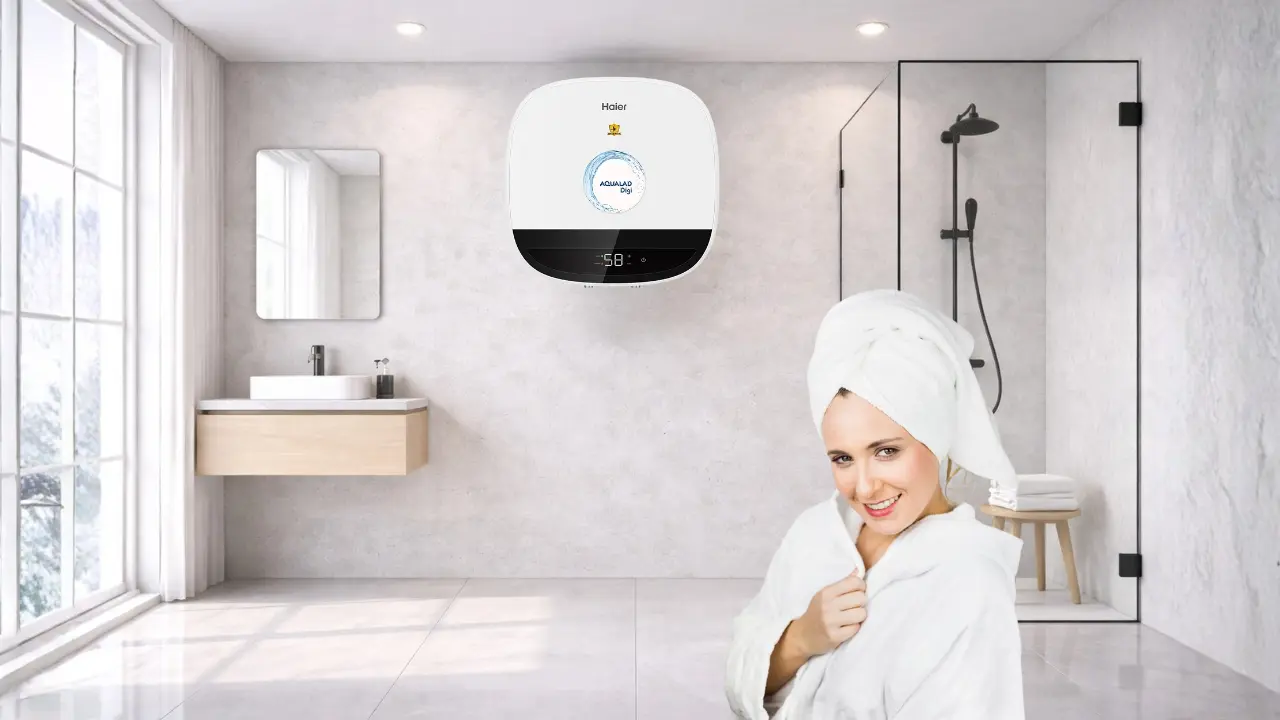

Haier water heaters handle hard water by designing every internal system around resistance, not reaction.
From titanium tanks and heating elements to magnesium rods, anti-scale flow design, and bacteria protection cycles, they are built to survive Indian water conditions without frequent breakdowns, heating loss, or hygiene compromise.
That is the difference between a water heater that works on day one and one that keeps working after three monsoons.
Hard water is not a water problem. It is a lifestyle problem
You notice it slowly.
White stains on taps.
Soap that never lathers properly.
A heater that once felt powerful now feels tired.
Hard water does not announce itself. It erodes quietly.
In many Indian cities, groundwater contains high levels of calcium and magnesium. Over time, these minerals settle inside appliances.
Water heaters feel this impact first because they heat water daily. Heat accelerates scale. Scale attacks efficiency. Efficiency loss increases power consumption.
The system breaks.
Not dramatically.
Gradually.
This is why choosing a water heater in India is not about capacity alone. It is about how the machine behaves when water quality is not ideal.
Why most water heaters fail early in hard water homes
The failure pattern is predictable.
- Minerals settle on the heating element
- Scale coats the inner tank
- Heat transfer drops
- Electricity consumption rises
- Parts corrode
- Repairs begin
Most water heaters are designed for clean water assumptions. Indian homes live in reality.
Haier starts from that reality.
Haier designs for water that fights back
Haier water heaters treat hard water like a permanent condition, not an exception.
This changes the design philosophy completely.
Instead of asking, “How do we heat water faster?”
The question becomes, “How do we keep heating water consistently for years?”
The answer lies inside.
Titanium tanks do not react. They resist.
Why the tank material matters more than capacity
In hard water areas, the inner tank takes the first hit. Steel tanks corrode. Glass linings chip. Micro-cracks form. Leakage follows.
Haier uses titanium tanks in models like the Square AQUALAD PRO series.
Titanium does not rust easily.
It resists mineral corrosion.
It maintains structural integrity over time.
That means the tank does not become a casualty of water chemistry.
This is not marketing. It is materials science.
The result is longer tank life and fewer internal failures even in high TDS water zones.
The heating element is where hard water causes real damage
Why scale attacks heating performance first
Hard water minerals love heat. They cling to heating rods. Over time, this layer acts like insulation. The heater works harder. Electricity usage spikes.
Haier counters this with a titanium heating element.
Titanium heating elements:
- Resist scale buildup
- Maintain consistent heat transfer
- Reduce efficiency drop over time
This is not about faster heating on day one.
It is about unchanged heating after year three.
The difference shows up in your electricity bill.
Magnesium rods quietly sacrifice themselves so your tank survives
Corrosion protection that works invisibly
Inside Haier water heaters is a magnesium rod.
It does not heat water.
It does not make noise.
It exists to be destroyed.
Magnesium corrodes faster than steel. So it absorbs corrosion that would otherwise attack the tank. This sacrificial role extends tank life dramatically in hard water regions.
Think of it as a bodyguard that steps into every hit first.
Without this, even strong tanks degrade faster.
RSC Technology keeps water moving so minerals cannot settle
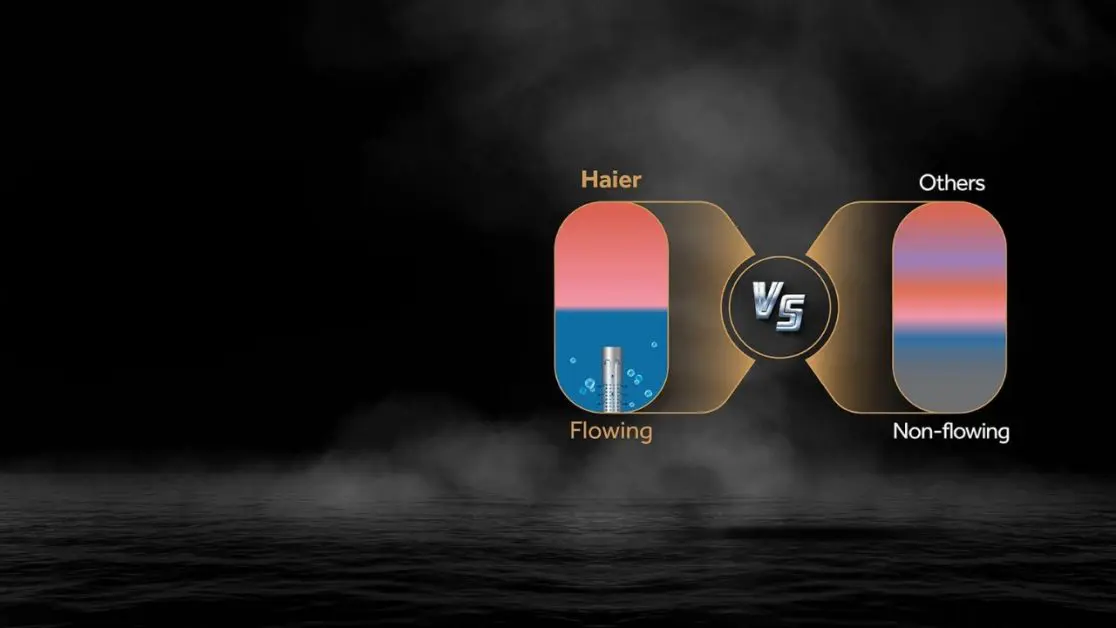
Stagnant water creates scale. Flow reduces it.
Scale loves stillness.
Haier’s RSC U-turn Flow Technology prevents water from sitting idle inside the tank. By maintaining circulation, minerals do not get the chance to settle and harden.
This has two effects:
1. Reduced scale formation
2. Fresher water output
It is a small design decision with long-term consequences.
Bacteria Proof System addresses a hidden hard water side effect
Hard water does not just bring minerals
It also creates a breeding ground.
Mineral deposits provide surfaces where bacteria can thrive. Haier’s Bacteria Proof System heats water to 80°C during specific cycles to neutralize bacterial growth inside the tank.
This matters more than people realise.
Hot water is not automatically hygienic.
Stagnant hot water is risky.
This system resets hygiene at a molecular level.
Pressure matters more in hard water homes
Why 8-bar rating protects internal parts
Hard water areas often coincide with high-rise living. Pressure fluctuations strain internal plumbing.
Haier water heaters are 8-bar pressure rated, making them suitable for tall buildings and inconsistent supply conditions.
Higher pressure tolerance means:
- Less stress on joints
- Reduced leakage risk
- Stable performance across floors
This protects both the heater and your bathroom walls.
Safety systems that assume the worst will happen
Hard water increases failure probability. Haier designs safety assuming failure will attempt to occur.
Key systems include:
- Shock Proof protection that reduces voltage to safe levels during leakage
- Dual Thermal Sensors that shut off heating at unsafe temperatures
- MUV valve for pressure relief, anti-vacuum, and controlled drainage
- IPX4 water resistance for humid bathrooms
Safety is not optional in mineral-heavy water environments. It is foundational.
Hard water increases electricity costs if insulation is weak
Why insulation matters more than star ratings
Scale forces reheating. Reheating wastes power.
Haier uses PUF and EPS insulation to retain heat longer. This reduces reheating cycles and keeps electricity usage predictable even as water quality challenges persist.
Energy efficiency in hard water homes is not about labels.
It is about insulation endurance.
15L or 25L is not the real decision
Capacity does not solve hard water problems
Whether you choose 15L or 25L depends on family size. But hard water does not care about capacity.
Both Haier 15L and 25L Square AQUALAD PRO models share the same internal protections:
- Titanium tank
- Titanium heating element
- Magnesium rod
- RSC technology
- Bacteria Proof System
- 8-bar pressure rating
This means performance scales with lifestyle, not water quality.
Hard water changes how appliances should be judged
Most buyers compare:
- Price
- Capacity
- Star rating
Hard water demands different questions.
- What happens inside after two years?
- Does performance stay consistent?
- Does maintenance increase?
- Does electricity usage creep up?
Haier water heaters answer these questions by design, not by promise.
The bigger insight most people miss
Hard water does not ruin appliances suddenly.
It reveals which ones were built honestly.
Good design shows up slowly.
Bad design shows up faster.
Haier designs water heaters for Indian water realities, not ideal lab conditions.
That is why they last longer.
That is why they feel consistent.
That is why they fade into the background of your daily routine.
And that is the highest compliment any appliance can earn.
Frequently Asked Questions
Every brand says their heater works in hard water. What’s actually different here?
Most brands assume clean water and add coatings. Haier designs from the assumption that water will fight back, using titanium tanks, titanium heating elements, magnesium rods, and flow designs that reduce scale formation from day one.
My water heater works fine, but why does my bathroom still feel unhygienic?
Hard water minerals create surfaces where bacteria can grow. Hot water alone doesn’t kill all bacteria, especially in stagnant tanks. That’s why Haier uses a Bacteria Proof System that periodically heats water to 80°C to neutralize microbial buildup.
I leave water sitting in the heater overnight. Is that a problem?
Yes. Stagnant water accelerates scale formation and bacterial growth. Haier’s RSC U-Turn Flow Technology keeps water circulating so minerals don’t settle and harden inside the tank.
Why does tank material matter more than star ratings?
Because star ratings don’t measure material fatigue.
Steel tanks corrode. Glass linings crack.
Haier’s titanium tanks resist mineral corrosion and maintain structural integrity in high-TDS water, extending real-world lifespan.
What does the magnesium rod actually do?
It sacrifices itself.
Magnesium corrodes faster than steel, so it absorbs corrosion before the tank does. This dramatically extends tank life in hard water homes. You never see it, but it’s doing the most important job inside the heater.
Why do some appliances “fade into the background” of daily life?
Because good design doesn’t demand attention.
When a water heater quietly delivers hot, hygienic water year after year, without repairs, rising bills, or anxiety, that’s not luck. That’s engineering built for reality.