


Built for Indian Electrical Conditions from Day One.
Modern water heaters designed for Indian electrical conditions come equipped with shock proof systems, dual overheat protection, voltage fluctuation resistance, and pressure control features. In a country where power supply varies widely across cities and buildings, these protections are not extras. They are essentials.
That is the short answer.
Now let us talk about why it matters inside a real Indian home.
Why are Indian electrical conditions a different game?
Walk into any Indian apartment building.
One floor runs smoothly.
Another struggles with voltage drops.
Festive season overloads circuits.
Summer pushes transformers to their limit.
According to the Central Electricity Authority, India’s peak power demand crossed 240 GW in 2023. High demand increases the risk of voltage fluctuations. In many Tier 2 and Tier 3 cities, voltage can swing from 160V to 260V within minutes.
That is not a small variation.
That is stress on every appliance.
A water heater sits in a wet environment. Electricity and water share space. The risk equation changes completely.
Electrical safety in India is not theoretical. It is practical.
So the question becomes simple:
Is your water heater built for stable labs, or real Indian bathrooms?
What Actually Goes Wrong During Voltage Fluctuations

1. Sudden Voltage Surges
Festivals. Weddings. Cricket finals.
When everyone switches on appliances, voltage spikes.
Without protection, heating elements burn out faster.
2. Low Voltage Drops
Low voltage makes heating elements work longer.
Longer heating increases wear.
3. Earthing Issues
In older buildings, improper grounding increases shock risk.
4. High Water Pressure in High-Rises
Many metro apartments exceed 6 bar pressure. Standard heaters may struggle.
According to the Bureau of Indian Standards, water heaters in high-rise buildings require reinforced pressure tolerance. Eight bar rating is now considered a safer benchmark.
This is not just about durability.
It is about protection.
Safety Is a System, Not a Feature
People often ask, “Is it shock proof?”
That question is incomplete.
Safety in Indian electrical conditions works like layers in a theatre security check. One guard is good. Three guards are better.
A well-designed system includes:
- Shock proof circuitry
- Dual overheat sensors
- Pressure relief valve
- Voltage fluctuation resistance
- Waterproofing standards
- Insulation that prevents energy leakage
Each layer solves a different risk.
Together, they create confidence.
Case Study: Haier 15L Square 5 Star Water Heater ES15V-SD WIFI
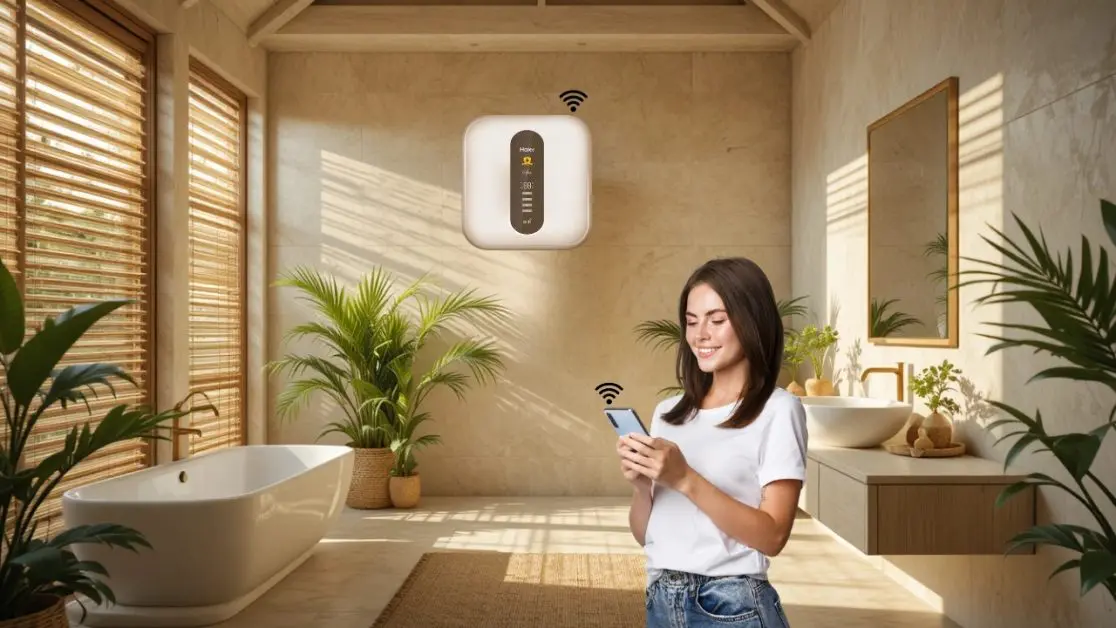
Let us look at a practical example.
The Haier 15L Square 5 Star Water Heater ES15V-SD WIFI is built specifically for Indian electrical realities.Shock Proof technology compliant with IEC standards
- Dual Thermal Proof with cut-offs at 75°C and 95°C
- Voltage Fluctuation Proof circuitry
- 8 Bar Rated Working Pressure
- IPX4 water resistance
- Incoloy 800 stainless steel heating element
- Glass-lined tank for corrosion resistance
That list is not a marketing language.
It is a map of risk reduction.
Let us break it down.
Shock Proof: Why It Matters More Than You Think
What It Does
Shock Proof converts rated voltage to a safer level in case of leakage.
In simple words, if leakage happens, the system reduces the danger before it reaches you.
Why It Matters in India
Many homes share electrical lines.
Wiring ages.
Moisture increases conductivity.
Shock proof systems reduce electrical shock risk even if the heater remains plugged in.
It is like wearing a helmet inside a car.
You hope you never need it.
But if you do, it defines the outcome.
Dual Thermal Protection: Because One Sensor Is Not Enough
The ES15V-SD WIFI uses Dual Thermal Proof technology.
- First cut-off at 75°C
- Secondary cut-off at 95°C
If the first layer fails, the second activates.
This is how aviation works.
Backup systems protect against rare failures.
Water heaters in India operate year-round. According to energy reports, electric water heating accounts for up to 18 percent of household electricity consumption in winter-heavy regions.
More usage means more heating cycles.
More heating cycles increase stress.
Dual protection reduces overheating risk.
8 Bar Pressure Rating: Designed for High-Rise India
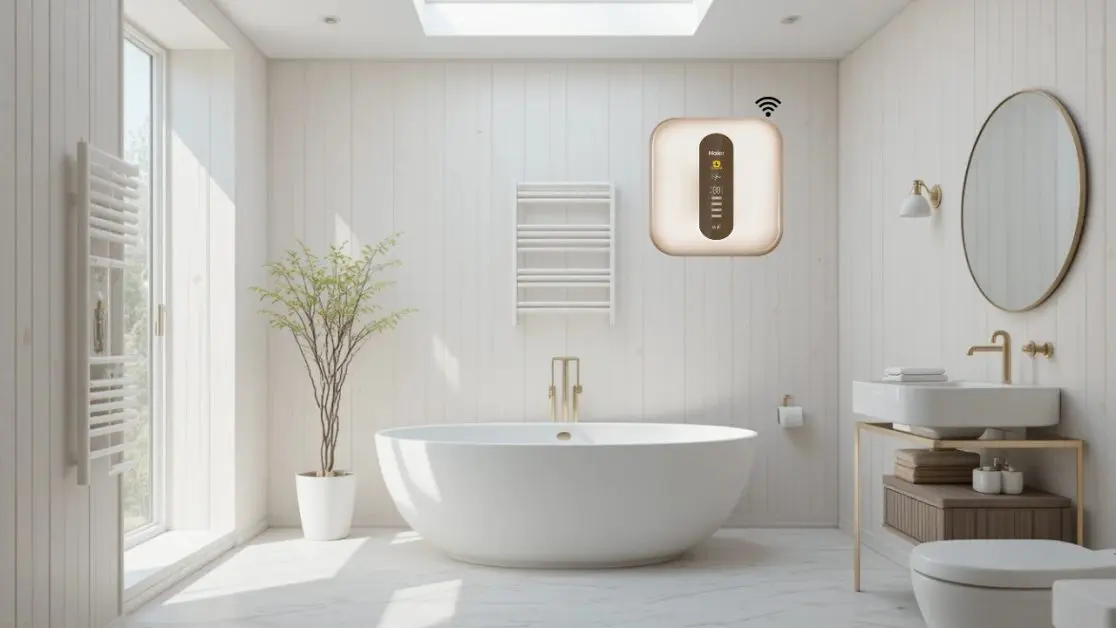
Look at any skyline in Mumbai, Bengaluru, or Gurgaon.
High-rise living is now standard.
The ES15V-SD WIFI carries an 8 bar pressure rating . That supports buildings up to roughly 80 meters.
Why is this important?
Lower-rated heaters may struggle with pressure spikes.
Pressure stress affects tank life.
Here is a simple comparison:
| Feature | Standard Heater | 8 Bar Rated Heater |
| High-rise support | Limited | Strong |
| Pressure spike tolerance | Moderate | High |
| Long-term tank safety | Variable | Reliable |
When pressure is controlled, durability improves.
Voltage Fluctuation Proof: The Invisible Shield
Power supply in India is improving, but fluctuations remain common in many areas.
Voltage fluctuation proof systems stabilize internal circuitry.
That reduces:
- Heating element damage
- PCB stress
- Unexpected shutdowns
It is economically efficient and requires no user effort.
Protection that works silently is the best kind.
Materials Matter in Indian Water Conditions
Indian water varies dramatically.
Hard water.
High mineral content.
Variable pH levels.
The ES15V-SD WIFI includes:
- Incoloy 800 SS heating element
- Glass-lined tank
- Magnesium rod
These are not cosmetic upgrades.
Incoloy resists scaling.
Glass lining reduces corrosion.
Magnesium rods absorb corrosive elements.
Hard water is one of the leading causes of heater failure in India.
Design that anticipates this is not luxury.
It is foresight.
Anti-Bacterial Mode: Hygiene as a System
The BPS mode heats water to 80°C to inhibit bacteria .
This matters in:
- Homes with children
- Elderly family members
- Apartments with intermittent water storage
According to WHO guidelines, water above 70°C reduces bacterial survival significantly.
In Indian bathrooms, where humidity remains high, this extra hygiene layer strengthens safety.
Energy Efficiency and Insulation
The heater uses PUF/EPS insulation to retain heat longer .
Why does insulation matter?
Because reheating costs electricity.
The 5 Star rating indicates high efficiency under Bureau of Energy Efficiency standards.
Here is the simple math:
- Better insulation
- Fewer reheating cycles
- Lower electricity bills
Comfort without excess consumption.
Safety Choices Indian Families Face
When choosing a water heater, there are three broad paths.
One Option: Basic Heater
Lower upfront cost.
Fewer protection layers.
Higher long-term risk.
Second Option: Stabiliser + Standard Heater
Extra device.
Additional wiring.
Moderate safety improvement.
Third Option: Built-In Protection System
Integrated shock proof.
Voltage resistance.
Dual thermal sensors.
Pressure rating.
Cleaner setup.
Better system thinking.
The third option costs more upfront, but reduces replacement risk, repair costs, and safety concerns.
Cheap appliances are expensive in slow motion.
Smart Control for Modern Homes

The ES15V-SD WIFI includes:
- LED display
- Smart timer
- Smart memory
- Remote control
This means:
- Heat water before reaching home
- Reduce idle heating
- Maintain consistent comfort
For working professionals living solo, smart scheduling avoids wasted electricity.
For families, it ensures hot water when needed.
Safety and convenience intersect.
Why This Conversation Is Bigger Than One Product
Electrical conditions in India are improving.
Infrastructure is expanding.
Urban density is rising.
Appliances that ignore this context fail faster.
Design that anticipates Indian realities lasts longer.
Whether it is a refrigerator managing summer voltage, an AC optimising power draw, or a water heater handling fluctuating supply, safety must be engineered into the system.
Haier’s approach reflects this thinking.
Not louder.
Smarter.
The Real Insight
Most people buy appliances based on visible features.
Capacity.
Color.
Price.
Few examine invisible protections.
But in India, invisible systems define daily comfort.
A water heater built for Indian electrical conditions does three things:
- Reduces electrical risk
- Extends product lifespan
- Protects family safety
And it does it quietly.
That is what good design looks like.
What This Means for Your Next Decision
When evaluating a water heater, ask:
- Does it handle voltage fluctuations?
- Is it 8 bars rated for high-rise buildings?
- Does it have dual overheat protection?
- Is it shock proof compliant?
- Are materials built for hard Indian water?
If the answer is yes, you are buying safety engineered for reality.
If not, you are hoping conditions remain perfect.
And Indian conditions are rarely perfect.
A Final Thought
Electricity is invisible.
Water is powerful.
Together, they demand respect.
Appliances designed for Indian electrical conditions are not premium luxuries. They are thoughtful necessities.
The right system does not just heat water.
It reduces anxiety.
It protects families.
It turns daily routines into reliable rituals.
And sometimes, that quiet confidence is the real upgrade.
Frequently Asked Questions
Do I really need a water heater designed specifically for Indian electrical conditions?
Yes especially if you live in an area with voltage fluctuations, older wiring, or high-rise pressure systems. Indian homes often experience 160V–260V swings. Built-in voltage resistance and shock-proof systems reduce long-term damage and safety risks.
Is paying more upfront for safety features actually worth it?
In most cases, yes. A heater with integrated shock proof, dual thermal protection, and 8-bar pressure rating reduces repair costs and early replacement. Cheap appliances often become expensive over time.
Should I buy a basic heater and add a stabiliser instead?
A stabiliser helps with voltage, but it does not solve pressure, overheat, grounding, or corrosion issues. Integrated protection systems offer more comprehensive safety.
What does Anti-Bacterial Mode actually do?
It heats water to around 80°C to reduce bacterial survival. This is especially useful in humid bathrooms and homes with children or elderly members.
Does hard water damage my water heater?
Yes. High mineral content causes scaling and corrosion. Features like an Incoloy 800 heating element, glass-lined tank, and magnesium rod extend tank life.
If my building has old wiring, is shock-proof technology enough?
Shock-proof systems reduce electrical leakage risk, but proper earthing is still important. Layered safety is always better.
Does low voltage make my heater heat slower?
Yes. Low voltage forces the element to work longer, increasing wear and electricity consumption.
Will voltage fluctuations shorten heating element life?
Without protection, yes. Surges can burn out elements prematurely. Voltage-resistant circuitry protects internal components.
Is faster heating bad for durability?
Not necessarily if thermal cut-offs exist. Dual thermal protection (e.g., 75°C and 95°C cut-offs) prevents overheating.