
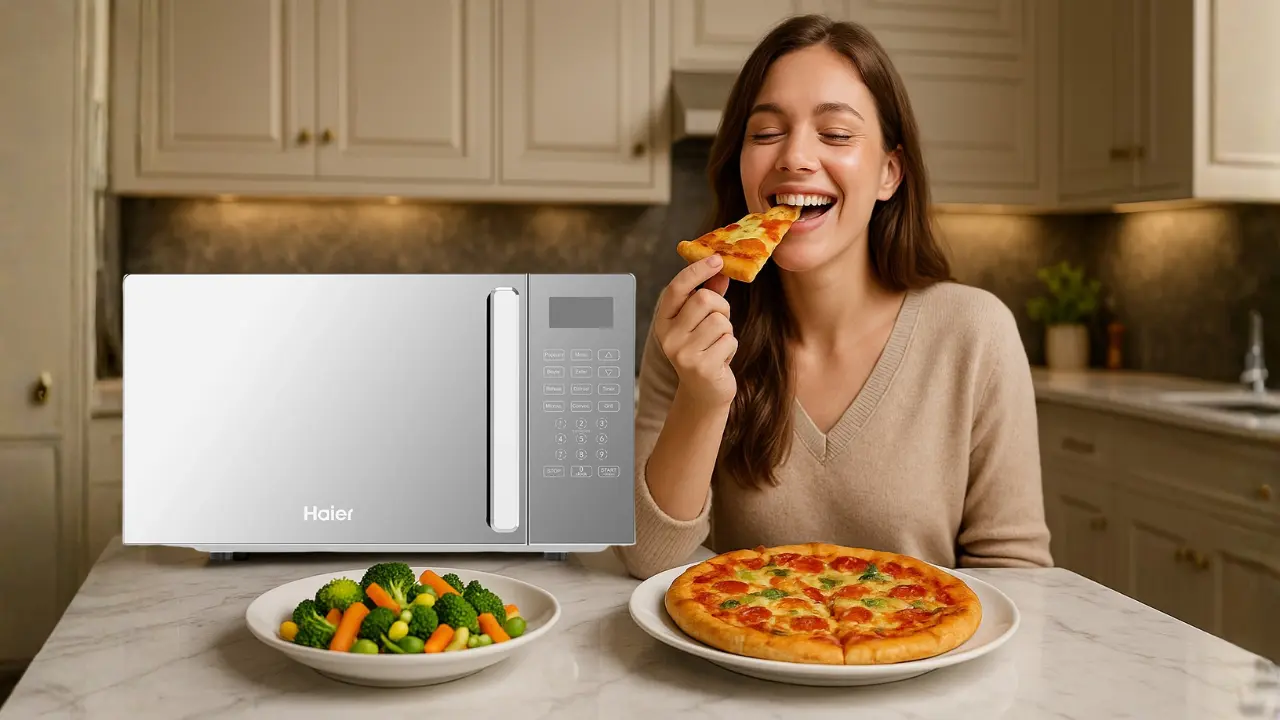

February quietly reshapes how Indian homes function. It is shorter, tighter, and mentally heavier. Work does not slow down, school routines stay intense, and evenings feel compressed.
In response, households lean toward appliances that save time, reduce decisions, and keep food warm without effort. That is why microwave usage rises in February. Not because people stop cooking, but because they need smarter continuity.
Everything else flows from that truth.
February Is Not a Busy Month. It Is a Compressed One.
January is loud.
New goals. New habits. Big intentions.
February is quieter. And more demanding.
The month has fewer days, but the same expectations. Salaries still arrive. Targets still exist. Tiffins still need packing. Dinner still needs to be served.
Compression changes behaviour.
When time shrinks but responsibilities remain, people stop chasing perfection and start protecting flow. They look for systems that help them keep moving without constant effort.
The microwave becomes central to that system.
The Invisible Calendar Shift Inside Indian Homes

February changes daily life in ways most people do not consciously notice.
One. Workload stays fixed while days reduce.
A 28-day month with a 30-day workload creates urgency. That urgency shows up in kitchens.
Meals cannot disappear just because time has.
Microwaves absorb that pressure quietly.
Two. Winter fades, but comfort still matters.
February evenings are cool, not cold. This is the peak month for reheating.
Leftover dal from lunch. Sambhar is made in the morning. Rotis from the night before.
Reheating becomes a daily ritual.
Three. Motivation dips between January and March.
January pushes. March pulls.
February sits in the middle.
This is when people want ease without guilt. Warm food without effort. Comfort without chaos.
Microwaves fit that emotional gap perfectly.
Microwaves Are Used More Because Systems Are Stressed
The idea that microwaves are about laziness does not survive contact with real homes.
Indian households operate on overlap.
Office calls overlap with homework. Gym schedules overlap with dinner prep. Couples share kitchens but not always timelines.
February tightens these overlaps.
Microwaves do not replace cooking. They support it.
They finish what was started earlier. They reheat without drying. They step in when attention is limited.
That is not convenient. That is system design.
What Actually Goes Into a February Microwave
February microwave usage is more diverse than people realise.
Reheating Full Meals
- Dal, rajma, chole, sambhar
- Rice, khichdi, pulao
- Rotis softened before serving
Even heating matters here. Uneven reheating ruins food quality.
This is where convection microwaves with stainless steel cavities perform better, preserving texture and moisture.
Speed Cooking Between Commitments
- Omelettes before work
- Steamed vegetables
- Quick breakfast portions
Microwaves shorten cooking time without demanding supervision.
Evening Snacks Without Deep Frying
February evenings invite snacking.
- Samosas reheated evenly
- Cutlets warmed without oil
- Frozen snacks cooked without a kadai
Oil-free and low-oil options gain popularity this month.
Late Night Comfort Food
This is the hidden category.
Warm milk. Mug desserts. Leftover rice reheated at 11 pm.
Microwaves quietly handle these moments without turning the kitchen into a project.
Why February Favors Smart Cooking Over Fresh Cooking
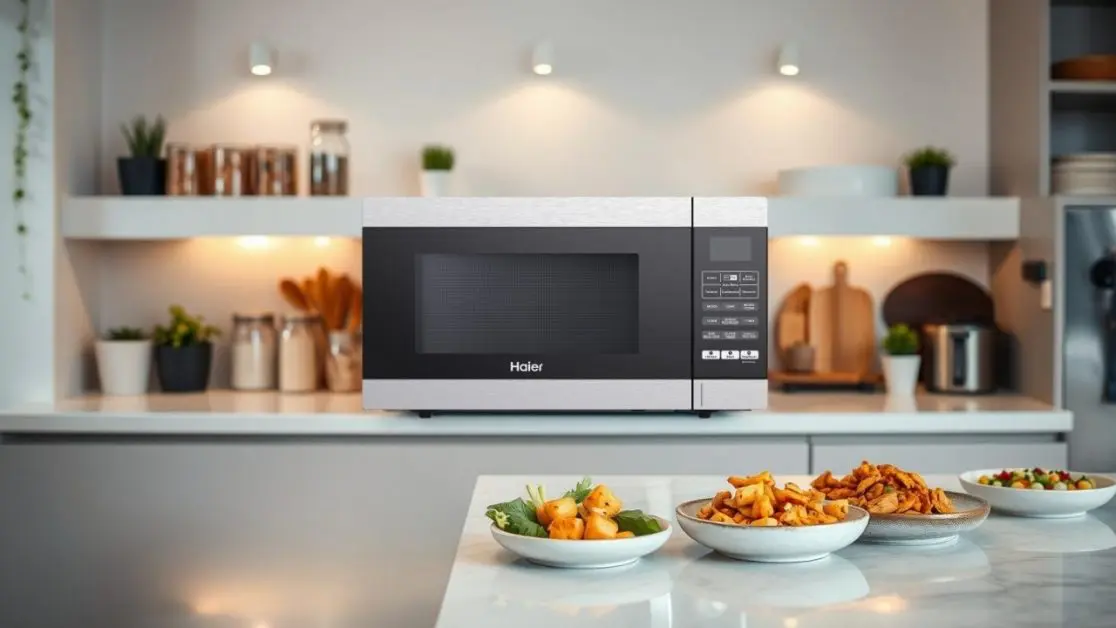
Fresh cooking requires three things.
Time. Energy. Attention.
February stretches all three.
This is why smart cooking wins.
Smart cooking is not about shortcuts. It is about continuity.
Cooking once. Eating twice. Preparing earlier. Finishing later.
Microwaves enable that rhythm.
The Role of Modern Microwave Features in February Habits
Older microwaves handled heat.
Modern microwaves handle decisions.
That difference matters most in February.
Auto Cook Menus Reduce Mental Load
After long days, decision fatigue is real.
Auto cook menus remove the need to guess time and power. The microwave handles it.
The Haier 25L Convection Microwave Oven HIL2501CBSH comes with extensive auto cook menus designed around Indian food habits, which makes daily cooking feel lighter during compressed months like February.
Oil-Free Cooking Supports Sustainable Health Goals
January brings resolutions. February tests them.
People still want healthier food, but not effort-heavy routines.
Oil-free cooking options help maintain balance without friction.
The Haier 20L Convection Microwave With Mirror Glass Design HIL2001CSSH supports low-oil cooking while staying compact for smaller kitchens and solo households.
Even Reheating Preserves Food Quality
Indian food does not forgive uneven heat.
Rice dries out. Gravies split. Rotis harden.
Microwaves with stainless steel cavities and controlled power distribution reheat food evenly and gently.
This matters more in February when reheating becomes daily behaviour.
February Is When Microwaves Replace Second Cooking Sessions
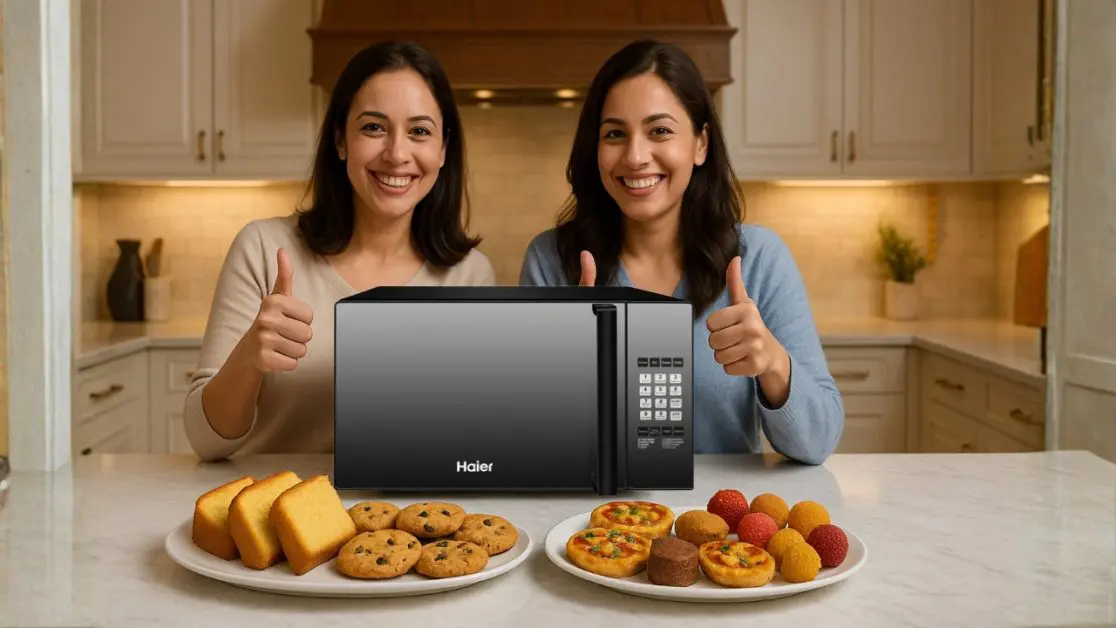
This is the key behavioural shift.
In January, many households still cook fresh twice a day.
In February, that changes.
People cook once and rely on the microwave for follow-up meals.
This saves:
- Time spent chopping again
- Energy spent standing in the kitchen
- Fuel used for repeated cooking
The microwave becomes a continuation tool, not a shortcut.
Different Homes, Different February Microwave Stories
The appliance stays the same. Usage adapts.
Families
- Reheating school lunch items
- Managing multiple meal timings
- Handling larger volumes efficiently
Microwaves help families scale without chaos.
Working Professionals Living Solo
- One-pot meals stretched across days
- Quick breakfasts
- Late dinners after long workdays
Microwaves support independence and routine.
Couples Setting Up New Homes
- Shared cooking with different schedules
- Snacks without clutter
- Smaller portions cooked efficiently
Microwaves support shared rhythm.
February Is Also a Transition Month for Food Habits
Heavy winter cooking fades. Summer eating has not started.
Meals become lighter. Portions become smaller. Reheating increases.
Microwaves adapt faster than traditional setups.
They manage transitions without demanding new habits.
That is why usage peaks now, not later.
When Capacity Starts to Matter More
February is also when people notice limitations.
Smaller microwaves feel restrictive during family dinners. Larger models feel reassuring.
The Haier 30L Convection Microwave With In-Built Air Fryer HIL3001ARSB addresses this shift well.
With larger capacity, air fryer functions, and combination cooking modes, it supports families who rely on microwaves not just for reheating, but for everyday cooking continuity.
This becomes relevant precisely when February routines intensify.
Why This Pattern Repeats Every Year
This is not a seasonal coincidence.
It is a system response.
As Indian homes become more time-aware and less process-heavy, appliances that reduce thinking and effort see predictable seasonal spikes.
February exposes inefficiencies.
Microwaves solve them.
That is why people notice themselves using them more, even if they never planned to.
The Insight Most People Miss
Microwaves are not about speed.
They are about continuity.
They allow life to move without stopping everything else.
In February, when margins are thin and days feel shorter, continuity becomes essential.
That is why this month belongs to the microwave.
Quietly. Consistently.
What February Teaches Modern Indian Homes
February reveals one simple truth.
Homes do not need more effort. They need better systems.
Microwaves fit into modern living not as backup appliances, but as everyday partners that adapt to real schedules.
When appliances stop asking questions and start supporting life, usage follows naturally.
February simply makes that visible earlier than most months.
And once you see it, you cannot unsee it.
Frequently Asked Questions
Why do I feel more exhausted in February even though it’s a shorter month?
February compresses responsibilities into fewer days. Work targets, school routines, and household tasks remain unchanged, which increases mental load.
Why am I relying more on my microwave in February without realizing it?
You are not being lazy. You are protecting energy. The microwave reduces decisions, supervision, and second cooking sessions.
I left my dal in the microwave overnight. Is it still safe to eat?
If it was unrefrigerated for more than 2 hours, it is safer to discard it. Reheating does not eliminate all bacterial risks.
I reheated rice twice in one day. Is that unhealthy?
Rice should be refrigerated properly and reheated thoroughly once. Multiple reheats reduce quality and increase risk.
Why does my rice dry out when I reheat it in February?
Uneven heating and low moisture cause dryness. Cover food and use controlled power settings.
Why does my gravy split after microwaving?
High power and long cycles can break emulsions. Use medium power and stir midway.
Are auto cook menus actually useful or just marketing?
In high-stress months like February, they reduce guesswork and mental fatigue.
Is oil-free microwave cooking practical for Indian snacks?
Yes. Cutlets, samosas, and frozen snacks can be crisped with minimal oil using convection or air fryer modes.
Why is my microwave suddenly getting more use this month?
Because your schedule is compressed. You are unconsciously optimizing for continuity.
Why does my microwave feel too small during family dinners?
February increases reheating frequency and portion overlap, exposing capacity limits.