
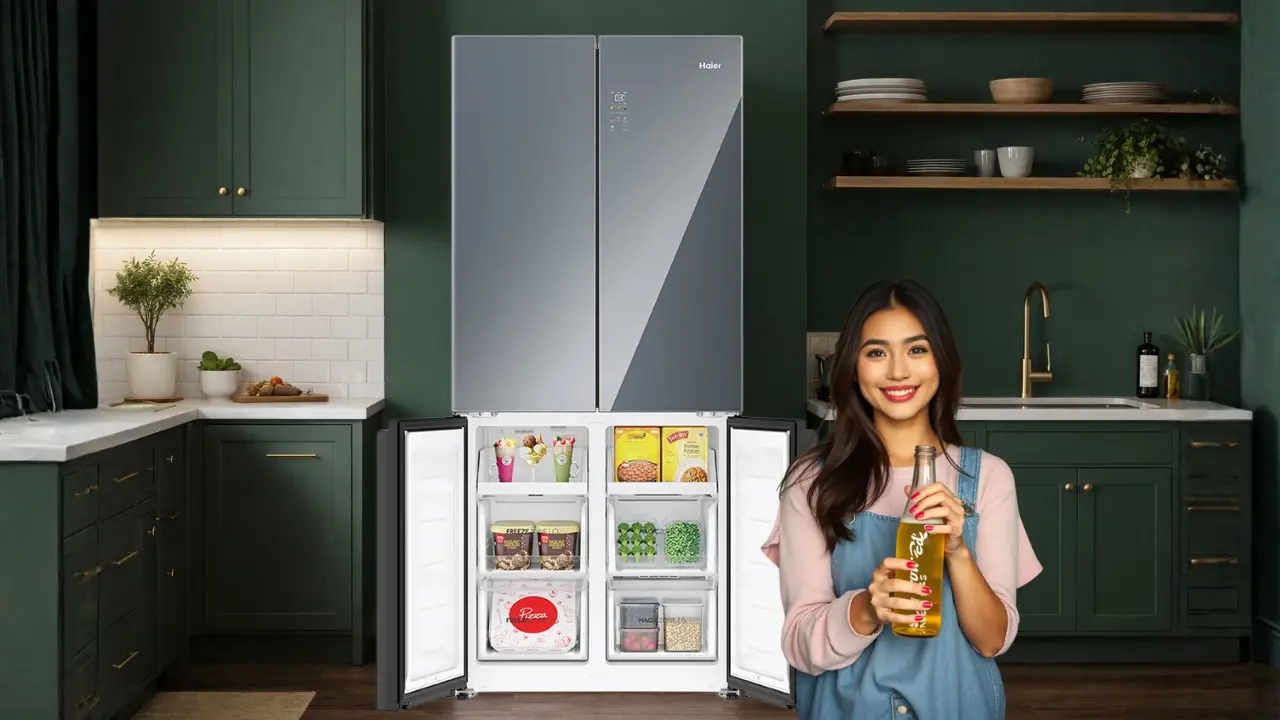

Separate zones for non-veg, dairy and beverages protect hygiene, preserve freshness longer, prevent odour mixing, and make everyday life simpler.
A well-zoned refrigerator reduces cross-contamination, maintains stable temperatures, and cuts food waste. In Indian homes where food diversity is high, smart separation is not luxury. It is logical.
You open the fridge after a long day.
There is marinated chicken on one shelf. Milk packets on another. A half-cut watermelon somewhere behind. Cold drinks stacked in the door.
And a faint smell that does not belong to anything specific.
That smell tells a story.
Food does not just sit in a refrigerator. It interacts. Air circulates. Moisture travels. Temperatures fluctuate. The fridge is a system. And systems behave better when they are structured.
Separate zones are not about neatness. They are about control.
Why Mixing Food Zones Creates Invisible Problems
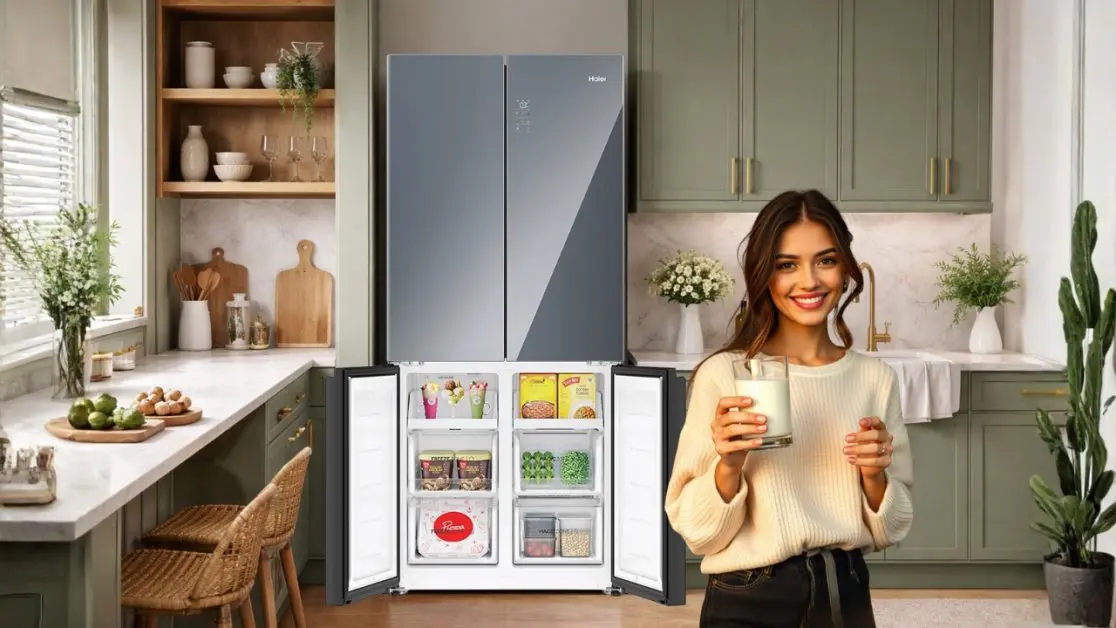
Most Indian refrigerators carry three categories almost every day:
- Raw non-vegetarian items
- Dairy like milk, paneer, curd
- Beverages and ready-to-eat foods
Each of these behaves differently inside a cooling system.
According to the Food Safety and Standards Authority of India, raw meat and poultry can carry bacteria that multiply between 5°C and 60°C.
Dairy products spoil faster if temperature fluctuates above 4°C. Beverages face constant door opening, which raises internal temperature.
Now imagine all three living without boundaries.
The cost shows up in small ways:
- Milk turning sour before its date
- Vegetables absorbing fish odour
- Extra cleaning every week
- More food waste than we admit
Food waste in Indian households is estimated at nearly 50 kg per person annually, as per UNEP Food Waste Index reports. Poor storage is one of the key drivers.
When storage is random, freshness becomes unpredictable.
And unpredictability creates stress.
Separate Zones Are About Hygiene First
Raw meat and seafood release natural juices. Even sealed packets can leak microscopically. When placed near dairy or fruits, cross-contamination risk increases.
One option is to keep everything wherever space exists.
The cost:
- Risk of bacterial spread
- Frequent rearranging
- Mental load of remembering what touched what
The second option is to create clear boundaries.
The benefit:
- Reduced contamination
- Easier cleaning
- Predictable storage system
Modern 4-door refrigerators like the Haier Lumiere 520L series, including HRB-600MP, HRB-600PW and HRB-600RW, offer a dedicated convertible section with flexible storage.
As detailed in the product, this model provides 520L total capacity with 440L fridge space and a 90L convertible zone
That convertible space can be assigned specifically to non-veg storage when required.
Structure reduces risk.
Temperature Stability Is Not Equal Everywhere
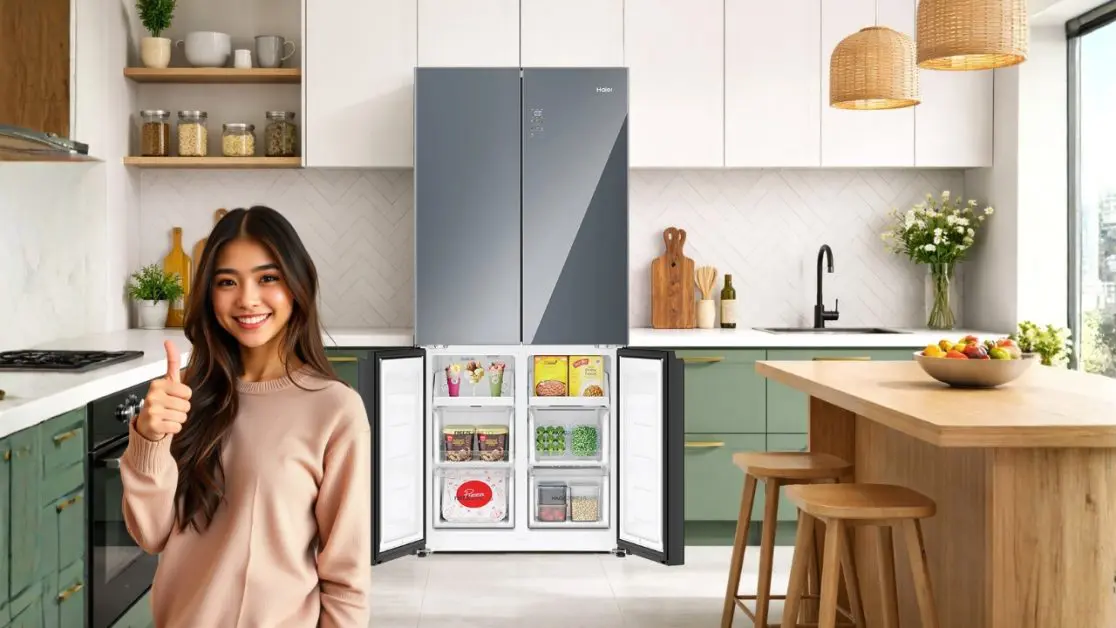
Not all parts of a refrigerator cool the same way.
The door shelves experience maximum temperature fluctuation because they are opened frequently. That makes them ideal for beverages but not for milk.
The middle shelves maintain the most stable cooling. That suits dairy.
Lower drawers retain moisture. That suits vegetables.
And convertible freezer sections allow deeper cooling for meat and seafood.
The Lumiere 4-Door series supports a temperature adjustable Magic Convertible Zone from -20°C to 5°C as shown in its feature panels
That range matters.
- -20°C supports seafood storage
- -12°C suits ice cream
- 2°C works for beverages
- 5°C supports fruits and vegetables
When one appliance adapts to food type, food lasts longer.
That is not design. That is intelligence applied to daily life.
How Zoning Reduces Food Waste in Indian Homes
Think about festive seasons.
Diwali sweets. Eid meat preparations. Christmas desserts. Sunday biryani prep. Cold drinks for guests.
Indian kitchens expand temporarily. Refrigerators stretch beyond comfort.
One option is to stack everything tightly.
The cost:
- Air circulation blocked
- Uneven cooling
- Spoilage pockets
The second option is structured zoning.
A 4-door refrigerator with 10 storage zones, as highlighted in the shop,haierindia.com.
Here is what structured zoning looks like in practice:
| Food Type | Ideal Zone | Why It Matters |
| Raw Chicken/Fish | Convertible freezer zone | Prevents contamination and odour spread |
| Milk/Curd/Paneer | Stable middle shelf | Maintains consistent cooling |
| Cold Drinks | Door racks | Easy access without disturbing core cooling |
| Vegetables | Moisture-controlled drawer | Prevents drying and shrinkage |
| Leftovers | Upper shelf containers | Easy visibility reduces forgetting |
Food forgotten is food wasted.
Visibility plus structure equals savings.
Odour Control Is More Important Than We Admit

Fish and garlic do not need permission to travel.
Odours move through circulating air inside the fridge. Once absorbed by dairy or fruits, the flavour changes.
That is why features like Deo Fresh Technology, mentioned in the Lumiere specifications, focus on absorbing odour and maintaining freshness
But technology works best when supported by smart zoning.
Separate areas for non-veg reduce odour mixing at source.
The result:
- Milk tastes like milk
- Fruits retain their natural aroma
- Desserts remain clean in flavour
Small sensory wins build trust in your kitchen system.
Indian Kitchens Are Not Minimalist Kitchens
Western storage advice often assumes fewer ingredients.
Indian homes operate differently.
We store:
- Multiple gravies
- Fresh coriander
- Ginger garlic paste
- Leftover dal
- Raw chicken
- Milk packets
- Festival sweets
- Pickles
Volume matters.
The Haier Lumiere 520L models offer a large 440L refrigerator section plus convertible 90L space
That scale allows logical separation without compromise.
Capacity supports zoning. Zoning supports hygiene. Hygiene supports health.
Systems stack.
Energy Efficiency and Structured Cooling
Frequent door opening for beverages increases energy load.
According to Bureau of Energy Efficiency guidelines, refrigerators consume between 300 to 600 kWh annually depending on size and usage patterns.
If beverages sit in the door racks and not inside core cooling shelves, the compressor works smarter.
The Lumiere 4-Door refrigerator uses inverter compressor technology and 360° cooling as described in its technical specifications
Triple inverter systems maintain stable temperatures while reducing energy waste.
But technology cannot compensate for chaos.
When zones are respected:
- Door opens briefly
- Core shelves remain undisturbed
- Temperature stabilises faster
Energy efficiency is not just a rating. It is a behaviour pattern.
Three Storage Mindsets Most Indian Homes Follow
Let us be honest.
There are three common approaches.
1. Everything Everywhere
Space is filled randomly.
Cost: confusion, waste, cleaning.
Benefit: quick placement.
2. Temporary Sorting
Things start to get organized. Drift happens in a week.
Cost: inconsistency.
Benefit: occasional control.
3. Defined Zones with Intent
Non-veg always below or inside the convertible zone.
Dairy is always in the middle.
Beverages are always at the door.
Benefit: clarity, hygiene, lower waste.
Cost: discipline for the first few days.
The third option feels restrictive initially.
Then it feels freeing.
Constraints create clarity.
Smart Connectivity Extends Zoning Beyond Storage
The Rosette White model in the Lumiere series includes Smart Connectivity with the Haismart App and smart food management.
Tracking stored items reduces expiry surprises.
Creating shopping lists based on inventory reduces duplication.
Digital systems reinforce physical zoning.
When refrigerator zones align with digital reminders, households become efficient ecosystems.
Efficiency reduces stress.
And stress reduction is an invisible luxury.
What This Means for Modern Indian Households
Millennial couples setting up new homes are not just buying appliances.
They are building systems.
Working professionals living solo want fewer cleaning headaches.
Parents want safety assurance.
Separate zones for non-veg, dairy and beverages offer:
- Hygiene protection
- Odour isolation
- Temperature stability
- Reduced food waste
- Energy efficiency
- Faster daily access
It sounds simple.
It is foundational.
The Bigger Insight
Refrigerators are no longer cold boxes.
They are storage ecosystems.
A 4-door convertible refrigerator like the Haier Lumiere 520L series integrates:
- 520L total capacity
- Convertible 90L section
- Adjustable temperature from -20°C to 5°C
- 360° cooling
- Odour control systems
- Inverter compressor efficiency
These are not feature checklists.
They are design decisions responding to how Indian homes actually function.
Final Thought
When non-veg sits next to milk without structure, you are not just mixing food. You are mixing systems.
Order inside a refrigerator reflects order inside a home.
Separate zones are not about perfection.
They are about intention.
And intention quietly defines how effortless everyday life feels.
In the end, smart homes are not built by grand gestures.
They are built by small, structured decisions that compound daily.
Frequently Asked Questions
Why do I always feel confused about where to store different foods in my fridge?
Because refrigerators without clear zones force you to make micro-decisions every time you store food. When raw meat, dairy, leftovers, and beverages compete for space, you constantly rearrange items. Creating fixed zones, non-veg areas, dairy shelves, and beverage racks removes that daily mental load and makes storage automatic.
Should I really keep non-veg, dairy, and beverages in separate fridge areas?
Yes. These foods require different temperature stability and hygiene conditions. Raw meat carries bacteria risk, dairy spoils quickly with temperature changes, and beverages are frequently accessed. Separate zones prevent contamination, maintain freshness, and simplify daily storage.
When my fridge is full, is it okay if I temporarily mix dairy and raw meat?
It’s best to avoid it. Raw meat can release microscopic juices that carry bacteria. Even sealed packets can leak slightly. If mixing is unavoidable, keep raw meat in airtight containers or in the coldest section, preferably separate from dairy.
What does a “convertible fridge zone” actually do?
A convertible zone allows you to adjust temperature based on food type. For example:
Deep freeze for meat or seafood
Mild cooling for beverages
Refrigerator mode for fruits or vegetables
This flexibility helps adapt storage to changing household needs.
How does adjustable temperature help different foods last longer?
Different foods require different cooling ranges:
Seafood: around -20°C
Ice cream: around -12°C
Dairy: around 2–4°C
Fruits and vegetables: around 5°C
Adjustable zones allow a refrigerator to maintain the ideal temperature for each category.
Are odor control systems in refrigerators actually useful?
Yes. Technologies like deodorizing filters absorb odour particles circulating in the fridge. This helps keep dairy, fruits, and desserts from absorbing smells of fish, spices, or cooked food.