


Because sound is what makes images feel real. Picture quality shows you what is happening on screen. Sound decides whether your brain believes it.
In real Indian homes, where viewing happens casually, socially, and often mid chaos, sound quality does as much work as the picture. Sometimes more.
The moment every household recognises.
It is a weekday evening.
Someone is making chai.
Someone else is scrolling.
The TV is on in the background.
The picture looks sharp. Colours are rich. Motion is smooth.
Then a character says something important.
You miss it.
You rewind.
You raise the volume.
Now the background music feels loud, but the dialogue still sounds thin.
This is not a screen problem.
This is a sound problem.
And it is why picture quality alone never completes the experience.
Why our brains care about sound more than we admit
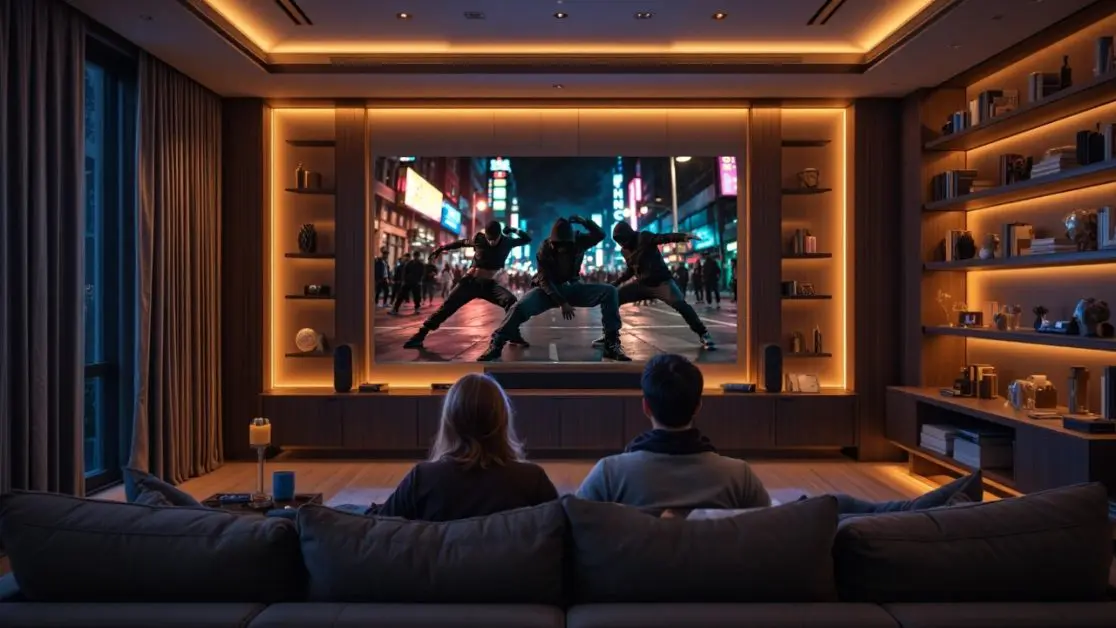
We like to believe vision leads.
It does not.
Your brain trusts sound before sight.
- Sound tells you distance.
- Sound tells you space.
- Sound tells you emotion.
That is why a whisper can feel more powerful than an explosion.
That is why cricket commentary shapes how a match feels.
That is why silence before a big moment feels heavier than the moment itself.
The picture shows information. Sound creates meaning.
Big screens amplify weak sound
Here is the hidden system most people miss.
The better the picture gets, the more obvious sound flaws become.
A large Mini LED screen shows scale, detail, and depth.
If the audio stays flat, your brain notices the mismatch instantly.
This is why people upgrade to big screens and still feel something is missing.
Scale without sound feels hollow.
The reality of modern TV design
Today’s TVs are slim, elegant, and visually striking.
That is great for your living room.
But physics still applies.
Thin cabinets leave less room for speakers to move air.
Less air means less depth.
Less depth means flatter sound.
Manufacturers solve this in three ways.
One option is louder speakers
Volume increases. Clarity does not.
The second option is external soundbars
Effective, but adds wires, remotes, space, and setup friction.
The third option is integrated premium audio
Speakers, tuning, and processing designed as part of the TV itself.
This third approach is where modern TV sound finally starts to feel natural.
What good TV sound actually does
Good sound is not about noise.
It is about balance.
Dialogue stays clear
Voices sound human, not sharp or metallic.
Bass feels controlled
Low frequencies add weight without shaking the room unnecessarily.
Sound has direction
You sense where audio comes from, even without extra speakers.
Volume feels stable
No constant adjusting between scenes or apps.
When this happens, you stop thinking about sound completely.
That is success.
Why cinema sound works and home sound often does not
Cinema halls design sound first.
Screens come later.
At home, we usually reverse that logic.
This creates a gap.
Big visuals stretch your expectations.
Weak audio fails to meet them.
That is why TVs built for cinematic viewing need cinema inspired sound engineering, not just bigger panels.
How newer TVs are solving this quietly
Some TVs now treat audio as a core experience, not an afterthought.
This includes:
- Dedicated 2.1 channel speaker systems
- Built in woofers for bass
- Audio tuning by specialist sound engineers
- Support for spatial audio formats like Dolby Atmos
A good example is the M80F Mini LED Google TV series, available in multiple sizes to suit different homes.
Across the range, sound is designed to scale with the screen.
M80F Mini LED 140cm (55) Google TV | Sound by KEF
This model is built for compact living rooms and bedrooms where clarity matters more than raw volume.
Key audio features include:
- 2.1 channel speaker system with 50W output
- Sound by KEF, bringing speaker tuning expertise into the TV itself
- Dolby Atmos support for spatial sound
- Balanced bass that does not overpower dialogue
In smaller spaces, this kind of tuning reduces the need for external speakers while keeping voices clear during movies, sports, and daily viewing.
M80F Mini LED 165cm (65) Google TV | Sound by KEF
This size hits the sweet spot for many Indian households.
The screen gets bigger. Expectations rise.
Sound keeps up.
Key highlights:
- 2.1 channel 50W audio system
- KEF tuned speakers for richer mid range and cleaner vocals
- Dolby Atmos for immersive layering
- Sound remains consistent even at moderate volumes
This matters during late night viewing, family movie sessions, and match nights where clarity matters more than loudness.
M80F Mini LED 189cm (75) Google TV | Sound by KEF
Once screens cross 189cm (75), sound mismatch becomes obvious if not handled well.
This model addresses that directly.
Audio features include:
- 2.1 channel speaker system with dedicated woofer
- 50W output tuned by KEF
- Dolby Atmos support for room filling sound
- Strong low end presence without dialogue loss
At this size, sound needs authority. Not aggression. This balance keeps long viewing sessions comfortable.
M80F Mini LED 215cm (85) Google TV | Sound by KEF
Large screens demand serious audio.
This model treats sound as part of the cinematic experience, not an accessory.
Key audio capabilities:
- 2.1 channel system with 50W output
- Sound by KEF with precision tuning
- Dolby Atmos and DTS X support
- Soundstage designed to match the scale of the screen
In large living rooms, this helps sound feel anchored to the picture instead of floating vaguely in space.
Why sound quality changes daily habits

Good sound does not just improve movies.
It changes how people use their TVs.
- You watch longer without fatigue
- You rewind less
- You keep volumes lower
- You feel more relaxed while watching
These small benefits add up.
Over time, they matter more than peak brightness or extra pixels.
Sound influences mood more than we realise
Sound design affects stress.
Harsh audio tires the brain.
Balanced audio calms it.
In homes where the TV is often on while people cook, work, or relax, sound needs to support life, not dominate it.
This is where tuned speakers and spatial processing make a real difference.
A simple way to think about TV upgrades
Picture quality impresses you on day one.
Sound quality decides whether you enjoy the TV on day one hundred.
Most people upgrade screens every few years.
They live with sound every single day.
The insight worth keeping
A better picture makes you look.
Better sound makes you stay.
In modern homes, the best TVs are not the loudest or the sharpest.
They are the ones where sound and picture move together, quietly doing their job without demanding attention.
When that happens, technology fades into the background.
And that is when home entertainment finally feels effortless.
Frequently Asked Questions
Why do I miss dialogue even when the volume is high?
Volume does not equal clarity. Poorly tuned speakers boost background music and effects but fail to separate voices. That’s why dialogues feel thin while everything else feels loud.
Why do I keep adjusting the volume between scenes, apps, or shows?
Inconsistent sound tuning. Good TV audio maintains stable loudness across content types, so you’re not constantly reacting to sudden music, ads, or action scenes
Is adding a soundbar the only real solution?
Not always. Soundbars work, but they add cables, remotes, space issues, and setup friction. TVs with integrated, well-tuned audio can deliver a more natural and convenient experience.
Why does sound quality affect how long I watch TV?
Clear, balanced audio reduces fatigue, rewinding, and volume tweaking. This makes watching feel more relaxed, so you naturally stay engaged longer.
Does sound quality really affect mood and stress?
Yes. Harsh or uneven sound increases cognitive load and irritation. Balanced sound supports calm, especially in homes where the TV plays alongside daily activities.
What should I prioritise when upgrading my TV?
Don’t separate picture and sound in your decision. The best TVs are the ones where audio and visuals are designed to move together, quietly supporting the experience.