
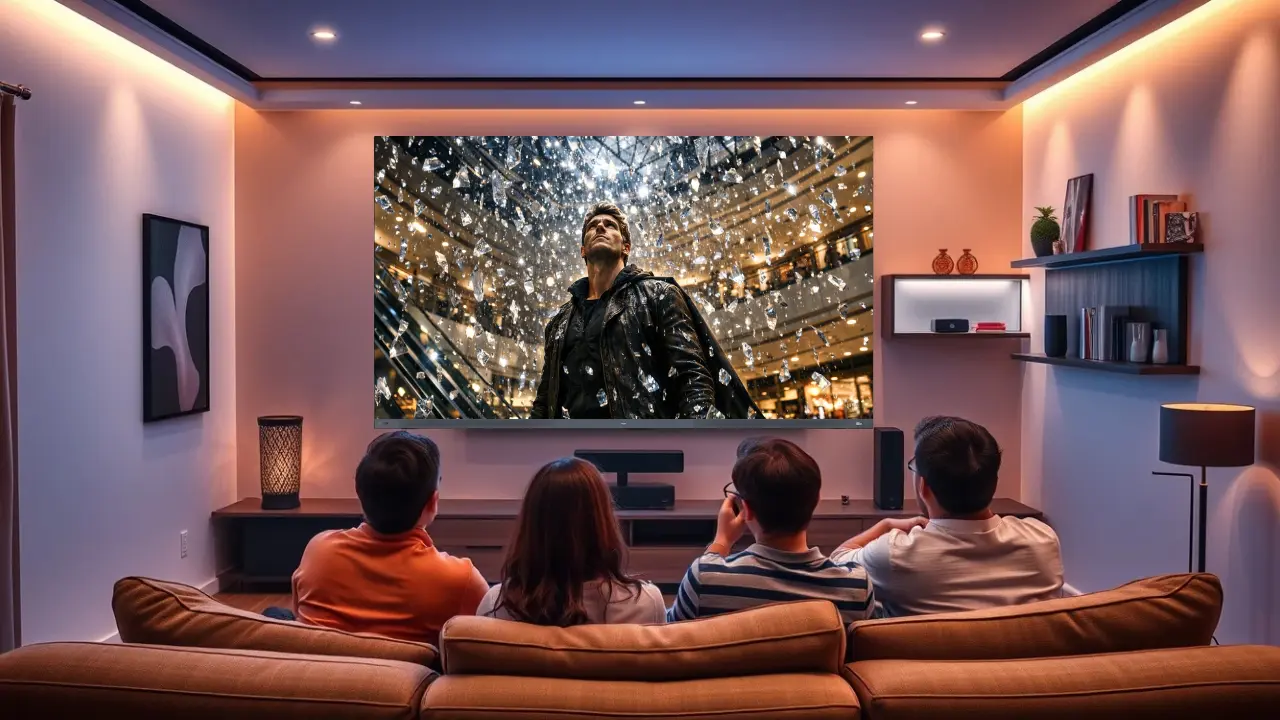

Sound quality defines premium TVs because the experience of watching content is not only visual. Dialogue clarity, spatial depth, and bass presence shape how immersive a scene feels.
A truly premium TV balances picture and sound so that every moment, from cricket commentary to movie explosions, feels complete rather than flat.
Most people notice screen size first.
Bigger screen. Brighter colors. Sharper resolution.
But the moment a movie starts, something else quietly takes control of the room.
Sound.
A television can show a stadium. Only sound can make you feel like you are inside it.
And that is why sound quality defines premium TVs.
The picture attracts attention. Sound holds emotion.
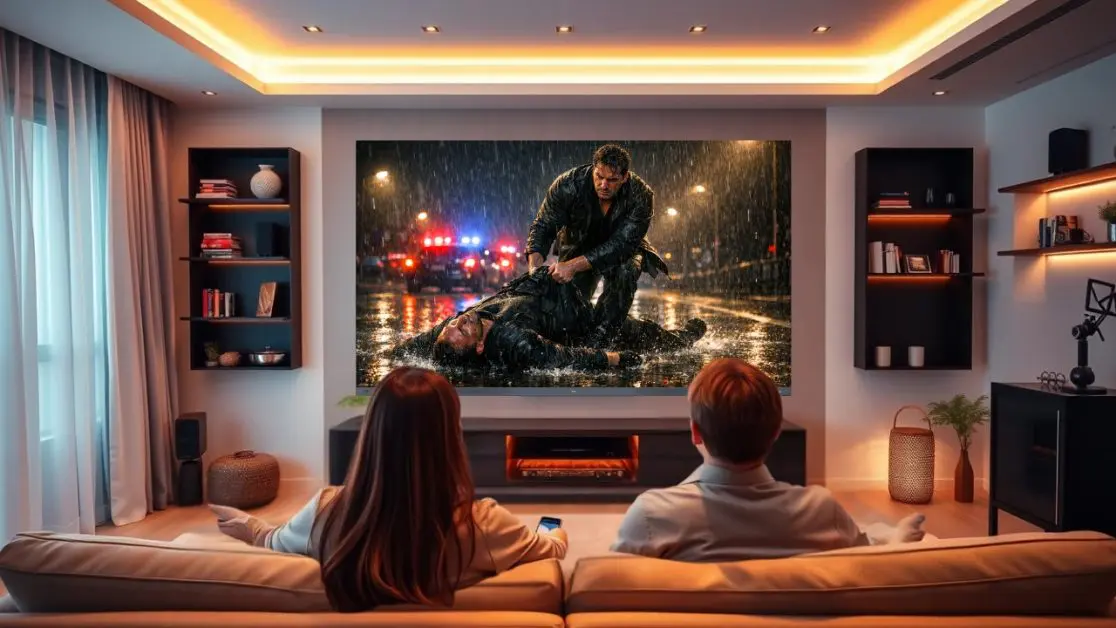
Imagine two living rooms.
In the first, a massive screen plays the final over of an IPL match. The picture looks sharp. But the crowd sounds thin. The commentary lacks depth.
In the second room, the same moment unfolds. The stadium roar spreads across the room. The commentator’s voice sounds present. The bat striking the ball carries weight.
Same video.
A completely different experience.
Because premium television is not just about pixels. It is about presence.
When sound works properly, something subtle happens.
You stop noticing the TV.
You start feeling the moment.
Why modern homes demand better TV sound
Indian homes today use televisions differently than they did a decade ago.
A TV is no longer a device for occasional viewing. It is a daily companion.
Morning news during chai.
Cartoons before school.
Cricket in the evening.
OTT shows late at night.
Media consumption studies show that average daily screen viewing in urban India crosses five to six hours when streaming, sports, and television are combined.
That creates a new expectation.
People want the living room to feel like a theatre.
And theatres rely heavily on sound.
What viewers expect from premium TV sound
A premium TV sound system solves three problems at once:
| Viewer Need | What Basic TVs Deliver | What Premium TVs Deliver |
| Dialogue clarity | Voices sometimes muffled | Crisp speech even at low volume |
| Immersion | Flat stereo sound | Surround and spatial audio |
| Bass impact | Weak low frequencies | Deep cinematic bass |
Premium televisions build audio systems that treat sound as a primary feature.
Not an afterthought.
The invisible system behind immersive sound
Most viewers assume sound quality depends only on volume.
It does not.
Sound quality depends on three hidden systems working together.
1. Speaker architecture
Basic TVs use two small speakers.
Premium TVs expand this architecture.
For example, the Haier M92 Series QD Mini LED AI Smart Google TV includes a 2.1 channel speaker system with a dedicated subwoofer designed to produce fuller sound and deeper bass.
That additional channel changes how audio behaves.
Dialogue stays clear. Bass gains depth.
The room starts to respond.
2. Spatial sound technology
Flat audio feels like it comes from the screen.
Spatial audio surrounds the viewer.
Technologies like Dolby Atmos create three dimensional sound fields, placing audio above and around the listener for cinematic immersion.
When used correctly, the effect becomes obvious.
Rain sounds like it falls from above.
A helicopter moves across the room.
Crowd noise surrounds the sofa.
3. Acoustic tuning by audio experts
Not all speakers sound the same.
The difference often lies in tuning.
Premium televisions integrate sound systems developed by professional audio engineers. For instance, Haier integrates Sound by KEF, bringing expertise from high fidelity speaker design into television audio systems.
That tuning adjusts frequencies so that sound feels balanced.
Music sounds fuller. Dialogue becomes clearer. Background details appear naturally.
Small adjustments.
Huge impact.
Bigger screens amplify sound problems
A hidden rule of home entertainment is simple.
The larger the screen, the more noticeable the sound quality.
Large displays expose weak audio immediately.
Imagine watching a movie on a 254cm(100) television.
The visuals dominate the room.
But if the sound feels thin, the illusion breaks instantly.
That is why larger premium TVs use more advanced speaker systems.
For example, the Haier M96 Series 254 cm (100) QD Mini LED AI Smart Google TV includes a 6.2.2 channel audio system designed to create layered three dimensional sound across horizontal and vertical channels.
That structure adds:
- Horizontal surround channels
- Dedicated bass channels
- Height speakers for spatial effects
The result feels closer to a theatre than a television.
Three types of sound experiences in modern TVs
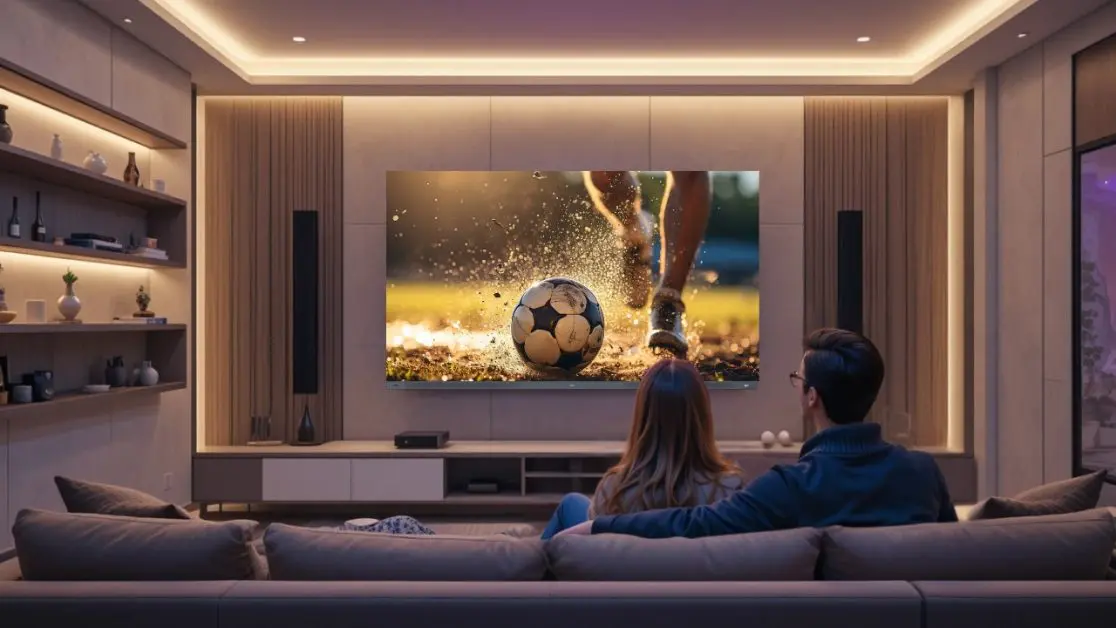
Not all televisions approach sound the same way.
Broadly, there are three levels.
Option 1: Basic stereo televisions
Two speakers. Limited bass.
Benefits:
- Lower cost
- Simple design
Costs:
- Flat soundstage
- Dialogue struggles during action scenes
- Limited immersion
Option 2: Enhanced speaker systems
Televisions add subwoofers or extra channels.
Benefits:
- Fuller sound
- Better dialogue clarity
- Moderate immersion
Costs:
- Still limited spatial effects
Option 3: Premium cinematic audio
Multi channel systems with spatial sound processing.
Benefits:
- Surround sound immersion
- Deep bass
- Realistic sound movement
Costs:
- Higher engineering complexity
- Requires advanced hardware
Premium TVs live in this third category.
Because sound becomes part of the storytelling.
Why dialogue clarity matters more than people think
Ask people what matters most in TV sound.
Most say bass.
In reality, the most important factor is dialogue clarity.
Consider everyday scenarios:
- Watching a crime thriller late at night
- Streaming a documentary with soft narration
- Following cricket commentary during tense overs
If dialogue sounds muddy, viewers constantly adjust volume.
Too loud during explosions.
Too soft during conversation.
Premium televisions solve this with intelligent audio processing.
For instance, modern AI processors analyze scenes and optimize both visuals and sound simultaneously.
The AI Ultra Sense Processor used in Haier Mini LED televisions identifies content patterns and adjusts output to maintain clarity and balance.
That means dialogue stays clear even during intense action.
Sports, movies, and music all demand different sound

Sound design changes depending on what you watch.
A premium television adapts to each type of content.
Movies
Movies rely on atmosphere.
Key sound elements:
- Surround sound movement
- Environmental effects
- Deep cinematic bass
Sports
Sports depend on energy.
Key sound elements:
- Crowd noise
- Commentary clarity
- Dynamic range during sudden moments
Music
Music prioritizes tonal balance.
Key sound elements:
- Clean vocals
- Controlled bass
- Wide stereo stage
Premium TVs adjust sound profiles automatically so that each experience feels natural.
The psychology of immersive sound
Sound influences emotion faster than visuals.
A sudden bass drop creates tension.
A quiet whisper builds suspense.
A stadium roar triggers excitement.
Psychologists studying media immersion often highlight that audio cues guide emotional response more strongly than visuals alone.
That is why film directors obsess over sound design.
And that is why premium televisions invest heavily in audio systems.
Because emotion travels through sound.
How premium TVs balance picture and sound
A true premium TV treats audio and video as one system.
Not separate technologies.
The best designs follow three principles.
| Principle | What It Means |
| Synchronization | Sound matches the motion on screen |
| Balance | Dialogue, music, and effects stay clear |
| Spatial realism | Sound appears to move through the room |
When these elements align, the television disappears.
The experience takes over.
Why sound quality will define the next generation of TVs
Television technology evolves quickly.
The resolution jumped from HD to 4K.
Refresh rates climbed to 144 Hz.
Display technology moved from LED to Mini LED.
But sound is becoming the next frontier.
Future televisions focus on:
- Multi directional speakers
- AI driven audio processing
- Theatre style surround sound
Because screen quality is approaching perfection.
Sound still has room to evolve.
The real insight most buyers miss
People often shop for TVs by comparing numbers.
Screen size.
Brightness.
Resolution.
Those matter.
But the real difference appears after purchase.
Rain outside.
Lights dimmed.
And the sound fills the room.
That is when premium televisions reveal their true value.
The picture shows the story. Sound makes you believe it.
And once you experience that difference, it becomes impossible to ignore.