
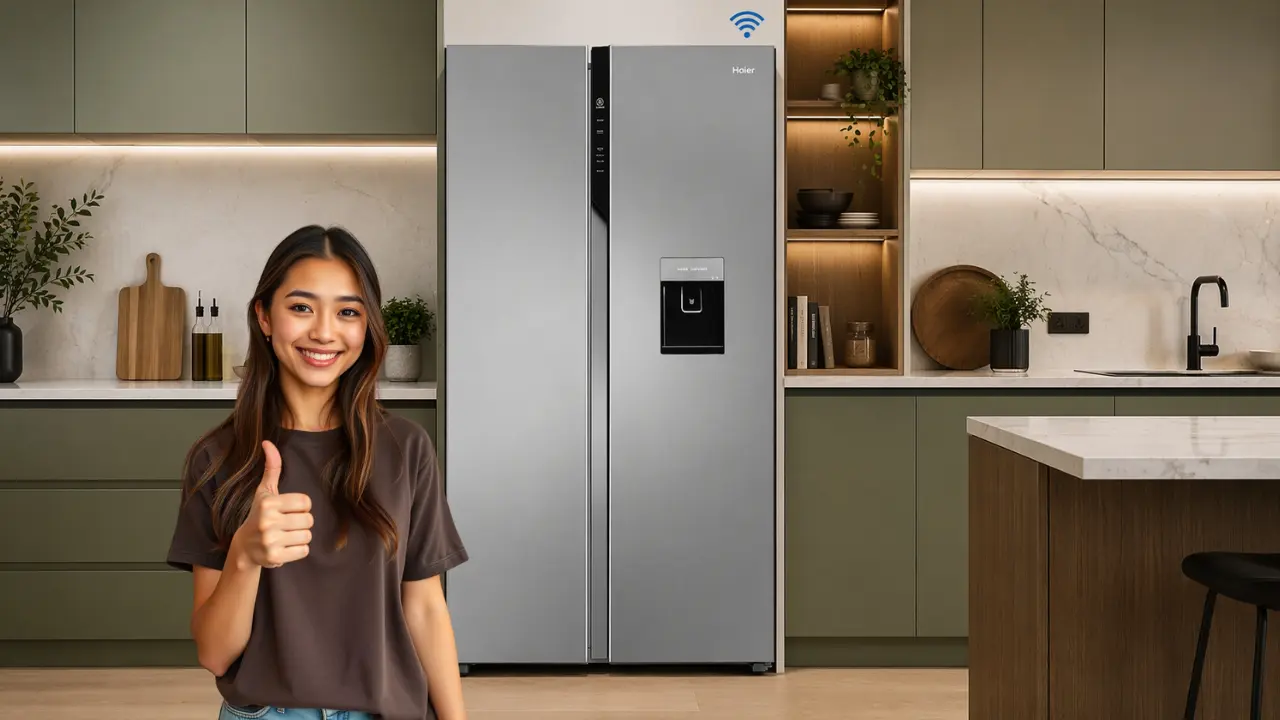

A WiFi enabled Haier water dispenser gives you instant access to safe water, remote control through your phone, and better energy efficiency, all while adapting to the rhythm of Indian homes.
Whether it is built into a 2 door or 3 door refrigerator, it turns water from a task into a seamless experience.
Why does something as simple as water still slow us down?
Picture a familiar evening.
You walk in after a long day.
Someone asks for cold water.
The fridge is full. The kitchen is busy.
Water exists.
But it is not ready.
That is the difference.
Availability solves access. Smart systems solve timing.
What changes when water becomes “smart”?
Let’s step back.
In traditional setups, water is handled in steps:
- Store it
- Cool it
- Refill it
Each step takes effort.
Now look at how modern appliances behave.
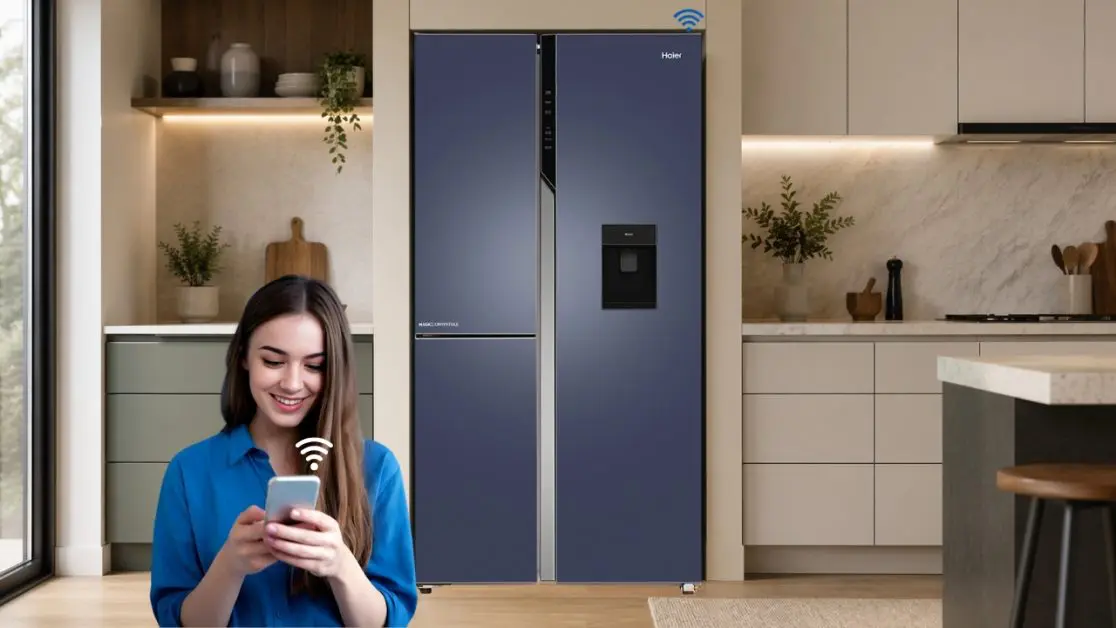
The Haier 592L Graphite Black 3 Door Smart Convertible Refrigerator (HRT-683WGKU1) connects to WiFi, tracks usage, and enables remote control.
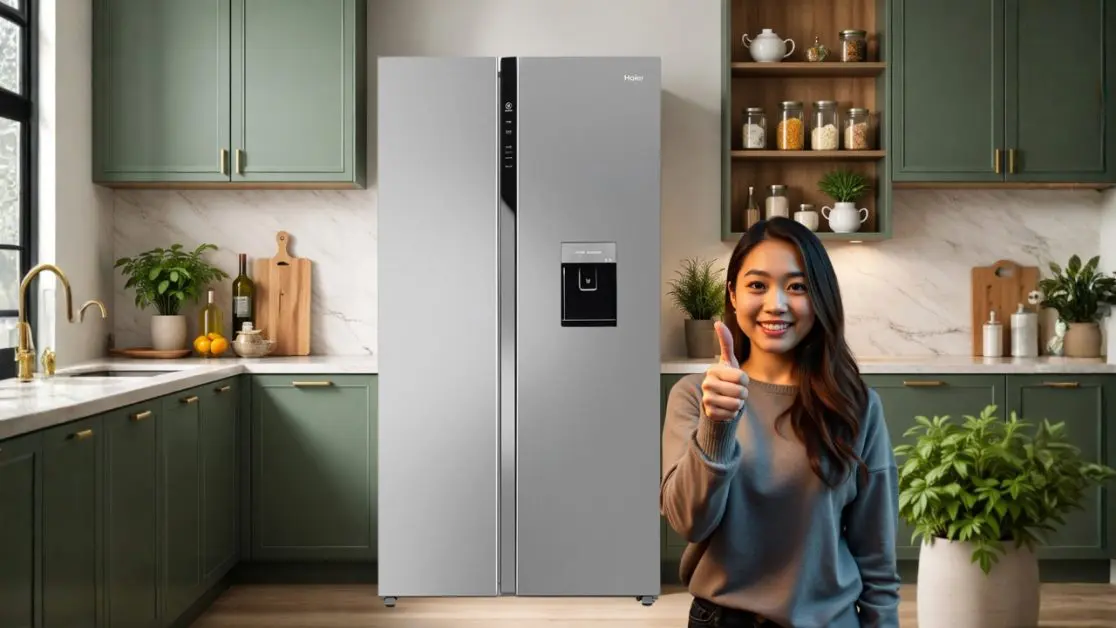
The Haier 596L Regal Steel 2 Door Smart Convertible SBS Refrigerator (HRS-682WRSU1) does the same, while also offering a built-in water dispenser and smart connectivity.
Different formats. Same philosophy.
Control replaces effort.
Where does a WiFi enabled water dispenser fit in?
It removes the middle steps
A built-in water dispenser lets you:
- Access instant cold water directly
- Reduce the need to open the fridge repeatedly
- Maintain better hygiene with enclosed storage
This is not feature stacking.
It is system design.
Top Reasons to Buy a WiFi Enabled Haier Water Dispenser
1. Cold water is ready before you are
Preparation beats reaction
You leave the office. Open your phone.
Set water to chill.
By the time you reach home, it is ready.
No waiting. No switching.
What powers this
- WiFi connectivity
- Remote access via smartphone
- Pre-set temperature modes
What you gain
- Saves 5 to 10 minutes daily
- Removes repetitive manual actions
- Builds consistency into routines
Convenience is not speed. It is anticipation.
2. One system, multiple preferences
Indian households rarely agree on one temperature
- Cold water for refreshment
- Normal water for daily use
Three clear choices emerge
1. Basic dispenser
- Single function
- Low cost
- Manual effort
2. Cold dispenser
- Dual temperature
- Moderate convenience
- Limited control
3. WiFi enabled smart dispenser
- Multi-temperature control
- Remote access
- Automated scheduling
Cost vs value
| Option | Cost | Convenience | Adaptability |
| Basic | Low | Low | Low |
| Cold | Medium | Medium | Medium |
| Smart WiFi | Higher | High | High |
The more diverse your home, the more valuable adaptability becomes.
3. Hygiene becomes automatic, not manual
Clean water depends on systems, not reminders
We assume filtered water is safe.
But storage and handling matter just as much.
What smart dispensers change
- Cleaning alerts
- Water quality indicators
- Reduced exposure to external contamination
Why this matters
- WHO highlights storage hygiene as a key factor in water safety
- Smart monitoring reduces human oversight errors
Safety improves when systems take over routine checks.
4. Energy efficiency without effort
Traditional appliances run constantly
They heat or cool water regardless of usage.
Smart dispensers behave differently
- Operate based on usage patterns
- Reduce idle energy consumption
The numbers
- Smart appliance usage can reduce energy waste by up to 30 percent
- Scheduled cycles prevent unnecessary power consumption
The outcome
Lower bills. Same comfort.
The best savings are the ones you do not have to think about.
5. Works seamlessly across 2 door and 3 door setups
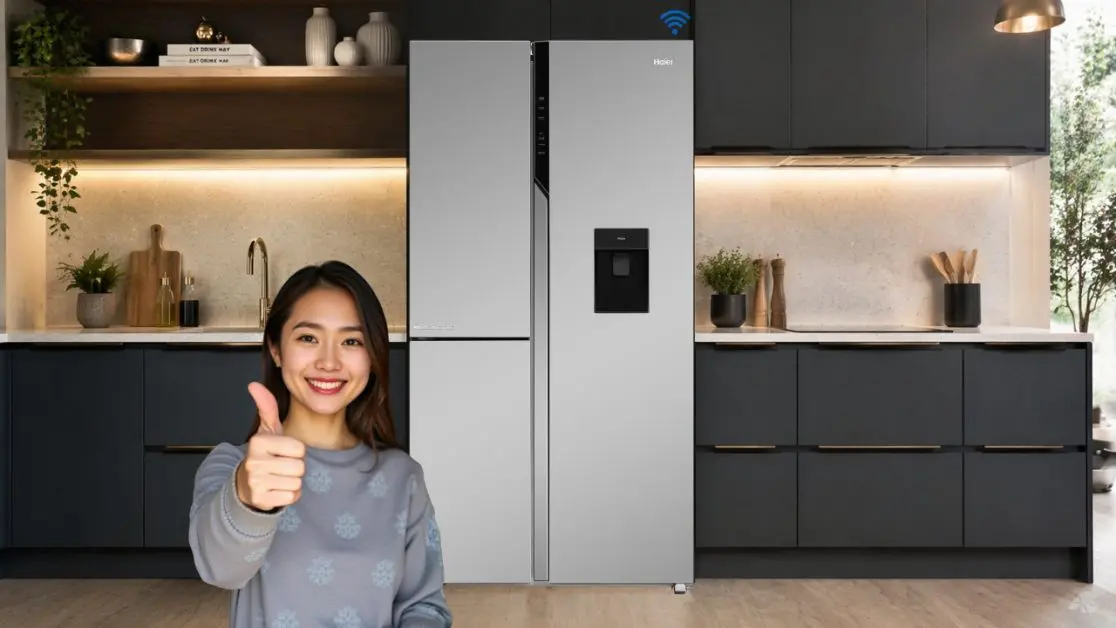
Not all homes are built the same
Some prefer compact setups.
Others need larger storage systems.
Two practical options
1. 2 Door Smart Refrigerators with Water Dispenser
- Ideal for compact homes and nuclear families
- Example: Haier 596L 2 Door Smart Convertible SBS
- Built-in dispenser with WiFi connectivity
- Lower footprint, high functionality
2. 3 Door Smart Refrigerators with Water Dispenser
- Ideal for larger families
- Example: Haier 592L 3 Door Smart Convertible Refrigerator
- Advanced smart food management and connectivity
- More storage flexibility
The insight
The format changes.
The system remains the same.
Smart water access adapts to your home, not the other way around.
6. Reduces invisible daily friction
The real problem is repetition
- Waiting for water to cool
- Forgetting settings
- Refilling again and again
Each task feels small.
But it repeats daily.
What that adds up to
- 10 minutes per day
- 300 minutes per month
- 5 hours lost to water management
The system truth
Time is rarely lost in big decisions. It leaks through small habits.
7. Built for Indian usage patterns
Indian homes use water differently
- High consumption frequency
- Frequent temperature changes
- Multiple users throughout the day
What Haier designs for
- Voltage fluctuation tolerance
- High usage durability
- Multi-user convenience
Just like stabilizer-free operation and smart connectivity in refrigerators are built for Indian conditions, smart water systems follow the same thinking.
Good technology adapts to local reality.
8. A gateway to a smarter home
One smart appliance changes expectations
Once water becomes controllable:
- AC starts feeling outdated if not smart
- Refrigerators feel incomplete without connectivity
- Appliances begin to feel like systems
The shift
From individual devices
To connected ecosystems
Homes are no longer collections of appliances. They are networks of decisions.
So, should you buy a WiFi enabled water dispenser?
It comes down to one question
What do you value more?
Option one
Keep things simple. Manual control. Lower upfront cost.
Option two
Upgrade convenience. Faster access. Limited automation.
Option three
Invest in control. Predictive usage. Seamless integration.
The real decision
Not about water.
But about how much friction you are willing to carry every day.
The final takeaway
A WiFi enabled Haier water dispenser does not try to impress you.
It quietly removes effort.
And when effort disappears, something else takes its place.
Ease.
Flow.
Consistency.
That is what modern living really looks like.
Frequently Asked Questions
Is the higher price of a smart dispenser actually worth it for me?
It depends on how much you value time and convenience. The savings come from reduced daily effort, energy efficiency, and consistency, not just features.
I hate overcomplicating my home. Will this make things more complex?
Surprisingly, no. Smart systems simplify usage by automating decisions. Once set, you interact less, not more.
I already have a fridge and a water filter. Do I actually need a WiFi water dispenser?
If your current setup feels “fine,” you may not need it. But if you’re repeatedly waiting, refilling, or adjusting temperatures, a smart dispenser removes those small daily frictions. It’s less about necessity and more about reducing effort over time.
I already drink filtered water. Why should I worry about storage hygiene?
Filtration is only half the story. Storage and handling introduce contamination risks. Smart dispensers reduce exposure and add alerts, closing that gap.
I forget to clean my water storage regularly. Will this help?
Yes. Smart systems send reminders and track usage, turning hygiene into an automated habit rather than a manual one.
I’m worried about bacteria buildup in dispensers. Are smart ones safer?
They’re designed to minimize exposure through enclosed systems and monitoring indicators, reducing human error.
What does “smart water” actually mean in real life?
It means fewer steps, no manual cooling, fewer refills, remote control, and automated monitoring.
I have family members who prefer different water temperatures. Can this handle that?
Yes. Smart dispensers allow multi-temperature settings and scheduling, adapting to diverse preferences.
If I start using smart appliances, will it change how I see my home?
Likely yes. Once one appliance becomes predictive, others start feeling outdated. It shifts your mindset from devices to systems.
Does this really reduce energy usage or is that just marketing?
Smart systems operate based on usage patterns, potentially reducing waste by up to 30%.