


Most winter plumbing issues in Indian homes come from one root mistake: choosing a water heater that does not match your building’s water pressure, your family’s usage pattern, or your home’s plumbing design.
Wrong choices create stress on pipes, taps, valves, and even the water heater itself. The right choice prevents leaks, pressure build-up, backflow, slow heating, and repeated breakdowns.
Winter does not break plumbing. Wrong decisions do.
Why winter exposes the cracks in your plumbing decisions

Every season has a signature challenge.
Summer tests your fridge. Monsoon tests your drains. Winter tests your water heater.
And not gently.
A cold morning in Delhi or Jaipur is unforgiving. The tap runs colder. The shower takes longer. Pipes contract. Pressure builds. If your water heater is mismatched to your home, this is the moment things start going wrong.
Think of it like choosing a small coffee mug for a long road trip. It works for the first few minutes, then becomes a problem you can’t ignore.
Plumbing works the same way. A water heater chosen casually in October can create a long list of silent problems by December.
The invisible pattern behind most winter plumbing issues
Here is the simple truth most people miss.
Plumbing systems fail when devices behave differently than the system expected.
Too much pressure. Too much heat. Too little capacity. Too much backflow. Too much bacteria. Too much reheating.
The pattern is consistent. And the consequences are predictable.
Here are the problems that show up every winter.
1. High pressure meets low resistance
The most common winter plumbing issue
Most modern Indian homes, especially in cities like Gurgaon, Bengaluru, and Mumbai, use high-rise plumbing systems.
These systems send water down with significant pressure. If your water heater is not built for high pressure, you invite leaks, joint damage, and constant dripping from the safety valve.
Why it happens
Cold water entering the heater expands as it heats. If the heater is not rated for high pressure, the tank strains. Older bathrooms show the first signs:
- Continuous dripping
- Damp patches
- Sudden valve failures
- Reduced hot water flow
The system-level solution
Choose a water heater with an 8 bar pressure rating. It is designed for high-rise buildings and prevents unnecessary stress on pipes and the tank.
The Haier Aqualad PRO series offers exactly this. Both the 15L and 25L models are built with 8 bar rated pressure for high-rise environments .
The implication is simple. When pressure stays stable, everything downstream stays calm.
2. Wrong capacity leads to overworking
Hot water timing tells a story
Peak winter habits change.
Showers run longer. Buckets fill slower. Kitchens need more hot water for washing. One small heater gets used by many people in short intervals.
If the heater is too small, it reheats continuously. The tank works harder than it should. Over time, this strain shows up in:
- Heating element burnout
- Pipe vibration
- Slower heating
- Increased electricity bills
The systematic way to choose capacity
One option is a 15L heater for small families.
The second option is a 25L heater for slightly larger homes or back-to-back usage cycles.
Both exist for a reason. Your usage pattern decides which one is right.
Haier’s Square Aqualad PRO series explicitly provides these two capacities for this reason, with 1kW, 2kW, and 3kW heating modes for different heating speeds and power efficiency needs .
The cost of wrong capacity is invisible until winter. Then it becomes daily friction.
3. Lack of protection creates electrical and thermal risks
A cold bathroom is already stressful. An unsafe heater makes it worse.
Electrical issues are more common in winter because bathrooms stay damp and ventilation stays low. If the heater does not have proper protection, even a minor leakage can become risky.
Where poor choices show their impact
- Electric shocks during switch-on
- Sudden power tripping
- Overheating
- Water tank failure
Features that protect the system
Haier’s water heaters use Shock Proof technology that converts the rated voltage to a safer level in case of leakage .
They also use Dual Thermal Proof technology that cuts off heating at 75°C and again at 95°C if the first fails .
Two layers. One purpose. Safety without compromise.
When the heater protects itself, it protects your plumbing too.
4. Bacterial growth that clogs the system
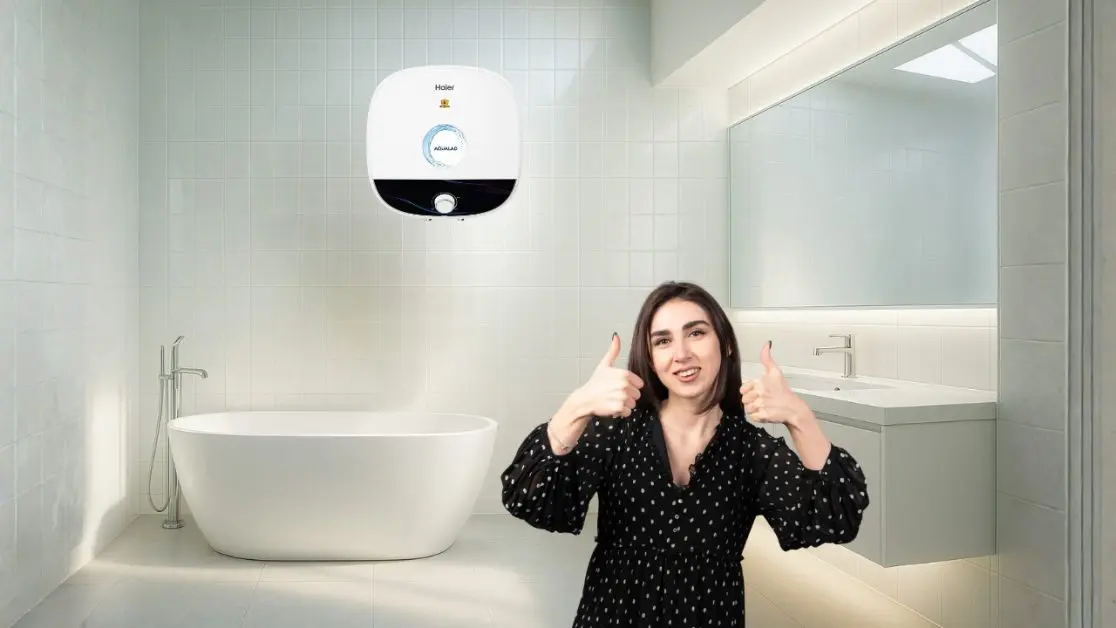
Cold weather slows water movement
When water stays still inside the tank, bacteria start accumulating. This seems like a health issue, but it is also a plumbing issue. Sediments and bacterial layers clog taps, showers, and valves.
The hidden winter connection
During winter, water heaters stay on for longer hours. Warm, stagnant water is the perfect home for bacterial buildup.
This leads to:
- Foul smell in water
- Reduced flow
- Sediment buildup inside pipes
How modern heaters fight this
The Haier water heaters include a Bacteria Proof System (BPS) that heats water to 80°C to deactivate bacterial growth .
The system is simple. The impact is huge. Clean water keeps pipes clean too.
5. Stagnant water increases corrosion and tank decay
The winter phenomenon nobody talks about
In most homes, people use extremely hot water in winter but low flow. Buckets replace showers. Half-filled tanks remain unused. This creates stagnant sections inside the heater.
Stagnation accelerates corrosion.
The solution is circulation
This is where U-Turn Flow and RSC Technology matter.
The RSC design in Haier heaters ensures consistent hot water flow and reduces stagnant pockets that corrode the tank over time .
Clean movement is the enemy of corrosion.
6. Rust enters taps due to poor tank material
One small part decides the entire system’s fate
If the inner tank material is not robust, rust forms. Rust travels. It enters taps, pipelines, and valves.
Once that happens, even the best plumber struggles to fully reverse the damage.
What protects real homes
Titanium-coated tanks. PUF insulation. Magnesium anode rods.
All three exist inside Haier’s Square Aqualad PRO units. The magnesium rod specifically prevents rust formation by acting as a sacrificial layer, protecting the tank and reducing corrosion-related plumbing failures .
One strong material choice avoids years of repair calls.
7. Slow heating increases strain on pipes
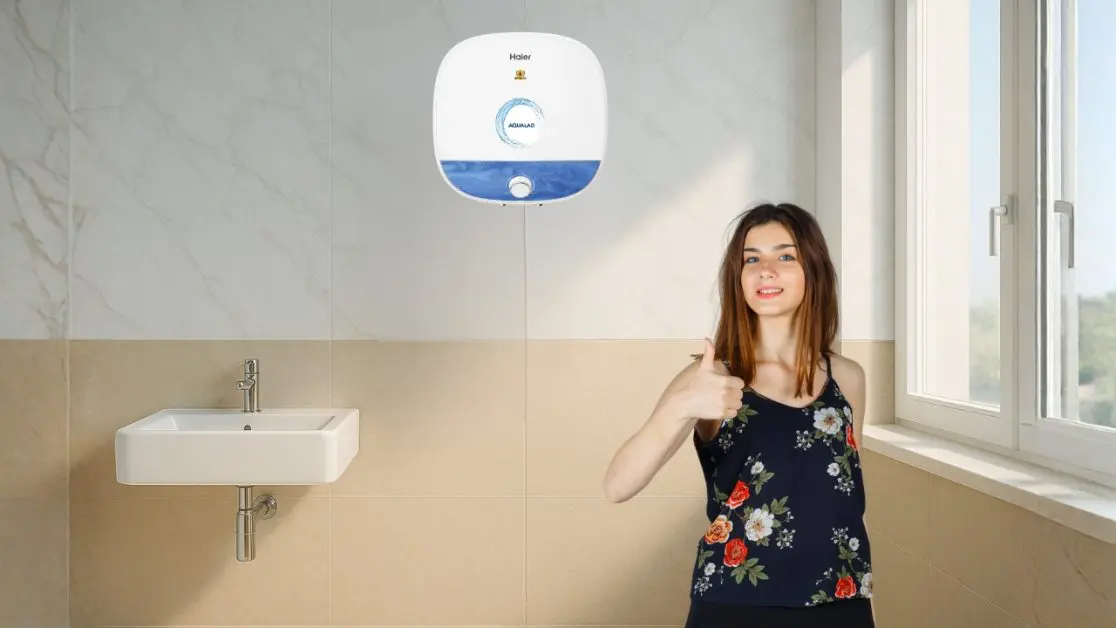
The physics of winter plumbing
Water takes longer to heat in winter. If your heater uses a low-capacity element, the heating delay creates cycles of uneven pressure inside the tank.
This unevenness reaches pipes. And joints. And taps.
How the right heater fixes it
A 2.2kW or 3kW heating element solves this problem by bringing water to temperature quickly and efficiently. Faster heating means fewer expansion cycles. Fewer cycles mean less stress.
Haier heaters use high-power heating elements to deliver faster heating and minimise reheating requirements .
Efficiency is not about speed. It is about stability.
8. Poor insulation leads to repeated expansion and contraction
Temperature swing is the silent destroyer of pipes
If the tank loses heat quickly, the heater switches on repeatedly. Every cycle expands and contracts the tank. Every expansion sends pressure through the pipes.
What insulation should do
Good PUF insulation retains heat long enough to reduce reheating cycles.
Both Haier heaters use PUF or EPS insulation to maintain water temperature, reducing electricity consumption and wear on plumbing components .
Stable temperature equals stable plumbing.
A quick comparison of common winter plumbing issues and the heater mistake behind them
| Winter Issue | Root Cause | Preventive Feature |
| Valve dripping | Low pressure rating | 8 bar pressure design |
| Rust in taps | Weak tank material | Titanium tank + magnesium rod |
| Slow heating | Undersized element | 2.2kW or 3kW heater |
| Clogged flow | Bacterial sediment | BPS mode at 80°C |
| Leaks at joints | Wrong capacity | 15L or 25L correct sizing |
| Tank noise | Stagnant water | RSC flow technology |
Patterns do not lie.
What this means for real Indian homes
Every home has a different rhythm.
A family in Gurgaon living on the 18th floor deals with pressure.
A couple in Pune deals with long winter showers.
A working professional in Bengaluru deals with early morning heating.
A joint family in Lucknow deals with back-to-back usage.
The right water heater is not about hot water. It is about matching your home’s rhythm.
So what should we do next?
Winter is only a problem when your water heater is a mismatch.
Choosing the right one prevents almost every plumbing issue you face in December. Safety stays intact. Heating stays consistent. Pressure stays controlled. Pipes stay healthy.
When a heater is built with circulation, protection, insulation, and high-pressure engineering, it quietly transforms your winter. Haier’s Square Aqualad PRO models include exactly these capabilities, not as selling points, but as solutions to real problems happening in real bathrooms.
The broader insight is simple.
Plumbing issues are not winter problems. They are design problems. And design is a choice.
Choose well now, and your home stays calm for years.