
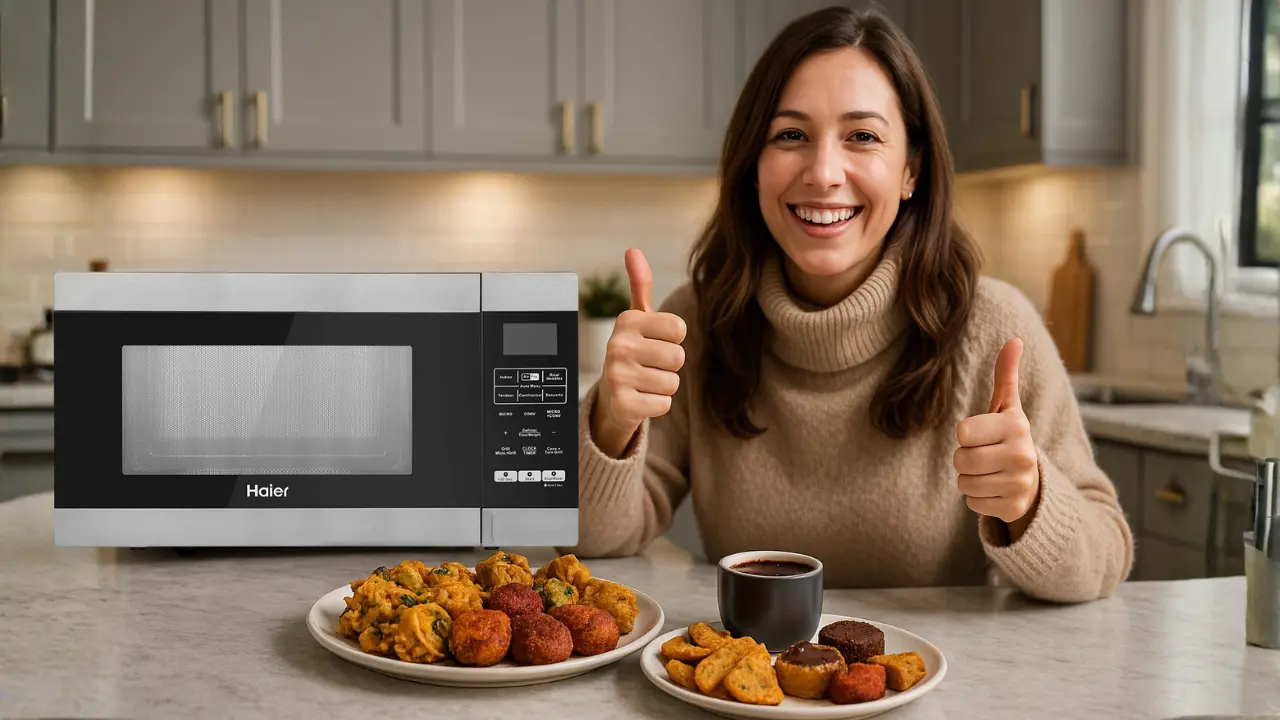

Yes, winter power bills rise in Indian homes. Heating water, reheating food, longer cooking hours, and darker evenings quietly add to electricity use.
A microwave helps control this by doing one simple thing better than most appliances. It delivers heat faster, in shorter bursts, with far less wasted energy.
That difference shows up on your bill.
Why does winter quietly become the most expensive season indoors?
Winter does not look power hungry at first glance.
There is no AC running all day. No fans spinning endlessly. No obvious red flags.
Yet the bill climbs.
Why?
Because winter changes behaviour, not just temperature.
Cooking stretches longer. Reheating becomes frequent. Hot water runs more often. Kitchens stay active through the day instead of just mornings and evenings.
The system shifts.
Power usage becomes distributed. Small spikes. Repeated cycles. Multiple appliances working together.
That is how winter bills grow. Not through one big culprit, but through many small habits layered together.
The invisible cost hiding inside everyday cooking
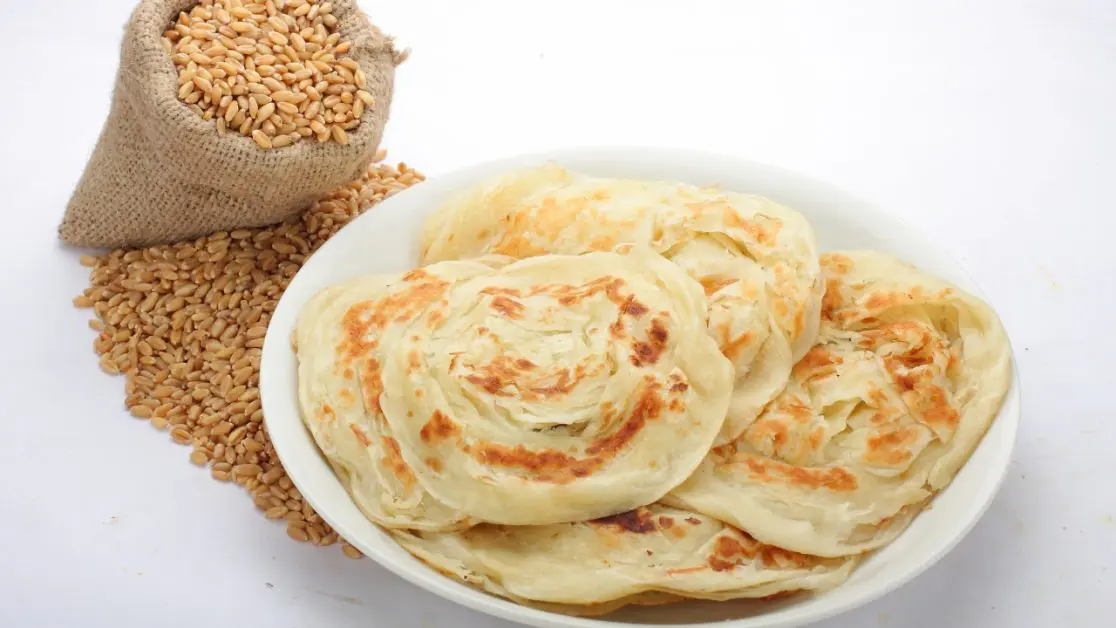
Think about a typical winter evening.
Leftover dal from lunch.
Cold rotis from the fridge.
Milk that needs reheating.
Frozen parathas waiting in the freezer.
Now think about how most homes handle this.
- Stove on
- Pan heats up
- Oil warms
- Food reheats slowly
- Flame stays on longer than expected
This feels normal. Familiar. Traditional.
But it is also inefficient.
A gas stove loses heat to air. An induction takes time to stabilize. An OTG needs preheating.
Most of the energy never reaches the food.
Microwaves flip this equation.
They heat the food itself, not the air around it.
That single difference changes the energy math completely.
Microwaves are not fast. They are efficient
Speed is the headline benefit everyone talks about.
Efficiency is the real one.
A microwave uses short, high impact energy cycles. Seconds, not minutes. Targeted heat, not ambient warmth.
This matters more in winter because reheating dominates cooking.
You are not cooking fresh sabzi three times a day.
You are warming, reviving, finishing.
Reheating is where microwaves shine.
And reheating is where winter steals power quietly.
One kitchen. Three choices. Very different bills
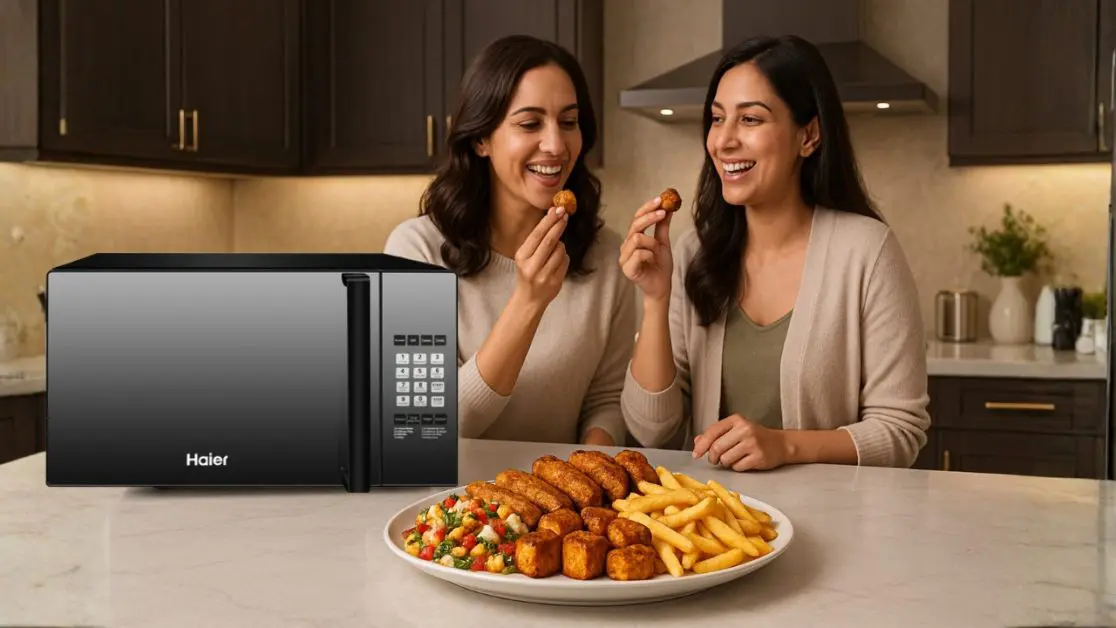
Let us break this down simply.
Option one: Traditional stove reheating
- Time taken: 8 to 12 minutes
- Gas or power used: Continuous
- Heat loss: High
- Attention needed: Constant
Good for full cooking. Bad for quick meals.
Option two: OTG or induction
- Time taken: 6 to 10 minutes
- Power draw: High upfront
- Preheating needed: Yes
- Overkill for small portions
Useful occasionally. Costly if used daily.
Option three: Microwave reheating
- Time taken: 1 to 3 minutes
- Power draw: Short bursts
- Heat loss: Minimal
- Attention needed: Almost none
Best fit for winter habits.
Efficiency is not about replacing everything.
It is about choosing the right tool for the right moment.
Why winter meals suit microwaves better than summer ones
Summer cooking is about freshness.
Winter cooking is about comfort.
That means:
- Batch cooking
- Leftovers
- Frozen food
- Hot beverages
- Frequent reheating
Microwaves are designed exactly for this rhythm.
They work best when food is already prepared and just needs to be brought back to life.
Winter kitchens do this all day long.
The compounding effect no one talks about
One reheating cycle feels insignificant.
Two minutes. One bowl.
But winter repeats this pattern.
Morning tea.
Lunch leftovers.
Evening snacks.
Dinner warm ups.
Late night milk.
That is 6 to 8 heating cycles daily.
Multiply that by 30 days.
Now the system reveals itself.
A microwave saves small amounts repeatedly.
And repeated savings compound faster than big, occasional ones.
This is how energy efficiency actually works in real homes.
Microwaves reduce more than power usage

Power savings are measurable.
Other benefits are quieter, but just as real.
Less kitchen heat buildup
In winter, kitchens stay closed. Windows shut. Exhausts run less.
Stoves raise ambient temperature unnecessarily. Microwaves do not.
Shorter appliance run time
Less wear. Fewer long cycles. Lower stress on wiring.
Better food consistency
No burnt edges. No over reheating. No repeated cycles.
Efficiency shows up everywhere when systems are designed well.
Where modern microwaves quietly improve the equation
Older microwaves had one job. Heat food.
Modern ones do more without using more power.
Take a contemporary convection microwave.
Features like combination cooking reduce total cooking time by using multiple modes efficiently. Auto cook menus remove guesswork and prevent overuse.
Deodorizers keep the cavity clean without extra cleaning cycles.
These things sound small.
They are not.
Every reduced minute, every avoided repeat cycle, every correct setting contributes to energy discipline over a season.
Haier’s 25L convection microwave, for example, is built around this thinking.
It is designed for Indian cooking habits, not generic use cases, and includes features like bread-focused modes, oil free cooking options, and combination functions that reduce overall cooking time .
The product matters less than the philosophy behind it.
Designing for how people actually cook.
Microwaves fit modern Indian homes better than we admit
Households have changed.
- Smaller kitchens
- Faster schedules
- Mixed cooking styles
- Fewer people cooking full meals daily
Microwaves suit this reality.
They do not demand attention. They do not need preheating. They do not scale energy use unnecessarily.
They just do the job and step back.
That is what good systems do.
The winter energy rule most homes miss
Energy savings do not come from extreme measures.
They come from alignment.
Aligning appliance use with actual needs.
Winter needs:
- Warm food
- Fast reheating
- Minimal kitchen chaos
- Predictable power use
Microwaves match this need set almost perfectly.
That is not marketing. That is pattern recognition.
Why this matters beyond the bill
Lower winter power usage does not just reduce cost.
It reduces friction.
Less time in the kitchen.
Less planning fatigue.
Less worry about switching things off.
Less stress around bills.
Appliances should reduce cognitive load.
The microwave does this quietly.
The bigger system at play
Every home is a network of habits.
Appliances either fight those habits or flow with them.
Winter changes the flow.
Homes that adapt early save more than money. They save energy in the human sense too.
Comfort without complexity. Warmth without waste.
That is the real upgrade.
What to remember when winter sets in
- Winter power bills rise because habits change
- Reheating dominates energy use
- Microwaves handle reheating more efficiently than most appliances
- Small savings repeated daily beat big savings used rarely
- The right appliance choice simplifies life, not just bills
A simple truth holds.
The most efficient appliance is the one that fits your life, not the one with the loudest claims.
Microwaves fit winter life better than we give them credit for.
And once you see the system clearly, the savings follow naturally.
Frequently Asked Questions
Are microwaves actually energy efficient or just faster?
They are energy efficient because they are faster. Short, targeted heating cycles reduce wasted energy, which is especially useful when reheating dominates cooking.
How much difference can a microwave really make to my winter bill?
A single reheating saves a small amount of energy, but winter involves 6–8 reheating cycles daily. These small savings compound significantly over a month.
Does using a microwave reduce kitchen heat buildup in winter?
Yes. Unlike stoves or OTGs, microwaves don’t heat the surrounding air, keeping kitchens more comfortable when windows are closed.
Do modern microwaves help save more power than older ones?
Yes. Features like auto-cook menus, combination cooking, and precise settings prevent overuse, reduce repeat cycles, and shorten total cooking time.
Can microwaves reduce stress around winter cooking and bills?
Yes. Faster reheating, less monitoring, predictable power use, and fewer appliances running together reduce both mental load and energy waste.
Should I replace all cooking with a microwave to save electricity?
No. Microwaves are best for reheating and finishing food. Full cooking can still be done on traditional appliances. Efficiency comes from using the right tool at the right time.