

Winter vegetables stay fresher, crunchier, and usable for far longer when you store them according to precise temperature zones instead of treating the fridge as one cold box.
Different vegetables need different conditions. When temperature, humidity, and airflow line up, spoilage slows down naturally and food waste drops without effort.
Now let us unpack why this matters in an Indian winter kitchen.
The quiet winter frustration inside most homes
It is peak winter sabzi season.
You come back from the market with bags full of carrots, methi, beans, cauliflower, peas, and cabbage. Prices are good. The quality is excellent. You feel sorted for the week.
Then reality sets in.
Coriander wilts by day three.
Beans lose their snap.
Cauliflower starts smelling strongly.
Something gets pushed to the back and forgotten.
This is not carelessness.
It is a system problem.
Most fridges are used as storage boxes, not as temperature systems.
Winter vegetables are tough but not careless
Yes, winter vegetables last longer than summer produce. But they are still living organisms.
They breathe.
They release moisture.
They react to gases in their environment.
Food science studies used in cold supply chains show that even a small mismatch of 2 to 3 degrees can reduce vegetable shelf life by up to 40 percent. That difference shows up as limp leaves, soggy textures, and faster decay.
Cold alone is not the answer.
Controlled cold is.
Why one temperature does not work for everything
Think about winter clothing.
You do not wear the same jacket for a Delhi morning, an evening walk, and a hill station trip. You layer.
Vegetables need layering too.
Some want an intense cold.
Some want gentle cooling.
Some want moisture.
Some want dry air.
A fridge already has these layers. The trick is using them intentionally.
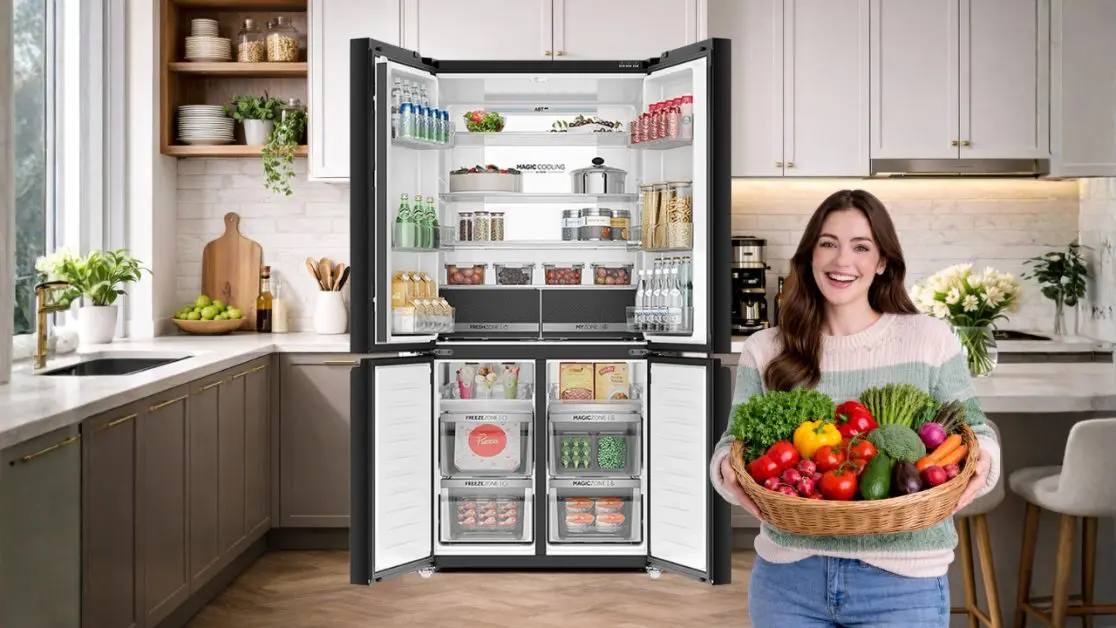
Understanding fridge temperature zones in plain language
Most refrigerators operate between 2°C and 8°C. But the inside is not uniform.
Here is how zones usually behave.
| Zone | Approx Temperature | Best Use |
| Bottom drawers | 2 to 4°C | Leafy greens, herbs |
| Middle shelves | 4 to 5°C | Carrots, beans, peas |
| Upper shelves | 6 to 8°C | Cooked food |
| Door racks | 8 to 10°C | Sauces, pickles |
Cold air settles lower. Warm air stays higher. Door areas fluctuate the most.
Once you understand this, vegetable storage stops being guesswork.
Leafy greens fail because of dehydration, not age
Methi, palak, lettuce, coriander.
Most people wash them, leave them wet, and seal them in plastic.
That combination suffocates leaves and accelerates rot.
A better system looks like this:
- Wash and dry thoroughly.
- Wrap loosely in a paper towel.
- Store in the coldest vegetable drawer.
Humidity control matters here. Advanced refrigerators now include dedicated vegetable zones that maintain moisture without freezing the leaves. This balance can extend leafy green freshness from four days to nearly ten.
Root vegetables want stability, not extremes
Carrots, radish, beetroot, turnips.
These vegetables dislike temperature swings more than cold itself.
Three common storage options exist.
1. Loose on open shelves.
2. Sealed in airtight bags.
3. Stored in ventilated mid-zone drawers.
The third option works best.
A ventilated zone around 4 to 5°C keeps roots firm without drying them out or causing surface rot.
Unwashed storage helps too. Soil remnants protect natural skins.
Cruciferous vegetables need separation
Cauliflower, cabbage, broccoli are notorious for fridge odour.
They release sulfur compounds as they age. That smell spreads and affects nearby produce.
The solution is simple.
- Wrap them lightly.
- Keep them in a separate mid-zone.
- Avoid storing near leafy greens.
Some modern refrigerators include deodorising and antibacterial technologies that neutralise odour-causing bacteria inside the fridge cavity.
This keeps flavours intact and prevents smell transfer between vegetables stored in different sections .
Peas and beans lose sweetness fastest
Green peas and French beans start converting sugar to starch soon after harvest.
Cold slows this process.
Store them:
- In breathable bags.
- In the coldest vegetable zone.
- Away from door shelves.
They stay sweet and firm longer, especially for Indian-style stir fries and sabzi cooking.
Potatoes and onions belong outside the fridge
This is an old rule that still holds.
Cold turns potato starch into sugar, altering taste and texture. Onions release gases that spoil nearby produce.
Best practice:
- Potatoes in a dark, cool cupboard.
- Onions in a dry basket with airflow.
- Never stored together.
Good storage is about knowing what not to refrigerate.
Why convertible fridge zones matter in winter
Winter changes buying behaviour.
We buy more vegetables. We cook more at home. Fridge usage increases.
Convertible fridge zones allow you to adapt storage based on season.
You can:
1. Convert freezer space into fridge space.
2. Create a dedicated vegetable-heavy zone.
3. Reduce overcrowding on shelves.
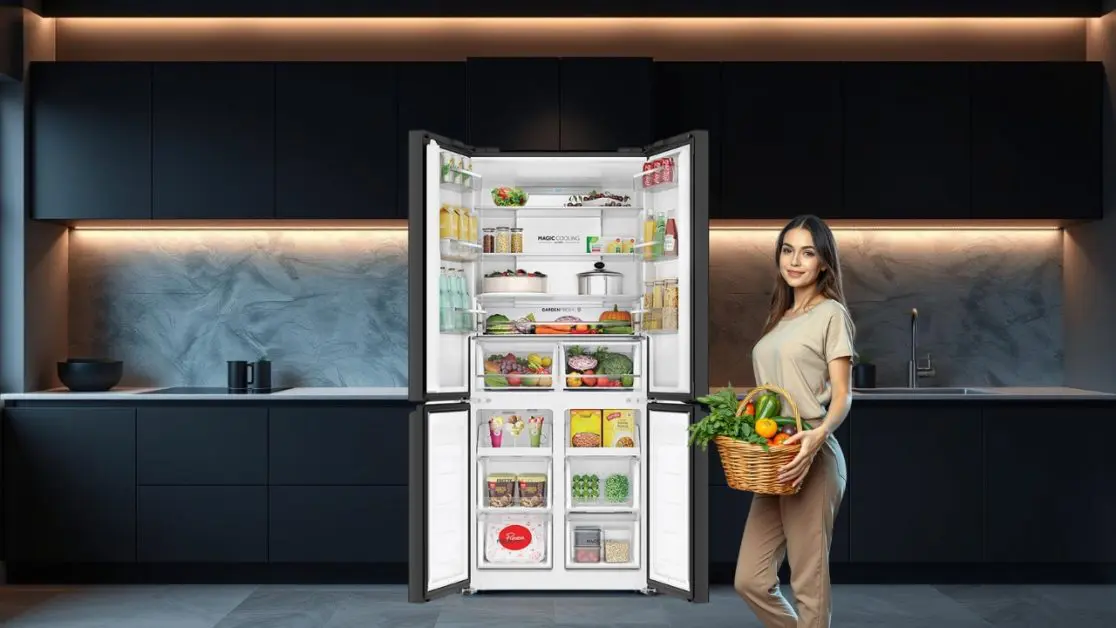
Some four-door refrigerators allow total space to be used as a fridge when needed, which is especially useful during winter stocking periods .
Flexibility reduces stacking.
Stacking causes bruising.
Bruising causes waste.
Temperature stability matters more than extra cold
Another overlooked factor is fluctuation.
Every door opening causes a temperature spike. In busy Indian kitchens, this happens often.
Inverter-based cooling systems adjust gradually instead of switching on and off aggressively. This keeps internal temperatures stable and protects vegetables from repeated shock.
Stable environments extend shelf life quietly and consistently.
Odour control is also food protection
The smell is not just unpleasant. It affects taste and freshness.
Vegetables absorb surrounding odours easily. When bacteria multiply, spoilage accelerates.
Advanced antibacterial technologies inside refrigerators help remove up to 99 percent of bacteria and viruses from circulating air, keeping stored vegetables in a cleaner environment .
Clean air equals longer freshness.
Smart food management reduces waste invisibly
Another modern advantage is digital food tracking.
Some smart refrigerators allow users to track stored items, plan usage, and create shopping lists through connected apps. This reduces forgotten produce and repeat buying, especially in households juggling work and home routines .
Less forgetting means less throwing away.
A simple winter vegetable zoning checklist
Use this weekly.
- Leafy greens dry, wrapped, bottom drawer.
- Roots unwashed, mid-zone.
- Cauliflower and cabbage separated.
- Beans and peas are cold and breathable.
- Avoid door storage for vegetables.
- Do not overcrowd shelves.
Simple rules. Big impact.
What this teaches us beyond vegetables
This is not really about fridges.
It is about systems that respect differences.
When environments match needs, things last longer. Food. Appliances. Even habits.
The best appliances do not demand attention. They quietly adapt to how real households function across seasons.
And winter cooking becomes calmer when vegetables stay fresh, meals stay planned, and waste feels unnecessary.
Precision is not complexity. It is care, applied thoughtfully.
That is what makes everyday life feel a little more sorted.