


What happens when a storm hits your week?
Not a literal storm, though sometimes that too.
I mean the kind of week when the office deadline collides with your child’s school project, the maid takes leave, and the weather decides to pour nonstop.
Clothes pile up. Energy drains out. And in moments like these, even the smallest convenience feels like a lifeline.
Why laundry feels heavier during stormy weeks

It’s not the clothes themselves. It’s the mental load.
Every working woman knows the cycle:
- The constant calculation of “Do I have something ironed for tomorrow’s meeting?”
- The dread of wet clothes that refuse to dry because of humid monsoon air
- The guilt of pushing laundry to the weekend, only to spend half your Sunday folding
When the week itself feels stormy, laundry becomes more than a chore it becomes another decision on an already overflowing list.
The relief of a one-touch cycle
Now imagine this: instead of scrolling through endless buttons and wash modes, you just press one touch.
That’s it. No second-guessing fabric settings, no worrying about stains, no standing there wondering if delicate tops will survive.
The machine reads the load, balances the cycle, and finishes the job while you move on with your day.
It’s not just technology. It’s peace of mind.
Why working women swear by it
There’s a reason this feature is talked about in hushed, grateful tones in WhatsApp groups and office breakrooms.
- Time saved is energy regained. When you don’t have to babysit laundry, you can use that half hour to breathe or better yet, to nap.
- Storms don’t matter. Rain outside, meetings inside clothes still come out fresh, hygienic, and ready.
- No learning curve. Even if your spouse, kids, or parents step in, one button keeps it foolproof.
It’s automation that feels like delegation.
A bigger system at play
Here’s the real pattern: the modern Indian household is quietly shifting.
Work and home no longer live in separate lanes. They overlap constantly. The pressure isn’t just to multitask, it’s to seamlessly switch roles. Professional at 9. Parent at 9:15. Host at 9:30.
In such a system, tools that think for you whether it’s a smart fridge that auto-adjusts cooling or a washing machine that calibrates cycles aren’t luxuries anymore. They’re survival tech.
Where Haier fits into this story
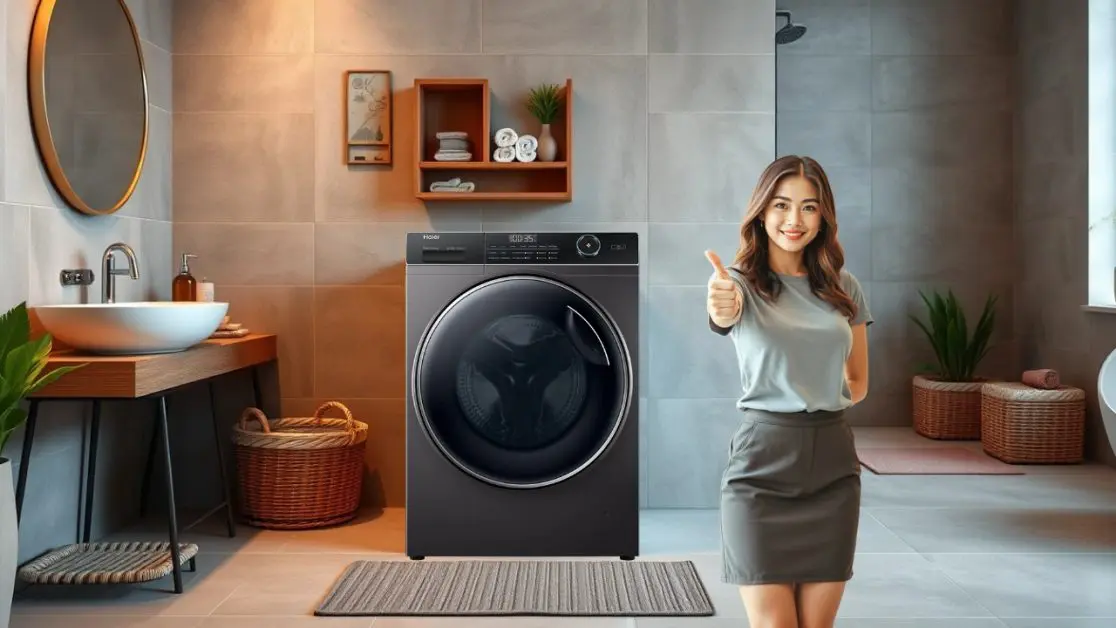
Haier’s fully automatic front-load washing machines carry exactly this kind of intelligence. The One-Touch AI cycle adjusts water, detergent, and spin speed on its own. Stormy week or sunny week, the result is consistent: fresh, ready-to-wear clothes without fuss.
Features like Refresh mode tackle humid monsoon odours, while Quick 15’ wash is a lifesaver when your white kurta decides to catch a coffee stain just before a video call.
It’s not about specs. It’s about how these specs disappear into the background so you don’t have to think about them.
Everyday examples that hit home
Think of three scenes:
- The 9 a.m. dash. You realise your kid’s uniform is dirty. One-touch saves the day.
- The late-night rescue. You forgot about laundry after a long Zoom call. The silent inverter motor keeps the wash running without waking the house.
- The monsoon mess. Towels stay musty in other machines. Here, the antibacterial wash refreshes them instantly.
Small details. Big relief.
What this teaches us about modern living

Stormy weeks aren’t going away. Work-life balance isn’t magically appearing. The real shift lies in systems that remove friction.
One button today.
One less decision tomorrow.
One lighter load, mentally and physically.
The wisdom is simple: when machines do the work, women keep their energy for what truly matters.
The broader implication
The conversation isn’t about washing machines. It’s about reclaiming time.
Every hour saved is an hour you can invest into your work, your family, or yourself. In a culture where women juggle storm after storm, that isn’t convenient. That’s empowerment.
Final thought
When the rain lashes outside and the calendar explodes inside, a one-touch cycle feels less like a feature and more like a quiet partner.
And that’s why working women love it.