
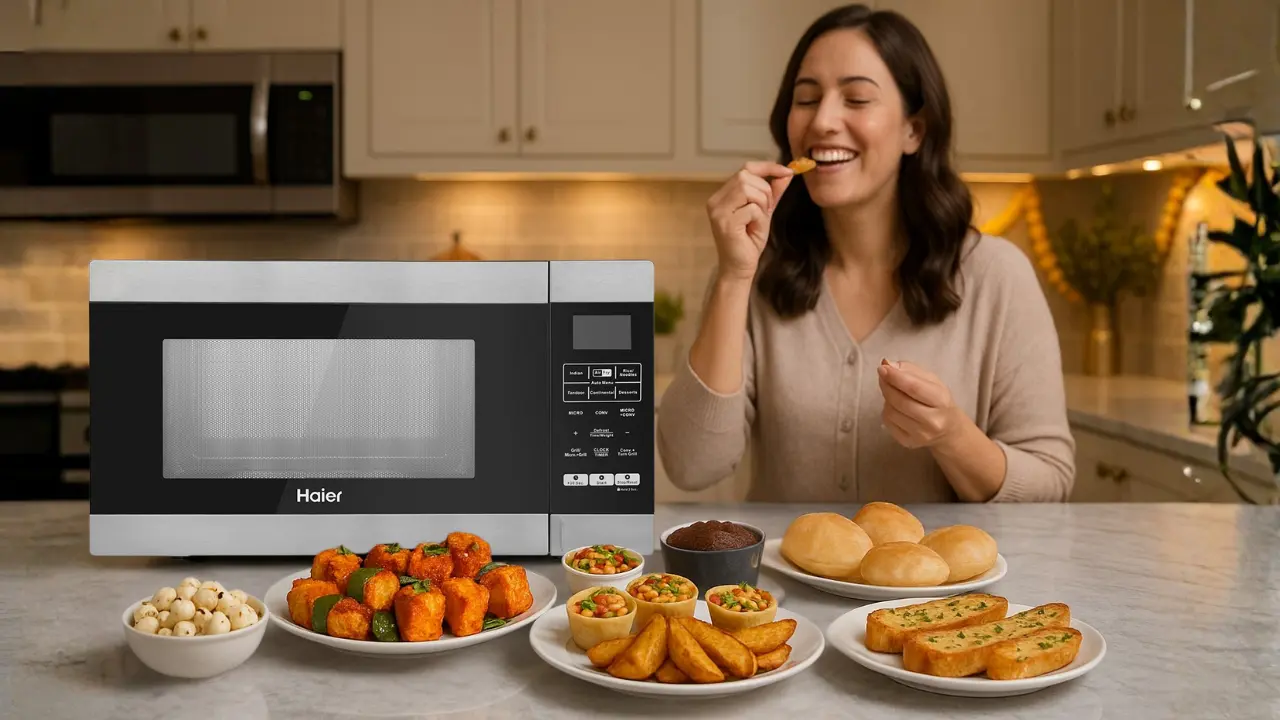

Most people use the same microwave settings all year.
That habit quietly fails in winter. Cold food, colder kitchens, and drier air change how heat behaves.
Unless power levels and modes are adjusted, winter meals turn uneven, dry, or rubbery even in a good microwave.
This is not a microwave problem.
It is a seasonal thinking problem.
Winter changes how heat moves inside food.
Think about a January night.
You come home late. The kitchen feels cold. The fridge is packed with leftovers from the weekend. You take out a bowl of rajma, put it into the microwave, press the same high-power setting you use all year, and wait.
Steam on the outside.
Cold in the middle.
This happens in homes across India every winter.
Microwaves heat by vibrating water molecules. In winter, food starts colder and loses heat faster the moment heating stops. Using summer settings ignores that reality.
Cold food needs patience, not aggression.
The biggest winter mistake is defaulting to high power
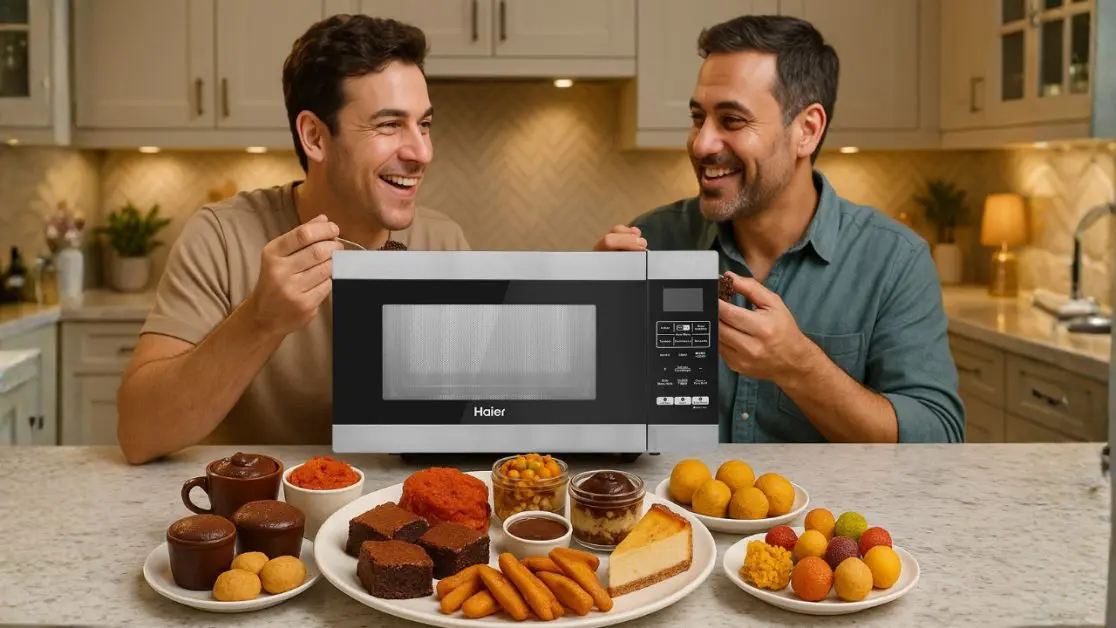
High power feels efficient.
In winter, it creates problems.
What actually goes wrong
- The surface heats too fast
- Moisture escapes before heat reaches the centre
- Starches tighten
- Proteins dry out
The result is food that looks hot but tastes tired.
This is why winter leftovers feel worse even when recipes stay the same.
Heat needs time to travel inward. High power rushes the process and breaks texture.
Power level matters more than time in winter
Most households adjust time.
Very few adjust power.
That is the real error.
A better winter rule
- Medium power for longer time beats high power for short bursts
Why it works
- Heat spreads evenly
- Steam stays trapped
- Food stays soft
This single change fixes most winter reheating complaints.
Why winter leftovers dry out faster
This has nothing to do with cooking skill.
It is physics.
Three winter forces working against you
- Lower room temperature
Food cools quickly once heating stops. - Drier air
Moisture escapes faster during reheating. - Cold plates and containers
They absorb heat before food does.
Together, they pull warmth away from what you actually want to eat.
The small habit that changes everything

Covering food.
Not sealing it tight.
Just covering it.
A microwave-safe lid or a damp cloth traps steam. Steam softens food and helps heat spread evenly. This matters more in winter than any other season.
It is a small step with a big payoff.
Not all foods need the same winter settings
Treating every dish the same is convenient.
It is also wrong.
One option is moist foods
Dal, curry, sabzi, rice.
- Medium power
- Longer duration
- Stir halfway
Cost: a little extra time
Benefit: even heating and better texture
The second option is breads
Roti, naan, paratha, garlic bread.
- Lower power
- Short intervals
- Always covered
Cost: patience
Benefit: no chewiness
The third option is dense foods
Paneer dishes, meat, layered leftovers.
- Start with defrost or low power
- Finish with normal reheating
Cost: two-step thinking
Benefit: hot centres without dry edges
Winter punishes shortcuts.
Why auto-cook menus matter more in cold months
Auto-cook menus are often dismissed as gimmicks.
They are not.
They work because they adjust power and time automatically instead of blasting food at full strength.
In winter, this matters.
Modern microwaves use programmed heating curves that slow down heat application and allow moisture to stay inside food. This reduces uneven heating and dryness.
For example, the Haier HIL2501CBSH 25L Convection Microwave Oven includes 305 auto cook menus designed around Indian dishes. These menus automatically balance power and time, which becomes especially useful when food starts colder in winter .
You do not need to think seasonally.
The microwave already does.
Combination modes are not complicated. They are practical
Many people avoid combination modes.
They sound technical.
They feel unnecessary.
In winter, they make sense.
Why combination heating works better
- Microwave mode heats the inside
- Convection evens out surface temperature
- Grill restores texture when needed
Used together, they prevent the classic winter problem of hot food with a dull, tired surface.
The Haier HIL2501CBSH 25L Convection Microwave Oven supports multiple combination functions that intelligently mix these modes, helping food heat evenly without repeated reheating cycles .
Winter reheating is also an energy question
Here is the surprising part.
Using slightly longer cycles at lower power often consumes less energy than reheating repeatedly at high power.
Why
- Fewer restarts
- Less moisture loss
- No second or third reheating
Winter rewards steady systems.
Not aggressive ones.
The bread problem every winter kitchen faces
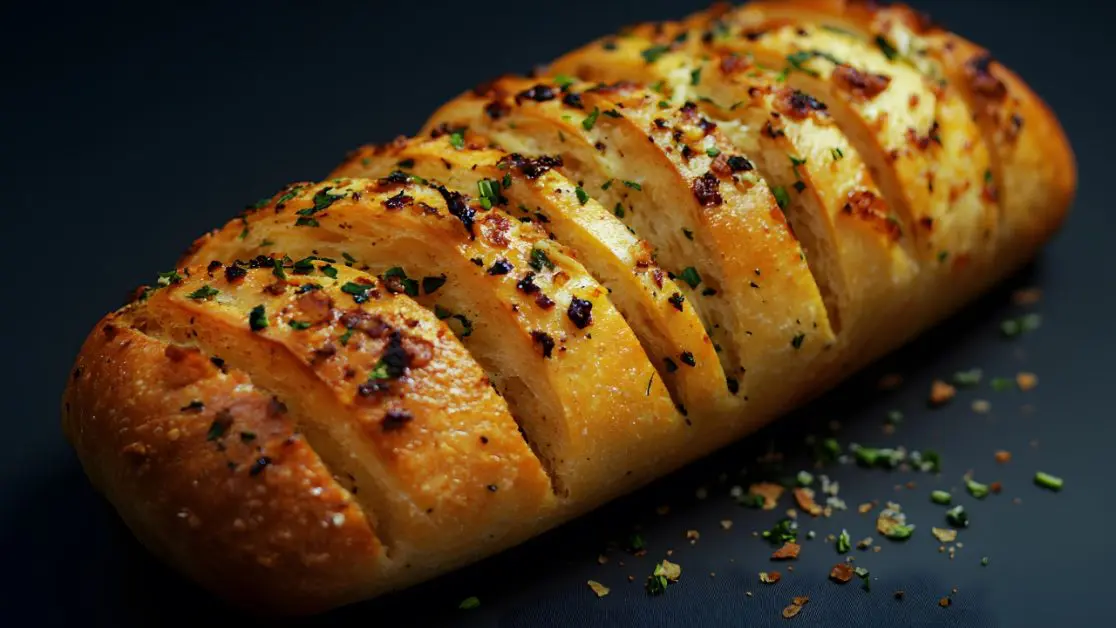
Cold bread is unforgiving.
Microwaves get blamed.
Dry heat is the real culprit.
What works better
- Lower power
- Short bursts
- Moisture retention
Some microwaves include bread-specific programs that classify Indian breads like naan, paratha, kulcha, and garlic bread and adjust heating accordingly.
The bread basket function in the Haier HIL2501CBSH 25L Convection Microwave Oven exists for this exact reason. It helps breads warm evenly without turning stiff or chewy in winter conditions .
Why winter exposes microwave habits
Summer forgives bad technique.
Winter does not.
In cold months:
- Wrong power dries food
- Wrong containers steal heat
- Wrong modes waste energy
The microwave is not unpredictable.
Our habits are.
A simple winter framework to remember
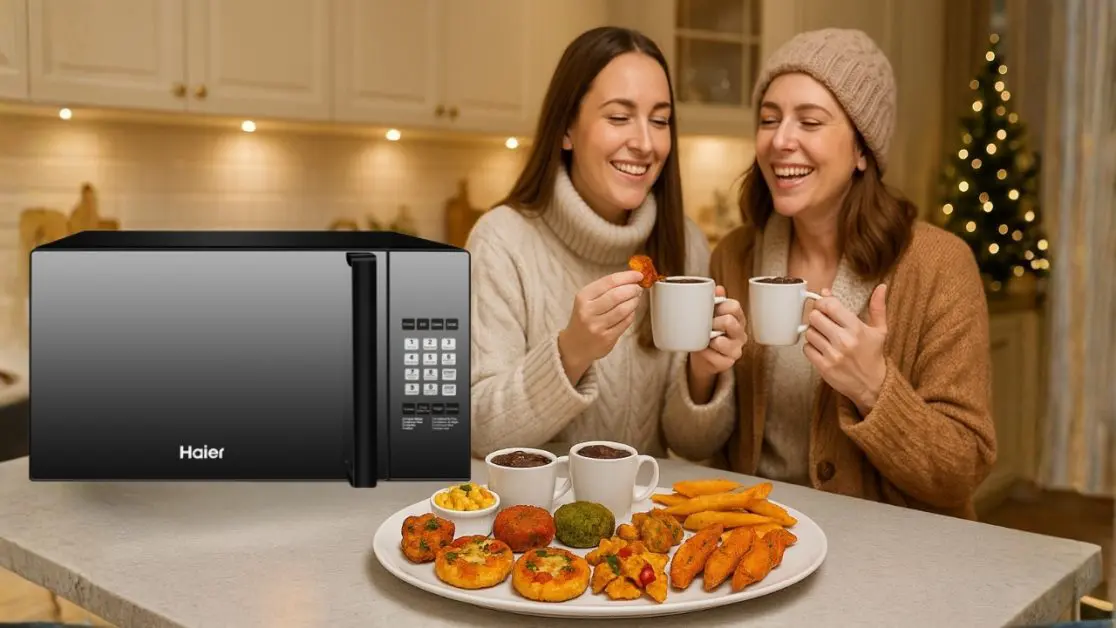
Before reheating food in winter, ask three questions.
- Is the centre cold?
Reduce power and increase time. - Is the food drying out?
Trap steam. - Is texture suffering?
Change modes or use intervals.
This framework works across dishes, homes, and schedules.
What this reveals about modern Indian homes
Indian kitchens have changed.
We batch cook.
We reheat often.
We balance work, family, and time.
Winter magnifies inefficiencies in these systems.
Smart appliances do not replace habits.
They quietly correct them.
Features like memory functions, auto cook menus, deodoriser cycles, and combination heating matter most when conditions are harsh and time is limited.
The real takeaway
Most people are not using the wrong microwave.
They are using the wrong assumptions.
Winter is slower.
Food starts colder.
Heat needs guidance.
Once that clicks, the microwave stops feeling unreliable.
It becomes what it was always meant to be.
A calm, dependable helper in a busy Indian kitchen.
Frequently Asked Questions
Are auto-cook menus actually useful or just gimmicks?
They matter more in winter. Auto-cook menus adjust both power and time, preventing moisture loss and uneven heating when food starts colder.
Why do combination modes make sense in cold months?
Because:
Microwave heats inside
Convection stabilizes surface temperature
Grill restores texture
Together, they prevent the “hot but dull” winter food problem.
Why does bread turn chewy in the microwave during winter?
Dry heat, not the microwave itself. Cold bread needs:
Lower power
Short bursts
Moisture retention
Some microwaves include bread-specific programs for Indian breads to prevent stiffness in winter.
Should I change microwave power levels in winter?
Absolutely. Power level matters more than time in winter. Lower or medium power allows heat to spread evenly.
Do combination microwave modes help during winter?
They do. Microwave heats the inside, convection stabilizes the surface, and grill restores texture, ideal for winter reheating.
What is the simplest winter microwave rule to remember?
If food is cold in the centre, reduce power and increase time. Winter heating needs patience, not force.