
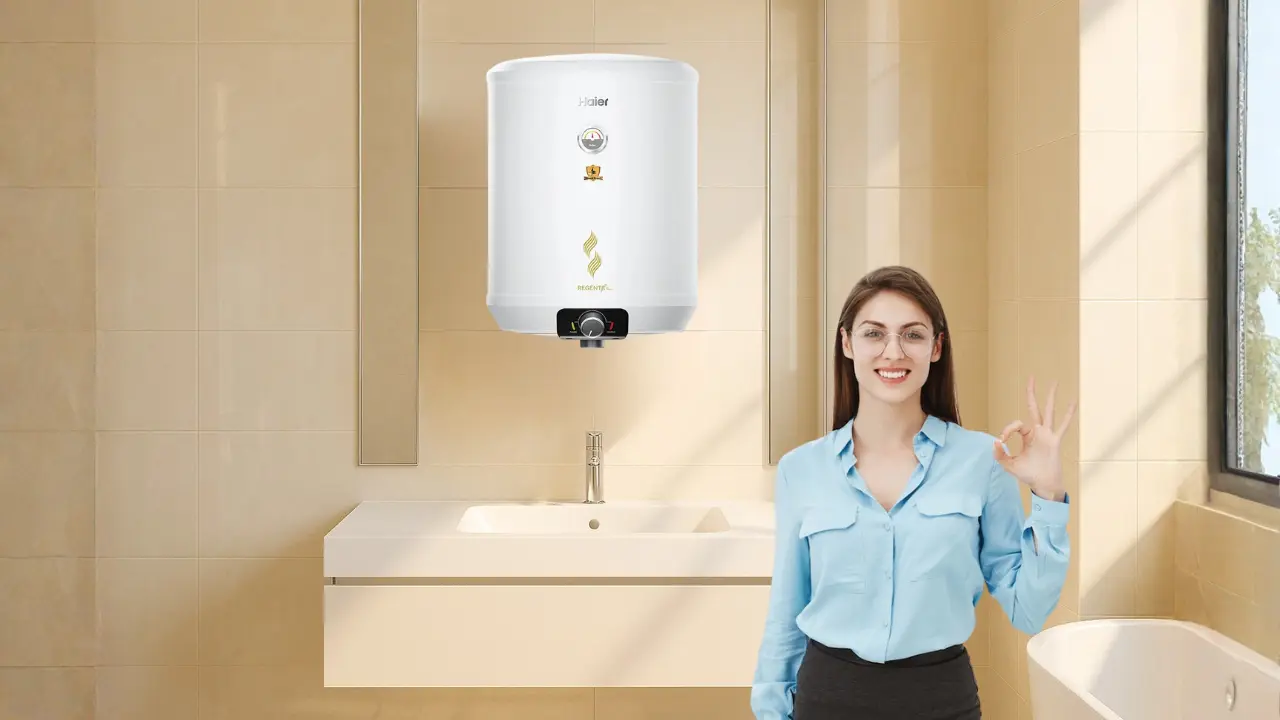

A 1kW setting works for slow, steady heating when you are not in a rush. A 3kW setting is ideal for fast heating on cold winter mornings when every minute counts.
The right choice depends on your household routine, water usage, and how sharply temperatures dip in your region.
Now let’s unpack this in a way that mirrors real homes, real winter habits, and the small decisions that shape comfort every day.
Why this question matters more in an early winter
Winter in India arrives quietly at first. A colder-than-usual morning. A cup of tea steaming more than usual. A shower you postpone because the water will take time.
Cold waves hit Mumbai and Pune out of nowhere. Delhi mornings feel still and sharp. Jaipur drops to single digits. These are not numbers. These are decisions. Your water heater becomes the one device you negotiate with every morning.
Do I wait?
Do I speed it up?
Do I switch to a higher power?
Heating speed is not a technical curiosity. It dictates the rhythm of your day.
The real question hiding behind the numbers
A 1kW setting feels gentle but slow.
A 3kW setting feels powerful but energy intensive.
So the question is not really about wattage.
It is about how you live.
How your home behaves in winter.
How your routines change when temperatures drop.
Let’s zoom in.
What does heating speed actually change
1. Time until the first bucket or shower
This is the most practical difference.
A 15L tank on 1kW heats slowly.
The same tank on 3kW heats fast.
In a typical 15L water heater, going from room temperature to a comfortable shower temperature takes:
- On 1kW: roughly 18 to 25 minutes
- On 3kW: roughly 6 to 10 minutes
Speed is not abstract.
Speed is the difference between:
- A parent getting ready before the school bus arrives.
- A working professional not missing a morning call.
- A cold evening when someone wants a quick half-bucket warm wash.
2. How energy behaves in winter
There is a common myth.
People assume a 3kW setting means triple the bill.
It does not.
Higher wattage heats faster, but uses that wattage for fewer minutes.
Lower wattage heats slower but runs for much longer.
The energy equation changes in ways most homes don’t notice.
3. Consistency when multiple people bathe
A single-person household behaves differently from a family of four.
Recovery time matters.
Reheating time matters.
3kW pulls the water back to warm conditions quickly between baths.
This becomes the unseen hero of winter mornings.
A simple way to think about heating speed
Water heaters work like stovetops.
Low flame takes time.
High flame finishes the job quickly.
The ingredients don’t change.
The timing does.
The smallest things in winter are shaped by heating speed.
1kW vs 3kW: The actual comparison table
| Feature | 1kW | 3kW |
| Heating speed | Slow | Fast |
| Best for | Light usage, single-person homes | Peak usage, families, cold regions |
| Energy behavior | Longer run time | Shorter run time |
| Comfort factor | Predictable | High, especially in cold waves |
| Water recovery rate | Low | High |
| Ideal seasons | Mild winter, humid months | Harsh winter, mornings and nights |
When 1kW makes complete sense
1. You live in a moderate climate
Hyderabad. Chennai. Bengaluru. Coastal Maharashtra.
Winter is pleasant, not punishing.
Water does not reach icy temperatures.
Heating slowly is not a problem.
2. You shower at non-peak hours
If you take a bath mid-morning or mid-afternoon, the wait is acceptable.
3. Your home has stable routines
One person showers.
Gap.
Another person showers.
No rush. No urgency.
4. You want the lowest instantaneous energy draw
Apartment buildings with older wiring often prefer lower load per device.
1kW works well.
When 3kW is absolutely worth it
1. You live in a colder region
Delhi. Gurgaon. Noida. Jaipur. Chandigarh.
North India winters are a different reality.
Water temperature drops sharply.
Showers demand faster heating.
2. Your family has peak-hour pressure
Everyone gets ready between 6.30 and 9.00 am.
A slow heating cycle strains the entire routine.
3kW becomes a rhythm stabiliser.
3. You prefer instant convenience
Cold evenings. Late-night returns.
A quick winter wash.
You want hot water now.
4. You want faster recovery time
A 3kW setting reheats faster after each bath, keeping the tank consistently ready.
5. Your home has a 15L or 25L tank
Larger tanks benefit significantly from faster heating.
Why modern water heaters offer both options
The smartest devices today adapt to your lifestyle instead of forcing you into one pattern.
Models like the Haier ES15V-REGENTA PRO+ offer multiple heating levels including up to 3kW for fast heating cycles . This minute-level control helps you shift between:
- Slow, economical heating
- Fast, peak-hour heating
It is not just a power toggle.
It is time management made visible.
The invisible winter challenges a faster setup solves
1. Water inlet temperature collapses during cold waves
A study from the Indian Institute of Technology points out that northern groundwater temperatures drop by 10 to 12 degrees in winter.
This single change doubles heating time on lower wattage.
2. Storage water cools faster in cold rooms
Bathroom walls stay cold all day.
Heat loss increases.
Heating cycles need more strength.
3. Multi-person usage creates a queue
A queue creates stress.
Stress creates frustration.
A small speed upgrade fixes an entire morning.
What modern Indian households usually choose
Patterns emerge when you look at behaviour:
- Single professionals in metros
Prefer 1kW for predictable, slow heating. - Families with school-going kids
Prefer 3kW for morning pressure. - Couples setting up new homes
Prefer models that offer both. - Regions from Punjab to Rajasthan to NCR
Lean heavily toward 3kW in winter.
Usage reflects climate.
Climate shapes comfort.
Comfort shapes choice.
A framework that makes the choice simple
When in doubt, use this checklist.
Choose 1kW if:
- You live in a moderate climate.
- Your routine has gaps between baths.
- You take baths later in the day.
- Your usage is light.
- Your wiring load prefers a lower power draw.
Choose 3kW if:
- You face harsh winters.
- You need multiple baths back-to-back.
- You want fast morning heating.
- You want quick recovery time.
- You dislike waiting.
This is the simplest decision tree most people never see.
Where Haier fits naturally into the conversation
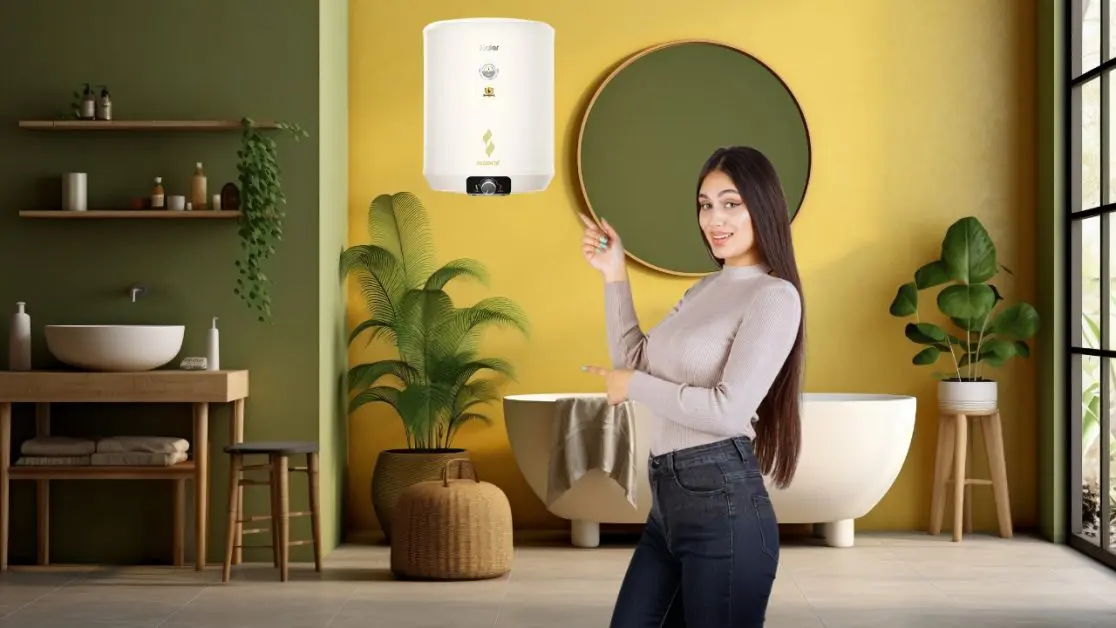
Haier water heaters are designed for homes where routines shift with seasons.
The ES15V-REGENTA PRO+, for instance, offers heating options up to 3kW along with features like:
- Bacteria-proof BPS mode
- Incoloy heating element for longer life
- High-pressure tolerance for high-rise buildings
- PUF insulation for low heat loss
- Multi-usage safety valve
- Shock-proof design
- Consistent flow with RSC technology
All of this supports the real reason wattage matters.
Not performance on paper.
Comfort in practice.
A simple aphorism to remember
Heating speed is not about power.
It is about timing.
So what does this mean for your winter
Your water heater becomes a quiet partner in the background, shaping the pace of your day without asking for attention.
If your mornings are slow and steady, 1kW is perfect.
If your mornings are tight and rushed, 3kW is a lifesaver.
If your region is freezing, 3kW is not a luxury. It is survival.
The best choice is the one that matches the rhythm of your home.
Because winter is not about cold.
It is about comfort.
And comfort begins with the speed of warmth.