
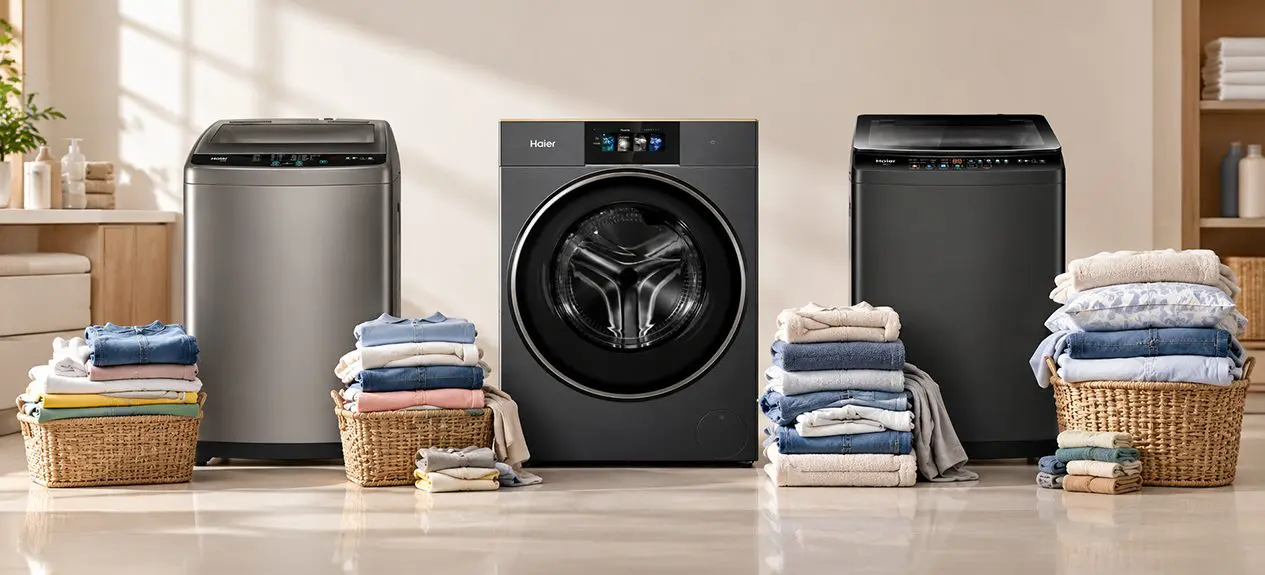

A pair of jeans can weigh as much as four or five T-shirts. That is why a 7kg washing machine does not mean you can fill it with seven kilograms of random clothes. The actual load depends on what you are washing and how bulky each item is.
A 7kg washing machine should be able to wash about 5 to 7 T-shirts, 2 to 3 pairs of jeans, 2 shirts, and a few smaller items in one go for everyday clothes. Towels and bedsheets take up more space, so you’ll need fewer of them.
Do not pack the drum tightly. Clothes need room to move freely during the wash. A simple way to check is to leave some space at the top. This helps water and detergent reach the clothes properly.
What the ‘kg’ Rating on a Washing Machine Tells You
The kg rating tells you how much dry laundry a washing machine can handle in one wash cycle. It does not refer to the machine’s own weight. That part is often misunderstood.
If you use the machine in the right conditions, a 7kg machine can wash up to 7kg of dry clothes. Clothes get heavier after they soak up water. But the weight of water doesn’t determine the capacity of the machine.
The washing machine kg rating depends on how much laundry the drum can handle while washing properly. It also considers the water system and load-handling capacity of the motor. So, more kilograms means more laundry, not a heavier machine.
How Laundry Weight Is Counted
Capacity is counted with dry clothes, since fabric absorbs water and gets heavier once it is wet. A bathroom scale gives a quick reading if you weigh the basket empty and then full. Most households fill the drum to about three quarters, which leaves space for clothes to tumble and rinse properly. That habit keeps the washing machine load capacity on the label useful in daily life.
How Many Clothes Each Size Can Hold
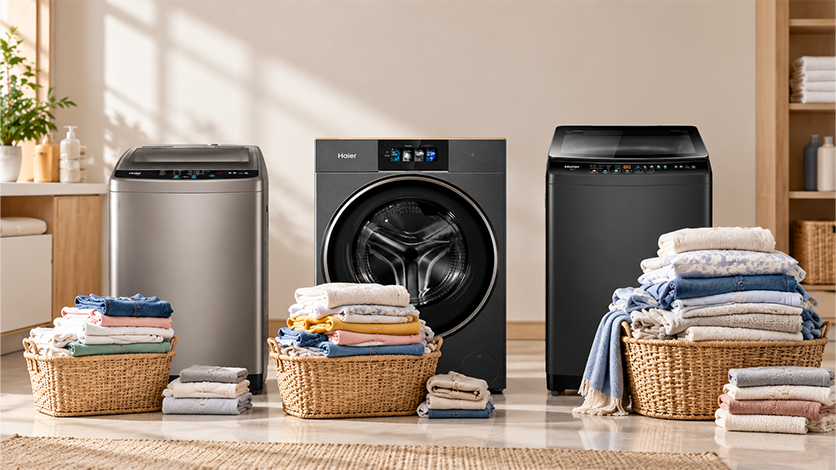
Haier’s capacity guide supplies the ranges below, though fabric thickness can shift the totals.
1> 6-7 kg for Small Families
A 6 to 6.5 kg machine suits one or two people, while a 7 kg machine handles two or three comfortably. A 7 kg drum takes roughly 25 to 28 garments of daily wear plus a few light towels, which answers the question of 7kg washing machine how many clothes fit in one wash. A 7.5 kg size falls close to the same band. Our 7 kg top-load washing machine (HWM70-306ES5N1) is made for this kind of routine.
2> 8-9 kg for Medium and Large Families
An 8 kg machine takes about 30 to 35 items per load, bedsheets and towels included, and suits families of three to five. For most homes, it is a comfortable mid-size rather than a small one. Nine kilograms moves that to roughly 35 to 40 items, an estimate placed between the 8 kg and 10 kg figures. The 8 kg washing machine capacity handles a weekly bedsheet wash without a second load. Our 8 kg HWM80-H320BK top load and F3 8 kg front load fall in this range.
3> 10 kg and Above for Large Families and Bulky Items
A 10 kg machine takes 40 to 45 items of mixed fabrics and suits five to seven members. At 12 kg, the count rises to 50 or more, so blankets and curtains fit with ease. Washer dryers carry two figures, and the F17 12 kg washer dryer washes 12 kg and dries 7 kg, so a 7 kg dryer rating belongs to the drying cycle only.
What a Full Load Looks Like in Practice
Counts make more sense when placed next to weight. These sample loads use typical garment weights, which vary by fabric and brand, so the totals are approximate.
| Sample load | Approx. weight | Suits |
| 6 T-shirts, 3 jeans, 4 shirts, 6 underwear, 5 pairs of socks, 2 bath towels (26 pieces) | 5.8 kg | 7 kg |
| 2 bedsheets, 3 bath towels, 8 T-shirts, 2 jeans (15 pieces) | 6.0 kg | 8 kg |
| 4 jeans, 4 bath towels, 2 bedsheets, 8 T-shirts (18 pieces) | 8.0 kg | 10 kg |
The last load has only 18 pieces, yet it fills about 80% of a 10 kg drum. Heavy fabrics change the picture fast, so the 8 kg washing machine capacity feels different on bedsheet day.
Why the Fill Level Matters: Overloading and Underloading
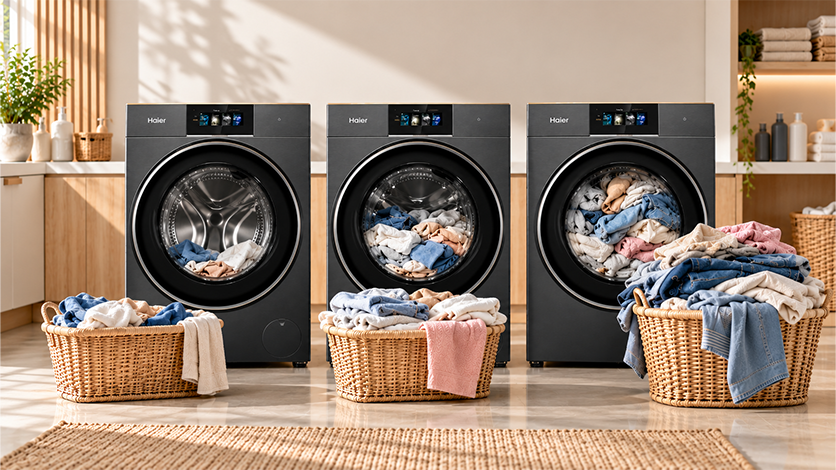
A drum filled to the right level gives clothes room to move and allows rinse water to flow through. Overfilling takes away that space and puts extra strain on the motor and bearings. A very light load uses nearly the same water and electricity as a full one, so a few garments per cycle means unused capacity. Aim for a drum that looks comfortably full but not packed, and you get cleaner clothes with fewer items left damp or soapy.
How to Work Out the Right Capacity for Your Home
- Weigh one normal week of laundry and divide it by the number of washes you want.
- Match the household: 6 to 6.5 kg for one or two people, 7 to 8 kg for three or four, 8 to 9 kg for four or five.
- Move up a size if you wash bedsheets and towels often.
- Choose 9 to 12 kg for large families, heavy loads or bulky items.
- Pick the next size up if the family is likely to grow
Still deciding between 7 kg and 8 kg for a family of four?
Read this blog: Best Washing Machine for a Family of 4: Capacity, Features and Buying Tips
How We Match Our Machines to Your Laundry
At Haier, we build washing machines in three formats so the kg figure fits real routines. Our front-load washing machines run from 8 kg to 12 kg, our top-load washing machines from 6.5 kg to 11 kg, and our semi-automatic washing machines from 8 kg to 14 kg. The HWM100-H326BK 10 kg top-load uses AI Wash to detect the weight of your load and choose a suitable cycle. The F5 10 kg front load adds a 525 mm Super Drum, which gives clothes more space to move. On the F11 12 kg front load, Smart Dosing calculates detergent based on the load size and fabric type. Every wash works best when the machine matches the laundry, and that starts with the right washing machine load capacity.
Conclusion
Weight is the most reliable way to read a washing machine size. Once the washing machine kg meaning is clear, the choice follows quickly: 7 kg for small households, 8 to 9 kg for medium and large families, and 10 kg and above for big loads and bulky items. Weigh your own basket once, and the right capacity usually becomes obvious.
FAQs
What does 7 kg mean in a washing machine?
It means the machine can wash up to 7 kg of dry clothes in one cycle. The figure refers to laundry weight, not the weight of the machine, and it excludes wet clothes, which weigh more after absorbing water.
How many clothes can a 7 kg washing machine hold?
A 7 kg machine holds roughly 25 to 28 garments of everyday wear, plus a few light towels, in one wash. Heavier items such as jeans and bedsheets reduce that count, so weight is the better guide.
Is an 8 kg washing machine small?
For most homes, an 8 kg machine is a comfortable mid-size. It takes about 30 to 35 items per load, including bedsheets and towels, and suits families of three to five members.
What capacity do I need for my household?
One or two people usually manage with 6 to 6.5 kg, three to four with 7 to 8 kg, and four to five with 8 to 9 kg. Larger households or frequent heavy loads suit 9 to 12 kg.
Does the kg rating mean the weight of the machine?
The kg rating refers to the maximum dry laundry the drum can wash in one cycle. The machine itself weighs far more, and that figure is usually listed separately in the product specifications.