
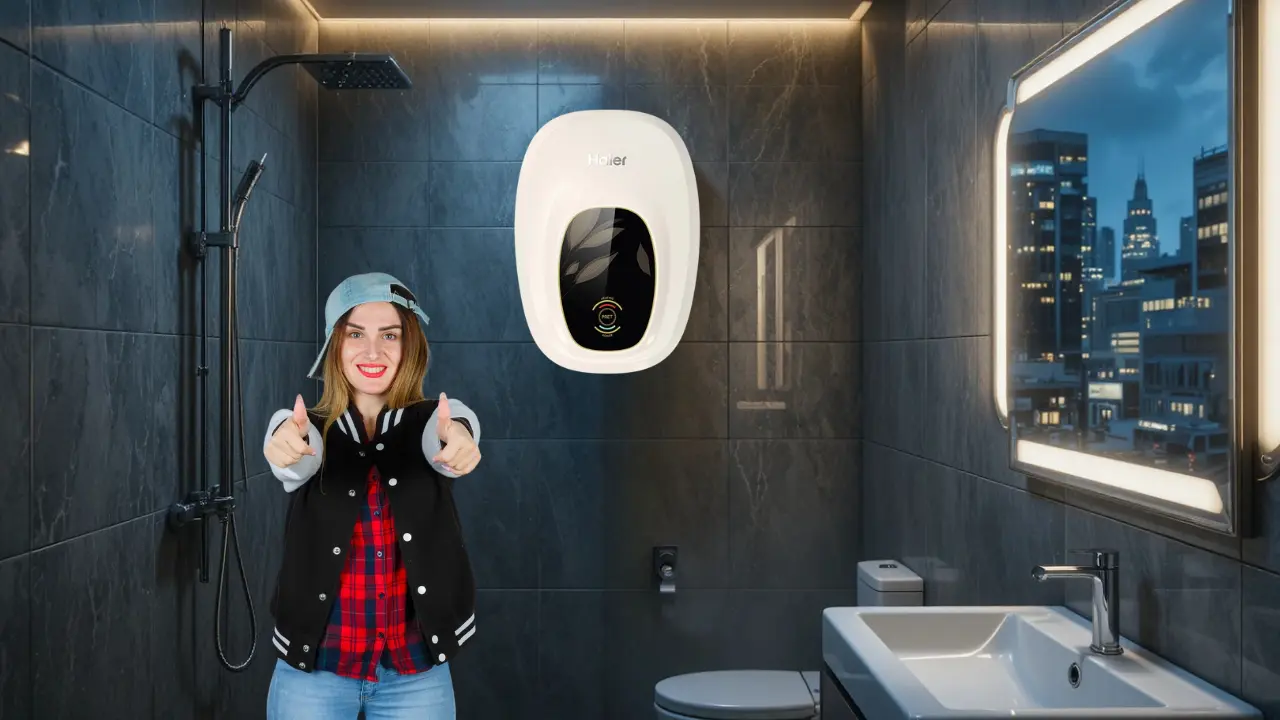

The simplest way to save power on water heaters in December is to control when, how long, and how intensely they heat.
Shorter heat cycles, smart scheduling, better insulation, and choosing efficient models such as Haier’s 3L Instant Water Heater range can cut monthly energy use by a noticeable margin while keeping comfort intact.
Why December Becomes the Pivot Month For Power Savings
Every Indian home feels the same shift.
One week you’re taking a quick cold shower.
Next, you are bargaining with yourself to step out of bed because the floor feels like ice.
December is that moment when households quietly switch into winter mode.
Hot water becomes less of a luxury and more of a daily anchor. Morning showers for the office. Bath time for kids. Late night bucket baths after a long commute. Warm water for kitchen chores.
And because all of this happens simultaneously, the electricity bill begins its slow, steady climb.
A water heater becomes one of the most power-hungry appliances between December and February. Which means this is the month when small behavioural tweaks create the biggest savings.
The question becomes simple.
How do you stay warm without burning through your energy budget?
The answer lies in understanding one core truth:
Heat wasted is money wasted.
Every hack that follows is designed around this idea.
Heat Only What You Need
This sounds obvious. Yet it is the single biggest leak in most households.
Why instant heating saves power
Instant water heaters such as Haier’s 3L EI3V series heat water only when you turn the tap on. No standby heat loss. No heating an entire tank that will cool down and demand a fresh heating cycle.
The logic mirrors everyday life.
You do not boil a full saucepan if you only want one cup of tea.
The same principle applies to water heaters.
Three choices you control
1. Capacity
A 3L instant heater works well for quick showers and washbasins. Smaller tank. Minimal heat loss. Lower monthly power draw.
2. Duration
Shorter showers create linear savings. Every extra minute is more heating time, not more comfort.
3. Timing
Heating only during use eliminates idle cycles.
Implication:
Control the volume, duration, and timing, and you cut your bill without changing your routine.
Use Smart Scheduling Before Winter Peaks
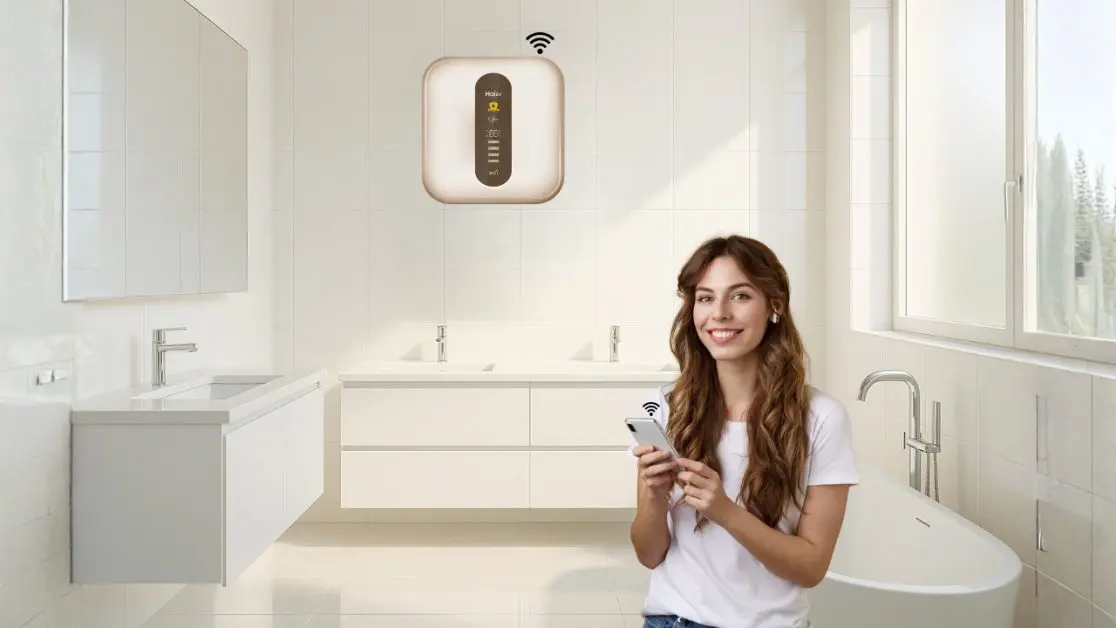
Most homes leave the water heater switch on for far longer than required.
Not intentionally. Just out of habit.
Why this matters in December
December mornings are cool, not freezing.
A 3 to 4 minute preheat often works.
By mid-December, the same household ends up doubling preheat time because the tank water temperature drops faster.
This is why December is the best month to set your schedule right.
Three patterns work across real homes
One option is the morning-only schedule
Turn the heater on 5 minutes before the first shower. Turn it off after the last person finishes.
The second option is the split schedule
Some families shower in the morning, some at night. Two short heating sessions use less energy than one long kept-on cycle.
The third option is the instant-use pattern
Ideal for instant heaters like Haier’s EI3V-C1 and EI3V-C2.
Switch on. Use water. Switch off.
No idle heating. No repeated reheating.
Aphorism:
The cheapest heat is the heat you do not lose.
Insulation Turns A Simple Appliance Into A Smarter One
Most people underestimate how much heat escapes through exposed pipes.
Heat loss is not abstract.
It is a slow leak, like leaving a tap half open.
Three high-value insulation hacks
- Wrap the outlet pipe with a foam sleeve. This keeps water hotter for longer, especially in standalone bathrooms.
- Install the heater closer to the point of use.
Shorter pipes equal less heat travel time. Less heat loss. - Keep bathroom windows closed during early mornings and late nights.
Cold air kills thermal efficiency.
These are small acts that quietly improve power savings through winter.
Set Your Temperature Just Right

Water heaters often run hotter than required.
Not because the family enjoys piping hot showers, but because the factory setting stays unchanged.
The sweet spot
Most Indian homes are comfortable at 55 to 60 degrees for bathing during December.
This acts as a natural power limiter.
Fix Heat Loss Before It Drains Your Wallet
A water heater that is technically working can still waste power if components are aging.
Where hidden losses occur
1. Thermostat malfunction forces repeated heating cycles.
2. Heating element scaling reduces heat transfer efficiency.
3. Rust or residue inside the tank causes uneven heating.
4. Old wiring reduces voltage efficiency.
These are quiet inefficiencies. You do not notice them until the bill jumps.
How modern models solve this
Haier’s instant water heaters use components such as the Incoloy 800 stainless steel heating element, BPS antibacterial mode, glass-lined or enamelled tanks, and dual thermostats. These features maintain consistent performance even with long-term usage.
Implication:
Better engineering equals fewer hidden heat losses.
Choose Appliances Designed For Energy Stability
Some water heaters are naturally more power efficient.
What to look for
- IPX4 water resistance for long-term safety
- 8 bar pressure rating for multi-storey buildings
- Dual thermal protection to prevent over-heating
- Copper or Incoloy heating elements for faster heating
- RSC U-turn Flow Technology to reduce stagnant water
These appear technical, but they directly affect monthly electricity use.
For example, the Haier 3L ISI Certified Instant Heater has two levels of thermal protection.
When the water reaches the target temperature, it simply stops drawing power.
That matters more than people realise.
Use The Cold Months To Build Better Habits
Power saving is less about sacrifice and more about routine design.
Three routines that work across Indian homes
Reduce running water during shower breaks.
Every pause saves heating demand.
Use warm water, not very hot water.
Warm water requires less power and offers nearly the same comfort.
Keep the heater switch off after use.
This alone can reduce 18 to 22 percent of unnecessary load in many homes that accidentally leave switches on.
These are not restrictions.
They are optimisations.
How December Habits Shape The Whole Winter
Energy efficiency compounds.
You change one behaviour in December, and the saving multiplies in December and January.
Invisible patterns become visible savings
- Shorter preheat time in December prevents long December cycles.
- Earlier insulation means less heat loss in peak winter.
- Lower temperature settings stay constant once the family adjusts.
- Routine-based usage prevents accidental all-day heating.
A system emerges:
Better habits reduce demand.
Better appliances reduce waste.
Better timing reduces cost.
When a Smarter Appliance Quietly Supports a Smarter Home
Modern Indian homes are evolving.
Work is hybrid.
Routines are unpredictable.
Households juggle school runs, fitness schedules, office meetings, and late-night chores.
Anyone who has lived through a busy winter morning knows this truth.
A fast instant water heater is not a luxury.
It is a time saver.
A mood stabiliser.
A small anchor that keeps the day running on schedule.
Haier’s 3L instant range fits naturally into this rhythm.
It heats fast.
It consumes only when used.
It protects itself from over-heating.
It stays durable because the materials resist corrosion and pressure.
It is not just a product.
It is an enabler of calmer mornings.
The Larger Insight: Power Saving Is A Behaviour System
You do not save electricity because someone told you to.
You save because the behaviour makes your home feel more organised.
December offers the perfect low-pressure month to set this system.
What this teaches us about home decisions
- Comfort and efficiency are not contradictory.
- Small tweaks outperform big sacrifices.
- Smart appliances amplify good habits.
- Timing matters more than intensity.
- Early decisions prevent peak season stress.
This is why a well-timed article like this sits at the intersection of energy advice and everyday Indian life.
Final Thought: Warm Water, Cool Bills
A warm December shower feels better when you know you are not wasting power.
The trick is simple.
Treat your water heater like a partner, not a switch.
Set the right temperature.
Use it at the right time.
Check for heat loss.
Choose appliances engineered for Indian winters.
Build small habits that stay with your home all season.
Because in the end, one truth stands firm.
The homes that feel effortless are the ones where energy works smarter, not harder.