

Most households eventually encounter a washing machine that no longer runs the way it once did. The spin cycle produces a persistent thumping sound. The unit shifts position on the floor with each load. This is a normal wear and tear, and more often, one part is carrying more strain than it was designed for: the drive mechanism.
Manufacturers have moved away from the traditional belt-and-pulley setup in recent years, replacing it with a system that connects the motor straight to the drum. That single change has reset what buyers expect from noise level, performance, and how long a machine lasts.
This guide covers what direct drive technology means, how it pairs with inverter motors, and what to check before buying. It also looks at how Haier has applied this thinking across its front load, top load, and semi-automatic ranges.
What Is a Direct Drive Washing Machine?
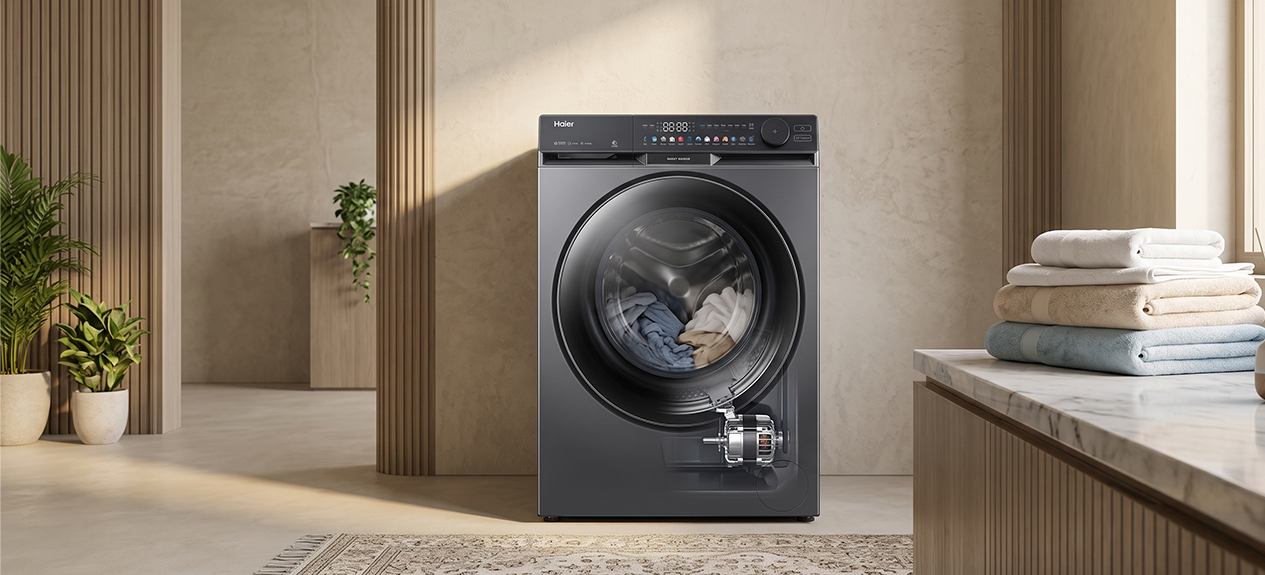
A direct drive washing machine connects the motor directly to the drum shaft, with no belt or pulley between the two, removing the one rubber component most likely to stretch, slip, or fail over years of use.
Older machines still lean on a belt-and-pulley system to move power from motor to drum. It works well enough, but friction builds at every point of contact, belts loosen with age, and pulleys drift out of alignment. Eventually this chain becomes the main reason a washing machine turns noisy, then unreliable.
Remove that chain entirely and the outcome shifts. The motor mounts directly behind the drum and turns it without anything in between, so fewer parts mean fewer things that can break. The machine also holds drum speed with a precision that belt-driven systems cannot match.
How Does an Inverter Motor Washing Machine Work?
The terminology trips up most buyers here. Direct drive is about the physical connection, while inverter is about the electronics running the motor, two different things often bundled into one machine.
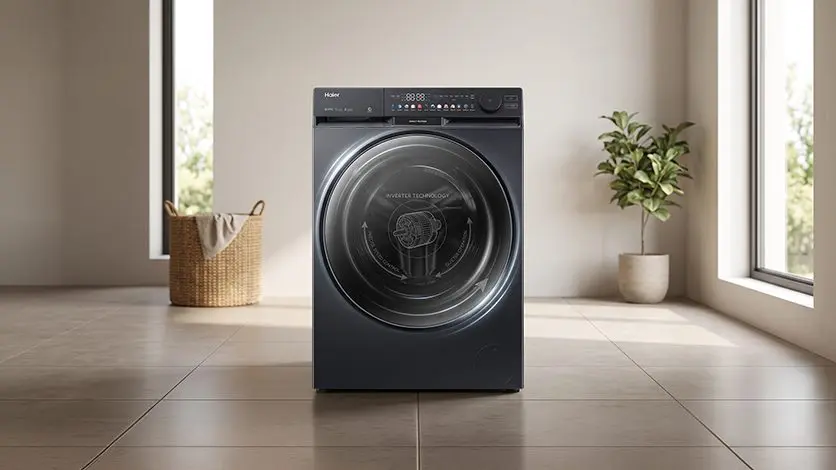
An inverter motor washing machine relies on variable frequency electronics that adjust motor speed on a continuous curve, rather than hopping between fixed settings. A conventional motor runs at set RPM levels and jumps between them abruptly, while an inverter motor ramps up and down, matching output to load size and fabric type.
This is where the two technologies work as one system. Direct drive removes the mechanical loss a belt introduces, and the electronics fine-tune how much power reaches the drum, so it spins at close to the exact speed each stage calls for. Together, they explain why newer machines run quieter and last longer.
Direct Drive Motor Washing Machine Features
Anyone comparing models should look past the marketing copy and ask what the mechanism does in daily use. A few direct drive motor washing machine features are worth checking first:
- Gearless, beltless construction. The motor connects straight to the drum shaft, nothing in between to wear down.
- Reduced mechanical friction. Fewer moving parts mean less resistance and heat buildup during long cycles.
- Precise speed and torque control. Output adjusts in real time, based on load weight and fabric type.
- Lower long-term maintenance. No belt to replace and no pulley to realign.
- Extended motor lifespan. Several manufacturers back these motors with warranty terms well beyond conventional units.
- Consistent performance across load sizes. Light and full loads both get smooth output, without the jerks belt-driven drums often show.
This is what separates a mechanical appliance prone to wear from a system built around precision.
Why Direct Drive Machines Are Becoming the Quiet Washing Machine Choice
Noise ranks near the top of most complaint lists when households replace a washing machine. A belt-driven motor throws off vibration at several points. The belt flexes under load, the pulley wobbles more each year it ages, and that motion works into the frame, then the floor beneath it.
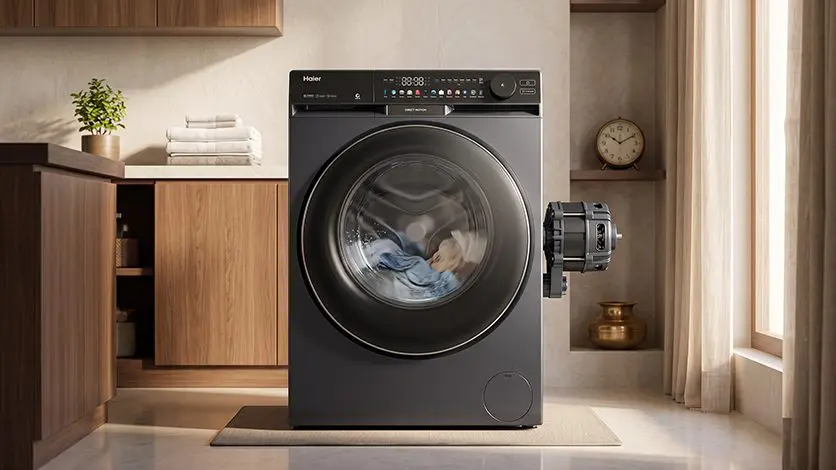
A direct drive setup cuts most of that vibration off at the source, since the motor bolts directly behind the drum instead of connecting through several parts, and less friction means less heat and strain with every wash.
This is why direct drive has become the standard answer for anyone searching for a quiet washing machine before buying one. Apartments with shared walls benefit, and so do households running loads early morning or late at night. Quieter operation is not a small footnote on a spec sheet. It changes what doing laundry feels like, day to day.
Direct Drive vs Belt Drive: A Quick Comparison
| Factor | Belt Drive | Direct Drive |
| Mechanism | Motor connects via belt and pulley | Motor connects directly to drum shaft |
| Noise Level | Higher, increases with age | Lower, stays consistent over time |
| Vibration | Noticeable, especially during spin | Minimal, due to fewer moving parts |
| Maintenance | Belt replacement needed periodically | Little to no belt-related servicing |
| Typical Lifespan | Shorter due to belt wear | Longer, often backed by extended motor warranty |
| Energy Use | Less efficient at variable speeds | More efficient with inverter-based control |
Haier’s Inverter Direct Drive Technology
At Haier, we built our washing machine range around this shift in drive engineering. We call our version the Direct Motion Motor, and it is what we mean by Haier inverter direct drive technology, running across our front load, top load, and semi-automatic ranges, adapted to what each format needs.
1> Front Load Range
Our front load lineup, including the F3, F5, F9, and F11 series, runs on this Direct Motion Motor, connecting straight to the drum without the belt and pulley of older designs. We pair this with a 525mm Super Drum, giving clothes more room to move and cutting down tangling. Dual Spray flushes the drum door and gasket after every cycle, keeping foam residue and mould spots from building up. Essence Wash pre-mixes detergent before spraying it onto fabrics, cutting wash time while pushing it deeper into fibres. AI Wash reads load weight and recommends the right cycle.
2> Top Load Range
Our top load machines take a related but different route. Fuzzy Control reads water level based on clothes weight, adjusting on its own instead of leaving that to a guess. Anti-Scaling Technology uses nano-sized smart balls that scrub the tub wall through each wash. Select models carry an in-built heater with a longer element for even heat distribution, useful against stubborn stains. The Oceanus Wave Drum imitates a hand-wash motion to protect fine fabrics, and Softfall Technology closes the lid slowly instead of letting it slam.
3> Semi-Automatic Range
For households that prefer a semi-automatic machine, often for its lower cost, we carry forward the same core hygiene features. The Anti-Bacteria Pulsator has antibacterial material built into the plastic, reducing bacterial growth on the wash surface. The Magic Filter catches lint before it redeposits onto clothes, and Anti-Rat Mesh guards internal wiring where that remains a concern.
Want a washing machine built around this kind of quiet, direct drive performance?
Explore the range here: Haier Front Load Washing Machines with Direct Motion Motor
How to Choose the Right Washing Machine for Your Home
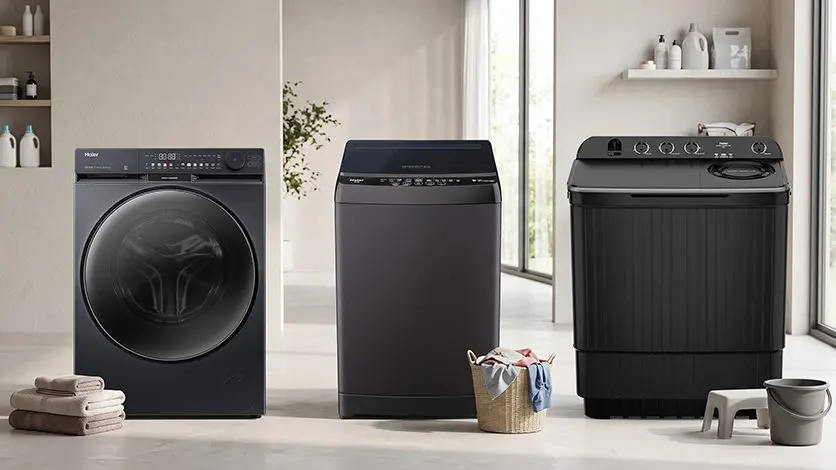
The right format comes down less to brand preference and more to how a household does laundry day to day. Families with larger, frequent loads tend to get the most from a front-load machine, since the direct-drive motor and AI-based cycle selection handle heavier washing with less manual input. Households wanting a fully automatic experience without the full feature set often land on a top load machine instead. Smaller homes, or buyers wanting a lower upfront cost, tend to find a semi-automatic machine practical.
Whichever format fits, the drive technology underneath still matters most, since a quieter machine that holds up over years of use saves both money and frustration.
Conclusion
Direct drive technology has reset what buyers can reasonably expect from a washing machine. Taking the belt and pulley system out of the equation cuts down on noise, reduces maintenance needs, and extends motor life. Paired with inverter electronics, the result is a machine that adjusts to each load rather than running at fixed speeds. Haier has built this thinking into its Direct Motion Motor across front load, top load, and semi-automatic ranges, adapting gearless, beltless operation to different homes and budgets.
FAQs
What is direct drive in a washing machine?
Direct drive means the motor connects straight to the drum shaft, without a belt or pulley in between. This reduces mechanical friction, lowers noise and vibration, and typically extends the motor’s operating lifespan compared to belt-driven designs.
What are the primary benefits of eliminating belts and pulleys in a direct-drive appliance?
Removing belts and pulleys cuts down on friction, heat, and moving parts prone to wear. This results in quieter operation, less vibration during spin cycles, lower long-term maintenance needs, and generally more precise control over washing performance.
Which is better, a direct drive or belt drive washing machine?
Direct drive generally outperforms belt drive on noise, vibration, and durability, since it carries fewer mechanical components that wear over time. Belt drive machines still function well, but usually need more upkeep and grow noisier with age.
What role does Haier’s Super Drum 525 play in improving laundry efficiency?
The 525mm Super Drum gives clothes more space to move during each cycle, reducing tangling and improving wash quality. Its larger diameter also supports better load distribution, helping the Direct Motion Motor operate efficiently across varying load sizes.