
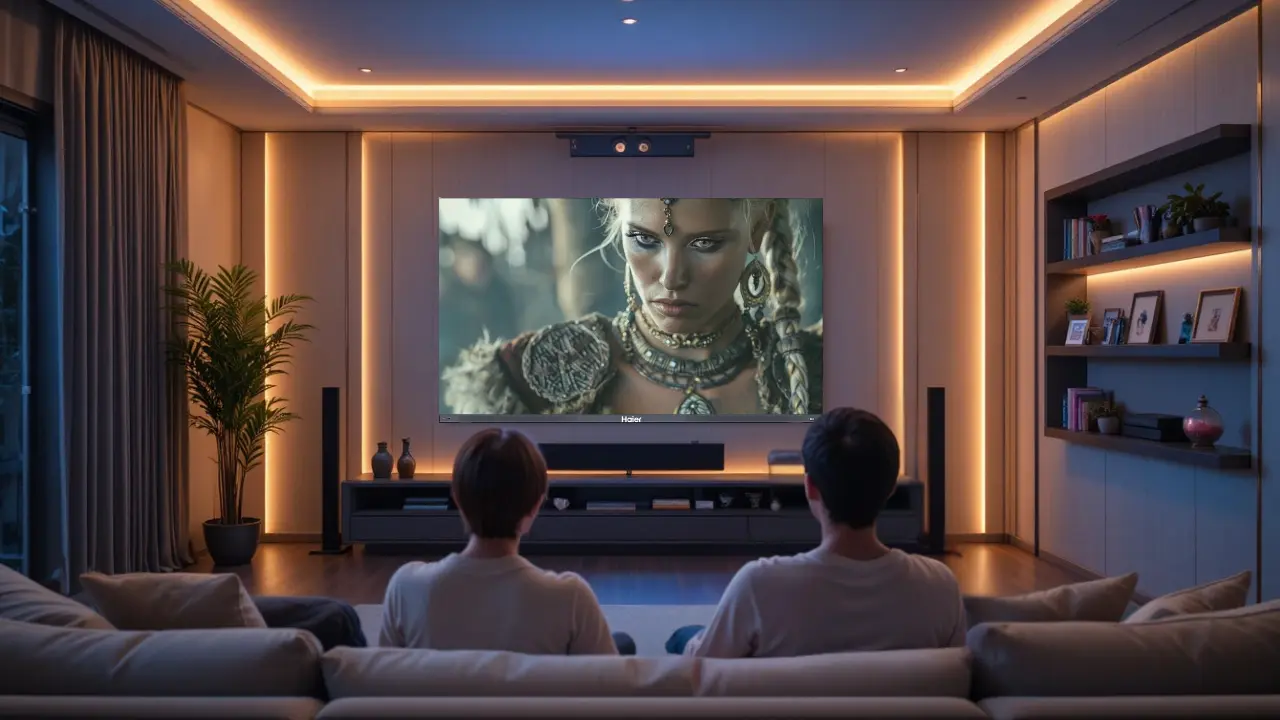

The future of home entertainment is no longer about just watching something on a bigger screen. It is about how the screen understands your home, your habits, and your everyday rhythms.
In modern Indian households, entertainment has become adaptive, intelligent, and quietly powerful. And that future is already sitting in living rooms today.
Not as a bold promise.
But as a lived experience.
Home entertainment has evolved without making noise.
There was a time when upgrading a TV meant adjusting your life around it.
Closing curtains.
Constantly changing picture modes.
Raising the volume, then lowering it again.
Today, something subtle has changed.
The screen adapts before you notice.
The sound fills the room evenly.
The picture looks comfortable, no matter the time of day.
This shift did not happen by accident.
It happened because home entertainment finally started thinking like a system, not a gadget.
One living room. Many lives.
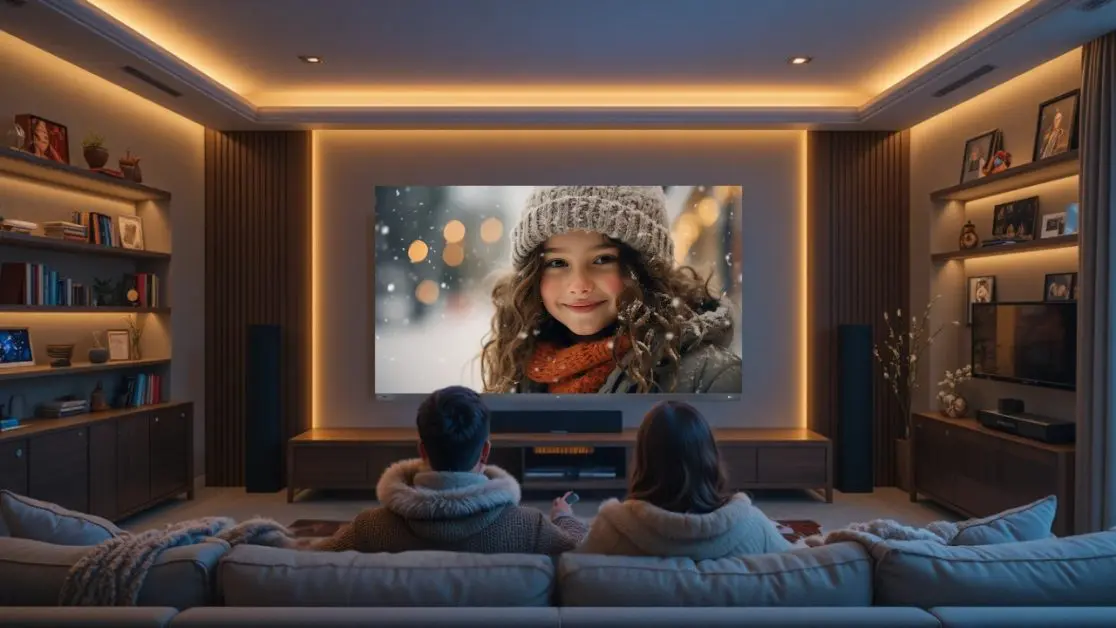
A single Indian living room plays many roles.
Morning news with chai.
Afternoon cartoons in the background.
Evening cricket matches with friends.
Late night series after everyone sleeps.
Earlier, TVs were designed for one kind of viewing.
Now, they are designed for transitions.
That is why modern displays focus on intelligence over manual control. They sense the room, read the content, and adjust automatically.
This is exactly where TVs like the Haier New M92 Series QD Mini LED Smart AI Google TV step in, built to handle shifting usage without constant interference.
Why intelligence matters more than screen size
Big screens attract attention in stores.
Smart screens earn loyalty at home.
Imagine watching a high contrast film scene in the afternoon with sunlight pouring in. Traditional TVs struggle here. Blacks look grey. Details fade.
Now contrast that with a display that adjusts brightness and contrast based on ambient lighting in real time.
The M92 Series 189cm (75) QD Mini LED Smart AI Google TV H75M92FUX and M92 Series 164cm (65) QD Mini LED Smart AI Google TV H65M92FUX use the AI Ultra Sense Processor to recognize scenes instantly and fine tune color, contrast, depth, and motion.
The benefit is not just visual sharpness.
It reduces eye strain and gives longer comfort.
That is future ready thinking.
Motion clarity is no longer optional
Fast motion exposes weaknesses.
Cricket balls in flight.
Racing scenes.
High speed gaming.
When motion stutters, immersion breaks.
That is why a 144Hz refresh rate has become essential, not premium. On the Haier New M92 Series, this ensures smoother visuals with reduced blur during sports, movies, and gameplay.
The takeaway is simple.
When motion feels natural, the brain stays engaged.
When engagement stays high, entertainment becomes effortless.
Sound has moved from loud to intelligent
Volume used to define good audio.
Now placement defines it.
Modern sound systems focus on direction, clarity, and balance.
With Sound by KEF and Dolby Atmos, the Haier New M92 Series creates a layered audio experience where dialogue remains crisp, bass feels grounded, and sound flows around the room instead of hitting it head on.
This matters deeply in Indian homes where:
- Conversations happen alongside viewing
- Walls are shared
- Night viewing is common
Good sound today is not disruptive.
It is immersive without being intrusive.
The smartest technology stays out of the way
Here is a quiet truth.
Great technology feels invisible.
You do not think about settings.
You do not explain features.
You simply use it.
With Google TV, the Haier New M92 Series brings streaming apps, recommendations, and live content into one clean interface. Hands free voice control allows searching, adjusting, and switching without reaching for the remote.
The system learns usage patterns over time.
The result is familiarity without effort.
That is where trust is built.
Gaming has become a living room activity
Gaming is no longer confined to bedrooms or desks.
It has entered shared spaces.
Features like VRR, ALLM, AMD FreeSync Premium , and HDMI 2.1 on the Haier New M92 Series ensure low latency, smooth frame syncing, and responsive gameplay across consoles.
The cost benefit is clear.
- One screen serves everyone
- No extra monitor required
- No compromise between family and personal use
This is entertainment designed for coexistence.
Design that respects the home
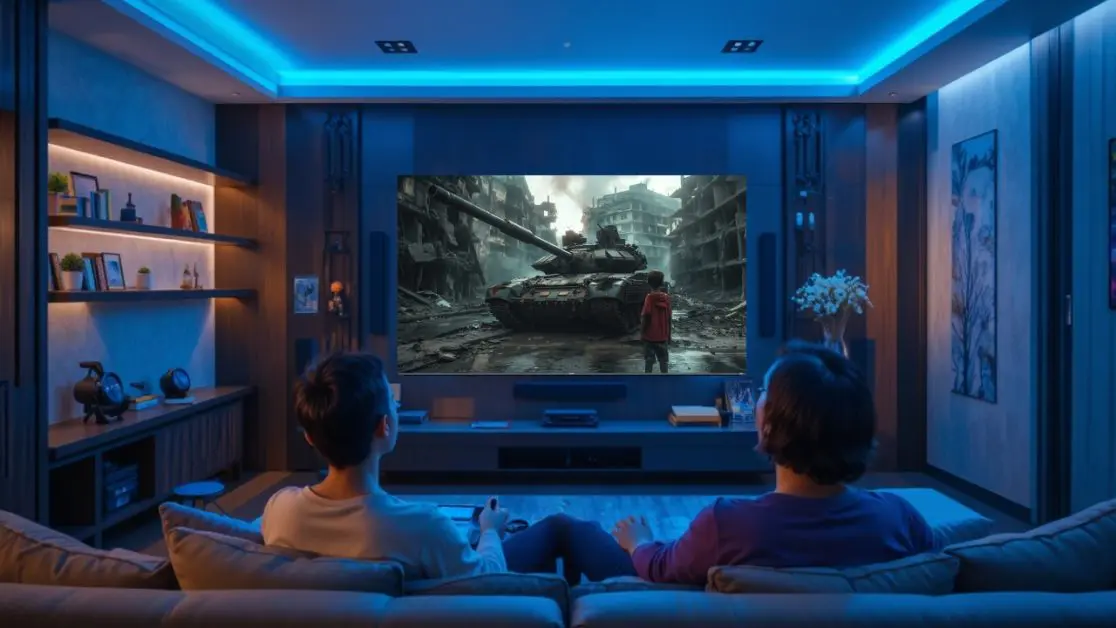
Big screens used to dominate rooms even when switched off.
Modern screens know when to step back.
The Haier New M92 Series features a slim fit design, minimal bezels, and a refined profile that blends into contemporary interiors rather than overpowering them.
This matters because Indian homes value balance.
Technology should enhance space, not compete with it.
Energy awareness is now part of entertainment
Entertainment no longer exists in isolation from responsibility.
Energy saving modes, adaptive brightness, and efficient power management help reduce unnecessary consumption without affecting viewing quality on the Haier New M92 Series.
This aligns with how households think today.
Lower bills.
Smarter usage.
Longer device life.
Efficiency has become a lifestyle expectation.
Three ways homes approach entertainment today
One option is spectacle
Large screen, high volume, manual control, high involvement.
The second option is balance
Intelligent visuals, adaptive sound, minimal adjustments.
The third option is integration
Entertainment that works with your schedule, your lighting, your habits.
The future clearly favors the third.
Systems that adapt instead of demanding attention.
What this tells us about the future beyond entertainment
Home entertainment reflects a bigger shift happening everywhere.
At work.
In homes.
In decision making.
The systems that succeed are those that:
- Reduce friction
- Anticipate needs
- Disappear into daily routines
The Haier New M92 Series QD Mini LED Smart AI Google TVs, including the H75M92FUX and H65M92FUX, embody this shift by focusing on intelligence, adaptability, and quiet performance.
The implication is bigger than TVs.
The future belongs to technology that understands people, not the other way around.
The future is already in the room
It is not a concept anymore.
It is a screen that adjusts itself.
Sound that surrounds without shouting.
An interface that listens.
The future of home entertainment is not arriving someday.
It is already here.