
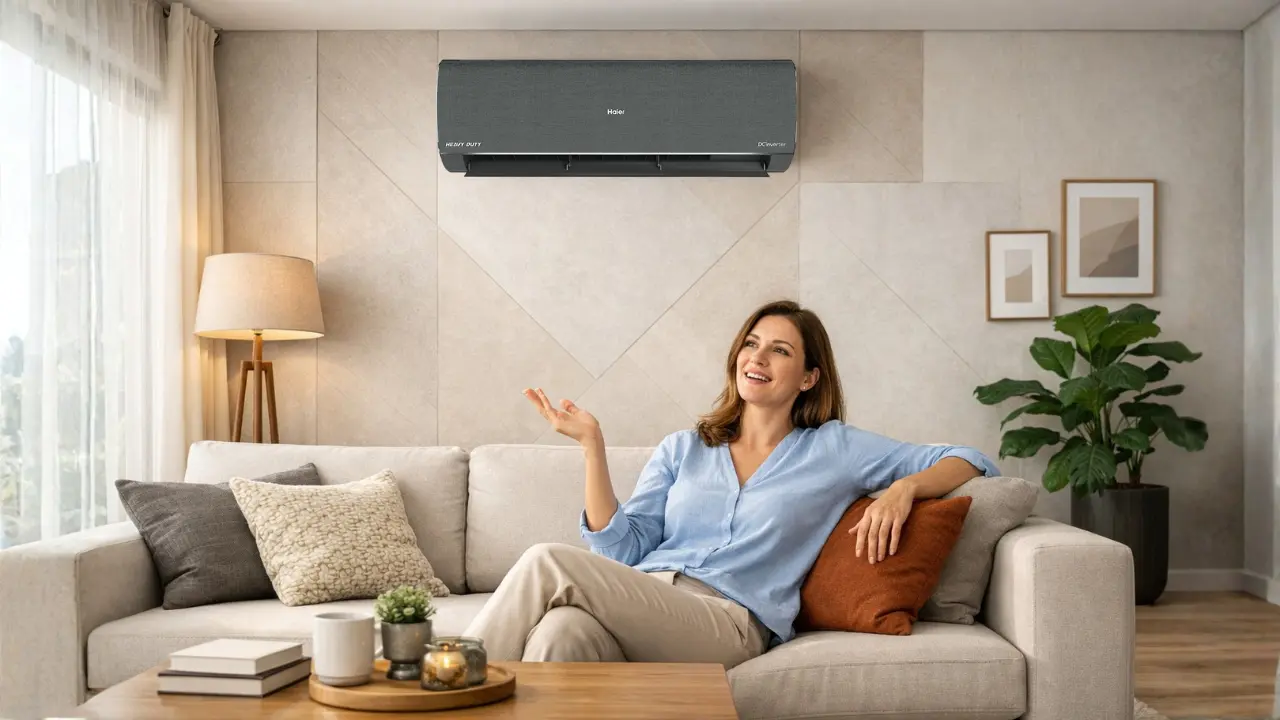

Automatic energy savings reduce your electricity bills by quietly adjusting how appliances work, based on real usage, real habits, and real conditions.
Instead of asking you to remember settings, timings, or modes, smart systems learn, adapt, and optimize energy use in the background. Comfort stays high. Waste quietly disappears.
The problem most Indian homes don’t realise they have
The AC is no longer than it needs to be.
The fridge works harder than required.
The TV, router, and appliances hum away even when no one is paying attention.
None of this feels wasteful at the moment. It just feels normal.
And that is the real issue.
Energy waste in Indian homes rarely comes from big mistakes.
It comes from small, repeated inefficiencies layered over months.
One extra hour of cooling.
One empty room being cooled.
One appliance running at full power when half would do.
Individually, they seem harmless.
Together, they quietly inflate the electricity bill.
Automatic energy savings exist to solve this exact problem.
Not by asking you to do more.
But by removing the need to think about it at all.
Manual savings fail because life is unpredictable
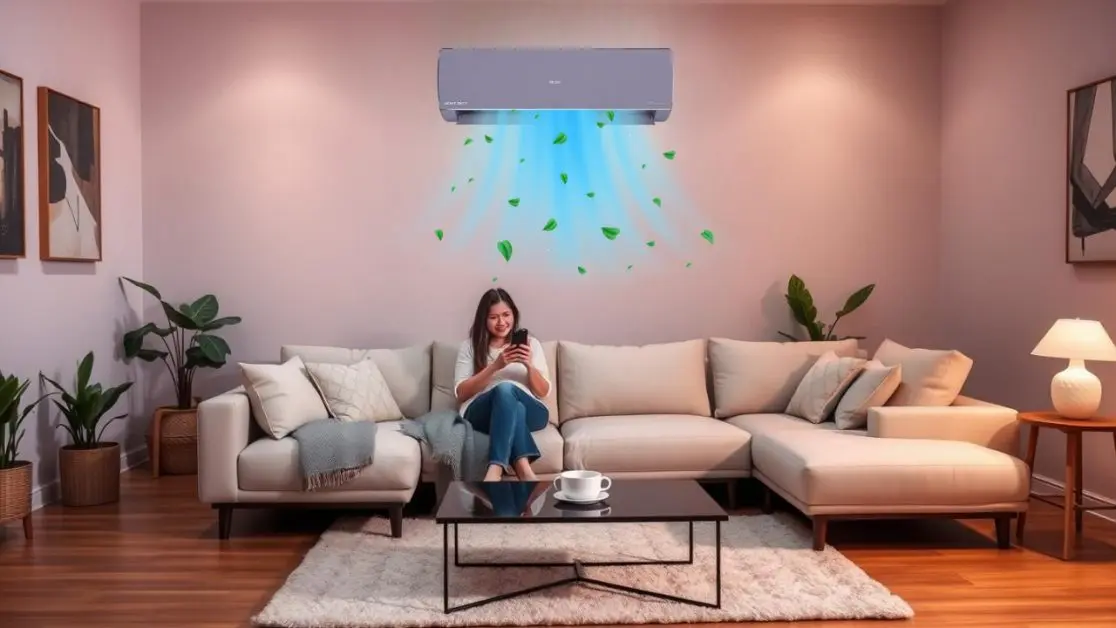
Most energy advice assumes a perfectly organised household.
Switch off when you leave.
Set timers.
Choose Eco mode.
Monitor usage weekly.
In reality?
You rush out for work.
Kids fall asleep early.
Guests arrive unexpectedly.
Meetings run late.
Plans change.
Manual control depends on consistency.
Life does not offer that.
That gap is where automatic energy saving systems step in.
They do not rely on discipline.
They rely on data.
Automatic energy savings are a system, not a feature
Think of it like traffic navigation.
Earlier, you memorised routes.
Now, maps reroute in real time.
You still reach the destination.
Just with less friction and fewer surprises.
Automatic energy saving works the same way.
It is not about one button or one mode.
It is about multiple small decisions happening continuously.
What these systems usually track
- Room temperature and humidity
- Usage patterns across days and seasons
- Occupancy and human movement
- Duration of operation
- Power draw across different modes
The appliance observes.
Learn.
Adjusts.
No reminders required.
The AC example everyone relates to
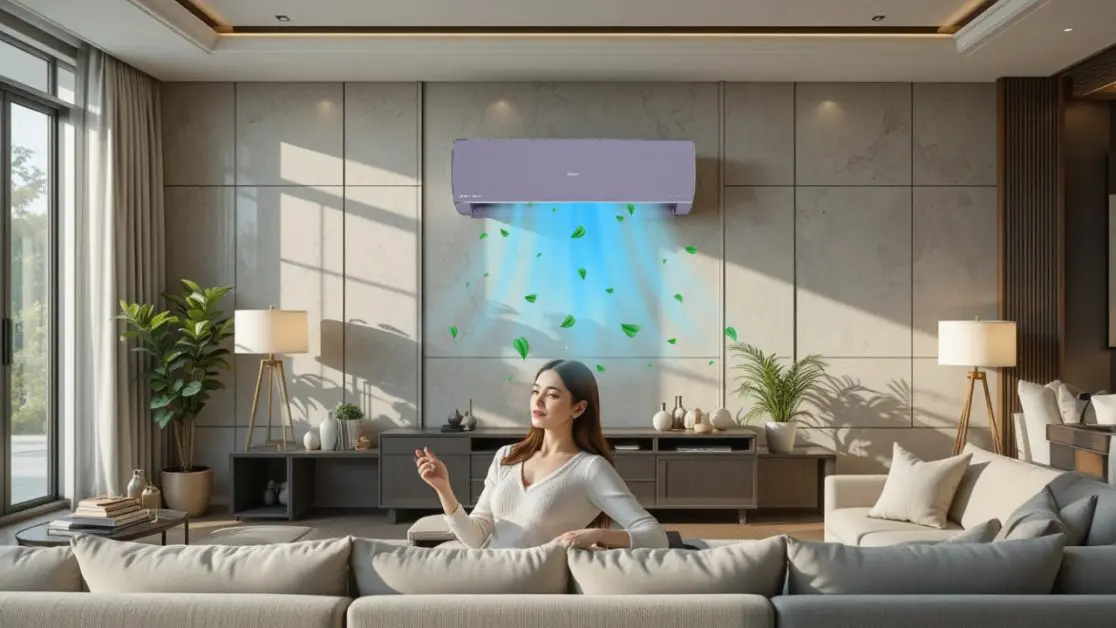
Credits: Haier India, Get Perfect Air conditioner to save energy
Air conditioners are the biggest energy contributors in Indian homes.
They also happen to be the easiest place to waste power without noticing.
Traditional behaviour
- AC cools the entire room equally
- Keeps running at the same intensity
- Does not know who is inside
- Does not know when you are about to arrive or leave
The result is simple.
Comfort arrives late.
Energy waste arrives early.
What automatic systems change
Modern AI-powered AC systems, like those built on Haier’s AI Atmox platform, approach cooling very differently .
They focus on when, where, and how much cooling is needed.
Not just whether the AC is on.
Automatic energy saving works in layers
Layer one: Learning behaviour
The system observes daily routines.
When you usually return home.
How long rooms stay occupied.
Which modes you prefer.
How seasons affect usage.
Over time, it builds a personalized energy profile.
This means the appliance stops treating every day like a blank slate.
Layer two: Predictive adjustment
Instead of reacting, the system anticipates.
For example, AI pre-cooling activates when it senses you are close to home, ensuring comfort without running the AC all day .
That single shift creates two benefits:
- Rooms cool faster
- Total runtime reduces
Comfort improves.
Consumption drops.
Layer three: Targeted usage
Why cool empty space?
AI target cooling focuses airflow where people actually are, rather than treating the room as a single block .
This is one of the most overlooked energy wins.
Cooling the sofa area instead of the entire room is like switching from floodlights to reading lamps.
Same comfort.
Lower cost.
Layer four: Automatic eco optimisation
Most people forget to switch Eco mode on.
Some avoid it because it feels slower.
AI Eco 2.0 systems remove that trade-off.
They adjust compressor capacity dynamically, based on the gap between current temperature and desired comfort .
The system shifts power levels automatically.
You do not feel the change.
The meter does.
Seeing energy makes saving easier
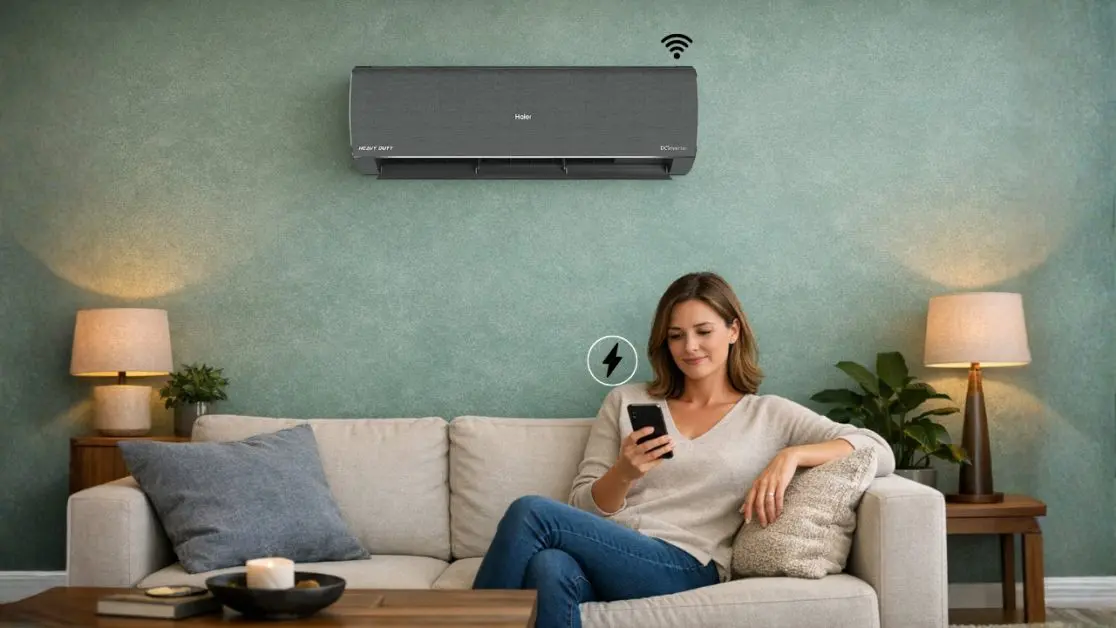
One underrated aspect of automatic savings is visibility.
Electricity monitoring 2.0 tools show:
- Daily and weekly consumption
- Eco vs normal usage time
- Cost estimates in currency
- Trends across months
This changes behaviour without forcing it.
When people see usage, they make better decisions naturally.
No guilt.
Just awareness.
Automatic cleaning also saves energy
Dirty machines consume more power.
Blocked coils.
Dusty condensers.
Moisture buildup.
They all force appliances to work harder.
Automatic self-clean systems keep both indoor and outdoor AC units clean, maintaining efficiency without manual intervention .
Clean systems cool faster.
And faster cooling uses less electricity.
Maintenance becomes invisible.
Savings stay consistent.
The real benefit is mental bandwidth
Here is the part no spec sheet talks about.
Automatic energy savings reduce cognitive load.
You stop:
- Second-guessing settings
- Remembering schedules
- Arguing over temperatures
- Checking switches repeatedly
The home feels calmer.
Energy efficiency becomes a background process, not a daily task.
This is why it works especially well for Indian households
Indian homes are dynamic.
Parents and kids.
Work-from-home and office days.
Festive gatherings.
Guests staying over.
Seasonal heat swings.
Rigid systems fail in flexible environments.
Adaptive systems thrive.
Automatic energy savings respect how Indian homes actually function.
The quiet shift happening in modern homes
Earlier, saving energy meant sacrifice.
Now, it means intelligence.
Appliances no longer wait for instructions.
They participate.
They learn.
They respond.
They optimize.
Without asking for attention.
The insight worth remembering
The biggest energy savings do not come from effort.
They come from removing friction.
When systems do the thinking,
people get the benefit.
Lower bills.
Consistent comfort.
And a home that quietly works in your favour.
That is what effortless energy saving really means.
Frequently Asked Questions
Why do energy-saving tips work for a few days and then fail?
They assume discipline and consistency. Real life, late meetings, guests, kids, festivals, breaks routines. Automation works even when habits don’t.
Why is my electricity bill high even though I don’t feel wasteful?
Because waste comes from small inefficiencies, extra cooling time, empty rooms being cooled, appliances running at full power unnecessarily.
What does ‘AI-powered energy saving’ really mean in appliances?
It means the appliance observes usage patterns, learns preferences, and continuously adjusts power without user input.
What is targeted cooling, and why does it matter?
It directs airflow toward occupied areas rather than treating the room as one block—same comfort, lower cost.
How does predictive cooling reduce my electricity bill?
By pre-cooling only when needed instead of running for long hours “just in case.”
Do I need to keep switching Eco mode manually?
No. AI Eco systems dynamically adjust compressor capacity automatically, removing the comfort vs savings trade-off.