


AI that understands content, not just pixels, analyses what is happening on the screen and why it matters, then adjusts visuals and sound in real time.
Instead of treating every frame equally, it recognises scenes, lighting, motion, and intent. The result feels natural, immersive, and aligned with real life, not just technically sharp.
This shift quietly changes how Indian homes experience entertainment, information, and downtime.
Why were pixels never the real problem?
For years, televisions have chased clarity.
4K became normal.
HDR became expected.
Bigger screens became aspirational.
Yet something still felt incomplete.
A cricket match looked great in daylight but flat at night.
A dark movie scene lost its mood.
Dialogues struggled against ceiling fans and background noise.
The limitation was never resolved.
Pixels show detail.
Understanding shows purpose.
Technology that only counts pixels treats every moment the same. People do not.
Content-aware AI begins with one question

What is actually happening on screen right now?
That single question changes the system.
Instead of asking how bright a pixel should be, AI evaluates context:
- Is this fast-paced sport or slow storytelling?
- Is the room flooded with sunlight or softly lit after dinner?
- Is the viewer watching cinema, news, animation, or gaming content?
Once intent is understood, adjustments become automatic instead of manual.
That is where AI shifts from feature to companion.
From raw data to real understanding
Content-aware AI works in layers, not switches.
Layer one: Scene recognition
The system analyses every frame in real time.
It identifies motion intensity, colour balance, contrast needs, and depth.
A night cricket match.
A sunset travel show.
A close-up emotional scene.
Each requires a different response.
Layer two: Ambient awareness
Indian homes change lighting constantly.
Morning balconies.
Afternoon glare.
Warm bulbs at night.
AI dynamically adapts brightness and tone so visuals remain comfortable without manual tweaking.
Layer three: Sound intelligence
Audio is part of content.
AI understands when clarity matters and when immersion matters.
- Dialogues stay crisp during conversations.
- Background effects expand during action.
- Volume stays balanced without sudden jumps.
Why this matters in Indian homes
Indian living spaces are fluid.
A living room becomes a work zone by day.
A cinema by night.
A family gathering spot on weekends.
Technology that demands constant adjustment breaks this rhythm.
Content-aware AI fits because it adapts silently.
No menus.
No modes.
No interruptions.
The hidden cost of manual control
Manual settings feel empowering at first.
But over time, they become effortful.
One option is constant adjustment.
It offers control but steals attention.
The second option is leaving defaults untouched.
It saves effort but compromises experience.
The third option is content-aware AI.
It balances effort and outcome by learning patterns and acting automatically.
- Manual control costs time.
- Static defaults cost quality.
- Intelligent adaptation saves both.
When AI understands scenes, details feel intentional
Motion is where this becomes obvious.
Sports demand smoothness.
Films demand natural pacing.
The Haier New M96 Series 254cm (100) QD Mini LED AI Smart Google TV (H100M96FUX) uses an AI Ultra Sense Processor co-developed with MediaTek that recognises scenes in real time and fine-tunes motion, contrast, colour, and depth accordingly .
Nothing looks artificially sharp.
Nothing feels sluggish.
Attention stays on the moment.
Brightness that adapts to life, not test labs

Brightness numbers look impressive on paper.
Real rooms are different.
Content-aware AI continuously measures ambient light and adjusts output so visuals stay balanced and comfortable.
Late-night viewing feels gentle.
Daytime sports remain vivid.
Reflections reduce without dulling detail.
This matters in Indian homes where lighting conditions change hour by hour.
Sound that knows what deserves focus
Ever noticed how dialogue disappears during action scenes?
That happens when sound systems treat everything equally.
AI-driven sound processing analyses audio layers and prioritises intelligently.
- Speech stays clear when it matters.
- Effects expand when immersion matters.
- Volume levels remain consistent.
The Haier New M96 Series 254cm (100) QD Mini LED AI Smart Google TV integrates multi-channel audio with Dolby Atmos and Sound by KEF, allowing AI to adapt audio output to content rather than forcing viewers to adjust settings constantly .
The benefit is subtle.
The relief is daily.
Gaming reveals intelligence instantly
Gaming exposes weak systems fast.
Lag.
Tears.
Motion blur.
Content-aware AI recognises gaming input instantly and shifts priorities.
- High refresh handling.
- Reduced latency.
- Motion clarity tuned for responsiveness.
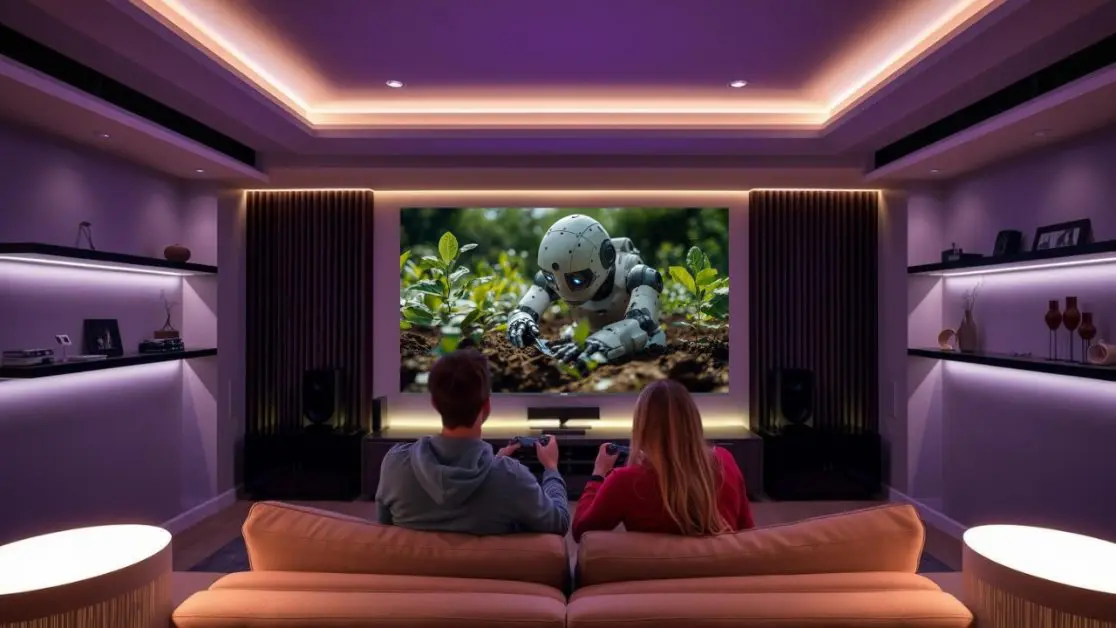
With features like high refresh rates and adaptive sync working alongside AI processing, the viewing experience stays smooth and responsive during gameplay .
No setup rituals.
No mode switching.
Just play.
The best AI stays invisible
Great technology does not announce itself.
It disappears.
When AI works well, viewers stop thinking about settings entirely.
They only notice comfort.
That is the real benchmark.
Not specifications.
Not feature lists.
But moments where nothing distracts from the experience.
A simple way to judge smart technology
Three questions reveal real intelligence.
Does it reduce decisions?
If constant tweaking is required, AI is shallow.
Does it adapt across situations?
One room or one time of day is not enough.
Does it stay consistent?
True intelligence improves quietly, not unpredictably.
Content-aware AI passes all three.
This shift goes beyond televisions
The same thinking is reshaping modern homes.
Fridges that adapt to usage patterns.
ACs that respond to occupancy and climate.
Washing machines that adjust cycles automatically.
The pattern is clear.
Technology moves from command-based to context-based.
Life feels lighter because of it.
Why this feels personal
Because it respects attention.
Modern households already juggle too many decisions.
What to watch.
When to rest.
How to manage energy.
When technology removes friction instead of adding options, trust builds naturally.
Not through persuasion.
Through relief.
The future belongs to systems that understand intent
Screens will keep getting bigger.
Pixels will keep getting sharper.
But the real leap happens when technology understands why content exists, not just how it looks.
When a TV knows the difference between a tense final over and a quiet midnight movie.
When sound adapts to people, not presets.
When intelligence supports instead of interrupts.
That is when homes feel truly smart.
Not because they respond to commands.
But because they understand context.
Frequently Asked Questions
Is it normal that I just leave TV settings untouched even if the picture feels off?
Yes. Most people choose consistency over effort. Static defaults save time but compromise experience. Content-aware AI offers a third path, dynamic adjustment without constant involvement.
Why does my TV look great during the day but dull at night?
Lighting changes drastically in Indian homes, sunlight, tube lights, warm bulbs. TVs without ambient awareness treat all conditions the same. Content-aware AI measures room light continuously and adjusts brightness and tone to stay comfortable.
My dialogues get lost when the fan or AC is on, why?
Traditional audio systems don’t prioritise sound layers. AI-driven sound processing understands when speech matters more than effects and dynamically balances them, keeping dialogue clear even with background noise.
Does AI really understand Indian viewing habits, or is it generic?
It’s built for variability, day/night viewing, shared spaces, mixed usage. That adaptability is precisely what aligns with Indian living patterns.
Why do sports and movies need different motion handling?
Sports demand smoothness and clarity. Films need natural pacing. Treating both the same causes either blur or artificial sharpness. Scene-aware AI recognises intent and tunes motion accordingly.
What does “AI that understands content” actually mean in daily use?
It means the TV asks – What’s happening right now, and why does it matter?
From that, it adjusts picture, sound, and motion automatically, without modes, menus, or interruptions.