
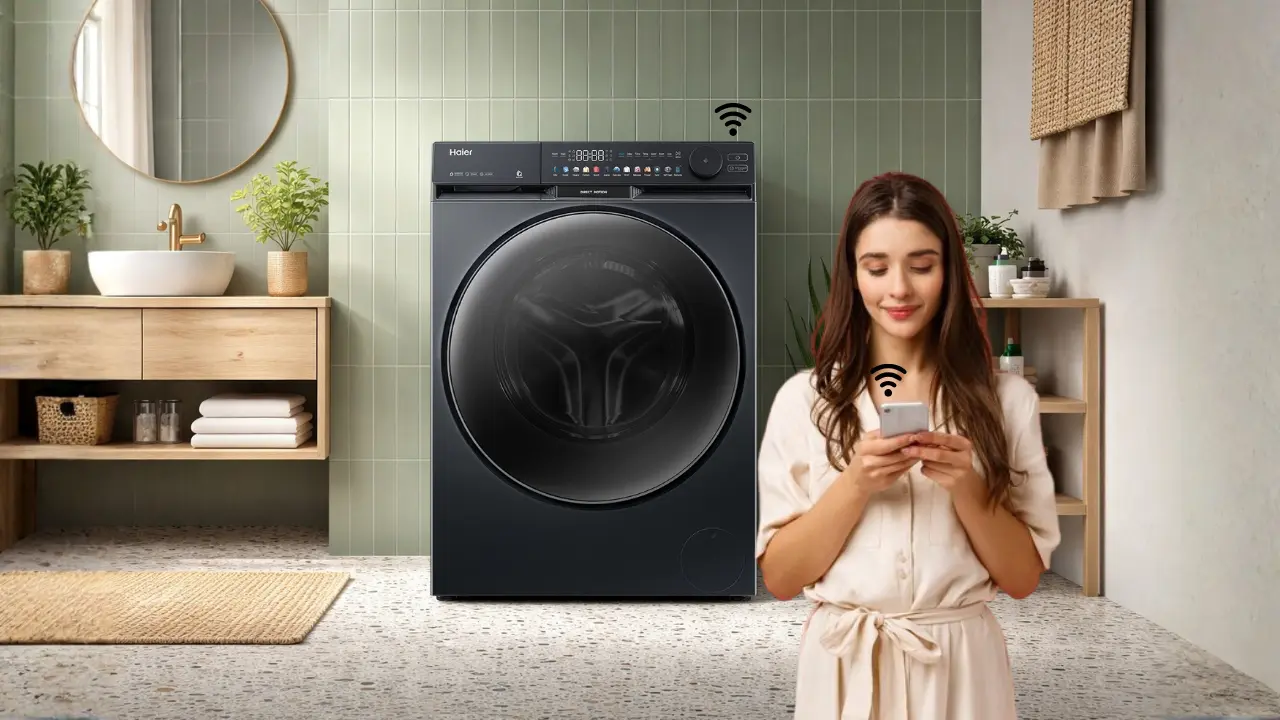

Smart washing that adapts to you means your washing machine understands your clothes, your time, and your lifestyle, then quietly adjusts itself to deliver the right wash without constant decisions.
It senses load, fabric, and dirt levels, balances energy and water use, and fits into real Indian routines where days are full and margins for error are small.
Laundry stops being a task you manage and becomes a system that manages itself.
That shift matters more than we admit.
Why does laundry feel harder than it should?
Think about a regular weekday evening.
You are back from work. The kids’ uniforms are dusty. Gym clothes smell like effort. There is a festival weekend coming up and guests on the way. Somewhere between dinner and downtime, laundry waits.
Laundry is rarely the problem.
Decision fatigue is.
Which mode. How much water. How long. Too much detergent. Too little care. These micro decisions pile up. Over time, they turn a simple chore into mental noise.
Good appliances reduce effort. Smart appliances reduce thinking.
That is the real upgrade.
What does “smart” actually mean in washing machines
Smart does not mean complicated.
In fact, it means the opposite.
A truly smart washing system does three things well.
1. It observes what you load.
2. It understands what that load needs.
3. It acts without asking you to babysit the process.
Modern front load washing machines now use sensors and algorithms to read fabric type, weight, and soil level before setting the wash. Instead of fixed cycles, the machine builds a response.
Intelligence is not about more buttons. It is about fewer decisions.
One touch is not a feature. It is a philosophy
Look at how phones, cars, and even TVs have evolved.
Complexity moved inside the system. Simplicity stayed outside.
The same logic applies to washing.
One-touch AI wash systems now allow users to load clothes, tap once, and walk away. The machine handles water levels, spin speed, temperature, and duration automatically.
For Indian homes, this matters because laundry loads are rarely uniform.
A single drum might hold cotton kurtas, jeans, towels, and children’s clothes together. Traditional machines struggle with this mix. Smart systems adapt.
Haier’s One Touch AI Wash works on this principle, sensing fabric type and dirt level to choose optimal settings automatically.
When machines adapt to people, routines become lighter.
The hidden cost of getting laundry wrong
We rarely calculate this.
But it adds up.
- Excess water use increases monthly bills.
- Longer cycles waste electricity.
- Overwashing damages fabric life.
- Noise disrupts night routines.
- Rewashing steals time.
According to Bureau of Energy Efficiency guidelines, front load washing machines can use up to 60 percent less water compared to older top load models when operated efficiently.
Efficiency is not about restraint.
It is about precision.
Smart washing brings precision into daily life.
How adaptive washing supports real Indian lifestyles
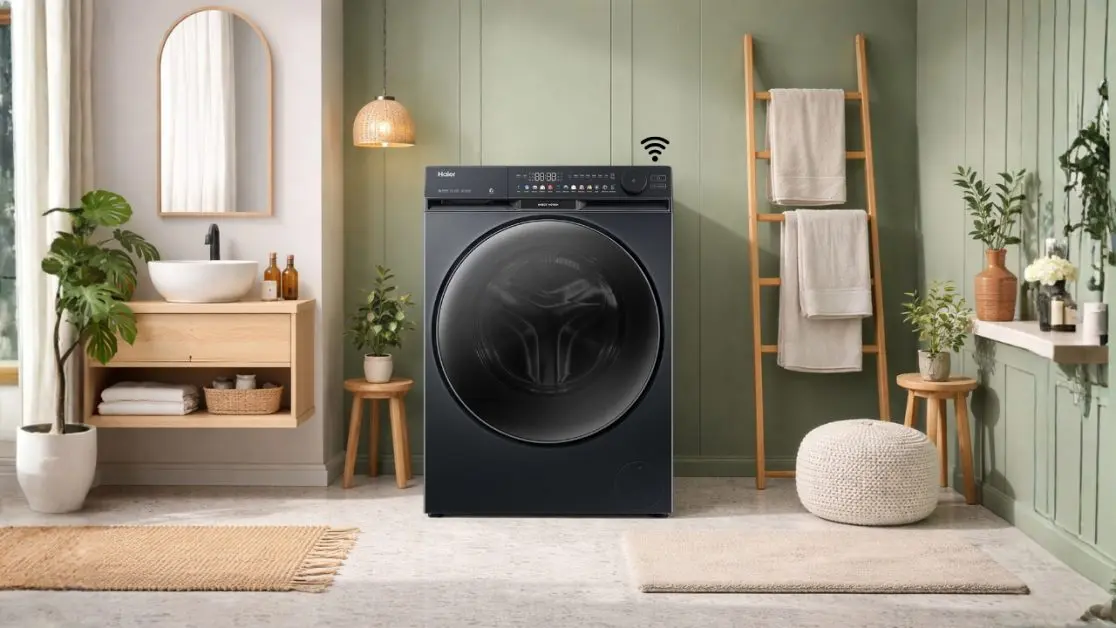
For working professionals living solo
Laundry often runs late at night.
Silent motors and vibration control matter more than flashy design. Direct drive motor systems reduce noise and mechanical wear, making night washes practical in apartments.
Haier’s Direct Motion Motor connects directly to the drum, reducing vibration and improving energy efficiency while keeping operation quiet.
Silence is not luxury. It is respect for shared spaces.
For couples setting up new homes
Early homes teach early habits.
Smart appliances help build better ones.
Automatic detergent distribution, adaptive wash times, and energy-efficient cycles reduce guesswork for first-time buyers. Instead of learning through mistakes, the system guides usage gently.
Less trial. Fewer errors. Longer appliance life.
For parents managing family routines
Children change everything.
Uniforms. Sportswear. Baby clothes. Bedding. Laundry volume multiplies.
Large-capacity drums like 10 kg or 12 kg models allow fewer loads per week. Bigger drums do not just save time. They reduce wear because clothes have more space to move.
Haier’s Super Drum design offers a wider drum diameter that improves washing efficiency while being gentler on fabric.
Capacity is not about size. It is about rhythm.
Smart washing and sustainability are not opposites
There is a common belief that smart appliances consume more resources.
Reality says otherwise.
Smart washing systems optimise:
- Water intake based on load weight
- Heating only when required
- Spin speeds to reduce drying time
- Cycle duration to avoid overuse
Eco wash programs now adjust washing time and water level automatically to reduce resource consumption without compromising cleanliness.
In homes where water availability fluctuates and electricity tariffs rise quietly, these optimisations matter.
Sustainability works best when it happens by default.
When technology disappears, comfort appears
The best technology feels invisible.
You notice its absence only when it fails.
A washing machine that adapts quietly to your habits allows attention to move elsewhere. To my family. To rest. To life beyond chores.
This is why WiFi-enabled machines matter less for control and more for awareness. Notifications about cycle completion or maintenance help users plan better without hovering over the machine.
Control is optional. Confidence is essential.
The role of design in everyday trust
Design is not decoration.
It is communication.
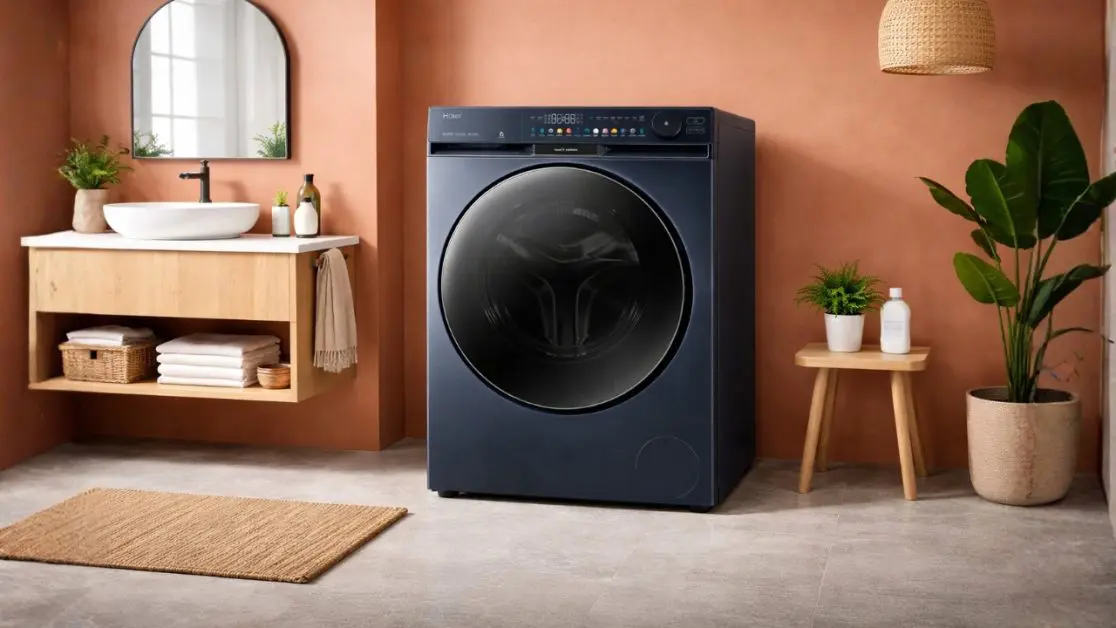
Clear displays, intuitive controls, and visual feedback reduce hesitation. Colour touch panels and guided programs make machines approachable for all age groups, not just the tech-savvy.
Haier’s AI Colour Panel is designed to make interaction intuitive and less intimidating, especially for first-time users or older family members.
A product earns trust before it earns praise.
Smart washing is a system, not a feature list
It helps to think in systems.
- Sensors collect information
- Algorithms interpret context
- Motors execute efficiently
- Design supports human understanding
When these parts align, laundry stops interrupting life.
It fits into it.
This system’s approach explains why smart washing feels calmer rather than smarter.
The goal is not to impress. It is to disappear into daily flow.
Choosing what actually matters
When evaluating a washing machine, buyers usually face three paths.
- The basic option
Lower cost. Manual control. Higher effort over time. - The feature-heavy option
Many modes. Steeper learning curve. Underused capabilities. - The adaptive option
Fewer decisions. Better efficiency. Long-term ease.
Smart washing sits firmly in the third category.
It trades control for clarity.
And clarity compounds.
The quiet future of Indian homes
Homes are getting smaller. Lives are getting fuller.
Appliances need to adjust accordingly.
Smart washing is not about futuristic promises.
It is about respecting time, resources, and mental space. It reflects a broader shift in Indian households toward appliances that work with people instead of asking people to work around them.
Laundry will never be exciting.
But it can be effortless.
And that is the upgrade worth caring about.
Because when everyday systems adapt to you, life feels lighter without trying to be.
Frequently Asked Questions
Why does doing laundry feel so exhausting even though it’s a simple chore?
Because laundry isn’t one task it’s dozens of micro decisions. Mode selection, water level, detergent quantity, fabric care, and timing all compete for attention. Smart washing reduces thinking, not just effort, by making those decisions automatically.
I’m tired of choosing the wrong wash mode. Can a machine really decide better than me?
Yes. Smart machines use sensors to read load weight, fabric type, and dirt level, then build a wash cycle dynamically. Unlike preset modes, the system adapts every time removing guesswork.
Is “one-touch wash” just marketing, or does it actually help?
It helps because it moves complexity inside the system. You load clothes, tap once, and walk away. Fewer choices = less decision fatigue, especially after long workdays.
I left my laundry in the washer overnight. Do I need to rewash it?
Often yes, especially in humid conditions. Smart machines help by optimising spin and moisture removal, reducing the chance of odour-causing bacteria when clothes sit too long.
My gym clothes smell clean but don’t feel fresh. Why?
Over- or under-washing is common. Smart systems adjust water temperature, agitation, and duration based on soil level, ensuring sweat-heavy fabrics get the treatment they actually need.
Can one wash handle mixed loads like jeans, kurtas, towels, and kids’ clothes together?
Traditional machines struggle here. Adaptive systems sense fabric differences and balance drum movement and spin speed to protect delicate items while still cleaning heavier ones.
Do smart washing machines use more electricity or water?
No. In fact, they usually use less. According to guidelines from the Bureau of Energy Efficiency, efficient front-load machines can use up to 60% less water than older models when optimised correctly.
I only get time to wash clothes late at night. Will it disturb others?
Smart machines with direct-drive motors reduce vibration and noise significantly, making night washes practical in apartments.