
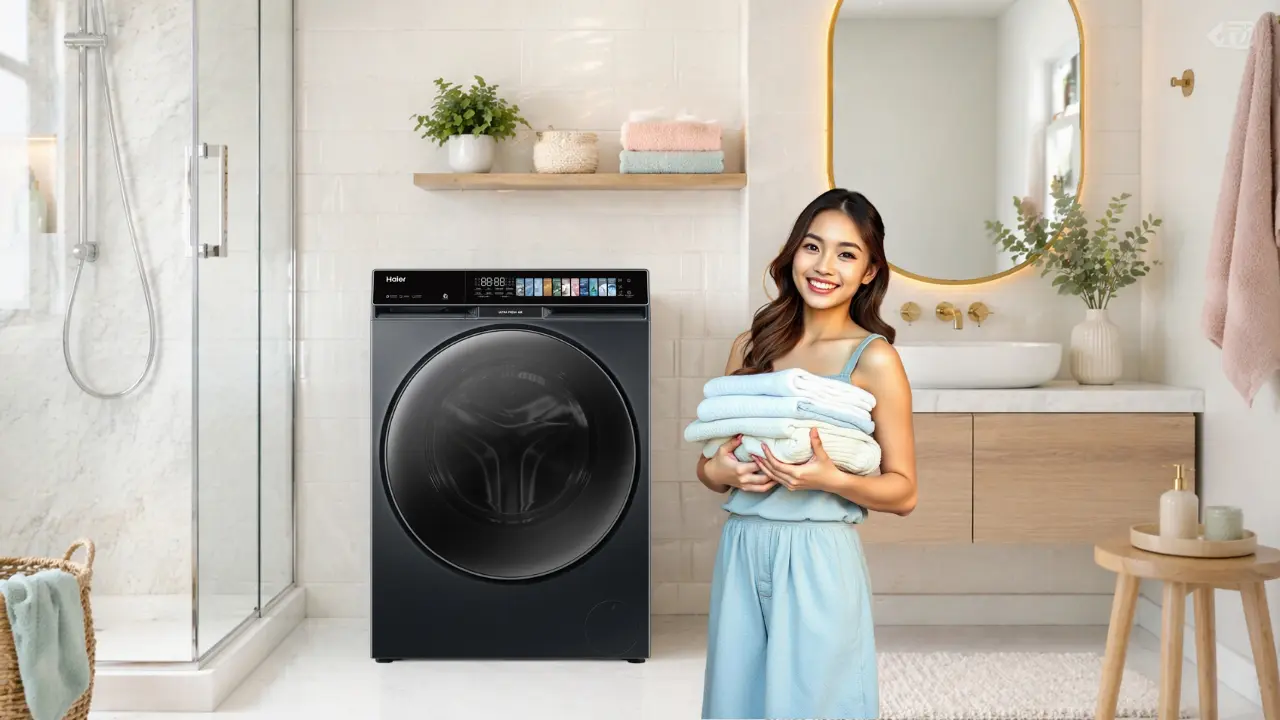

AI washing is better for most modern Indian households because it saves time, reduces effort, and protects fabrics automatically.
Manual washing offers control and low upfront cost, but it demands time and consistency. The real decision is simple. Effort or intelligence.
The Sunday laundry scene everyone recognizes.
It’s Sunday morning.
A bucket. A pile of clothes. A mental checklist.
Whites. Colours. Delicates.
Someone rolls up their sleeves.
And then it begins.
Scrub. Rinse. Repeat.
Now imagine a different version of the same morning.
Clothes go in. A button is pressed. The system decides the rest.
Same clothes. Same dirt.
Different life.
Laundry hasn’t changed. The system around it has.
What Are We Really Comparing Here?
This is not just AI vs manual washing.
These are two different philosophies of living.
One option is manual control
- You decide water levels
- You scrub stains
- You manage rinsing and drying
- You carry the full load
The second option is intelligent automation
- The machine senses load and fabric
- It adjusts water, time, and motion
- It optimises cleaning automatically
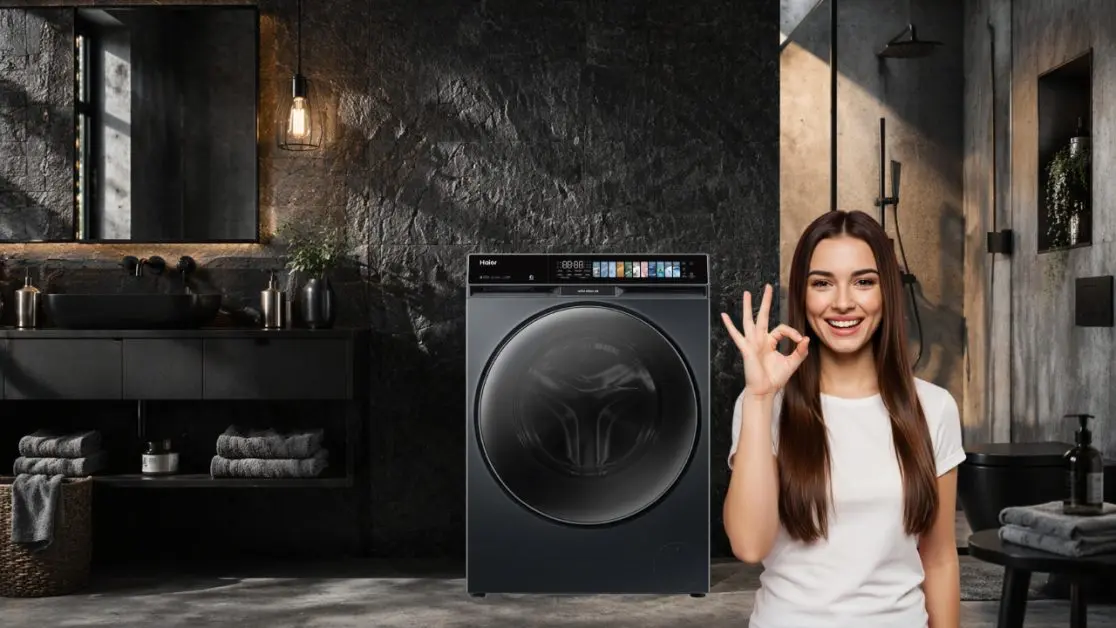
Take machines like the Haier 12 Kg F9 Pro Front Load Washing Machine (HW120-DM14F9BKU1) and the Haier 10 Kg Fully Automatic Front Load Washing Machine (HW100-DM14F9BKU1).
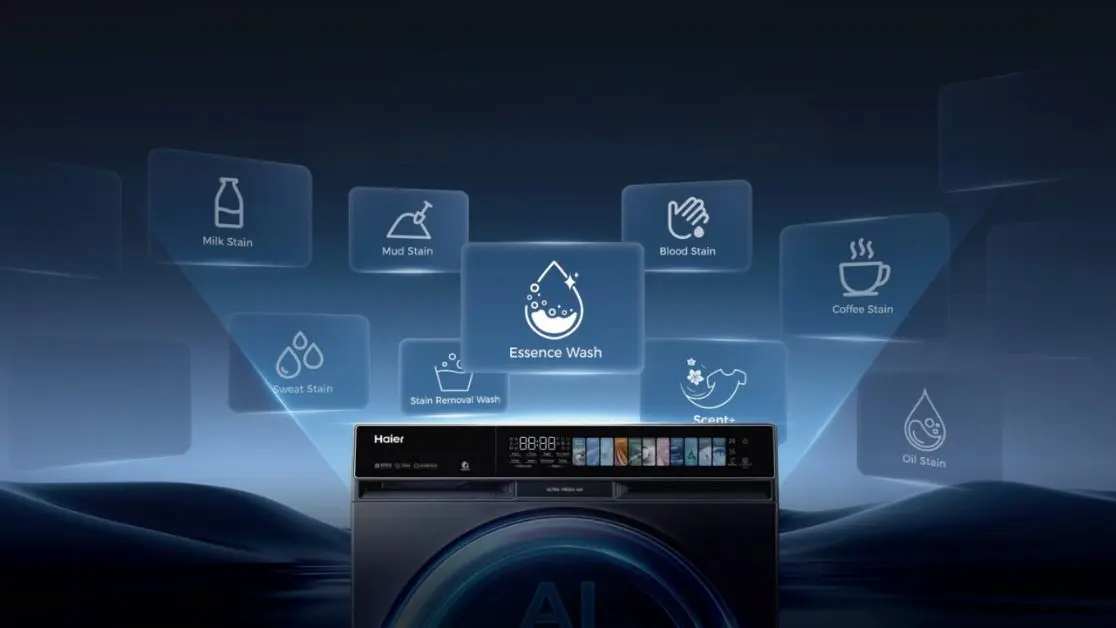
With One Touch AI Wash, they automatically detect fabric type, load size, and dirt level, then select the ideal wash settings
The shift is clear
From doing laundry
To designing how laundry gets done
Manual Washing: Control That Costs Time
Manual washing feels reliable.
Hands-on. Immediate. Familiar.
But control comes with hidden costs.
What manual washing gives you
- Complete control over delicate fabrics
- No electricity consumption
- Low initial investment
- Flexibility for small loads
What manual washing takes away
- 45 to 90 minutes per cycle
- Physical effort, especially for bedsheets and jeans
- Inconsistent cleaning results
- Higher water usage due to repeated rinsing
A typical Indian home washes clothes 4 to 6 times a week.
That adds up to nearly 6 hours of effort.
Manual washing looks simple. Until you measure time.
AI Washing: Intelligence That Removes Decisions
AI washing does something subtle.
It removes decisions you should not have to make.
What AI washing handles for you
- Load detection and water adjustment
- Fabric identification
- Optimal spin speed and wash timing
- Detergent and energy efficiency
For example, the Haier 10 Kg Fully Automatic Front Load Washing Machine (HW100-DM14F9BKU1) uses AI One Touch to automatically match wash parameters for each load
Which means:
- No guesswork
- No trial and error
- No overthinking
Good systems reduce thinking, not just effort.
AI vs Manual Washing: A Practical Comparison
| Factor | Manual Washing | AI Washing |
| Time per load | 45 to 90 minutes | 30 to 60 minutes hands-free |
| Effort | High | Minimal |
| Water usage | Often higher | Optimised automatically |
| Fabric care | Skill-dependent | Consistent and intelligent |
| Energy use | No electricity | Energy-efficient |
| Consistency | Varies | Reliable every time |
The difference is not convenience.
It is consistent.
The Hidden System Behind Laundry
Laundry is not about soap and water.
It is about managing three variables:
- Water
- Time
- Motion
Manual washing depends on experience.
AI washing depends on systems.
Features like Eco Wash automatically balance water levels and washing time to reduce waste and improve efficiency
Experience works. Systems scale.
Three Types of Households. Three Clear Choices
The best option depends on how your home functions.
1. The time-constrained home
- Working professionals
- Dual-income couples
- Families with kids
Best choice: AI washing
Because time matters more than effort.
2. The control-focused home
- Small households
- Occasional washing
- Budget-sensitive buyers
Best choice: Manual or semi-automatic
Because flexibility is key.
3. The efficiency-driven home
- Large families
- Frequent laundry loads
- Focus on hygiene and consistency
Best choice: AI front load machines
Because systems outperform effort at scale.
Fabric Care Is Where AI Wins Quietly
Cleaning is visible.
Damage is gradual.
Manual washing depends on judgment.
Too much scrubbing weakens fabric.
Too little leaves stains behind.
AI-powered machines like the Haier 12 Kg F9 Pro Front Load Washing Machine (HW120-DM14F9BKU1) automatically adjust wash intensity based on fabric type and dirt levels, ensuring better care over time
Add to that:
- Dedicated programs for cotton, jeans, baby care
- Steam-based refresh cycles for odour removal
- Gentle drum movement for delicate fabrics
Washing is not just cleaning. It is preservation.
Electricity vs Water: The Misunderstood Trade-off
Many assume manual washing saves more.
But look closer.
Manual washing
- No electricity use
- Often higher water consumption
- Inconsistent detergent usage
AI washing machines
- Use electricity, but efficiently
- Optimise water per cycle
- Reduce detergent waste
Direct Motion Motors in Haier machines ensure lower noise, better durability, and improved energy efficiency
Efficiency is not about avoiding usage. It is about optimising it.
Convenience Has Become Infrastructure
There was a time when washing machines were upgraded.
Today, there are expectations.
Because life has changed.
Work stretches longer.
Schedules shift constantly.
Weekends are no longer empty.
Features like:
- Night Wash for silent cycles
- WiFi-enabled remote control
- Quick wash programs
are not luxuries anymore.
They are responses to real life.
So, Which Is Better? AI or Manual Washing?
Here is the honest breakdown.
Manual washing is better when:
- You wash occasionally
- You want full control
- Budget is your primary constraint
AI washing is better when:
- You wash frequently
- You value time and consistency
- You want long-term fabric care
But there is a deeper insight.
The best system is the one you stop thinking about.
The Real Shift: From Effort to Design
We used to do everything manually.
Now we build systems.
We used to scrub clothes.
Now machines learn patterns.
This is not about convenience.
This is about evolution.
Every generation moves from effort to intelligence.
What This Means for Your Home
The real question is not:
“Which is better?”
The real question is:
“Where do I want to spend my energy?”
Because time is limited.
Attention is limited.
And laundry is just one part of your day.
A Simple Way to Decide
If laundry feels like a task.
Manual works.
If laundry feels like something that should run in the background.
AI wins.
The Insight That Stays
Clothes will get clean either way.
But your time will not come back.
And that changes everything.
The smartest homes are not filled with machines.
They are designed so effort quietly disappears.
Frequently Asked Questions
Do I really need an AI washing machine, or am I overcomplicating things?
If you wash clothes frequently (4–6 times a week), AI machines remove dozens of small decisions, water level, timing, fabric care saving both time and mental effort.
I’m tired of sorting clothes every time. Can AI washing handle that for me?
Yes, AI washing machines detect fabric type and load automatically, so you don’t need to manually separate everything unless it’s extremely delicate.
Is AI washing actually smarter, or just marketing hype?
It’s practical intelligence. Machines like Haier 12 Kg F9 Pro Front Load Washing Machine (HW120-DM14F9BKU1) use sensors to optimize wash cycles based on real inputs not guesses.
I just want laundry to happen in the background. What should I choose?
AI washing. It’s designed exactly for that minimal thinking, minimal involvement.
What does “AI washing” actually do in real life?
It detects load size, fabric type, and dirt level then automatically sets water, time, and spin speed.
Do I still need to choose settings manually?
Not usually. One-touch AI modes handle most decisions for you.
Are smart features like WiFi control actually useful?
Yes, especially for busy schedules you can start, pause, or monitor cycles remotely.
Is AI washing worth it for large families?
Absolutely. Machines like Haier 10 Kg Fully Automatic Front Load Washing Machine (HW120-DM14F9PBKU1) handle frequent, heavy loads efficiently.