


Wash kids’ Holi clothes safely by rinsing colours immediately with cold water, pre-treating stains gently, separating whites from brights, and using a mild detergent on a fabric-appropriate cycle.
Avoid hot water first. Let the wash system do the heavy lifting without damaging delicate fibres or sensitive skin.
That is the practical answer.
The real story begins on the balcony.
The balcony after Holi tells the truth.
It is 4:30 pm.
Your child walks in, smiling, hair pink, T-shirt unrecognisable.
Blue on the sleeves. Green on the collar. A stubborn purple patch right in the middle.
The instinct is panic.
The assumption is damage.
But Holi stains are not disasters. They are chemistry problems.
And chemistry rewards calm systems.
According to dermatologists quoted by the Indian Association of Dermatologists, over 30 percent of post-Holi skin complaints relate to synthetic colours. If colours irritate skin, imagine what they do to fabric fibres.
The way you wash matters.
Because colour particles bind differently depending on water temperature, detergent strength, and fabric weave.
Cold water loosens.
Hot water locks.
That single decision shapes the result.
Step One: Act Fast, But Act Right
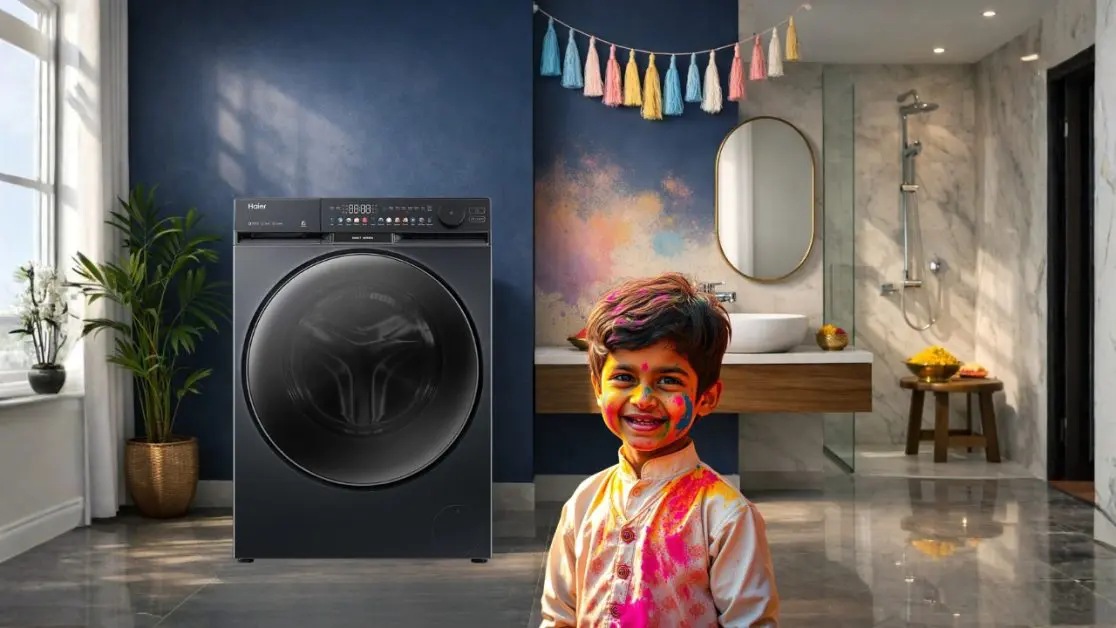
Why timing is more powerful than scrubbing
Most Holi colours today are either water-soluble dyes or oil-based pigments. Water-soluble colours respond best to immediate rinsing. Oil-based stains need gentle lifting agents.
The first 30 minutes are crucial.
One option is to throw the clothes in a corner and deal with them later.
The second option is to rinse immediately under running cold water.
The third option is to soak briefly in cold water with a mild detergent before washing.
The third option wins.
Because soaking loosens surface particles without pushing pigment deeper.
Speed reduces stain strength. Patience protects fabric.
Cold Water Is Not a Suggestion. It Is A Strategy.
Hot water feels powerful. It feels effective.
It is not.
Textile research from the American Cleaning Institute confirms that heat can set protein-based and dye-based stains permanently if applied too early.
Holi colour is often a synthetic dye.
So:
| Washing Step | Right Choice | Why It Works |
| First rinse | Cold water | Prevents stain setting |
| Pre-soak | Mild detergent in cold water | Loosens pigments |
| Main wash | Fabric-appropriate cycle | Protects fibres |
Heat belongs later, if at all.
This is not about being gentle for the sake of it. It is about understanding how dyes behave.
Pre-Treating Without Over-Treating
Scrubbing is satisfying. It is also destructive.
Children’s cotton T-shirts, leggings, frocks, and shorts often use soft, breathable weaves. Aggressive scrubbing weakens fibres.
Instead:
- Dab liquid detergent directly onto the stain.
- Let it sit for 10 to 15 minutes.
- Gently rub fabric against itself, not with a hard brush.
If colours are oil-based, a few drops of diluted vinegar can help break residue. Always test first.
India’s Bureau of Energy Efficiency recommends lower-temperature washing to reduce energy use. That same practice protects fabrics during Holi clean-up.
Smart homes understand this balance.
Efficiency and care can coexist.
Separate Like a Pro, Not Like a Panic Parent
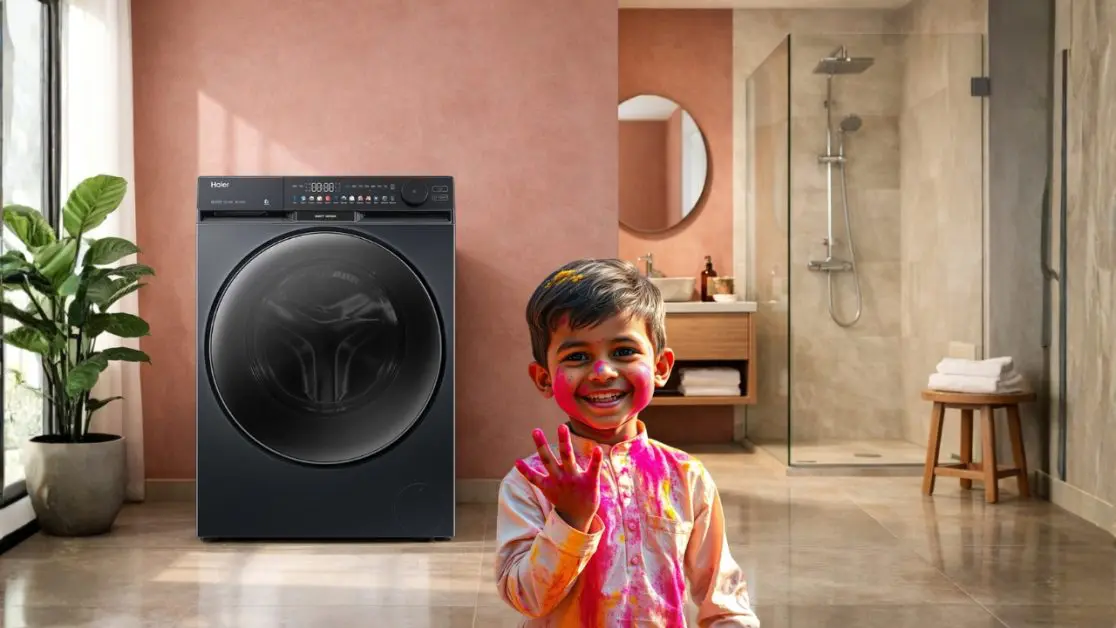
Colour bleeding is preventable
Holi clothes are already overloaded with colour. Adding whites to that wash is an invitation to regret.
One option is to wash everything together and hope for the best.
The second option is to separate whites, pastels, and heavily dyed clothes.
The third option is to run smaller, smarter loads.
The second and third options are smarter.
Smaller loads reduce friction.
Reduced friction means less colour transfer.
Modern front load washing machines are designed for this logic. Systems like the Haier 10 Kg Fully Automatic Front Load Washing Machine with AI One Touch Wash automatically sense load size, fabric type, and dirt level to optimize water and spin settings.
That matters.
Because too much spin on a heavily stained garment can push dye deeper into fibre threads.
Smart wash cycles remove guesswork.
Choosing the Right Wash Program for Kids’ Clothes
Children’s skin is sensitive. Post-Holi, it is even more so.
A wash program that rinses thoroughly is non-negotiable.
According to the product specifications of the Haier 12 Kg F9P Front Load Washing Machine, dedicated programs like Baby Care, Allergy Care, and Extra Rinse help ensure residue-free washing.
Why does this matter?
Because detergent residue plus colour residue equals irritation.
Here is a simple framework:
| Fabric Type | Recommended Approach | Benefit |
| Cotton | Cotton or Daily Wash program | Deep cleaning without fibre damage |
| Delicates | Delicate/Silk program | Gentle motion |
| Sportswear | Synthetic or Sport program | Maintains elasticity |
| Heavily stained | Extra Rinse + Cold Wash | Removes pigment thoroughly |
The goal is not just clean clothes. The goal is skin-safe clothes.
That shift changes how we wash.
Spin Speed Is a Decision, Not a Default
High spin speeds remove more water. They also increase friction.
If your machine offers adjustable RPM up to 1400, like many advanced front load systems, remember this:
Higher spin means faster drying.
Lower spin means less fibre stress.
For Holi clothes:
- Use moderate spin.
- Avoid maximum RPM for delicate garments.
- Air dry under shade to prevent colour fading.
The invisible system here is mechanical stress.
Every wash cycle is a negotiation between cleanliness and longevity.
Night Wash and Real Indian Homes
Holi is chaotic.
Laundry rarely happens at 5 pm with sunlight and peace.
It happens at 10:45 pm, when everyone is tired.
Silent washing options such as Night Wash, available in select advanced models, allow cycles to run without disturbing sleep.
This is not about features.
It is about rhythm.
Indian homes function in waves.
Festivals create surges.
Appliances that adjust to those surges reduce friction in daily life.
Good systems absorb chaos. They do not amplify it.
Water Usage After Holi: The Hidden Cost
India faces recurring water stress. NITI Aayog reports that nearly 600 million Indians experience high to extreme water stress annually.
Holi often increases water use dramatically.
Efficient wash programs that automatically adjust water levels reduce unnecessary consumption. Features like Eco Wash, highlighted in modern front load, match water and time to load size.
The cost benefit is clear:
- Lower water use
- Lower electricity bills
- Reduced environmental impact
Festivals should create memories, not waste.
When Colours Refuse to Leave
Some stains linger.
This is where systems thinking matters.
One option is to repeat hot washes.
The second option is to reapply gentle stain treatment and wash again in the cold.
The third option is to accept slight fading as part of the story.
Sometimes the third option is the healthiest.
Clothes are functional memories.
A faint pink mark on a white tee is not a failure. It is evidence.
Not every stain needs erasing. Some need reframing.
Drying Safely After the Wash
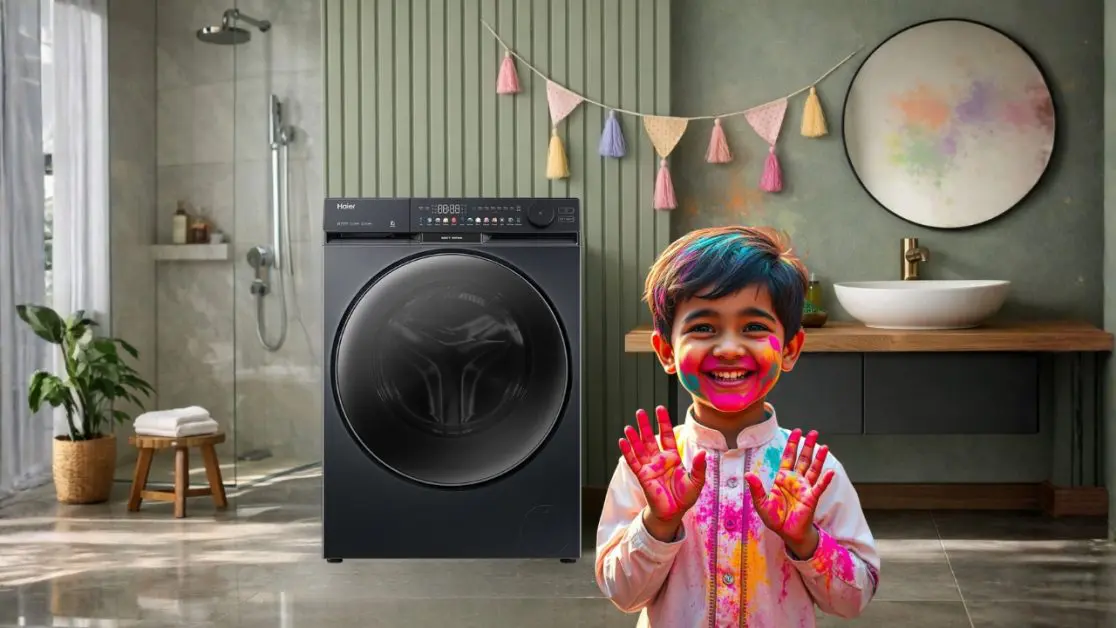
Direct sunlight can bleach colours unevenly.
Instead:
- Turn clothes inside out.
- Dry under shade with airflow.
- Avoid metal hangers for wet, delicate fabrics.
Fabric fibres are most vulnerable when wet.
Respect that window.
Building a Holi Laundry System for Next Year
The smartest homes do not improvise every year.
They prepare.
Here is a simple pre-Holi system:
- Choose darker, older clothes for kids.
- Keep a laundry basket ready near the entrance.
- Stock mild liquid detergent before the festival.
- Plan a same-day wash schedule.
It is not dramatic.
It is intentional.
And intentional systems reduce stress.
What This Teaches Us About Homes
Holi colours wash out.
Stress lingers longer.
The way we handle post-festival laundry says something about how we run our homes.
Reactive washing creates damage.
Structured washing creates control.
Smart appliances, when used thoughtfully, become silent partners. AI One Touch Wash settings that detect fabric type and dirt level remove decision fatigue.
Less guessing.
More clarity.
And that clarity matters in busy Indian households where both parents work, children juggle school schedules, and evenings feel compressed.
Laundry is not about fabric.
It is about systems.
The Insight That Stays
Holi stains are temporary.
Laundry habits are permanent.
Cold water first.
Gentle pre-treatment.
Smart separation.
Thoughtful cycles.
Do this, and kids’ Holi clothes stay safe.
More importantly, the home feels organised even after chaos.
And that is the real win.
Because the goal is not spotless fabric.
The goal is a home that feels sorted, even when life is colourful.
Frequently Asked Questions
I just got home from Holi and I’m exhausted. What’s the first thing I should do with my child’s stained clothes?
Rinse immediately under running cold water, then soak briefly in cold water with mild detergent before the main wash.
I feel tempted to use hot water to remove stains faster. Will that ruin the clothes?
Yes, hot water can set synthetic dye stains permanently. Always start with cold water.
Should I scrub hard to get the colour out quickly?
No. Aggressive scrubbing damages soft cotton fibres. Instead, dab liquid detergent, wait 10–15 minutes, and gently rub fabric against itself.
Can I just throw everything into the washing machine together and hope for the best?
It’s risky. Separate whites, pastels, and heavily coloured garments to prevent colour bleeding.
I’m overwhelmed. Is there a simplified 3-step system I can follow every year?
Yes:
Cold rinse immediately
Gentle pre-soak
Fabric-appropriate wash cycle
My child has sensitive skin. How do I make sure no colour residue remains?
Use a Baby Care or Extra Rinse program to remove detergent and dye residue thoroughly.
I left my child’s Holi clothes in a basket for hours. Is that dangerous?
It’s not dangerous, but stains become harder to remove. Soak in cold water before washing.
Do Holi colours actually irritate skin and fabric?
Yes. Many synthetic dyes can irritate skin and bind to fibres differently depending on water temperature.
Should I use strong detergent to kill germs and remove colour?
Avoid harsh detergents. Mild liquid detergent cleans effectively without damaging fabric or irritating skin.
How do I wash Holi clothes if my child has allergies?
Choose Allergy Care or Extra Rinse settings and avoid fabric softeners.