
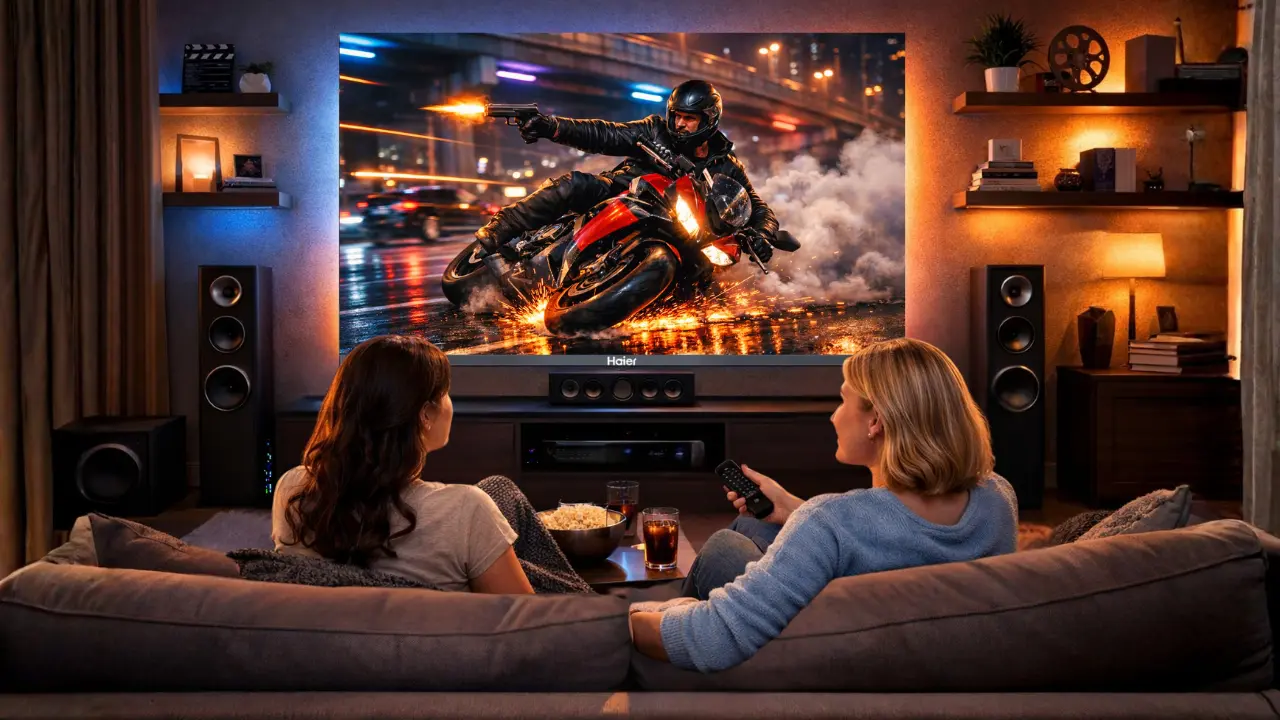

Better entertainment happens when picture and sound are designed as one system, not two separate features.
When visuals adapt to content and sound fills the room naturally, watching stops feeling like screen time and starts feeling like an experience.
A smart picture plus smart sound does not impress loudly. It feels right, effortless, and deeply immersive.
That is the simple answer.
The real story begins inside Indian living rooms.
The familiar moment that exposes the problem
It is a Friday night.
Dinner is done. Phones are on charge. Someone opens Netflix or switches to live cricket.
The screen looks sharp. The sound is loud.
And yet something feels off.
Dialogues need subtitles. Action scenes feel thin. Music never quite lands. You adjust brightness. You raise the volume. Then lower it again.
This is not a content problem.
It is a system problem.
Most TVs still treat picture and sound as separate checkboxes. But the human brain never does.
Your brain experiences picture and sound together
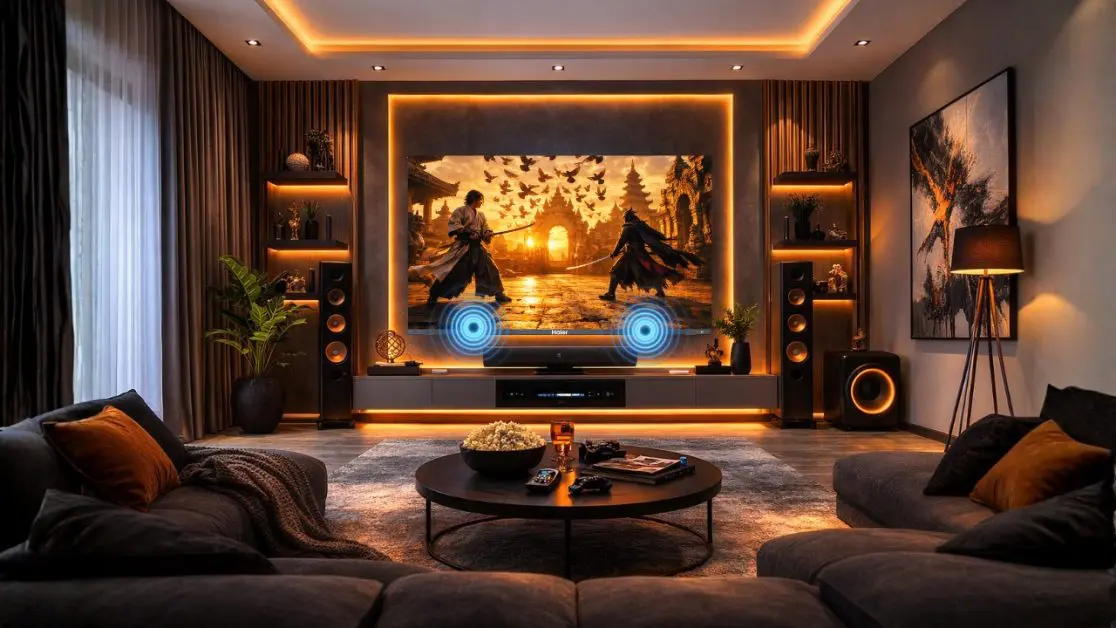
Here is a quiet truth.
The brain does not process visuals first and audio later.
It experiences them as one event.
When picture and sound are mismatched in quality, immersion breaks instantly.
- Sharp visuals with weak sound feel empty
- Loud sound with flat visuals feels tiring
- Strong sound and strong picture together feel invisible
The best entertainment does not draw attention to technology.
It pulls attention into the moment.
What makes a picture truly smart today
A smart picture is not about brightness numbers alone.
It is about context.
A cricket match, a late night thriller, a YouTube vlog, and a console game all demand different visual behaviour. Smart picture systems recognise this automatically.
Smart picture systems do three things consistently
They read the scene.
Motion, colour, contrast, and depth are analysed in real time.
They adjust dynamically.
Brightness and tone shift scene by scene, not once per preset.
They respect the room.
Ambient light, reflections, and viewing conditions are factored in automatically.
This is why AI-powered picture processors matter more than raw panel specs.
They remove guesswork.
You stop managing settings.
The TV starts managing reality.
Why sound breaks immersion faster than picture
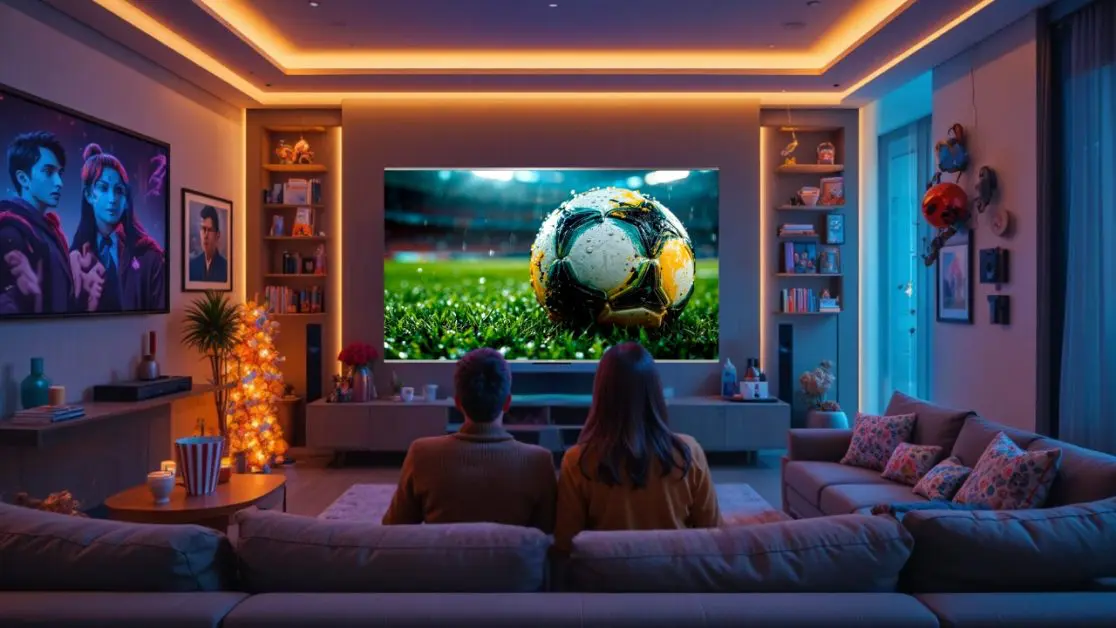
You can tolerate average visuals longer than bad sound.
Bad sound demands attention.
Dialogues disappear. Bass overwhelms voices. Surround effects feel artificial. Volume keeps creeping up without you realising it.
Sound fatigue sets in quietly.
Smart sound solves a different problem
Smart sound is not about louder speakers.
It is about placement, balance, and direction.
- Voices stay anchored to the screen
- Background effects spread naturally across the room
- Bass supports emotion instead of overpowering it
When sound is engineered well, you stop noticing speakers.
You notice the feeling.
The hidden system most TVs still ignore
Most TVs optimize the picture first and treat sound as an accessory.
This approach misses how humans actually experience media.
Sound shapes perception.
Multiple media studies show that viewers rate picture quality higher when audio quality improves, even if visuals stay the same.
Sound tells your brain what matters.
A whisper in a quiet scene.
A stadium roars during a boundary.
A footstep behind the character.
When sound places you inside the scene, the picture suddenly feels deeper.
When picture and sound work as one system
The next leap in home entertainment comes from integration.
Picture systems that inform sound systems.
Sound systems that respond to visual cues.
This is where modern AI-led TVs change the experience.
One system. Multiple senses.
- Fast motion triggers clearer audio separation
- Cinematic scenes widen soundstage automatically
- Sports content amplifies atmosphere without drowning commentary
This is not manual tuning.
It is contextual intelligence working quietly in the background.
A real moment Indian homes recognise instantly
Think about cricket night.
The camera pans across the stadium. The crowd swells. The ball hits the bat.
If the picture is smooth but the sound is flat, excitement drops.
If the sound is loud but the visuals lag, the timing feels wrong.
But when motion stays fluid and sound arrives from the right direction at the right moment, something shifts.
You lean forward.
That is immersion.
Why big screens demand smarter systems
As screens get larger, weaknesses get louder.
This is why premium large-screen TVs focus on integrated audio and visual architecture instead of treating sound as an afterthought.
The Haier M96 Series 254cm (100) QD Mini LED AI Smart Google TV (H100M96FUX) is a good example of this thinking.
It is designed around an AI Center that coordinates picture, sound, gaming, and ambient inputs as one system.
Its AI Ultra Sense Processor analyses scenes quickly and tunes visuals in real time, while QD Mini LED technology delivers high contrast, deep blacks, and precise brightness control across thousands of dimming zones.
On the audio side, its Sound by KEF 6.2.2 channel speaker system with Dolby Atmos creates layered sound that matches the physical scale of the screen.
This is not about listing features.
It is about proportion.
A large screen needs equally intelligent sound and processing to feel balanced.
Smart entertainment reduces effort, not adds options
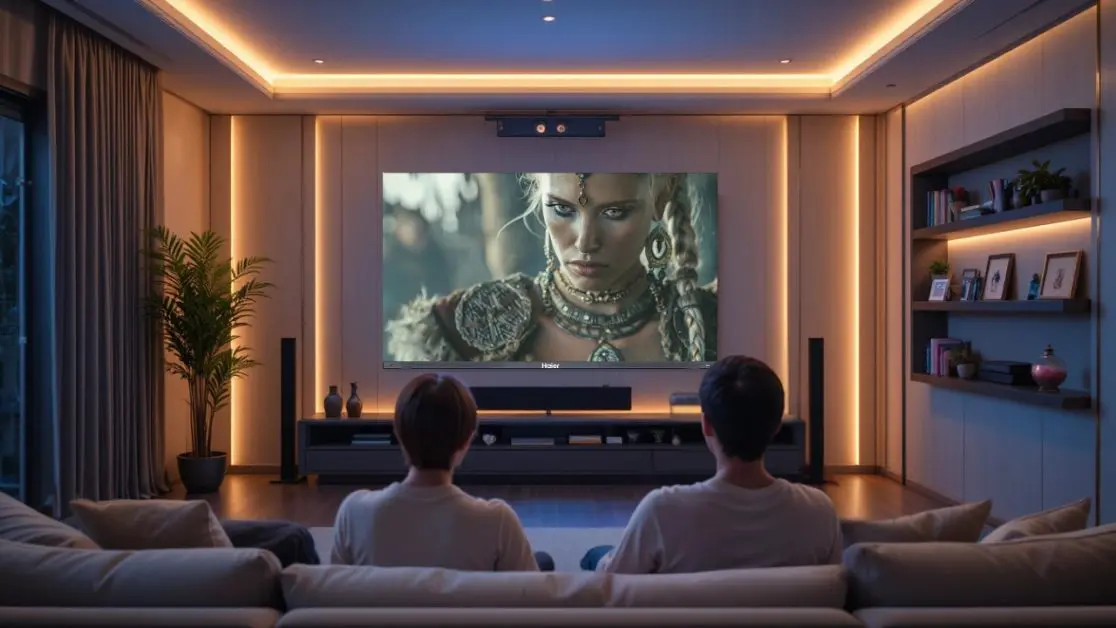
Here is the paradox most people discover late.
The best technology asks the least from you.
Older TVs offered more modes and more controls.
Newer TVs aim to remove decisions entirely.
- No constant volume correction
- No brightness changes between scenes
- No immediate need for external soundbars just for clarity
Smart systems remove friction quietly.
That is the upgrade people feel before they can explain it.
Three ways households approach entertainment today
Option one: Add-ons everywhere
Soundbars. Extra remotes. Manual calibration.
Benefit: High customisation
Cost: Complexity, clutter, and constant adjustment
Option two: Strong picture, average sound
Sharp visuals paired with basic audio.
Benefit: Visual impact
Cost: Dialogue fatigue and reduced emotional pull
Option three: Integrated intelligence
Picture and sound designed together, managed by AI.
Benefit: Consistency and immersion
Cost: Requires thoughtful engineering, not shortcuts
The third option scales best with modern Indian living.
This shift is bigger than entertainment
This is not just about movies and matches.
It is about mental load.
After long workdays, people want experiences that do not demand attention to settings. They want technology that feels aligned with life, not something that needs managing.
Smart entertainment reflects a broader shift in home design.
From control to comfort.
From features to flow.
The future of entertainment feels quieter
The most advanced systems rarely announce themselves.
They work in the background.
Picture adapts.
Sound balances.
The room responds.
And life continues.
That is the real promise of a smart picture plus smart sound.
Not louder specs.
Not more buttons.
Just better evenings.
When technology respects human attention, entertainment stops feeling like a task and starts becoming restful.
Frequently Asked Questions
Why do I keep adjusting my TV brightness every time I watch something different?
Because most TVs rely on static presets instead of scene-based AI adjustments. Without real-time tuning, content with different lighting styles (sports vs. thrillers vs. YouTube) requires manual correction.
Why does my TV sound too loud during action scenes but too soft during dialogues?
Standard audio systems don’t dynamically separate voice from background effects. Smart sound systems rebalance in real time so dialogue remains clear without constant volume changes.
Is it normal to use subtitles even when the volume is high?
Yes and it usually signals weak voice clarity, not hearing issues. Smart audio processing keeps voices anchored and distinct.
Why does watching TV sometimes feel tiring even when I’m just relaxing?
Constant micro-adjustments brightness, volume, clarity create hidden mental load. Integrated AI systems reduce that friction.
Why does my TV look sharp but still feel flat?
Sharpness alone doesn’t create depth. Contrast control, motion smoothing, and synchronized sound staging create perceived realism.
Why does loud audio sometimes feel exhausting instead of immersive?
Loudness is not the same as clarity. Poor sound separation forces your brain to work harder.
Why do sports feel less exciting at home than in a stadium?
If ambient crowd audio isn’t spatially layered correctly, the atmosphere collapses into flat noise.
Does sound quality really affect how I see the picture?
Yes. Studies show viewers rate visuals higher when audio improves even if the image stays identical.