
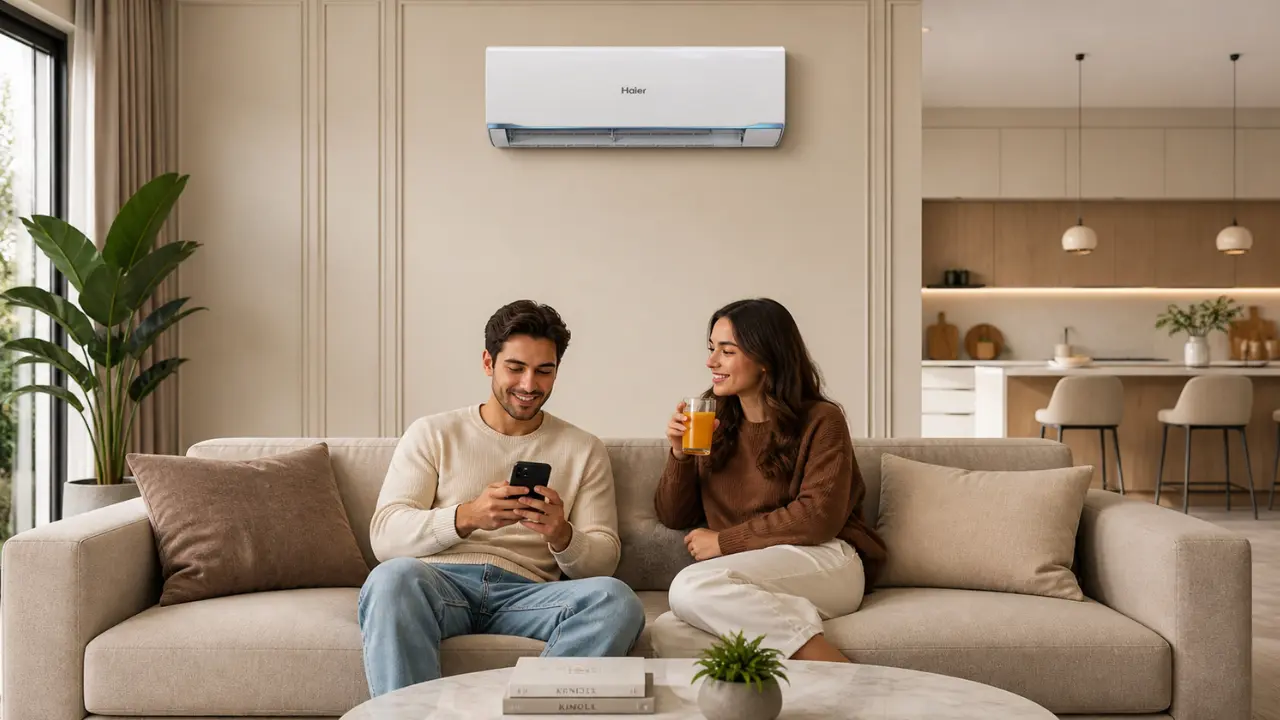

AI-based human detection in homes improves comfort, reduces energy waste, and makes everyday living more intuitive by allowing appliances to respond to real human presence instead of assumptions.
It shifts homes from reactive systems to intelligent environments that adapt automatically, saving time, effort, and electricity.
Why does your home still run like nobody is watching?
It is 2:15 PM.
The room is empty. Curtains are still. The AC hums quietly.
No one is there.
But the system does not know that.
This is how most homes operate.
Not based on presence. But based on instructions given earlier.
Switch on. Stay on. Until someone remembers to switch it off.
That gap between reality and response is where energy gets wasted.
And where comfort quietly breaks down.
AI-based human detection closes that gap.
What is AI based human detection, really?
At its simplest, it answers one question.
Is someone actually here?
But the way it answers that question changes everything.
The system behind the simplicity
AI human detection combines:
- Infrared sensors to detect body heat
- Machine learning to avoid false detection
- Behaviour learning to understand habits
In advanced systems like the and the Haier 1.8 Ton 5 Star Desert Rose Air Conditioner (HSA20DSD-NAI5NB-I), this goes further.
It does not just detect.
It learns.
It adapts.
It responds in real time.
For example, Haier’s AI Human Detection enables precise presence detection with zero energy waste, ensuring the AC runs only when needed.
That is the shift.
From manual control to context-aware living.
Benefit #1: Energy savings that happen without effort
Most people believe saving electricity requires discipline.
Switching off appliances. Monitoring usage. Constant awareness.
But here is what actually works.
Remove the need to remember.
How AI human detection reduces energy waste
| Situation | Traditional AC | AI-Based AC |
| Room empty | Continues cooling | Reduces or stops cooling |
| Person returns | Manual restart | Auto resumes cooling |
| Overnight usage | Fixed settings | Adjusts based on presence |
The result is simple:
- Lower electricity bills
- Reduced energy waste
- Zero manual effort
Haier’s AI systems even monitor energy usage and shift to AI ECO mode automatically, achieving up to 56% energy savings.
That is not just efficiency.
That is intelligent correction of waste.
Benefit #2: Comfort that adjusts to real life
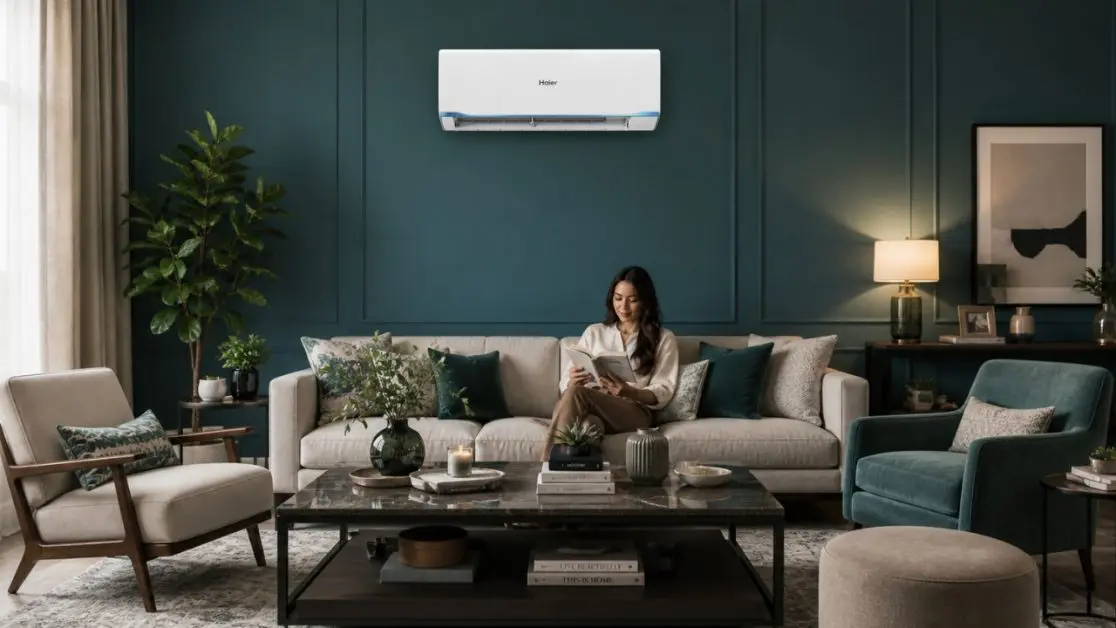
Comfort is not a number.
It is a moving target.
- Afternoon heat feels different from late night humidity
- A room with two people feels different from a room with six
- Your comfort changes as you move, work, and rest
The flaw in fixed settings
Manual temperature settings assume stability.
But real homes are dynamic.
AI human detection brings flexibility into comfort.
What adaptive cooling actually does
- Detects human presence and movement
- Adjusts airflow direction to avoid discomfort
- Modifies cooling intensity based on occupancy
In systems like the Haier 1.8 Ton 5 Star Gold Desert Rose Air Conditioner (HSA20DSD-GAI5NB-I), AI also analyzes real-time weather and indoor conditions to automatically select the most efficient cooling mode.
This is not just cooling.
This is situational comfort.
Benefit #3: Fewer decisions in a decision-heavy life
Modern homes run on constant micro-decisions.
Increase temperature. Reduce fan speed. Switch off AC.
It never ends.
AI removes decisions you never wanted
One option is manual control
- Full control
- High effort
- Constant involvement
The second option is timed scheduling
- Predictable
- Limited flexibility
- Fails when your routine changes
The third option is AI human detection
- Real-time response
- No manual thinking
- Works even when life is unpredictable
The third option wins because it adapts.
And modern life demands adaptation.
Benefit #4: Longer appliance life through smarter usage
Appliances do not break suddenly.
They degrade over time.
And most of that degradation comes from unnecessary usage.
Why constant running reduces lifespan
- Compressors work harder than needed
- Cooling cycles increase unnecessarily
- Wear and tear builds silently
AI human detection changes the pattern.
It ensures the AC runs only when required.
System-level benefits
- Reduced load on internal components
- Fewer unnecessary cooling cycles
- Improved long-term efficiency
Haier’s AI ecosystem even includes self-cleaning systems that maintain performance and air quality over time.
So the appliance does not just work better.
It ages better.
Benefit #5: Smart living without visible complexity
Most people think smart homes mean more apps and more control.
But real intelligence works differently.
It removes effort.
What effortless smart living looks like
- AC adjusts when you enter the room
- Cooling reduces when you leave
- Temperature stabilizes during sleep
No constant inputs. No manual corrections.
Just quiet efficiency.
They do not demand attention.
They reduce it.
Why AI human detection matters more in Indian homes
Indian homes are not static environments.
They are constantly in motion.
- People move across rooms frequently
- Families gather and disperse through the day
- Weather conditions change dramatically
Where AI fits perfectly
Because it thrives in complexity.
Real scenarios
- Working professionals
Cooling adjusts as you move between work calls and breaks - Families
Rooms cool based on actual occupancy - Elderly users
No need for constant manual adjustments - Festive gatherings
AC adapts instantly to crowded spaces
This is not about convenience.
This is about alignment with real life.
The system behind the experience
Every powerful feature hides a simple system.
AI human detection works through:
- Sensing real presence
- Learning usage behaviour
- Responding in real time
When these three combine, something shifts.
The home stops reacting.
It starts anticipating.
What most people misunderstand about AI
Let’s break a few assumptions.
| Assumption | Reality |
| AI is complex | AI simplifies daily living |
| AI is expensive | AI reduces long-term costs |
| AI is optional | AI removes hidden inefficiencies |
| AI replaces control | AI reduces unnecessary control |
The key insight?
AI is not a feature. It is a system upgrade.
So how should you think about buying appliances now?
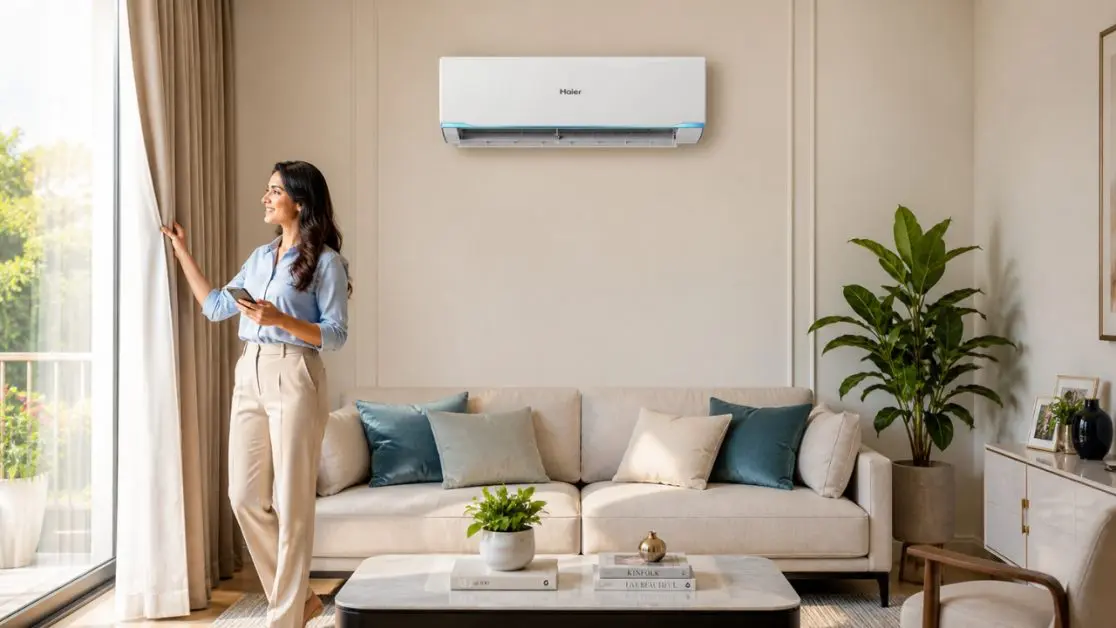
Most decisions still focus on:
- Ton capacity
- Star rating
- Price
But these are surface-level metrics.
They tell you what the product is.
Not how it behaves.
A better framework
Ask:
- Does it understand my presence?
- Does it adapt without input?
- Does it reduce effort over time?
If the answer is yes, you are choosing intelligence.
Not just hardware.
The future of homes is not smart. It is aware.
Smart homes respond.
Aware homes understand.
That is the difference.
AI-based human detection is the beginning of that shift.
It teaches appliances to notice, learn, and adjust.
Without instructions.
The one insight worth remembering
The best technology does not give you more control. It quietly takes responsibility.
And when that happens, your home stops feeling like something you manage.
It starts feeling like something that understands you.
Frequently Asked Questions
Do I really need AI in my AC, or is it just another fancy feature?
If you’re constantly adjusting temperature or forgetting to turn things off, AI removes that mental load. It’s not about being “fancy”, it’s about making fewer daily decisions.
I’m tired of adjusting my AC all the time. Will AI actually fix that?
Yes. AI-based detection automatically adjusts cooling based on whether you’re in the room, how many people are present, and even your usage patterns.
Is AI control better than setting a timer on my AC?
Timers assume your schedule is predictable. AI adapts when life isn’t. If your routine changes often, AI is far more effective.
How is AI human detection different from motion sensors?
Motion sensors react. AI understands. It learns patterns, detects presence more accurately, and adapts over time.
Can AI ACs adjust based on how many people are in the room?
Yes. Advanced systems can modify airflow and cooling intensity depending on occupancy.
Will the AC adjust itself based on weather too?
In high-end systems, yes. They combine indoor data with outdoor conditions to optimize cooling.
Does AI mean I lose control over my AC?
No. You still have full control, you just won’t need to use it as often.