
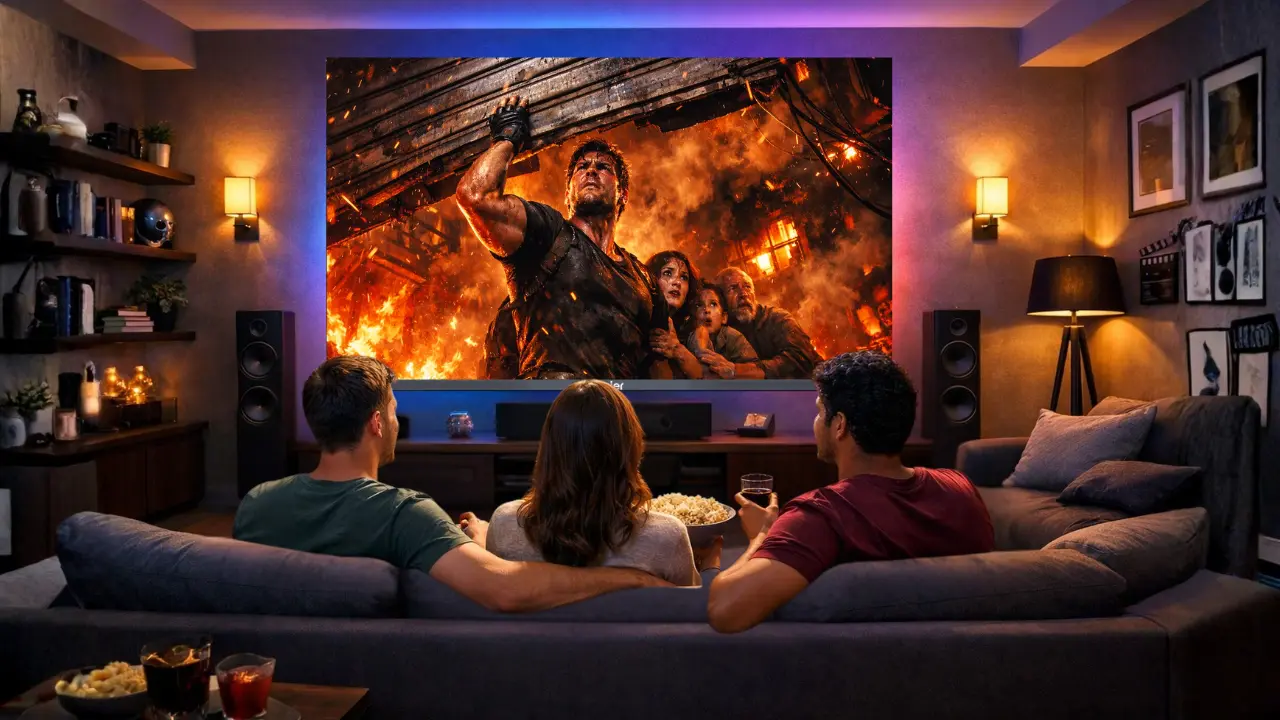

Cinema-grade viewing without extra devices means getting rich picture quality, immersive sound, and intelligent tuning directly from your TV, without soundbars, streaming boxes, or constant setting changes.
Modern TVs now handle colour, motion, brightness, and audio on their own, turning everyday Indian living rooms into effortless cinema spaces.
That is the short answer.
The real story unfolds at home.
Why does cinema at home still feel complicated?
It usually begins with excitement.
A new TV arrives.
The screen looks stunning.
A weekend movie night is planned.
Then the small frictions appear.
Dialogues feel low.
Action scenes lack impact.
Someone suggested adding a soundbar.
Someone else mentions a streaming box.
Before long, the clean setup fills up with cables, remotes, and workarounds.
This is not a user problem.
It is a system problem.
For years, home entertainment assumed that cinema-quality experiences require layers of extra hardware. Indian homes are now quietly rejecting that idea.
Indian homes want immersion, not installations
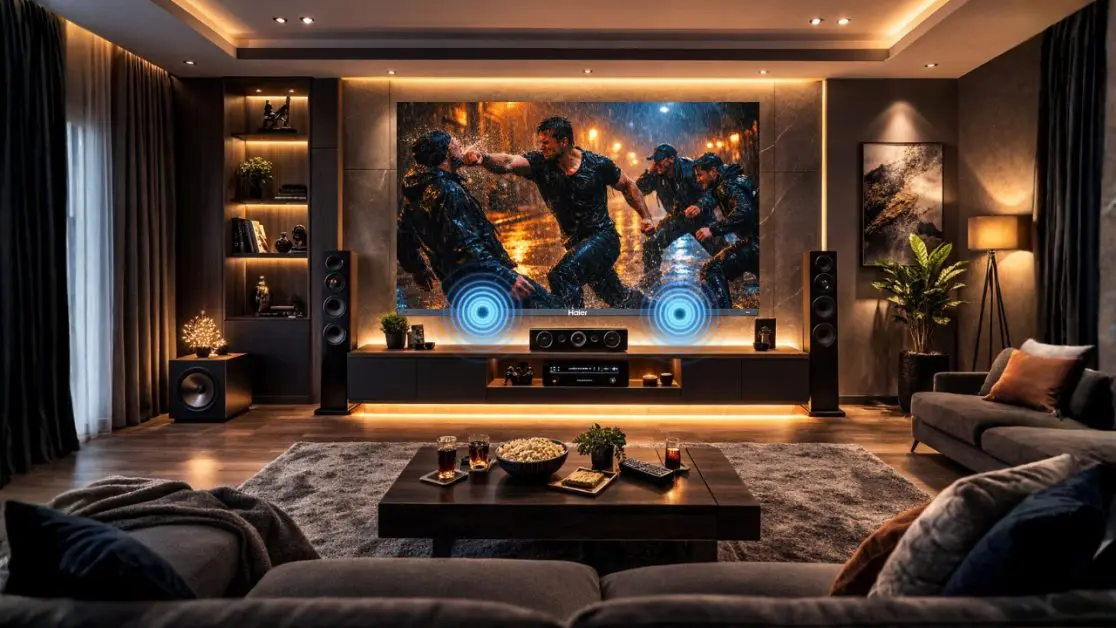
Living rooms today do many jobs.
They are family spaces, work-from-home corners, play areas, and relaxation zones. Adding extra devices often means sacrificing space, aesthetics, and simplicity.
Recent consumer electronics buying trends show a clear shift towards integrated entertainment systems, especially among millennial homeowners and first-time buyers. The preference is simple. Fewer boxes. Fewer wires. Fewer things to manage.
Cinema-grade viewing works best when it blends in, not when it demands attention.
What actually makes a TV feel cinematic?
Not just size.
Cinema is the result of multiple systems working together seamlessly.
Picture that understands what you are watching
Cinema screens respond to mood, movement, and lighting. A modern TV needs to do the same.
Advanced displays now use real-time scene recognition to adjust brightness, contrast, and colour dynamically. Sports, movies, animation, and news are treated as distinct experiences, not as one generic feed.
Display technology studies consistently show that adaptive picture processing significantly improves perceived contrast and clarity, especially in mixed lighting conditions common in Indian homes.
Cinema quality is not fixed.
It adapts.
Sound that fills the room, not just the screen
In a theatre, sound surrounds you.
Earlier TVs pushed audio forward, flat and directional. Today, integrated multi-channel speaker systems and spatial audio formats recreate depth without external soundbars.
Dolby research indicates that spatial audio improves dialogue clarity and immersion compared to standard stereo output, even at lower volumes. That matters in homes where late-night viewing is common.
More presence.
Less equipment.
Intelligence that removes manual effort
Cinema does not pause for setting adjustments.
Modern TVs now use AI-driven processing to read ambient light, scene complexity, and audio intensity in real time. The TV fine-tunes itself while you stay focused on the story.
The best technology reduces thinking.
How modern TVs replace extra devices
This shift is driven by three quiet but powerful advances.
Next-generation display panels
High-contrast QLED and Mini LED panels now deliver deeper blacks, higher brightness, and wide viewing angles. This reduces dependence on dark rooms or external lighting control.
The Ultra Crystal-Black panel technology used in premium models improves contrast and reduces glare, helping visuals stay sharp even during daytime viewing .
This is critical in Indian homes filled with natural light.
Built-in cinema sound systems
Slim TVs now house advanced 2.1 channel speaker systems with dedicated bass support. Combined with Dolby Atmos processing, sound gains height, depth, and direction.
You hear rain behind you.
Crowds around you.
Dialogues anchored to faces on screen.
No external soundbar required.
AI as the invisible director
Modern processors analyse every frame in real time.
They recognise scenes.
Track motion.
Enhance depth.
Reduce noise.
This happens automatically, thousands of times per second. The result is a picture that feels intentional rather than artificially enhanced.
Where the Haier S90 fits into this shift
This is where the Haier S90 QLED 254cm (100) Google TV AI Center Max becomes a useful reference point.
It is designed around the idea that cinema-quality experiences should not require add-ons. The AI Center Max system integrates picture processing, sound optimisation, gaming performance, and content handling into one intelligent core.
Features like a high refresh rate panel, Dolby Vision IQ, HDR10+, Dolby Atmos sound, and AI-driven scene optimisation work together as a single system rather than isolated specs .
The TV does the work.
The room stays calm.
Why this matters during everyday moments

Cinema-grade viewing is not reserved for movie nights.
It shows up in small, familiar situations.
- Cricket matches that remain clear under bright lights
- Late-night shows that stay comfortable on the eyes
- Cartoons that look vibrant without appearing harsh
- OTT thrillers where whispered dialogue stays intelligible
Indian viewing behaviour studies show frequent content switching throughout the evening. TVs that adapt automatically reduce friction during these transitions.
Comfort becomes the real upgrade.
Cinema-grade viewing is really about trust
Trust that the picture will look right without tweaking.
Trust that sound will feel balanced without external help.
Trust that the TV understands the moment.
When that trust exists, the device fades away.
Only the experience remains.
What this means for new homes and upgrades
Indian households are rethinking what a good upgrade looks like.
Less configuration.
More confidence.
Fewer devices.
Better experiences.
Cinema-grade viewing without extra devices reflects a broader shift in how technology fits into life. From spectacle to support. From complexity to calm.
The best home upgrades do not announce themselves.
They quietly make evenings better.
And once you experience that level of effortlessness, it becomes the new baseline.
The future of home entertainment is not about adding more devices.
It is about needing less.
Frequently Asked Questions
Do I really need a soundbar and streaming box to get theatre-like sound at home?
Modern premium TVs now include multi-channel speaker systems with spatial audio formats like Dolby Atmos, reducing the need for external soundbars in many living rooms.
Why does my new TV still feel incomplete without extra devices?
Older TV ecosystems were built assuming add-ons were necessary. New AI-driven TVs integrate display processing, sound optimisation, and smart streaming in one system.
I just bought a big TV. Why doesn’t it automatically feel cinematic?
Size alone doesn’t create immersion. Adaptive picture processing (like Dolby Vision IQ) and intelligent sound tuning make the difference.
Is buying fewer devices actually better, or am I compromising quality?
With QLED and Mini LED panels, integrated bass systems, and built-in streaming platforms like Google TV, fewer devices often mean less friction not less performance.
My living room has lots of natural light. Will cinema-grade viewing still work during the day?
Yes. High-brightness QLED and Mini LED panels reduce glare and maintain contrast even in sunlit rooms.
I don’t want bulky speakers or extra wiring. Can a slim TV really fill the room with sound?
Advanced 2.1 channel systems with integrated bass and Dolby Atmos processing now simulate height and surround effects internally.
I switch between cricket, cartoons, and OTT shows constantly. Do I need to keep changing picture modes?
AI-based scene detection automatically adjusts brightness, motion, and colour for different content types.
I live in an apartment and watch late at night. Will spatial sound still feel immersive at lower volumes?
Spatial processing improves dialogue clarity even at moderate volumes, making it apartment-friendly.