
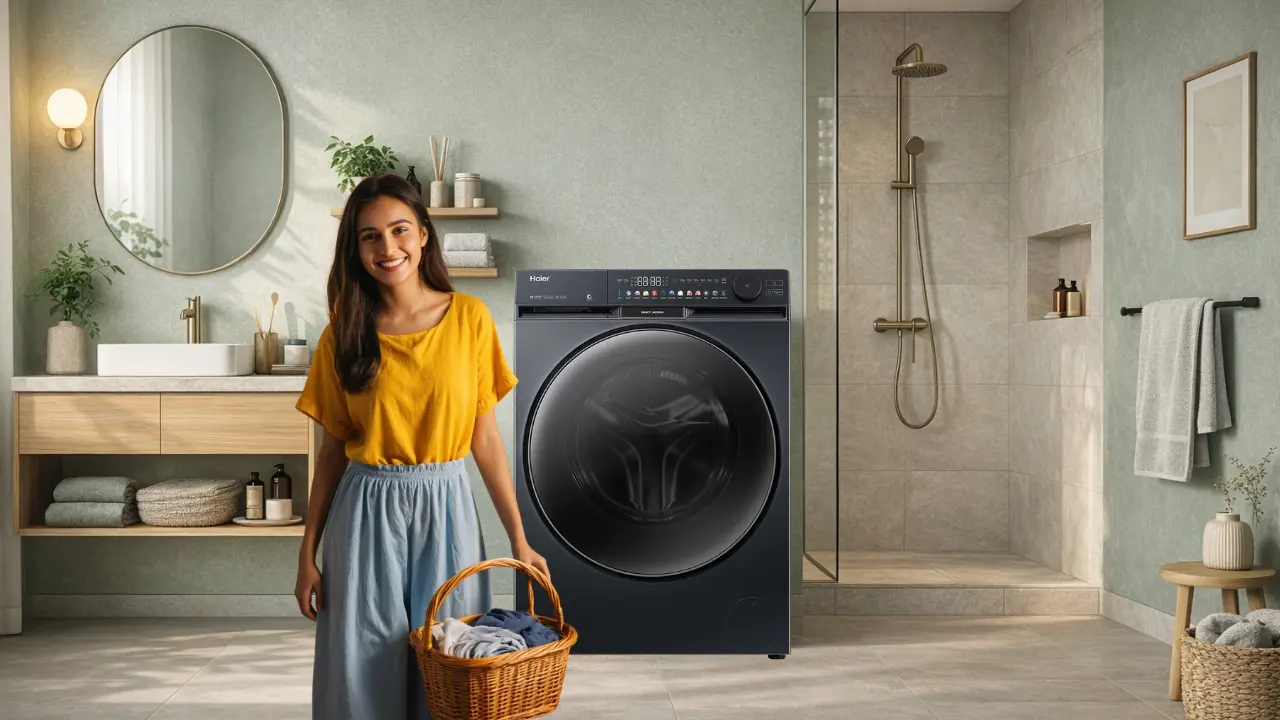

Smart fabric detection prevents overwashing by automatically identifying fabric type, load size, and dirt level, then adjusting water, temperature, and wash time accordingly.
The result is simple but powerful: clothes last longer, water use drops, energy consumption falls, and laundry becomes a quiet system that runs intelligently in the background of modern homes.
Laundry becomes easier.
Clothes survive longer.
And homes waste less.
That is the short answer.
But the real story lives inside the laundry baskets of everyday Indian households.
The hidden problem most laundry cycles create.
Overwashing is the silent damage nobody sees
It is Sunday morning.
A washing machine runs with a mixed load.
Gym T-shirts. Office shirts. A sari worn once. Bedsheets from the guest room.
Everything goes into the same cycle.
The machine runs longer than necessary.
Water heats more than required.
Delicate fabrics spin harder than they should.
The clothes get clean.
But something else happens quietly.
Fibres weaken.
Colours fade.
Elastic loses strength.
The cost appears months later when a favourite shirt feels older than it should.
The truth is simple.
Overwashing is not about washing too often.
It is about washing too aggressively for the fabric involved.
Why Traditional Washing Machines Cause Overwashing

Machines follow instructions. Not fabrics.
Traditional washing machines depend on human choices.
And humans guess.
Standing in front of the machine, most people ask the same questions.
Cotton or mixed?
30°C or 60°C?
Quick wash or daily wash?
Few households have time to analyse fabric science before every cycle.
The result is predictable.
| Laundry Decision | What Usually Happens | Hidden Cost |
| Mixed fabrics in one load | One generic cycle used | Delicate fabrics suffer |
| High temperature washing | Removes stains faster | Fibre damage over time |
| Longer wash cycles | Feels safer | Wastes water and electricity |
| High spin speeds | Dries clothes faster | Weakens fabric elasticity |
Laundry becomes guesswork.
Guesswork creates overwashing.
What Smart Fabric Detection Actually Means
The machine learns before it washes
Smart fabric detection changes the logic.
Instead of asking the user to decide everything, the washing machine senses what is inside.
Modern AI driven washing machines analyse three things instantly.
- Fabric composition
Cotton, synthetics, wool, silk, or mixed blends. - Load weight and density
Heavy bedding behaves differently than lightweight clothing. - Dirt level and washing requirement
Once detected, the system automatically adjusts wash parameters.
That includes:
- Water level
- Temperature
- Wash duration
- Spin speed
- Drum movement intensity
The principle is simple.
Clean the clothes. Not the fibres.
The Science Behind Preventing Overwashing
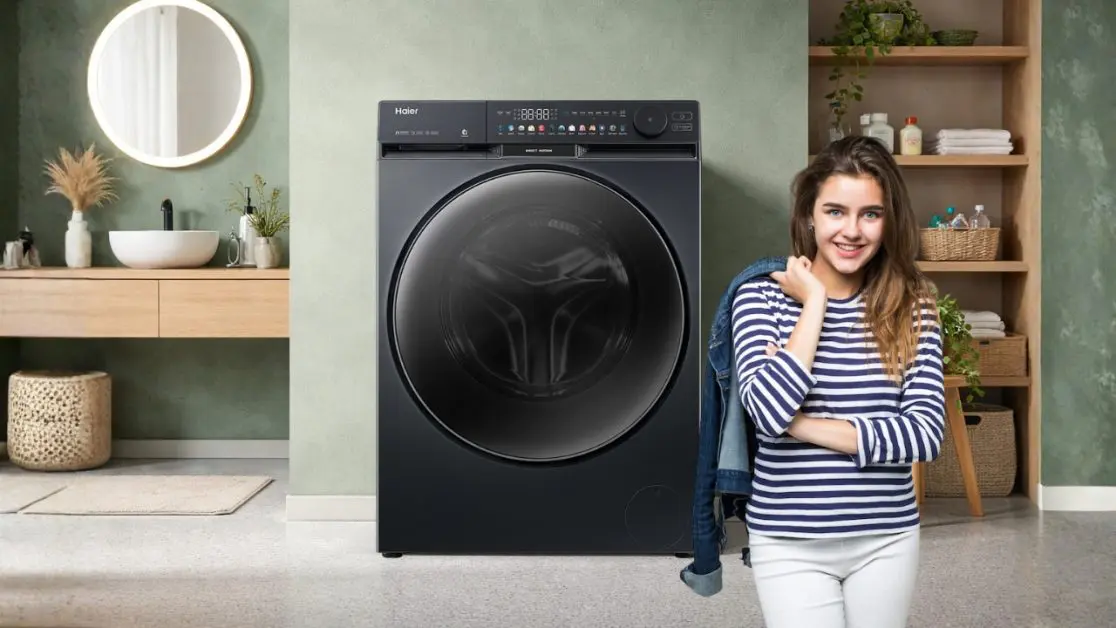
Fabric care is a balance between cleaning and preservation
Every textile behaves differently.
Cotton tolerates strong agitation.
Silk needs gentle motion.
Denim requires deep cleaning but moderate spin.
Smart fabric detection maps these differences.
Here is a simplified view.
| Fabric Type | Ideal Wash Behaviour | Overwashing Risk |
| Cotton | Medium agitation | Shrinking and colour fade |
| Denim | Deep wash, controlled spin | Fibre stress |
| Wool | Low temperature, gentle cycle | Fibre breakage |
| Silk | Minimal agitation | Fabric thinning |
Traditional machines treat these fabrics the same.
Smart machines treat them differently.
That difference protects garments.
Where Smart Fabric Detection Appears in Real Homes
The weekday laundry moment
Picture a typical weekday evening.
Dinner is done.
The TV plays in the background.
Laundry waits near the washing machine.
The basket contains:
- Office shirts
- Gym clothes
- Children’s uniforms
- A delicate kurta
One touch starts the wash.
In advanced machines like the Haier 10 Kg Fully Automatic Front Load Washing Machine (HW100-DM14F9BKU1) and the Haier 12 Kg F9 pro Front Load Washing Machine (HW120-DM14F9PBKU1 ), the AI powered system automatically detects the fabric mix and adjusts washing conditions accordingly.
Instead of running a fixed program, the machine intelligently adapts.
The wash becomes precise.
And overwashing disappears.
The Three Hidden Benefits of Smart Fabric Detection
1. Clothes last longer
Fabrics degrade mainly due to friction and heat.
When washing intensity matches fabric type, fibres remain stronger.
The difference becomes visible over time.
Colours remain vibrant.
Elastic holds shape.
Fabric texture stays smooth.
Clothes age slower.
That alone changes how wardrobes behave.
2. Water and energy use drop naturally
Smart fabric detection reduces unnecessary washing intensity.
That means:
- Shorter wash cycles
- Lower water consumption
- Reduced electricity usage
For example, AI powered systems can optimize wash parameters automatically through features like One Touch AI Wash, which senses load conditions and selects the most efficient cycle.
Efficiency becomes automatic.
Not manual.
3. Laundry decisions disappear
The biggest benefit is mental.
Laundry stops being a decision making exercise.
Instead of asking multiple questions before every cycle, users press one button.
The machine handles the complexity.
The best systems remove decisions, not just effort.
How Smart Washing Systems Work Together
Fabric detection is only one layer
Modern smart washing machines combine multiple technologies.
These systems operate together.
- AI fabric sensing determines wash behaviour
- Automatic load weighing sets water levels
- Direct motion motors reduce vibration and energy waste
- Eco wash optimisation matches water and wash time precisely
For instance, Haier front load models use advanced Direct Motion Motor technology designed for smoother operation and improved energy efficiency.
Each technology solves a small problem.
Together they transform laundry into an automated system.
Laundry Habits in Indian Homes Are Changing
More loads. More fabrics. Less time
Laundry in India has evolved.
Urban households now manage multiple types of clothing every week.
Typical loads include:
- Gym wear and sports fabrics
- Office formals
- Kids school uniforms
- Traditional garments like kurtas and saris
- Bedding and towels
Each requires different care.
Yet most households still rely on generic wash cycles.
Smart fabric detection solves this mismatch.
The machine adapts.
Not the user.
Three Ways Households Handle Laundry Today
Different systems produce different outcomes
There are three common approaches.
One option is manual washing logic
- Users choose programs every time
- Trial and error dominates
- Risk of overwashing stays high
The second option is fixed automatic cycles
- Machine runs preset programs
- Works for simple loads
- Struggles with mixed fabrics
The third option is intelligent detection
- Machine senses fabrics automatically
- Wash behaviour adapts in real time
- Overwashing reduces dramatically
Only the third system scales with modern lifestyles.
The Future of Laundry Is Invisible
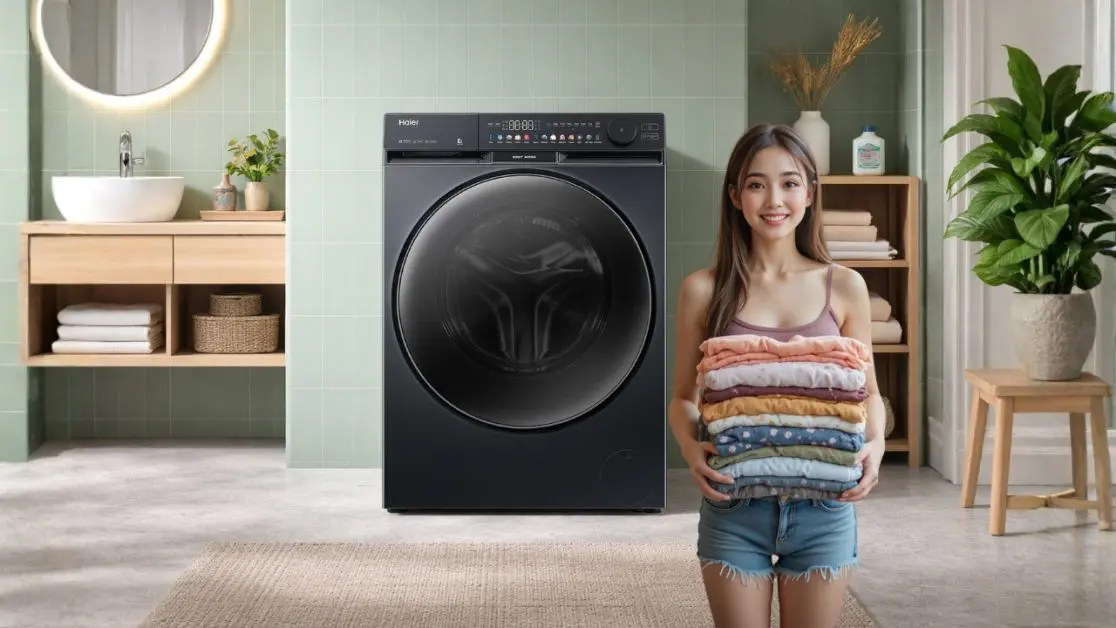
The best technology disappears into routine
When appliances become truly intelligent, they fade into the background.
No complicated settings.
No trial and error.
No constant supervision.
Laundry simply happens.
Machines like the Haier 12 Kg F9 pro Front Load Washing Machine (HW120-DM14F9PBKU1) demonstrate how AI driven washing systems automatically match wash conditions to fabrics, helping homes save water, energy, and time.
And the household barely notices the technology working.
The Deeper Insight Behind Smart Fabric Detection
Most people assume washing machines exist to clean clothes.
That assumption is incomplete.
A modern washing system has a bigger responsibility.
Protect the fabric while removing the dirt.
That balance defines intelligent laundry.
Clean clothes are easy.
Clean clothes that last longer require smarter systems.
The Takeaway Modern Homes Are Discovering
Smart fabric detection changes a small everyday habit.
But the ripple effect is larger.
Clothes stay new longer.
Water usage drops.
Energy bills shrink.
Laundry stops demanding attention.
And something subtle happens.
A small domestic chore becomes an intelligent system that quietly supports the rhythm of daily life.
That is the real promise of smart appliances.
Not more technology.
Better living through invisible decisions.
Frequently Asked Questions
Why do I feel unsure every time I choose a washing machine cycle?
Many traditional washing machines require users to choose temperature, cycle type, spin speed, and fabric settings. Most people are not fabric experts, so they rely on guesswork. This uncertainty often leads to using stronger cycles than necessary, which causes overwashing.
Why do I always end up using the same wash cycle for everything?
Because selecting different cycles for each fabric type takes time and effort. Many households default to a “safe” or standard cycle that works for most clothes but may be too harsh for delicate fabrics.
Is it bad to wash mixed fabrics in one cycle?
Mixed loads are common, but when a single wash program treats cotton, synthetics, and delicate fabrics the same way, some fabrics receive more agitation or heat than they can handle.
My favourite T-shirt faded after just a few months even though I wash it regularly. Could overwashing be the reason?
Yes. Frequent washing with high temperatures or long cycles can cause dyes and fibres to degrade faster than intended.
If my clothes already look clean, do I really need a strong wash cycle?
Not necessarily. Many modern washing systems can detect dirt levels and automatically run shorter, gentler cycles when heavy cleaning is unnecessary.
Is quick wash safer for clothes than long wash cycles?
Quick wash cycles reduce exposure to heat and friction, which can help protect fabrics. However, they may not remove heavy stains as effectively.
Why do longer wash cycles sometimes damage clothes?
Longer cycles increase agitation and exposure to water and detergent, which can weaken fibres over time.
Does high spin speed affect fabric durability?
Yes. High spin speeds remove more water but can stretch or weaken delicate materials and elastic fabrics.