


Low-voltage friendly refrigerator cooling means the refrigerator continues running efficiently even when electricity supply drops below normal levels.
Advanced compressors and voltage protection systems stabilize cooling, protect food freshness, and reduce the need for external stabilizers, ensuring uninterrupted refrigeration during common power fluctuations in many Indian homes.
Electricity behaves differently across India.
In one neighborhood, the lights glow steady all night.
In another, the fan slows down just before dinner.
And in countless homes, refrigerators quietly face the same invisible challenge.
Voltage drops.
It happens during summer evenings. It happens when air conditioners across the colony switch on together. It happens during festival seasons when every home lights up.
Yet inside the refrigerator, vegetables still need to stay crisp. Milk must remain fresh. Leftover dal should not spoil overnight.
That quiet reliability depends on something most people rarely notice.
Low-voltage friendly refrigerator cooling.
And once you understand the system behind it, you start seeing your refrigerator differently.
Because good refrigeration is not only about cooling.
It is about resilience.
Why Voltage Fluctuations Are a Daily Reality in Indian Homes
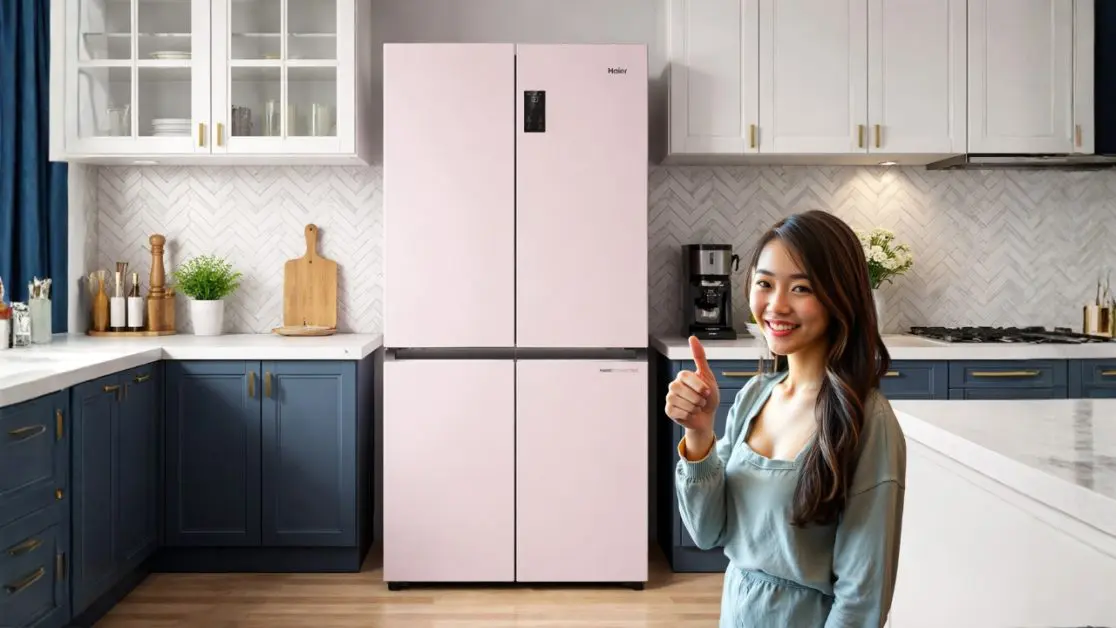
Stand in any Indian kitchen around 8 pm.
Pressure cookers whistle. Mixers run. Televisions broadcast cricket highlights. Air conditioners hum.
Electricity demand peaks.
The result is predictable.
Voltage dips.
According to power distribution reports across several Indian states, household voltage can fluctuate between 160V and 240V during peak usage periods, especially in older residential areas.
That fluctuation creates a silent problem for traditional refrigerators.
Cooling systems rely on compressors. Compressors depend on stable voltage.
When voltage drops too low, older refrigerators struggle to start or stop functioning properly.
This leads to three common issues:
| Household Situation | What Happens to a Traditional Refrigerator |
| Evening voltage dip | Compressor fails to start properly |
| Sudden power fluctuation | Cooling cycle becomes inconsistent |
| Frequent low voltage | Increased wear on compressor |
The result?
Food warms slowly. Ice cream softens. Fresh produce loses shelf life.
Most families never connect these moments to voltage.
But engineers do.
Which is why modern refrigerators are designed to adapt.
What Does “Low-Voltage Friendly Cooling” Actually Mean?
Low-voltage friendly cooling refers to refrigerators designed to operate efficiently across a wide voltage range without external stabilizers.
In simple words:
The refrigerator adjusts itself when the electricity supply becomes unstable.
This capability typically relies on three technological systems working together:
1. Inverter Compressor Technology
Modern refrigerators increasingly use inverter compressors.
Instead of turning on and off abruptly, inverter compressors adjust their speed gradually based on cooling needs.
Benefits include:
- Stable operation during voltage dips
- Lower energy consumption
- Reduced mechanical stress on components
Many modern refrigerators now rely on triple inverter technology, which optimizes compressor, fan motor, and cooling control simultaneously.
For example, models like the Haier Vogue Lumiere 520L 4 Door Convertible Refrigerator integrate advanced inverter systems to maintain consistent cooling while minimizing energy fluctuations.
This means cooling adapts rather than shuts down.
2. Wide Voltage Operation Range

Low-voltage friendly refrigerators often operate within a wide voltage band.
Instead of requiring a constant 220V supply, these refrigerators can function safely within ranges such as:
| Voltage Range | Cooling Performance |
| 220V to 240V | Optimal performance |
| 180V to 220V | Stable cooling maintained |
| 160V to 180V | Compressor adjusts speed to maintain temperature |
This flexibility removes the need for separate stabilizers in many homes.
It also reduces electrical risk.
3. Intelligent Cooling Sensors
Modern refrigerators now combine voltage protection with internal sensors.
These sensors track:
- Internal temperature
- Compressor load
- Door opening frequency
- Cooling distribution
Systems like 360-degree surround cooling circulate cold air evenly through all shelves, ensuring temperature stability even when compressor power fluctuates.
The result is simple.
Cooling continues smoothly even when electricity behaves unpredictably.
Why Stable Cooling Matters More Than Most People Realize
Refrigeration works like a rhythm.
Cool. Pause. Cool again.
That rhythm keeps food safe.
When voltage drops interrupt this rhythm, temperature begins rising slowly.
And food safety depends heavily on temperature stability.
According to food safety guidelines published by the Food Safety and Standards Authority of India (FSSAI), perishable foods should remain below 5°C inside refrigerators to slow bacterial growth.
Small fluctuations matter.
Even a short disruption in cooling cycles can reduce shelf life for foods like:
- Milk
- Cooked rice
- Leftover curries
- Cut fruits
- Paneer
Which is why reliable cooling during low voltage becomes essential.
Not dramatic.
But essential.
The Hidden Design Systems Inside Modern Refrigerators
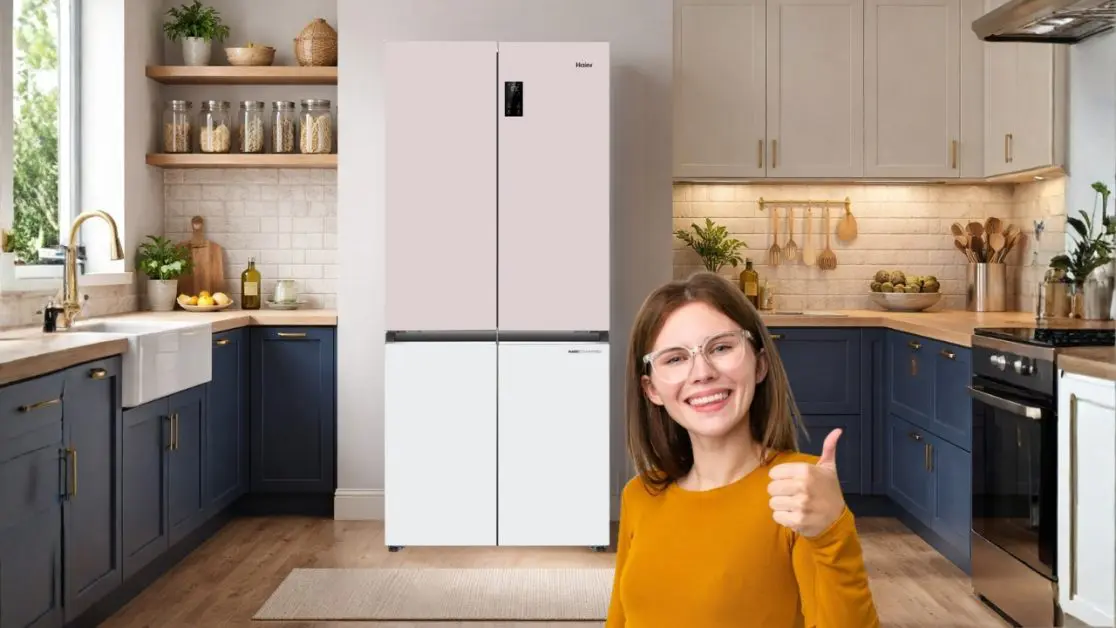
Open a refrigerator door and everything looks simple.
Shelves. Drawers. Lights.
But behind the panel sits a network of systems quietly maintaining balance.
Modern low-voltage friendly refrigerators typically include the following design layers:
Cooling Distribution System
Airflow channels circulate cold air across multiple storage zones.
Large refrigerators often include 10 dedicated storage zones to maintain freshness for different food categories.
Convertible Storage Zones
Convertible compartments allow users to switch between refrigerator and freezer modes depending on storage needs.
For example:
| Storage Mode | Temperature Range |
| Refrigerator mode | Around 2°C to 5°C |
| Freezer mode | Around -20°C |
Some advanced models offer a 90-litre convertible section, allowing households to adjust cooling zones based on weekly grocery patterns.
Freshness Protection Technologies
Systems such as odor filters and freshness preservation modules help maintain food quality.
For instance, Deo Fresh technology absorbs odors and impurities inside the refrigerator, helping maintain a cleaner cooling environment.
These features together create what engineers call cooling resilience.
The refrigerator adapts.
Even when electricity does not.
Three Household Scenarios Where Low-Voltage Cooling Makes a Difference
Low-voltage friendly refrigeration becomes especially valuable in everyday situations many Indian households recognize.
1. Summer Evenings
Air conditioners switch on across the building.
Voltage dips slightly.
Older refrigerators struggle.
Low-voltage friendly models continue cooling normally.
2. Small Town Power Fluctuations
In tier-2 and tier-3 cities, voltage variation remains common.
Wide voltage operation ensures refrigeration stays consistent without requiring stabilizers.
3. Festival Cooking Weeks
Think about Diwali.
The refrigerator fills quickly.
Sweets, milk, vegetables, leftovers.
Stable cooling during voltage fluctuations becomes critical when the refrigerator works at full capacity.
What to Look for in a Low-Voltage Friendly Refrigerator
If voltage fluctuations are common in your area, refrigerator design matters.
Look for systems that support:
- Inverter compressor technology
- Wide voltage operation range
- Multi-directional cooling airflow
- Convertible storage zones
- Energy-efficient operation
Here is a quick comparison framework.
| Feature | Why It Matters |
| Inverter Compressor | Adjusts cooling smoothly during voltage dips |
| Wide Voltage Operation | Eliminates need for stabilizer |
| Surround Cooling | Maintains uniform temperature |
| Convertible Zones | Adapts storage to household needs |
| Energy Efficiency | Reduces electricity consumption |
These features create stability.
And stability protects food.
Cooling Technology Is Quietly Becoming Smarter
There is an interesting shift happening in home appliances.
Appliances are learning to adapt.
Air conditioners adjust airflow automatically. Washing machines detect fabric types. Refrigerators manage cooling zones and food freshness.
This shift reflects a larger design principle.
Good technology removes decisions from everyday life.
You no longer think about voltage fluctuations.
The refrigerator handles it.
You simply open the door and take out fresh food.
The Bigger Insight: Reliability Is the Real Luxury
Design trends often focus on color finishes, sleek handles, or touch panels.
Those details matter.
But the deeper value of modern appliances lies elsewhere.
Reliability.
When voltage dips and cooling continues.
When vegetables stay fresh through summer.
When leftovers remain safe overnight.
That quiet consistency changes how households function.
And once people experience it, they rarely go back.
Because the real promise of modern appliances is not complexity.
It is calm.
And low-voltage friendly refrigerator cooling is one of the invisible systems making that calm possible in kitchens across India.
One final insight
Technology does not become meaningful when it looks impressive.
It becomes meaningful when it disappears into everyday life.
The best refrigerators do exactly that.
They simply keep things fresh.
No matter what the voltage outside decides to do.
Frequently Asked Questions
My area has frequent voltage drops. Do I really need a low-voltage friendly refrigerator?
Yes, especially if your voltage regularly dips below ~200V. These refrigerators keep cooling stable without needing an external stabilizer, preventing food spoilage and compressor damage.
I already use a stabilizer. Should I still consider upgrading?
A stabilizer helps, but modern low-voltage refrigerators have built-in protection + adaptive cooling, making them more efficient and responsive than external stabilizers alone.
How do I know if my current fridge is struggling due to voltage issues?
Signs include delayed cooling, frequent compressor stops, soft ice cream, or milk spoiling faster than usual.
Is low-voltage compatibility just a marketing term or actually useful?
It’s very practical in India. With voltage fluctuations between ~160V–240V in many areas, this feature directly impacts food safety and appliance lifespan.
How does my refrigerator adjust when voltage drops?
It reduces compressor speed, redistributes cooling, and uses sensors to maintain temperature balance instead of shutting down.
What does “wide voltage operation” really mean in daily use?
Your fridge keeps working normally anywhere between ~160V–240V without needing intervention.
I see terms like ‘360-degree cooling’ . What does that do?
It circulates cold air evenly across all shelves, preventing hot spots when power fluctuates.
What are convertible zones, and do they help with voltage issues?
They don’t directly handle voltage, but they help manage cooling load more efficiently, which supports stable performance.
Does my fridge actually “think” or is it just automated?
It uses sensors and programmed logic not AI thinking but it does adapt dynamically to conditions.