

Laser navigation in robot vacuum cleaners matters because cleaning is no longer just about suction power. It is about intelligence.
A robot vacuum with laser navigation maps your home, avoids obstacles, cleans systematically, and wastes less time, battery, and movement. The result is quieter efficiency, fewer missed spots, and a home that feels consistently managed instead of constantly maintained.
There is a reason some robot vacuum cleaners feel smart.
And others feel random.
One glides through the house like it understands the layout. The other bumps into chair legs like a shopping cart with one broken wheel.
The difference is not luck.
It is navigation.
Why cleaning systems fail in busy homes
Think about a typical Indian evening.
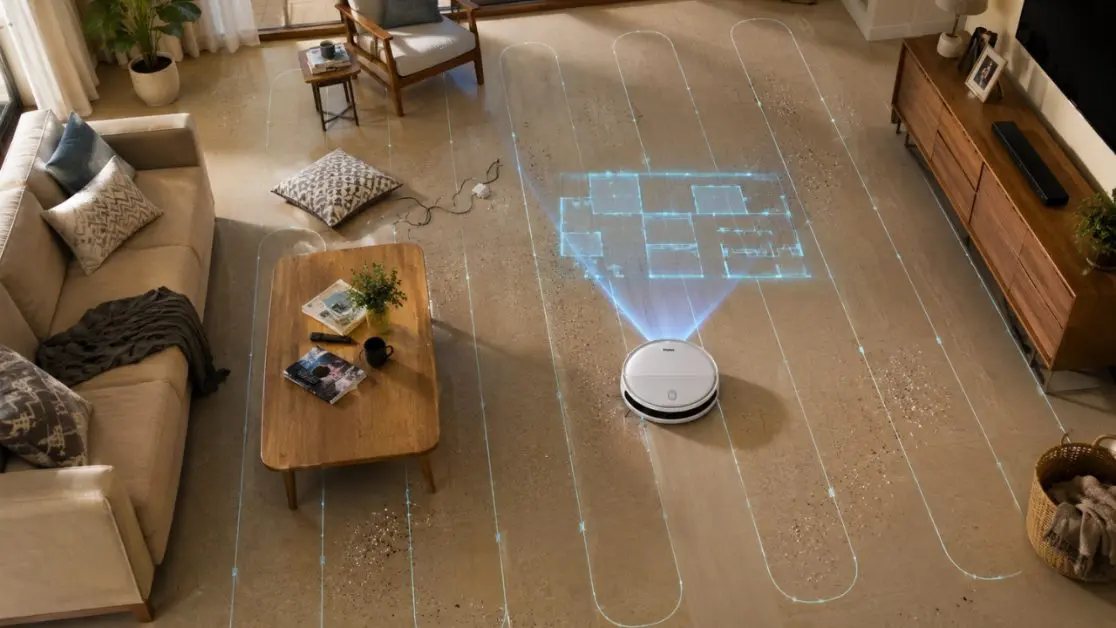
Shoes near the entrance. The dining chairs moved slightly. A charging cable under the sofa. Someone forgot a school bag in the hallway. The floor changes every day because life changes every day.
Most homes are not static.
They are living systems.
And that is exactly why robot vacuum cleaners need more than strong suction. They need awareness.
A robot vacuum cleaner without proper navigation behaves like someone entering a dark room with no memory. It wanders. Repeat paths. Misses corners. Drains battery.
Laser navigation changes that equation.
It helps the machine see the home before cleaning it.
That single shift changes everything.
What is laser navigation in a robot vacuum cleaner?
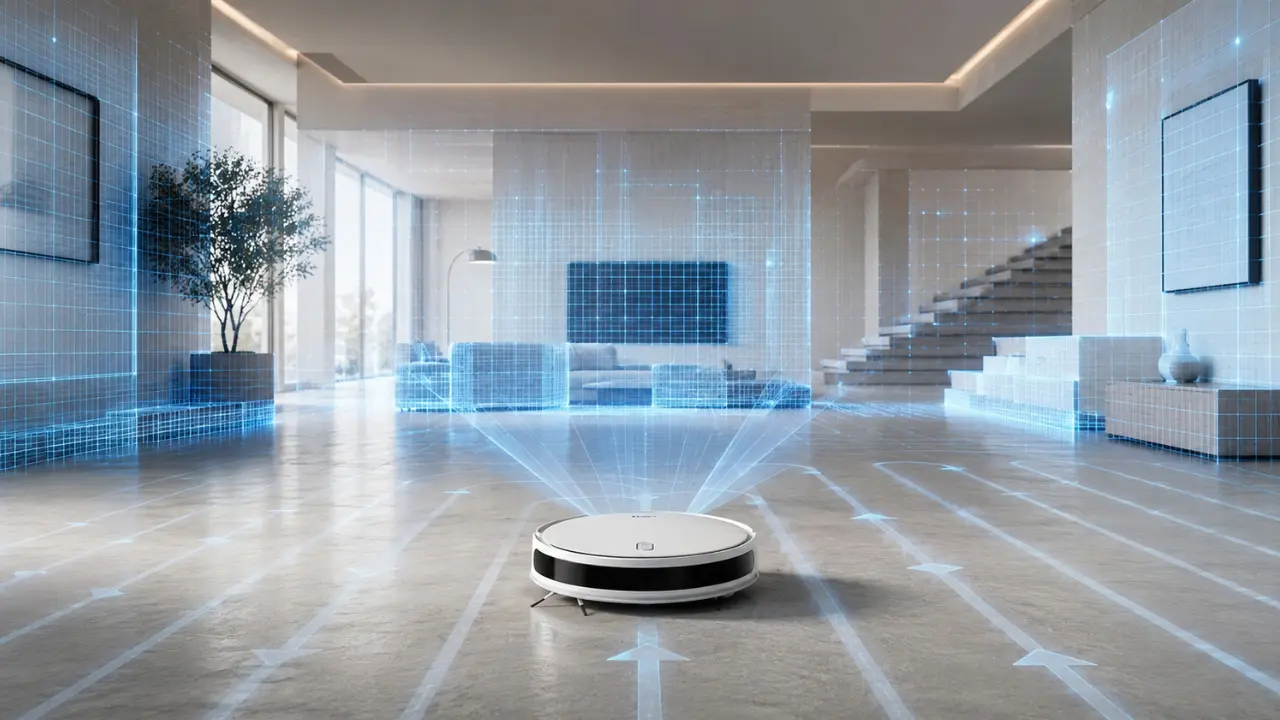
Laser navigation uses laser sensors to scan and map the home in real time.
The system creates a digital layout of rooms, furniture, walls, and obstacles. Instead of moving randomly, the robot vacuum cleaner follows an organised cleaning path.
It is similar to how ride-sharing apps map roads before suggesting the fastest route.
The cleaner is not guessing.
It is calculating.
How laser navigation actually works
Most advanced robot vacuum cleaners use a small laser sensor placed on top of the machine.
The laser continuously scans the surroundings and measures distance from objects.
This helps the robot:
- Understand room layouts
- Detect obstacles
- Create cleaning zones
- Avoid falling from stairs
- Return to charging docks automatically
- Clean efficiently instead of repeatedly
The Haier CIVIC X11 Robot Vacuum Cleaner uses laser navigation along with multiple map memory and obstacle detection systems.
The Haier CIVIC X11 PRO Robot Vacuum Cleaner also combines laser navigation with intelligent mapping and auto-empty functionality.
That matters because modern homes are layered.
Tiles in one room. Carpets in another. Furniture constantly shifting. Pets moving around.
Cleaning today is less about brute force and more about spatial intelligence.
Random cleaning feels cheaper. Until you live with it.
There are usually three types of robot vacuum experiences.
Option 1: Random navigation systems
These move without memory.
They bounce around until the battery dies or the room feels “mostly done.”
Lower upfront cost.
Higher long-term frustration.
Common problems:
- Missed corners
- Repeated cleaning in the same spot
- Poor edge cleaning
- Longer cleaning times
- Faster battery drain
Cheap systems often cost more in patience.
Option 2: Camera-based navigation
These use visual recognition to understand the room.
Good in bright lighting.
Less effective in darker spaces.
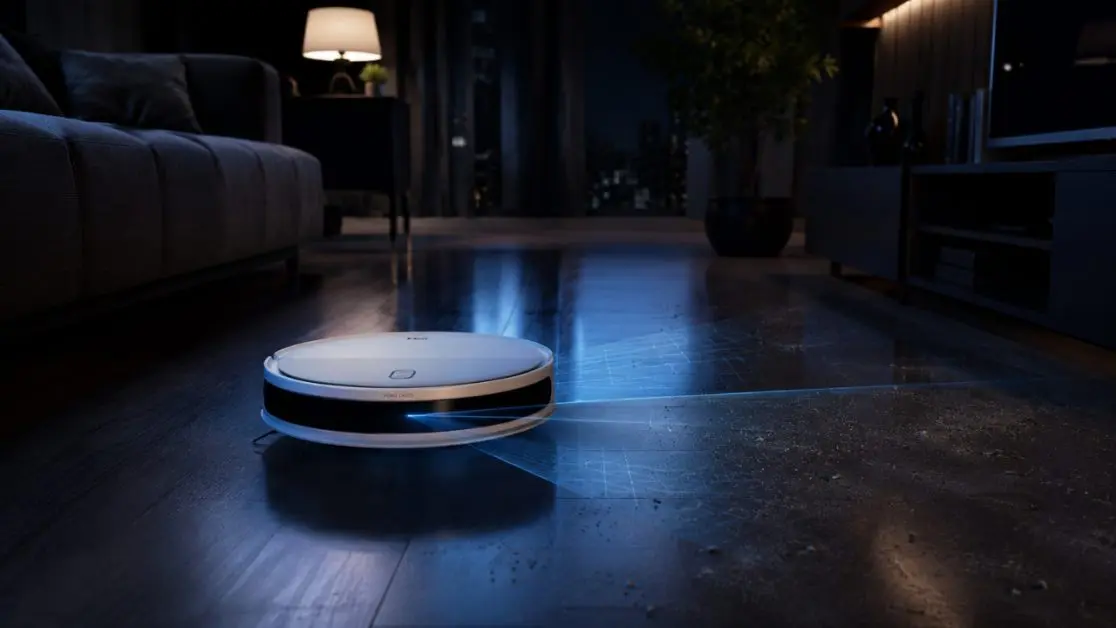
Indian homes often have mixed lighting conditions. Early morning cleaning, evening cleaning, dim bedrooms, curtains drawn during summer afternoons.
Vision changes.
Laser precision doesn’t.
Option 3: Laser navigation systems
This is where cleaning becomes structured.
Laser navigation robot vacuum cleaners:
- Build room maps
- Clean in planned lines
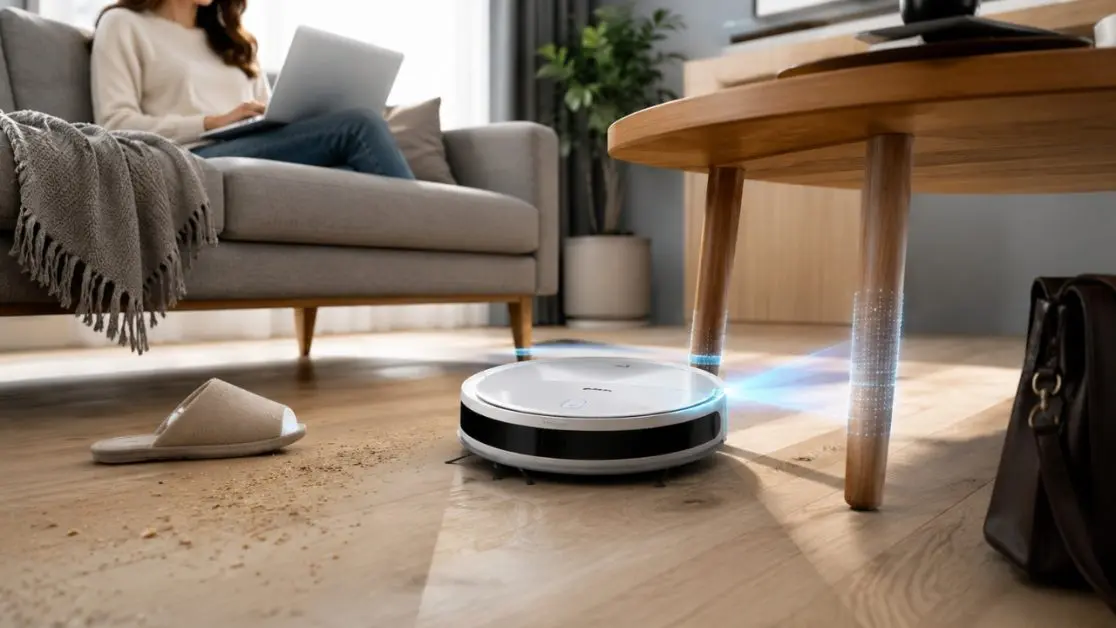
- Avoid obstacles better
- Reduce overlap
- Save battery life
- Support room-wise customisation
Efficiency is invisible when it works well.
That is the hallmark of a good system.
The hidden advantage nobody talks about: Predictability
People assume robot vacuum cleaners save time.
They do.
But the bigger benefit is predictability.
A predictable home feels mentally lighter.
Floors stay consistently clean instead of cycling between spotless and chaotic. Dust does not silently collect under beds for two weeks. Pet hair does not become a weekend project.
This changes the household rhythm.
Especially for:
- Working professionals
- Parents with young children
- Couples managing hybrid work schedules
- People living alone
- Homes with elderly family members
- Pet owners
Why mapping matters more in Indian homes
Indian homes are complex environments.
Not messy. Complex.
Consider the variables:
- Rugs and doormats
- Dining chairs moved daily
- Raised thresholds between rooms
- Compact apartments with tighter layouts
- Seasonal dust from balconies
- Festival movement and rearranged furniture
A random navigation system struggles in dynamic spaces.
Laser navigation adapts.
The Haier CIVIC X11 Robot Vacuum Cleaner supports 5-map memory for multi-area cleaning.
That means the robot remembers layouts instead of relearning the home every day.
Memory is what makes systems feel intelligent.
The best smart appliances reduce decisions
This is the real story behind smart homes.
Not flashy apps.
Not futuristic marketing.
Reduction.
Good technology removes repeated micro-decisions.
Think about modern navigation apps. Nobody prints directions anymore.
Think about smart TVs remembering viewing preferences.
Think about inverter ACs adjusting cooling automatically.
The smartest appliances quietly remove friction.
Robot vacuum cleaners with laser navigation follow the same principle.
What laser navigation improves daily
| Feature | Without Laser Navigation | With Laser Navigation |
| Cleaning path | Random | Structured |
| Obstacle handling | Frequent collisions | Intelligent avoidance |
| Battery efficiency | Lower | Higher |
| Room mapping | No memory | Multi-room mapping |
| Cleaning time | Longer | Faster |
| Coverage consistency | Uneven | Thorough |
| Custom cleaning zones | Limited | Supported |
A home does not become smarter because devices connect to Wi-Fi.
A home becomes smarter when systems begin anticipating patterns.
Why suction power alone is not enough
Many buyers focus only on suction numbers.
5000Pa.
6000Pa.
7000Pa.
Important? Yes.
Complete story? No.
A robot vacuum cleaner with strong suction but poor navigation behaves like a powerful car stuck in traffic.
Movement matters as much as power.
The Haier CIVIC X11 series combines 5000Pa suction with laser navigation and intelligent cleaning paths.
That combination matters because cleaning performance depends on three connected systems:
- Movement intelligence
- Suction capability
- Battery optimisation
Break one part, and the experience weakens.
Strong systems work together.
The rise of multi-floor living changes everything
Indian homes are changing.
Duplex apartments.
Independent floors.
Work-from-home setups.
Dedicated study spaces.
Pet zones.
Children’s play areas.
Cleaning patterns are no longer simple.
That is why multi-map memory is becoming more relevant.
What multi-map memory actually solves
Imagine this:
- Ground floor during the day
- Bedroom cleaning at night
- Balcony avoidance zones
- Different cleaning schedules for different rooms
Laser navigation systems can store room layouts and customize behaviour accordingly.
The Haier CIVIC X11 and CIVIC X11 PRO support five-map memory for multiple areas.
The machine remembers.
That is the shift from gadget to assistant.
Voice control sounds small until your hands are busy
There is a familiar modern moment.
One hand holding groceries.
Phone charging somewhere else.
Doorbell rings.
The floor suddenly looks dusty before guests arrive.
Convenience matters most when attention is already stretched.
Robot vacuum cleaners with voice control integrate into daily flow more naturally.
The Haier CIVIC X11 and CIVIC X11 PRO support voice commands through Google Assistant and Alexa integration.
This is not about novelty.
It is about reducing interruption.
The future of home appliances is not more buttons.
There are fewer interruptions.
Auto-empty systems reveal where the market is heading
The most interesting part of smart appliances is not automation.
It is continuity.
Anyone can automate one task once.
The real breakthrough is reducing repeated maintenance.
That is why auto-empty systems matter.
The Haier CIVIC X11 PRO includes an auto-empty dust box system that transfers collected dust into a larger storage unit automatically.
This changes the ownership experience.
Because convenience compounds.
One less cleaning task.
One less interruption.
One less thing to remember.
Small frictions create large fatigue over time.
What should buyers actually look for?
If laser navigation matters, what should people evaluate beyond marketing terms?
A practical buying framework
Look for:
- Laser navigation instead of random movement
- Multi-map memory
- Obstacle detection sensors
- Strong battery runtime
- Automatic recharge and resume
- Voice assistant support
- Wet and dry cleaning modes
- Custom cleaning schedules
Avoid focusing on only one specification.
A balanced system outperforms isolated features.
Questions worth asking before buying
- Does the robot map the home intelligently?
- Can it handle multiple rooms efficiently?
- Will it work in low-light conditions?
- Does it remember layouts?
- How often will maintenance interrupt usage?
- Can it adapt to dynamic home environments?
Good buying decisions come from understanding systems, not advertisements.
The bigger shift: Homes are becoming self-managing
This is larger than vacuum cleaners.
Homes are slowly shifting from manually operated spaces to intelligently managed environments.
Lights automate.
ACs optimize cooling.
Washing machines sense fabric loads.
Robot vacuum cleaners learn room patterns.
The best technology does not demand attention.
It disappears into routine.
And that is why laser navigation matters.
Not because lasers sound futuristic.
Because invisible efficiency changes how homes feel.
A clean floor is not just about hygiene.
It changes mood.
Movement.
Mental load.
Smart homes are not built through dramatic transformation.
They are built through small systems that quietly remove friction from ordinary days.
That is the real promise behind intelligent cleaning.
Not robotics.
Relief.
Frequently Asked Questions
I’m confused between suction power and laser navigation. Which one matters more?
Suction matters, but navigation decides how well that suction is used. A robot vacuum with laser navigation cleans in planned paths instead of wasting power on random movement.
Do I really need laser navigation in my robot vacuum cleaner?
Yes, especially if your home has furniture, rugs, pets, cables, or changing layouts. Laser navigation helps the robot map your home and clean more predictably.
I live in a small apartment. Is laser navigation still useful?
Yes. Even small homes benefit because laser navigation reduces missed spots, repeated cleaning, and battery waste.
Is a cheaper random-navigation robot vacuum good enough for daily cleaning?
It may work for basic cleaning, but it can miss corners, repeat areas, and take longer. Laser navigation is better for consistent everyday use.
My home layout changes every day. Will a laser robot vacuum still work properly?
Yes. Laser navigation helps the vacuum scan the space, detect obstacles, and adjust its cleaning path instead of depending on a fixed layout.
I have shoes, bags, and cables lying around. Can laser navigation help?
It helps the robot detect obstacles better and avoid unnecessary bumping, though loose cables should still be cleared when possible.