
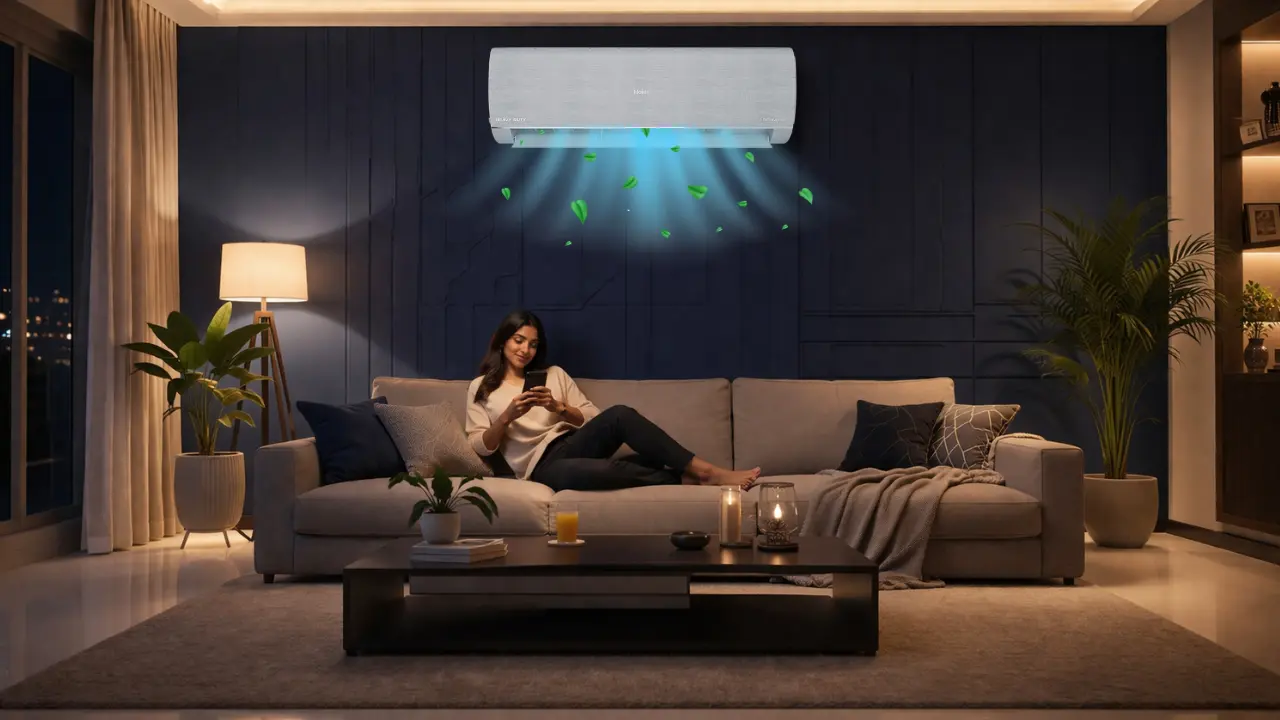

Smooth temperature consistency is achieved when climate control units constantly monitor the space, grasp occupants’ patterns, and modify ventilation and energy use without manual input.
Rather than responding once conditions shift, smart climate platforms anticipate requirements and make subtle alterations, preserving even comfort all day long.
Consistent temperature is seldom the result of one switch on a controller.
It originates from a comprehensive setup.
An apparatus that observes its surroundings.
Comprehend the pace of your dwelling.
And unobtrusively maintains equilibrium.
When cooling functions properly, it remains largely unnoticed.
That is the true objective.
Why Temperature Stability Matters in Everyday Indian Homes
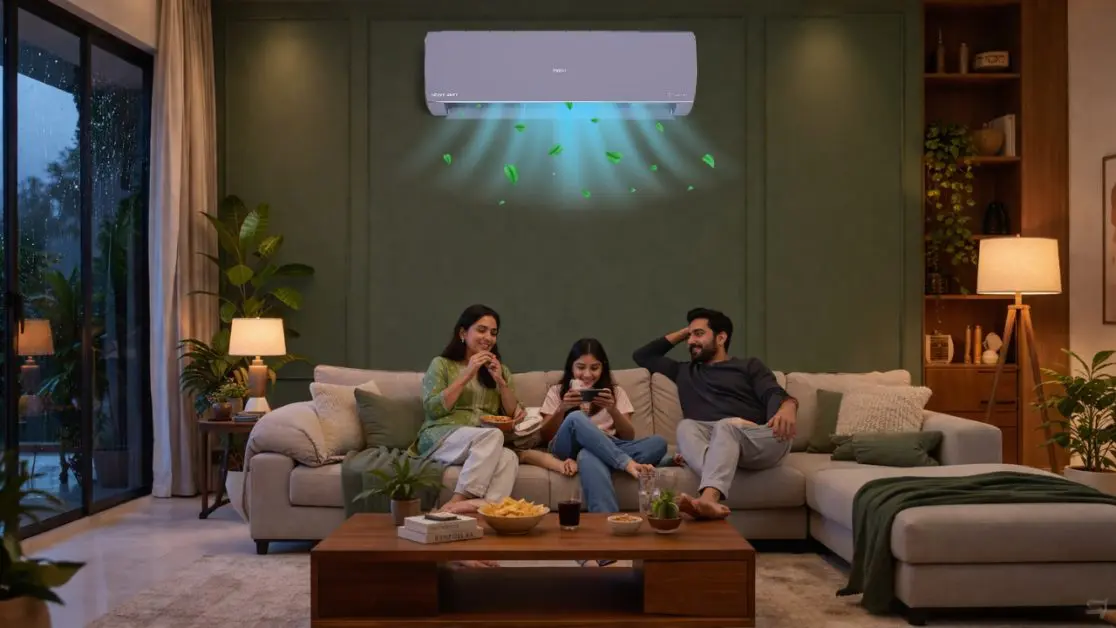
Picture this.
It’s a summer night in Hyderabad.
The mercury outside hits 40°C.
You enter the living area hoping for coolness.
However, the space feels inconsistent.
Freezing close to the air conditioner.
Quite warm near the cooking area.
A harsh rush of chill air, then quiet.
Older AC units often function this way.
They chill intensely.
They pause.
They switch on again.
This stop-start pattern leads to temperature variations.
And our bodies react strongly to these shifts.
Anything more significant starts to feel unsettling.
That’s the importance of steady temperature.
True comfort isn’t just about lowering the temperature.
Comfort means maintaining a steady, pleasant air quality.
What Actually Disrupts Temperature Stability
A home is a living system.
Temperatures inside constantly shift because of everyday activity.
Consider how many small forces affect indoor temperature.
| Factor | What Happens | Effect on Room Comfort |
| Sunlight through windows | Walls absorb heat | Room warms gradually |
| Cooking or appliances | Heat released into air | Localized warm pockets |
| People in the room | Body heat raises temperature | Small steady increase |
| Doors opening | Outdoor air enters | Sudden fluctuations |
| Poor airflow direction | Cold air collects unevenly | Uneven cooling zones |
Traditional cooling systems react slowly to these changes.
They detect temperature shifts only after the room warms up.
Then they respond.
By that time, comfort has already slipped.
The Real Science Behind Stable Cooling
The real breakthrough in cooling technology is predictive climate control.
Instead of waiting for temperature to rise or fall, modern systems continuously analyze the environment.
This is where AI Atmox technology changes how cooling works.
AI Atmox systems analyze multiple signals at the same time:
- Real-time temperature conditions
- Indoor humidity levels
- Occupancy and human movement
- Historical usage patterns
- External weather conditions
Using machine learning, the system builds a model of how a room behaves.
It then adjusts cooling automatically to maintain stability.
The system essentially learns your home.
According to the AI Atmox climate control architecture, the system continuously collects environmental and usage data, analyzes it through AI models, and automatically adjusts cooling performance to maintain comfort while reducing unnecessary power consumption.
The result is simple.
Cooling becomes smooth.
Four AI Atmox Innovations That Maintain Temperature Stability
Stable cooling is not a single feature.
It is a combination of intelligent technologies working together.
1. AI Climate Control
At the core of AI Atmox is a system that constantly evaluates the surrounding environment.
Instead of fixed cooling levels, AI Climate Control dynamically adjusts compressor speed and airflow to maintain optimal comfort.
The system automatically adapts to seasonal changes, humidity shifts, and daily room conditions without manual intervention.
The implication is powerful.
Cooling becomes responsive.
2. AI Pre-Cooling
One of the most interesting ideas behind temperature stability is anticipation.
AI Atmox systems can predict when users are likely to arrive home.
Through geofencing technology, when a smartphone enters a preset range near home, the system begins pre-cooling the room automatically.
This means the room reaches a comfortable temperature before you enter.
Benefits include:
- Instant comfort after arrival
- Reduced compressor stress
- Lower peak electricity load
3. AI Target Cooling
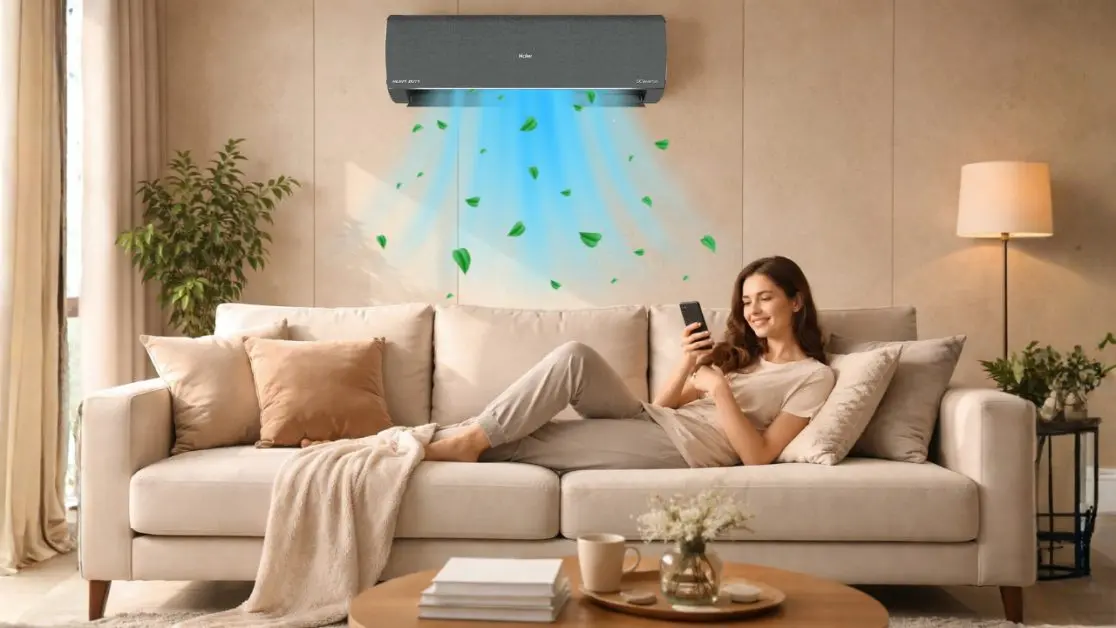
Traditional ACs cool entire rooms evenly.
But people rarely use every part of the room equally.
AI Target Cooling directs airflow precisely toward occupied zones.
Using installation layout data and cloud-based AI calculations, the system focuses cooling where it is actually needed.
Cooling becomes faster.
Energy waste drops.
Comfort improves.
4. AI Eco 2.0 Mode
Energy efficiency and temperature stability go hand in hand.
AI Eco 2.0 continuously monitors the gap between the actual room temperature and the set temperature.
The system automatically shifts between three performance levels depending on the temperature difference:
| Temperature Gap | Cooling Mode | Efficiency Impact |
| More than 3°C | Eco Level 1 | Maximum cooling power |
| 1–3°C | Eco Level 2 | Balanced cooling |
| Less than 1°C | Eco Level 3 | Energy saving mode |
This gradual adjustment prevents sudden compressor spikes.
The room stays stable.
Electricity consumption stays controlled.
Human Detection: Cooling That Understands Presence
Another major contributor to temperature stability is occupancy awareness.
AI Atmox uses sensors that detect human movement inside the room.
When the room becomes empty, the system automatically reduces power usage and shifts to energy-saving operation.
If inactivity continues, the system eventually powers down to prevent unnecessary electricity consumption.
This creates a balance.
Comfort when people are present.
Efficiency when they are not.
Why Stable Cooling Also Reduces Electricity Bills
Temperature stability has a surprising side effect.
It saves energy.
Here is why.
Traditional AC systems operate with large cooling bursts. When the temperature rises, compressors run at full capacity.
Then they shut off.
This stop-start cycle wastes electricity.
AI Atmox systems instead make continuous micro adjustments.
Small corrections prevent large temperature swings.
| Cooling Type | Compressor Behavior | Energy Consumption |
| Traditional AC | Frequent power spikes | Higher |
| AI Atmox Cooling | Smooth micro adjustments | Lower |
Stability therefore improves efficiency.
What Temperature Stability Means for Modern Indian Lifestyles
Today’s homes are different from the past.
People work from home.
Children study online.
Even entertainment happens indoors.
The indoor climate therefore matters more than ever.
Temperature stability supports:
- Better sleep quality
- More comfortable work environments
- Improved productivity
- Consistent indoor air conditions
In a country where summer temperatures can exceed 45°C, maintaining a stable indoor environment becomes essential.
Three Small Habits That Improve Temperature Stability
Technology does most of the work.
But a few simple habits improve cooling performance.
1. Reduce Direct Heat Entry
Curtains or blinds block solar heat during peak afternoon hours.
2. Maintain Clear Airflow
Avoid placing large furniture directly in front of AC airflow.
3. Keep Doors Closed During Peak Cooling
Limiting warm air entry helps the system maintain balance.
The Future of Cooling Is Invisible
The best technology does not demand attention.
It works quietly.
Early air conditioners required constant adjustments.
Temperature changes meant reaching for the remote.
Modern AI climate systems remove that effort.
AI Atmox technology learns the environment, adapts to user behavior, and continuously adjusts cooling performance to maintain comfort automatically.
In simple terms:
The system learns.
The system adapts.
The system stabilizes the room.
And life indoors feels easier.
Because the future of cooling is not about colder air.
It is about effortless temperature stability.
Frequently Asked Questions
Why does my room feel cold one minute and warm the next even with the AC on?
This usually happens with traditional ACs that use a stop-start cycle. They cool aggressively, shut off, and then restart when the temperature rises. This creates noticeable fluctuations instead of steady comfort.
Do I really need a smart AC or is my regular AC enough?
If you’re okay with manual adjustments and uneven cooling, a regular AC works. But smart ACs (like AI-based systems) reduce effort by automatically maintaining stable temperature without constant intervention.
I keep changing my AC settings all night why can’t I get it right?
Because the room conditions (humidity, body heat, outside temperature) keep changing. Smart systems solve this by continuously adjusting cooling instead of relying on fixed settings.
How does AI know what temperature I need?
AI systems analyze your past usage, room conditions, and environmental data to predict and maintain your preferred comfort level.
What is AI pre-cooling and does it really help?
It uses location tracking (geofencing) to start cooling before you arrive home, so your room is comfortable the moment you enter.
What is target cooling?
Instead of cooling the whole room, the AC focuses airflow where people are actually present, improving efficiency and comfort.
Will AI ACs save electricity or just sound fancy?
They save energy by avoiding power spikes and making small adjustments instead of running at full power repeatedly.