
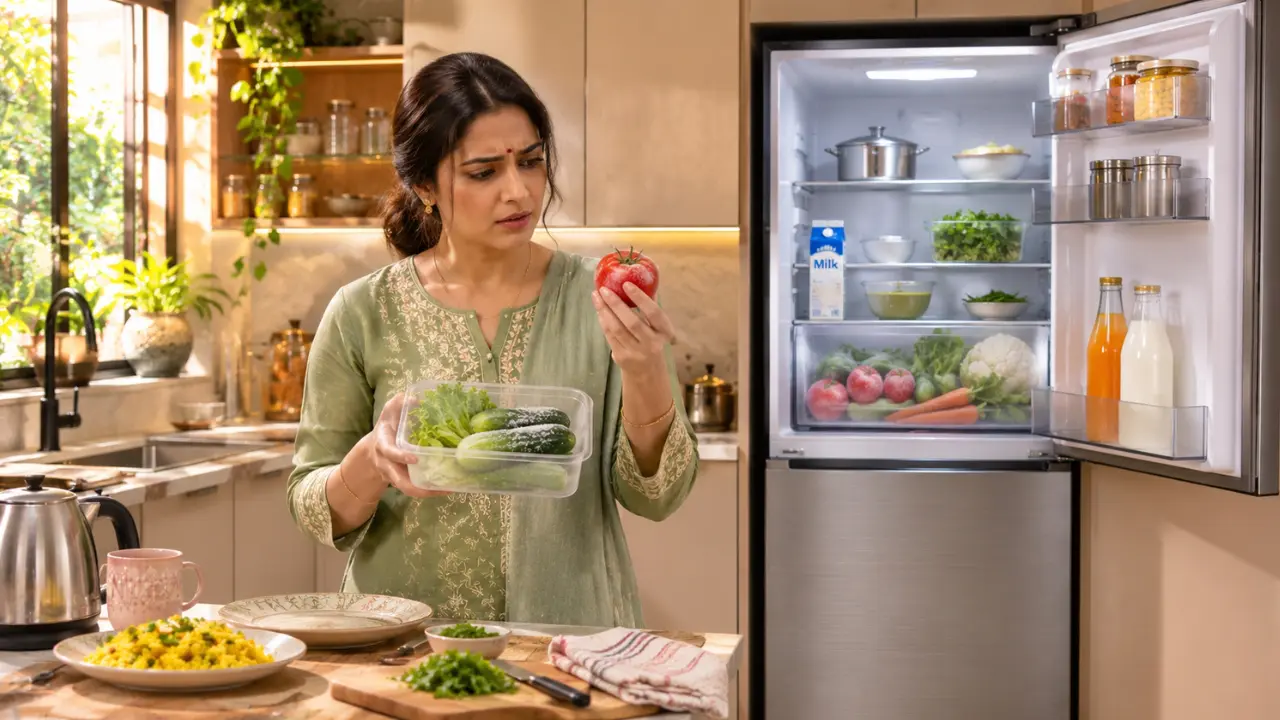

When you get up to make breakfast, you open your fridge and realise that the tomato you have in it is much firmer than usual. The cucumber is cold, the lettuce has frozen spots, and the milk is also colder than usual.
Strange, isn’t it? After all, these items were kept in the refrigerator compartment, not the freezer.
The purpose of a refrigerator is to maintain the freshness of food, not to freeze it. But sometimes, it can be too cold in the refrigerator compartment due to the wrong setting, blocked air vents, improper food storage, or faulty refrigerator parts.
The good news? Not all freezing issues need to be fixed by a professional. It may also be a matter of rearranging a few containers or changing the cooling settings.
Before moving on, let’s see the reasons why food freezes inside a refrigerator and how it can be prevented.
Can Food Freeze in the Refrigerator?
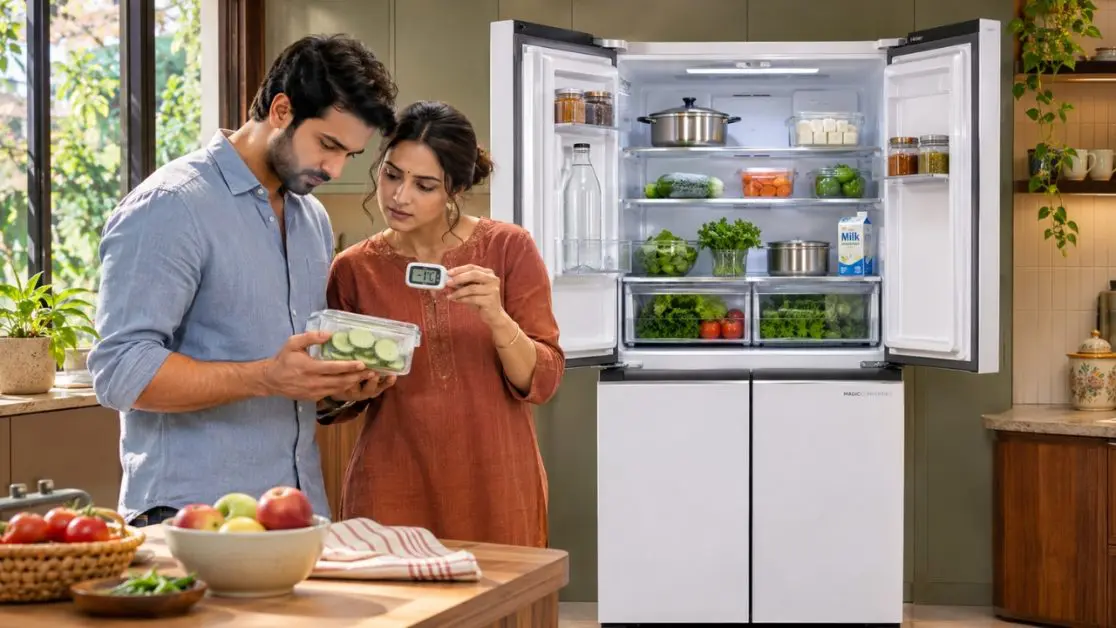
If food is freezing in the fresh-food compartment, in most cases, this indicates that it is too cold, cold air is coming in too directly on some items, or the refrigerator is not managing the cooling process properly.
A temperature of about 3°C to 4°C is generally adequate for most refrigeration uses, and the temperature of the compartment should be kept at or below 4°C for food safety.
Typically, the freezer temperature is set at approximately -18°C.
Refrigerated foods like tomatoes, cucumbers, leafy vegetables, and some fruits can freeze if the refrigerator compartment temperature falls below 0°C.
There’s a big difference, though.
The issue may be due to localised cold spots if only the vegetables located close to the rear wall are freezing. If the milk and leftovers are freezing on several shelves, the refrigerator may be freezing too quickly.
Be aware of this difference so that you can determine the probable cause.
7 Reasons Why Food Freezes in the Refrigerator Compartment
1. The Refrigerator Temperature Is Too Low
This is usually the first thing to check.
During the peak Indian summers, many families tend to turn up the refrigerator’s cooling. That makes sense during hot outdoor temperatures that rise into the 40s.
However, once the weather changes, those settings may cause the refrigerator to become unnecessarily cold.
For instance, if the refrigerator is used at its coldest setting in winter, it could expose sensitive vegetables to temperatures that are too cold.
What you should do:
- See the present refrigerator temperature setting.
- Follow the manufacturer’s instructions to set the fresh-food compartment to about 3°C to 4°C.
- Do not turn the cooling to the lowest setting if it isn’t needed.
- Allow sufficient time for the temperature to stabilise after making adjustments.
Keep in mind that higher cooling settings don’t necessarily mean better food preservation.
2. Food Is Placed Too Close to Cold Air Vents
Ever seen vegetables freeze on one side while the rest of the food keeps just fine?
This may be caused by an airflow problem.
Many frost-free refrigerators have chilled air flowing through specific vents to keep the temperature at the proper level.
Food items that come in the way of this cold air may become colder than other food items.
For example, a packet of paneer stored near an air outlet can also become partially frozen even if the temperature of the refrigerator is correct.
The answer is fairly simple.
Avoid pushing food packs against the back interior wall, and don’t place food containers in front of any visible air vents.
3. The Refrigerator Is Full
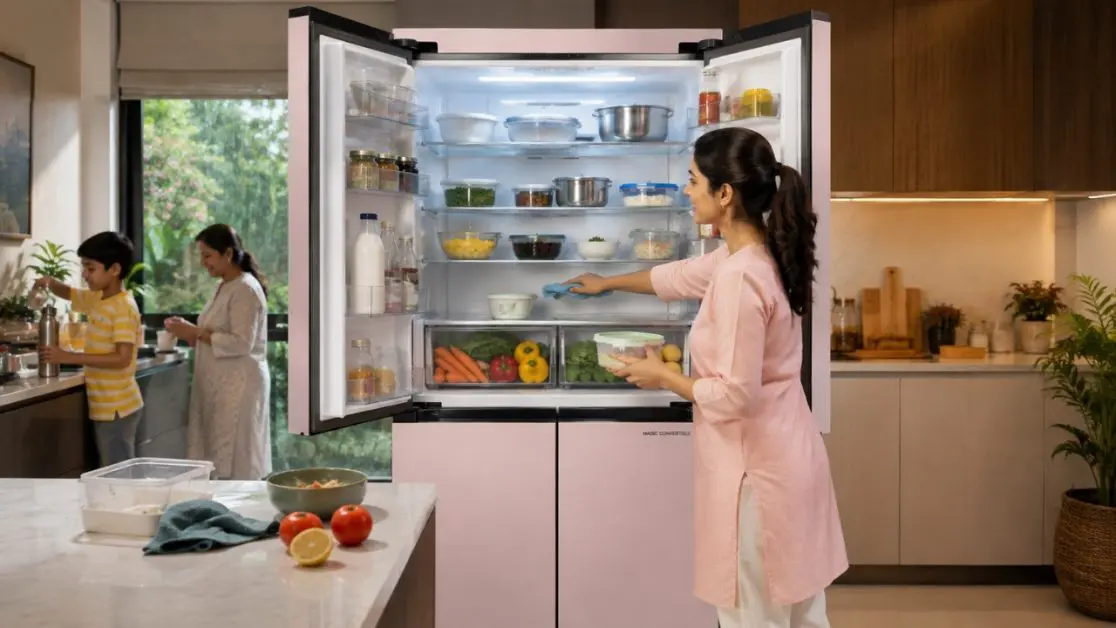
Indian refrigerators have quite a responsibility.
Vegetable containers, milk packets, leftover dal, chutney, water bottles, and sometimes a large container of biryani waiting for the next meal.
The space is even busier during festivals and family reunions.
But filling every corner can restrict airflow.
With uneven airflow, the air may be much colder in some areas than others, while other areas may receive less cooling.
Try these adjustments:
- Leave space between large food containers.
- Don’t block vent openings.
- Keep fresh vegetables in designated vegetable compartments.
- Organise the most frequently used items so they can be easily reached.
- Do not stack containers against the back wall!
An organised refrigerator allows better air circulation and makes everyday food storage more convenient.
4. There Is a Problem With the Temperature Sensor or Thermostat
Sometimes, it’s not the way you store food.
The components of a refrigerator that monitor temperature determine when to increase or decrease cooling.
If one of the sensors or thermostats is malfunctioning, the cooling system can run for a longer period of time than necessary.
This leaves the refrigerator compartment colder than desired.
Some warning signs may be:
- Food freezing across several shelves.
- Little noticeable effect from temperature settings.
- Repeated freezing despite proper food placement.
- Unusual cooling behaviour over a few days.
The presence of these symptoms should warrant professional inspection.
Don’t try to fix electrical components yourself.
5. The Air Damper Is Not Regulating Cold Air Properly
For refrigerators with an air damper, this component helps control the amount of chilled air flowing into the fresh-food compartment.
If the damper stays open, the refrigerator section could be subjected to too much cold air.
The result?
The selected temperature is correct, but food begins to freeze.
Without technical inspection, it may be hard to detect whether a damper is not working correctly.
If adjusting the temperature and rearranging food does not solve the problem, contact an authorised service professional if the refrigerator is still not working properly.
6. The Door Gasket Is Damaged or Not Sealing Properly
The rubber gasket around the refrigerator door is critical to keeping the refrigerator cool.
Warm air can enter the compartment if the gasket is damaged or not installed properly.
This can cause the cooling system to operate more frequently. Under certain conditions, the resulting temperature differences can cause uneven cooling.
But having a faulty gasket does not necessarily mean that it will cause freezing by itself.
Check whether:
- The door closes completely.
- Cracks can be seen in the rubber gasket.
- The door is unable to close because of food containers.
- The seal is dirty and covered with food particles.
Useful first steps include cleaning the gasket and making sure the door is properly closed.
7. Incorrect Convertible Zone Settings
Modern refrigerators might have convertible compartments that accommodate different storage needs.
These compartments are intended to be used at selected temperatures for refrigeration and/or freezing.
Selecting a freezing temperature for fresh vegetables or drinks, however, may result in unnecessary freezing.
This may be especially important in refrigerators with adjustable temperature zones.
Before putting food into a convertible compartment, be sure to check the selected mode.
What Should You Do When Food Starts Freezing?
Do some simple checks before calling a technician.
| What to Check | What You Should Do |
| Temperature setting | Set the refrigerator at a temperature of about 3°C to 4°C |
| Food placement | Separate food from cold air vents |
| Air circulation | Do not overfill shelves or cover vents |
| Door gasket | Inspect for dirt, damage, or seals that aren’t tight |
| Convertible compartment | Check whether the chosen mode matches the stored food |
| Persistent freezing | Call an authorised service technician |
It is a good idea to have a refrigerator thermometer in the fresh-food compartment.
Wait for the refrigerator to stabilize, usually after several hours, before checking the reading.
This will help you decide if it is too cold throughout the compartment or just in specific storage areas.
How Haier Lumiere Refrigerators Help With Food Storage Flexibility
The wrong temperature is not the only factor to consider when preventing unwanted freezing. Storage flexibility, compartment organisation, and appropriate cooling settings also play a role.
A refrigerator with organised compartments could simplify daily storage for Indian households, whether they are stocking fresh produce for the week or frozen meals.
This flexibility is taken into consideration when designing the Haier Lumiere 520L 3 Star French Door Refrigerator range.
The Lumiere series is available in Mauve Pink (HRB-600MP), Pearl White (HRB-600PW), and Rosetyte White (HRB-600RW) and offers a generous four-door design, convertible storage, and a dedicated cooling system.
Magic Convertible Zone for Different Storage Requirements
A major highlight of the Haier Lumiere 520L refrigerator is its Magic Convertible Zone, with a capacity of 90 litres.
This compartment is able to maintain adjustable temperatures in the range of -20°C to 5°C.
That means users can choose different temperature settings according to their storage needs.
For example:
- Approximately 5°C for suitable fruits and vegetables.
- Approximately 2°C for drinks.
- Around 0°C for suitable chilled food items.
- Lower temperatures for frozen food storage, according to the selected setting.
The convertible zone gives more flexibility than treating every food item equally.
This is especially helpful when storage requirements change between normal workdays, the holiday season, and family reunions.
It is important to note that the storage temperature should always be appropriate for the food being stored.
360° Surround Cooling for More Consistent Cooling
The Haier Lumiere series also comes with Magic Cooling and 360° Surround Cooling.
This technology is used to circulate chilled air throughout the refrigerator, helping provide more uniform cooling across different storage compartments.
The refrigerator, coupled with Triple Inverter Technology, is designed to support temperature stability and efficient operation.
But, of course, good food placement still counts.
Even with advanced cooling technology, users shouldn’t block air passages or set unnecessarily low temperatures.
Ample Storage Space for Better Organisation
The Haier Lumiere has a total capacity of 520 litres, and its storage compartment can be converted to provide 440 litres of refrigeration space.
It has some practical storage features, such as:
- Shelves that can be adjusted to fit various sizes of containers.
- Toughened glass shelves for everyday Indian kitchen utensils.
- Dedicated fruit and vegetable storage.
- Bottle and jar racks for secure storage.
- A four-door system for organising various food categories.
The refrigerator also has Deo Fresh Technology, which is designed to help eliminate odours and impurities while helping preserve freshness.
All these features allow food to be more easily organised according to its storage requirements.
Some Tips on Good Storage Practices to Avoid Accidental Freezing
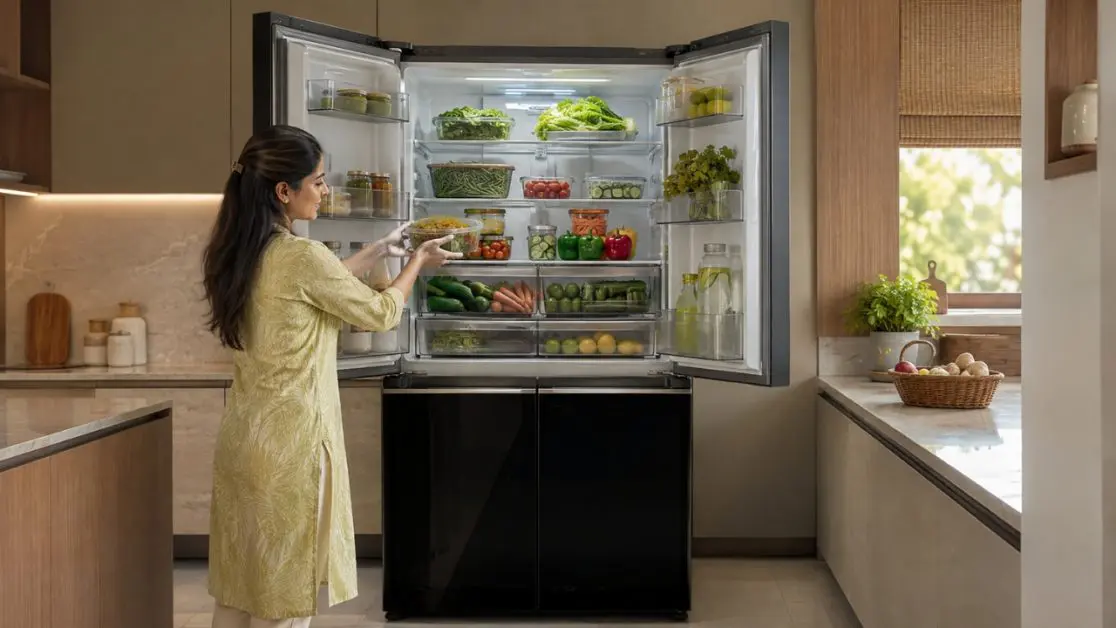
It does make a difference when a little attention is given to food placement.
Think about the characteristics of food that can change when it is refrigerated.
Leafy vegetables have a high water content and may suffer texture damage if frozen by accident.
Leftovers should be stored in appropriate covered containers, and milk and other dairy products must be kept at a consistent temperature.
To ensure better everyday storage:
- Store leafy vegetables in the designated vegetable compartment.
- Don’t put milk packaging in front of cold air outlets.
- Use covered, food-safe containers to store cooked food.
- Allow adequate air circulation between containers.
- Check the convertible compartment settings before storing fresh produce.
- Check the temperature of the refrigerator as the seasons change.
Additionally, take note that the quality of food can be compromised by freezing.
Food that has been accidentally frozen can become mushy or watery when it thaws. Appearance alone is not enough to decide whether perishable food is safe; it must also be evaluated based on safe storage and handling conditions.
When Is It Time to Call a Refrigerator Technician?
Freezing may occasionally occur in areas around the air outlet, which can be addressed through proper food placement.
Persistent freezing is another story.
If the refrigerator keeps freezing food when temperatures are set correctly and the airflow is not obstructed, the refrigerator may need to be professionally checked.
Call for help if:
- Multiple shelves repeatedly experience freezing.
- The temperature cannot be regulated properly.
- The refrigerator shows an error code.
- There are unexpected changes in cooling behaviour.
- The problem persists after troubleshooting.
If you are a Haier refrigerator user, you can opt for authorised service support and avoid unnecessary experimentation with internal refrigerator parts to figure out what went wrong.
Choose More Flexible Refrigeration With Haier India
A refrigerator should make food storage easier, not leave you wondering if the vegetables will turn icy overnight.
It is important to use the correct temperatures and storage practices. However, when it comes to selecting a new refrigerator, flexible compartments and well-thought-out storage may make day-to-day organisation more convenient.
The Haier Lumiere 520L 3 Star French Door Refrigerator is a combination of Magic Convertible Zone technology, 360° Surround Cooling, Triple Inverter Technology, and ample four-door storage.
The Mauve Pink, Pearl White, and Rosetyte White options make the Lumiere range a practical choice for those looking for flexible refrigeration options and modern styling.
Explore Haier India’s Lumiere refrigerator range and discover storage options designed for the evolving needs of Indian households.
Frequently Asked Questions
1. Why are vegetables freezing in my refrigerator?
Vegetables may freeze because the refrigerator temperature is too low, they are placed near cold air vents, or airflow is uneven. Check the temperature setting and move vegetables into the designated storage compartment.
2. What is the ideal refrigerator temperature to prevent food from freezing?
A fresh-food compartment temperature of approximately 3°C to 4°C is generally recommended. Always follow the temperature guidance provided for your refrigerator model.
3. Can an overloaded refrigerator cause food to freeze?
Yes. Overcrowding can obstruct airflow and contribute to uneven cooling. Keep ventilation openings clear and leave sufficient space between containers.
4. Why does food freeze even when the refrigerator temperature is set correctly?
Possible causes include localised cold spots, incorrect food placement, malfunctioning temperature sensors, or problems with airflow regulation. Persistent freezing should be professionally inspected.
5. Does a frost-free refrigerator prevent food from freezing accidentally?
No. Frost-free technology reduces frost accumulation, but it does not guarantee that fresh food will never freeze. Incorrect settings, blocked airflow, or component faults can still cause excessive cooling.
6. What is the Magic Convertible Zone in the Haier Lumiere refrigerator?
The Haier Lumiere 520L refrigerator features a 90-litre Magic Convertible Zone with adjustable temperatures from -20°C to 5°C. It allows users to select suitable settings for different refrigeration and freezing requirements.