

Faster cooling without increasing power consumption happens when an air conditioner cools the right place at the right time, instead of simply working harder.
Modern AI-driven technology analyzes temperature, occupancy, and usage patterns to deliver targeted cooling quickly while keeping electricity usage under control.
Speed alone does not define smart cooling.
Efficiency does.
And in an Indian summer, that difference matters more than most people realize.
Why faster cooling often leads to higher electricity bills?
Walk into any Indian home in May.
The first instinct is familiar.
Remote in hand. Temperature dropped instantly to 18°C. Fan speed was high. Doors closed.
For a few minutes, the room feels cooler.
But the electricity meter begins a quiet sprint.
According to the Bureau of Energy Efficiency (BEE), air conditioners already account for nearly 40 percent* of household electricity consumption during peak summer months in Indian cities.
When cooling technology relies purely on brute force, the result is predictable.
More compressor activity.
Higher electricity draw.
Longer running cycles.
Fast cooling becomes expensive.
But that is not the only way the technology can work.
The Hidden technology Behind Smart Cooling
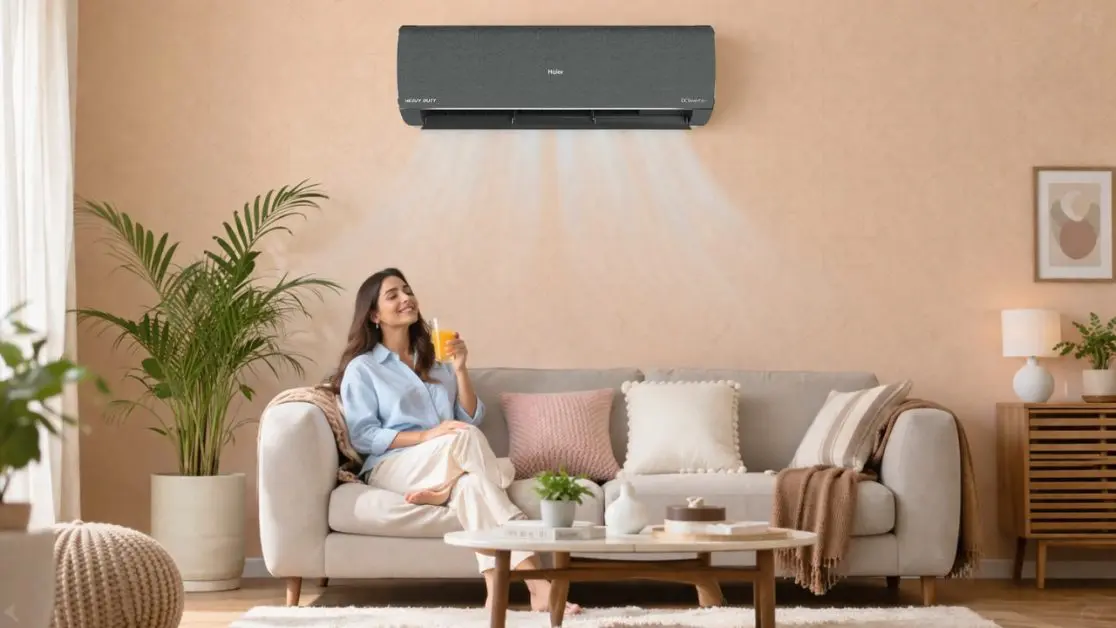
Cooling a room is not just about lowering the temperature.
It is about managing air movement, heat load, and human comfort simultaneously.
Three invisible factors decide whether cooling feels fast or slow:
- Room heat buildup from sunlight and appliances
- Airflow direction and distance
- How quickly cool air reaches people
Traditional air conditioners ignore most of these signals.
They cool the entire room evenly, whether someone is sitting there or not.
Modern intelligent cooling technology approaches the problem differently.
They ask a better question.
Where is cooling actually needed?
Three Ways Air Conditioners Try to Cool Faster
Not all cooling technologies use the same strategy.
In most homes, one of three approaches is at work.
1. Brute Force Cooling
The first approach is simple.
Lower the temperature drastically and run the compressor harder.
Benefits
- Immediate cooling sensation
- Simple to operate
Costs
- High electricity consumption
- Frequent compressor cycles
- Uneven temperature distribution
Many households rely on this method during peak summer evenings.
It works. But it wastes energy.
2. Timed Cooling
The second option uses timers or schedules.
You set the AC to start before you arrive home.
Benefits
- Room feels cooler on arrival
- Less waiting time
Costs
- Cooling happens even if plans change
- Electricity may be wasted when nobody is home
Timers are useful. But they lack awareness.
They cannot predict human behaviour.
3. Intelligent Predictive Cooling
The third approach relies on AI-driven technology that analyzes environment and usage patterns.
These technologies learn how and when people use cooling.
They adjust automatically.
Instead of cooling harder, they cool smarter.
And that changes everything.
The Idea That Changes Everything: Target the Cooling
Imagine pouring a glass of cold water on a hot day.
You do not cool the entire room.
You cool yourself.
Cooling technology is moving toward the same principle.
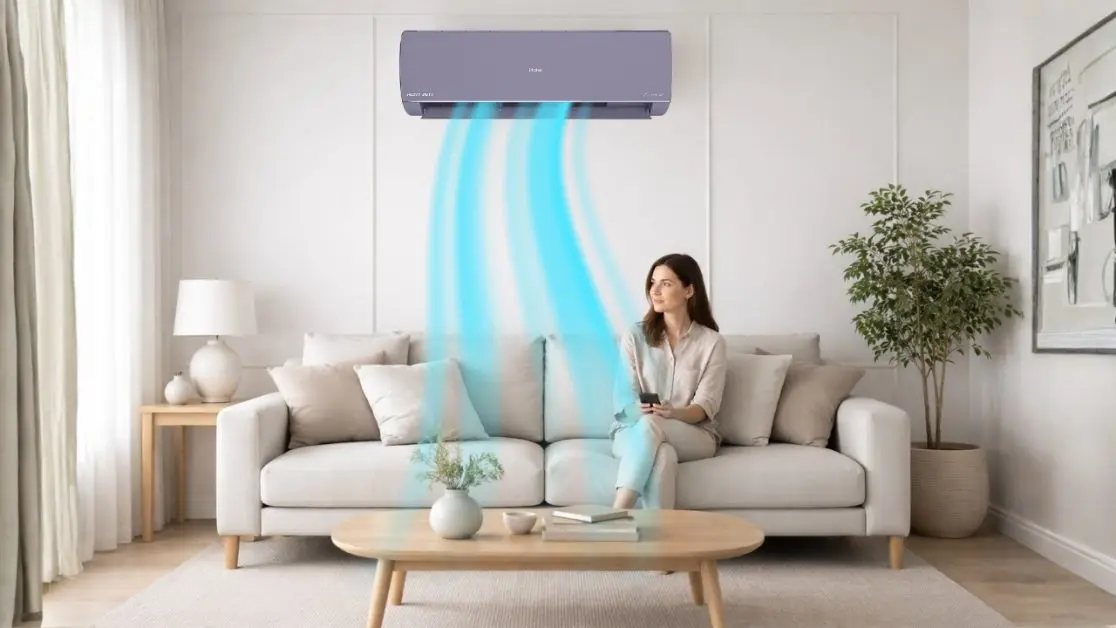
Instead of distributing cold air everywhere, modern technology sends airflow directly toward occupied areas.
This concept is known as targeted cooling.
When cooling reaches the user faster, the compressor does not need to work as aggressively.
That means:
- Faster comfort
- Lower electricity consumption
- Reduced energy waste
It sounds simple.
But achieving it requires intelligent sensing and airflow control.
How AI Is Quietly Changing Home Cooling
A new generation of air conditioners is beginning to apply machine learning to climate control.
Take technology powered by AI-driven climate intelligence, such as Haier’s AI Atmox platform.
Instead of waiting for users to adjust settings repeatedly, the technology learns behaviour patterns and adapts automatically.
According to the AI Atmox, the technology continuously analyzes temperature conditions, environmental factors, and usage habits to optimize cooling performance and reduce unnecessary energy consumption.
That analysis allows several smart actions to happen automatically.
AI Climate Control
The technology monitors indoor and outdoor conditions and adjusts cooling levels dynamically.
Instead of running the compressor continuously, it balances performance and energy savings.
AI Pre-Cooling
The AC predicts when the user is about to arrive home.
When the smartphone enters a predefined location radius, the technology begins cooling in advance so the room feels comfortable immediately.
No waiting. No wasted energy.
AI Target Cooling
Rather than cooling the entire room evenly, airflow is directed toward occupied zones for faster comfort.
The result is simple.
Cool air reaches people sooner.
The technology uses less energy to get there.
Why Targeted Cooling Uses Less Power
Cooling a room requires energy because heat must be removed from the air.
The larger the area being cooled, the harder the compressor works.
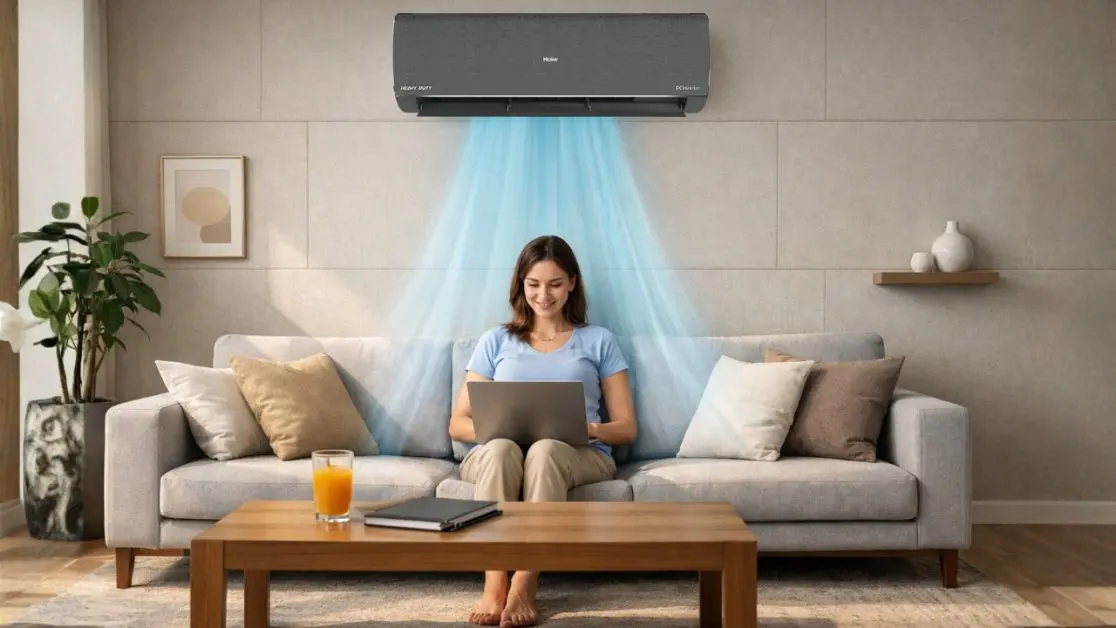
Targeted cooling reduces the workload.
Instead of removing heat from the entire room immediately, the technology prioritizes the occupied zone.
Think of it like lighting.
You can illuminate an entire stadium.
Or switch on a reading lamp beside your chair.
Both create light.
One uses far less electricity.
Cooling works the same way.
Small Design Choices That Make Cooling Faster
Technology matters. But everyday habits also shape cooling efficiency.
Several small adjustments dramatically improve cooling speed without increasing power consumption.
Simple Cooling Efficiency Checklist
| Action | Why It Works |
| Close curtains during afternoon heat | Reduces heat entering the room |
| Keep AC filters clean | Improves airflow and cooling efficiency |
| Set temperature between 24–26°C | Balances comfort and electricity use |
| Use ceiling fans with AC | Circulates cool air faster |
| Avoid placing heat sources near the AC | Prevents temperature misreading |
The principle remains consistent.
Reduce heat load. Improve airflow. Target the cooling.
Electricity monitoring 2.0 Changes How People Use ACs
One of the biggest shifts in modern appliances is visibility.
Earlier, electricity consumption was invisible.
Now smart cooling technology allows households to track usage patterns.
Advanced Electricity monitoring 2.0 features provide graphical views of daily consumption, operating modes, and real-time cost tracking through connected apps.
When people see how cooling decisions affect electricity bills, behaviour changes quickly.
A small shift from 20°C to 25°C can reduce energy use significantly.
Awareness creates efficiency.
When the AC Understands the Room
Another subtle innovation is human detection technology.
Sensors detect when people enter or leave a room.
If the room remains empty for a period of time, the AC automatically switches to a power-saving mode or shuts down to avoid unnecessary consumption.
This creates a new kind of appliance behaviour.
The AC does not simply run.
It responds.
Comfort stays high.
Electricity waste disappears quietly in the background.
What Faster Cooling Really Means for Indian Homes
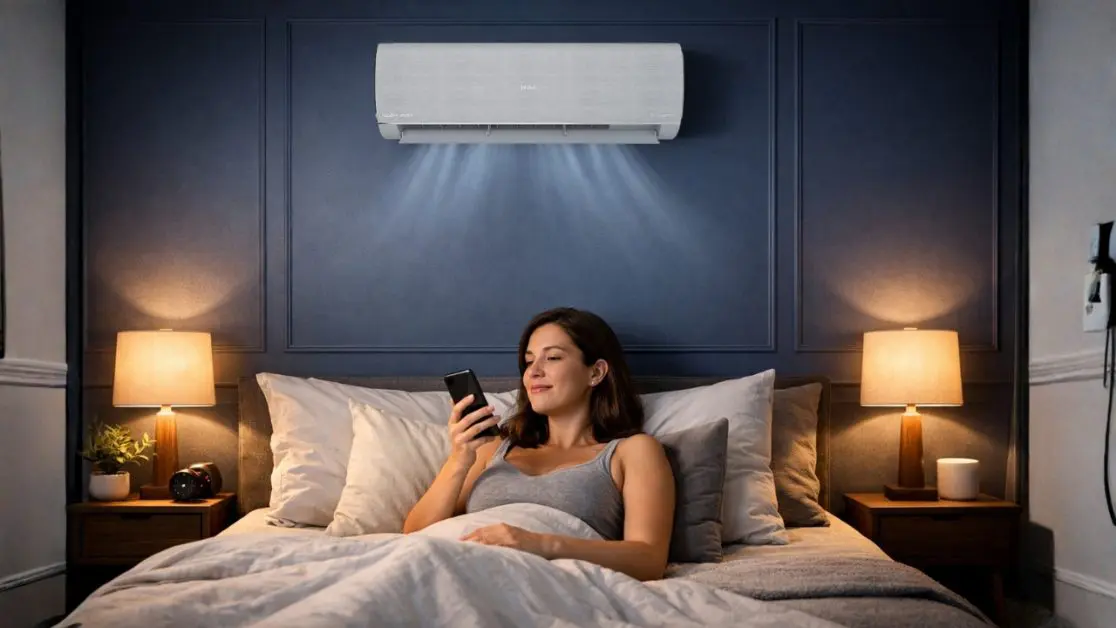
The real benefit of intelligent cooling appears during everyday moments.
Picture three familiar scenes.
Evening Return from Work
A young professional enters the apartment after a long commute.
The room already feels cool.
No waiting.
Weekend Family Time
Parents and children gather in the living room.
Targeted airflow cools the seating area quickly without wasting energy elsewhere.
Nighttime Sleep
Human detection and AI Eco 2.0 gradually reduce power usage once the room stabilizes.
Comfort stays constant.
Electricity consumption drops.
The technology works silently in the background.
That is the real promise of smarter cooling.
A Simple Insight About Cooling technology
Technology often evolves in surprising ways.
Cars became efficient not by adding bigger engines, but by designing smarter ones.
LED lights became brighter while using less electricity.
Cooling is following the same pattern.
Efficiency does not come from working harder.
It comes from working smarter.
The Bigger Shift Happening in Indian Homes
India is entering a decade where cooling demand will rise rapidly.
Urbanization is increasing.
Temperatures are climbing.
That reality creates a simple challenge.
Homes need cooling.
But electricity technology cannot afford waste.
The solution lies in intelligent technology that balances comfort with efficiency.
AI-powered cooling platforms are one step in that direction.
The Real Meaning of Faster Cooling
Most people think faster cooling means stronger machines.
But the future suggests something different.
Faster cooling will come from:
- Predictive technology that learn behaviour
- Targeted airflow that cools people first
- Sensors that eliminate wasted energy
- Smart monitoring that builds awareness
The technology becomes less mechanical.
More intuitive.
And in the quiet background of daily life, homes become a little more comfortable.
A little more efficient.
A little more thoughtful.
Because the best technology rarely demands attention.
It simply makes life work better.
Frequently Asked Questions
Why does my AC cool fast sometimes but still give me a huge electricity bill?
Because fast cooling often comes from forcing the compressor to work harder (low temp + high fan), which spikes energy usage instead of optimizing airflow.
Should I always set my AC to 18°C for faster cooling?
No. Setting it that low increases compressor load. A setting of 24–26°C with good airflow cools efficiently without wasting power.
I feel like my AC isn’t fast enough. should I upgrade or change how I use it?
In many cases, usage habits matter more. Improving airflow, cleaning filters, and reducing heat load can noticeably improve cooling speed.
Is “faster cooling” just marketing or does it actually mean something?
It depends. Real faster cooling comes from targeted and intelligent cooling, not just higher power output.
What is AI-based cooling in air conditioners?
It uses data (temperature, usage patterns, occupancy) to automatically adjust cooling for efficiency and comfort.
How does AI pre-cooling work in real life?
It detects when you’re nearing home (via phone location) and starts cooling in advance, so you arrive to a comfortable room.
What is targeted cooling and why is it important?
It directs airflow toward people instead of the entire room, reducing energy use while improving comfort speed.
Does smart AC technology really reduce electricity bills?
Yes, by avoiding unnecessary cooling, optimizing compressor usage, and adapting to real conditions.