
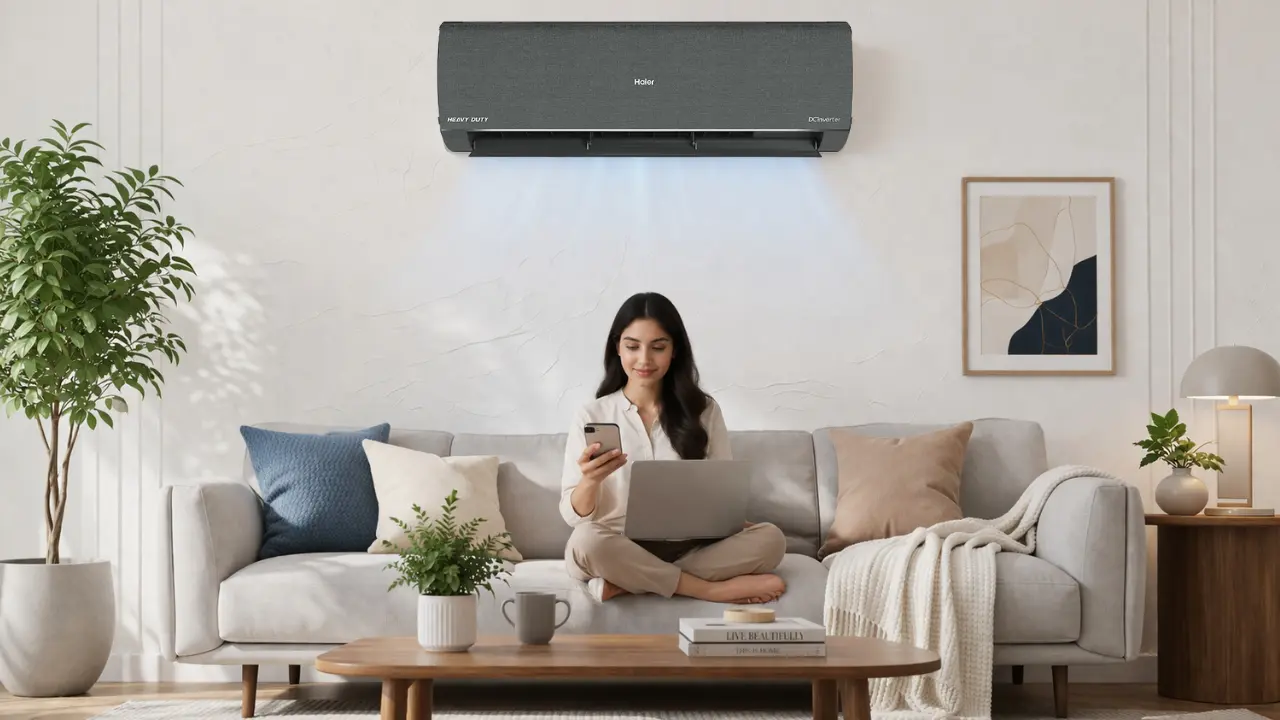

Haier AI Cooling Technology, powered by AI Atmox , uses sensors, machine learning, and real-time data to automatically adjust temperature, airflow, and energy usage.
It learns your habits, predicts your needs, and optimizes cooling without manual input, delivering comfort, lower electricity bills, and smarter living for modern Indian homes.
Why does cooling still feel like work in most Indian homes?
It is 9:30 PM in May.
Someone lowers the temperature.
Five minutes later, someone else says it is too cold.
The remote changes hands again.
This is how most homes “manage” cooling.
Constant adjustment. Constant compromise.
Now step back and ask a better question.
What if cooling adjusted itself before you even noticed the discomfort?
That question is where Haier AI Cooling Technology begins.
What is Haier AI Cooling Technology really doing behind the scenes?
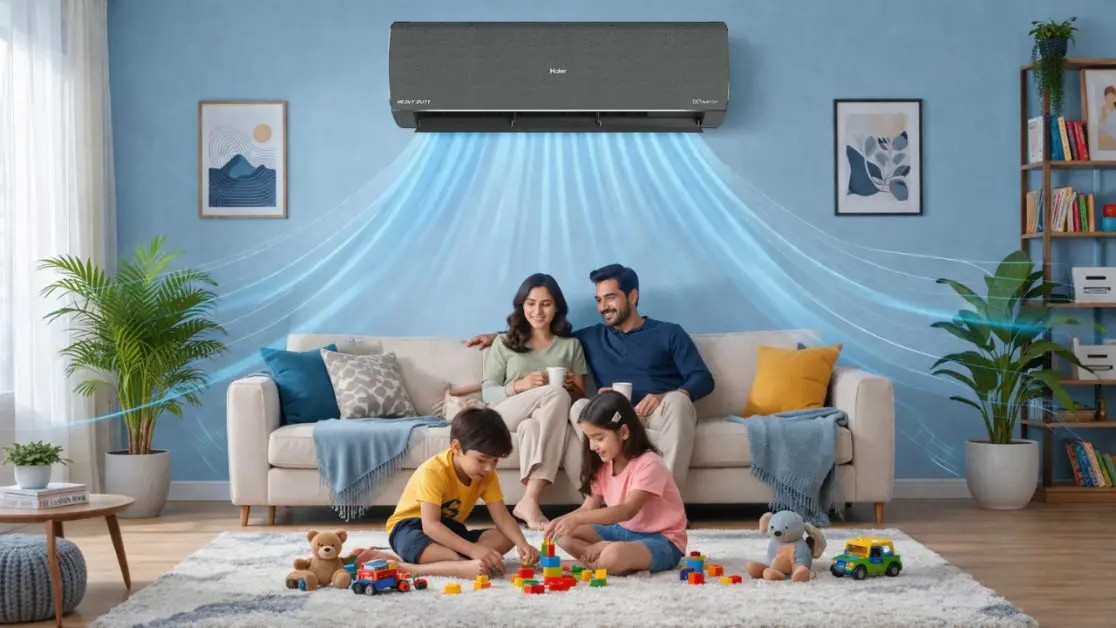
Most people think cooling is about temperature.
It is not.
It is about timing, behavior, and prediction.
Haier’s AI Atmox platform works like a silent observer inside your room.
According to the product technology overview, it combines:
- Environmental data like temperature and humidity
- User behavior patterns like usage time and preferences
- Real-time adjustments through AI learning
The result is simple.
Cooling becomes proactive instead of reactive.
And that changes everything.
The technology that quietly runs your comfort
1. AI Climate Control learns, adapts, and balances
Traditional ACs follow commands.
AI cooling follows patterns.
Haier’s AI Climate Control:
- Tracks usage patterns in real time
- Adjusts cooling based on weather and room conditions
- Prevents overcooling and unnecessary energy use
Insight:
Comfort is not a fixed setting. It is a moving target.
So the technology keeps recalibrating.
Not once.
Continuously.
2. AI Pre-Cooling solves the “arrival problem”
Think about the most uncomfortable moment.
Not when you are inside the room.
When you enter it.
Haier solves this with AI Pre-Cooling.
- Uses geofencing to detect when you are nearby
- Starts cooling before you arrive
- Eliminates the waiting period entirely
This is not convenient.
This is timing intelligence.
A room that waits for you feels different from a room that reacts to you.
3. AI Target Cooling focuses where it matters
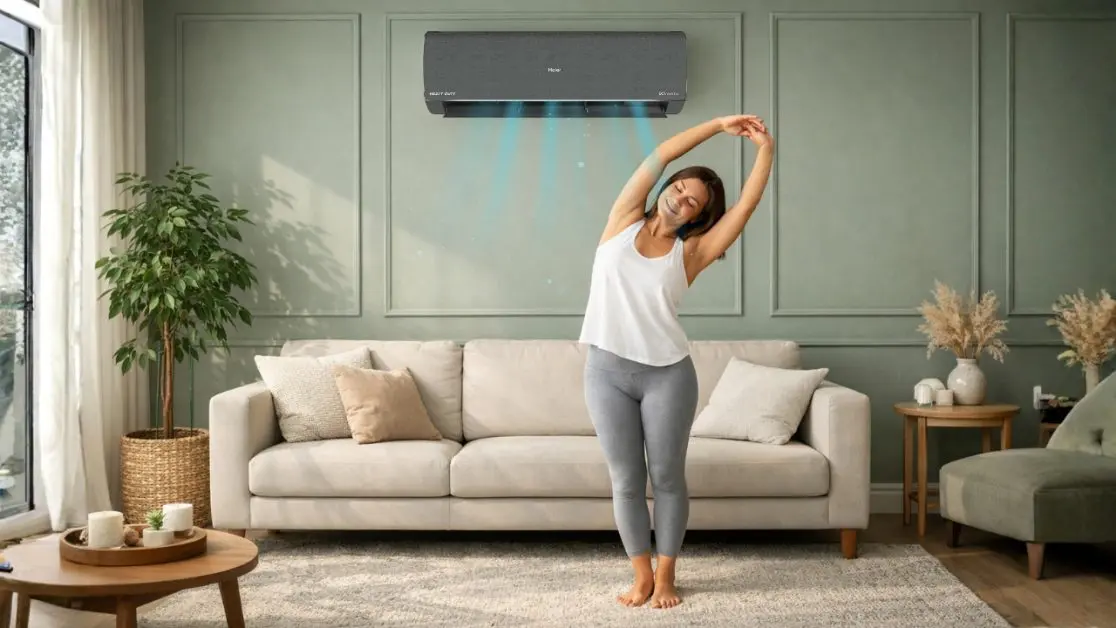
Most ACs cool the entire room equally.
But people do not use the entire room equally.
- Uses installation and layout data
- Directs airflow toward occupied zones
- Reduces wasted cooling energy
Imagine this in real life.
You are sitting on the sofa.
The AC cools you first.
Not the empty corner near the door.
Efficiency begins when technology understands intent.
4. AI Eco 2.0 optimizes energy without effort
Electricity bills are not about usage.
They are about inefficiency.
Haier AI Eco 2.0 works in layers:
- L1 mode when temperature gap is high
- L2 when conditions stabilize
- L3 when near optimal
This dynamic adjustment means:
- No manual switching
- No wasted cooling cycles
- Lower energy consumption over time
Savings are not created by turning things off. They come from smarter operations.
5. AI Human Detection prevents invisible waste
Here is a pattern most people miss.
Rooms stay cooled even when empty.
Haier addresses this directly:
- Detects human presence using sensors
- Reduces cooling when the room is empty
- Can power off automatically after inactivity
This is not just automation.
It is awareness.
Energy waste often happens when technology cannot see reality. AI fixes that.
What makes Haier AI Cooling different from traditional ACs?
Let’s break it down simply.
| Feature | Traditional AC | Haier AI Cooling |
| Control | Manual | Automated |
| Response | Reactive | Pre-cooling |
| Cooling pattern | Uniform | Targeted |
| Energy usage | Fixed cycles | Dynamic optimization |
| User effort | High | Minimal |
The shift is clear.
From control to intelligence.
Three ways Indian households actually experience this technology
One: The working professional living alone
- Leaves for work at 9 AM
- Returns exhausted at 7 PM
Without AI:
- Room is hot
- AC takes time to cool
With AI Pre-Cooling:
- Room is already comfortable
- No waiting, no adjustments
Benefit: Immediate comfort after a long day
Cost: Slight initial setup, zero daily effort
Two: The family managing electricity bills
- AC runs through the night
- Usage varies across rooms
Without AI:
- Overcooling leads to higher bills
With AI Eco 2.0+ Power Manager:
- Tracks usage
- Adjusts automatically
- Displays consumption in real time
Benefit: Predictable bills
Cost: Trusting automation instead of manual control
Three: The couple setting up a new home
- Prioritizes comfort and design
- Wants smart living without complexity
With AI Target Cooling + Voice Control:
- Cooling adapts to room layout
- Can control AC through voice
- No constant remote usage
Benefit: Effortless lifestyle integration
Cost: Learning to let the technology decide
The hidden layer most people never think about: self-maintenance
Cooling performance drops over time.
Not because of technology.
Because of dust.
Haier integrates AI cleaning technology:
- Indoor frost self-clean every 240 hours
- Outdoor cyclone clean reverses airflow to remove dust
This leads to:
- Better cooling efficiency
- Lower maintenance costs
- Longer appliance life
A technology that cleans itself protects its own performance.
So what is the real shift here?
It is not about AI.
It is about responsibility.
Earlier:
- You monitored the AC
- You adjusted the settings
- You managed the bills
Now:
- The technology monitors itself
- The technology adjusts itself
- The technology optimizes usage
The role of the user changes from operator to observer.
Why this matters more in Indian homes than anywhere else
Indian households are dynamic.
- Summers hit 40°C and above
- Monsoon changes humidity drastically
- Rooms are used differently throughout the day
Static cooling cannot handle dynamic environments.
AI can.
Because it adapts in real time.
Because it learns patterns.
Because it optimizes continuously.
The more unpredictable the environment, the more valuable intelligent technology becomes.
The one idea to remember
Cooling is no longer about lowering temperature.
It is about understanding behavior.
And once technology starts understanding behavior, everything changes.
- Comfort feels natural
- Bills become predictable
- Effort disappears
What this means for how we think about appliances
We used to buy appliances.
Now we choose technology.
technology that:
- Learn
- Adapt
- Cool
Haier AI Cooling Technology is not just a feature set.
It is a shift in how homes function.
Quietly.
Consistently.
Intelligently.
Final thought: The future of comfort is invisible
The best technology does not ask for attention.
It removes friction.
When cooling becomes invisible, life becomes easier.
And that is the real promise here.
Not colder air.
But smarter living.
Frequently Asked Questions
Why do I keep adjusting my AC temperature multiple times at night?
Traditional ACs are reactive. They don’t adapt to changing room conditions or your body’s comfort shifts. Haier India AI Cooling learns patterns and adjusts automatically, reducing this back-and-forth.
I’m tired of arguing over the remote. Can an AC manage comfort for everyone?
Yes. AI Climate Control continuously recalibrates cooling based on room conditions and usage patterns, removing the need for manual compromise.
Do I really need to keep changing AC modes every day?
Not with AI. It eliminates manual mode switching by dynamically adjusting cooling intensity and airflow.
Is AI cooling just marketing, or does it actually make a difference?
It’s functional. AI uses environmental data, behavior patterns, and real-time adjustments to optimize comfort and efficiency.
How does my AC ‘learn’ my habits?
It tracks usage patterns (timing, temperature preferences, room conditions) and builds predictive adjustments over time.
Will AI cooling reduce my electricity bill?
Yes. AI Eco 2.0 dynamically adjusts energy usage across multiple levels, avoiding unnecessary cooling cycles.
Can I still control the AC manually if I want?
Absolutely. AI enhances automation but doesn’t remove manual control.