
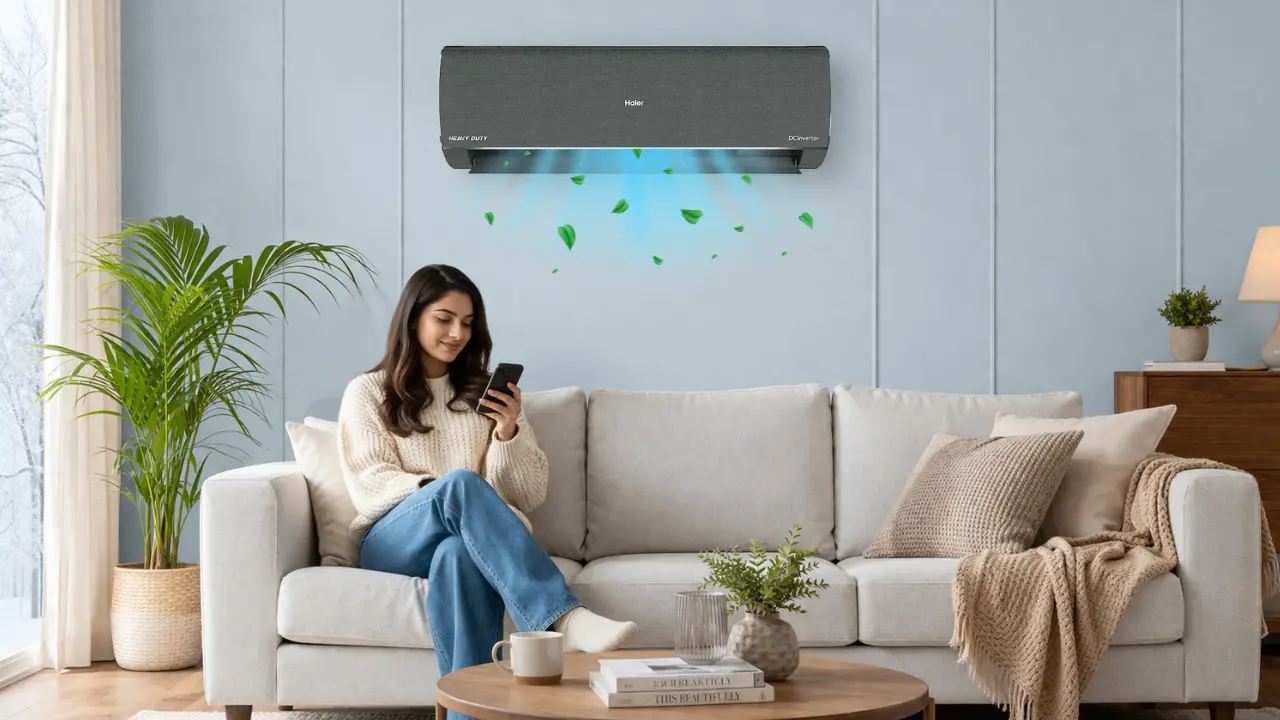

The best time to buy an air conditioner in India is just before summer.
Prices are still reasonable, options are available, and installation is faster.
If you wait until peak summer, you may pay more and face delays
Why timing your AC purchase matters more than you think?
Walk into an electronics store in May.
Fans spinning. Customers negotiating. Salespeople rushing. Delivery dates stretching into days. Sometimes weeks.
Now walk into the same store in December.
Quiet. Relaxed. Options available. Negotiation possible.
Same product. Different experiences.
Buying an AC is not just about the product. It is about the timing of the decision.
Because pricing, availability, and service are not fixed.
They move with the seasons.
The hidden technology: AC buying follows the weather, not logic
Most people buy an air conditioner when they feel heat.
Which means most people buy at the worst possible time.
The pattern is simple.
Demand rises with temperature. Prices follow demand.
Which leads to one insight:
Comfort is cheaper when you plan ahead.
The three buying windows most people choose
Let’s simplify this into three clear options.
One option is buying in winter
This is the October to February window.
Benefits:
- Lowest prices due to off-season demand
- More time to compare models
- Faster installation scheduling
- Access to new technology launches
Costs:
- You are buying without immediate need
- Requires planning and upfront decision-making
Who this is for:
- New homeowners setting up their space
- Families planning ahead for summer
- Buyers who value price and choice over urgency
Insight:
Winter buyers pay with planning. Summer buyers pay with money.
The second option is buying just before summer
This is March to early April.
Benefits:
- Decent pricing before peak surge
- Wide model availability
- Installation still manageable
Costs:
- Prices begin rising
- Limited negotiation flexibility
Who this is for:
- People who delayed but still want some advantage
- First-time buyers testing the market
Insight:
This is the compromise zone. Not the cheapest. Not the most expensive.
The third option is buying during peak summer
This is May to June.
Benefits:
- Immediate need fulfillment
- No delay in decision making
Costs:
- Highest prices of the year
- Long installation wait times
- Limited model availability
- Higher chances of rushed decisions
Who this is for:
- Urgent buyers
- First-time users reacting to heat
Insight:
Urgency is expensive.
Why AC prices rise before summer
Let’s step back.
Why do prices increase every year around the same time?
Because three forces collide:
1. Demand spikes suddenly
India sees temperature jumps from 28°C to 40°C in weeks.
2. Supply chains stretch
Logistics, installation teams, and inventory all get pressured.
3. Retail psychology shifts
When everyone wants the same product, discounts disappear.
This is not random.
It is predictable.
A familiar Indian scenario
It is mid-May.
You come home after a long day. The room feels like it has been storing heat since morning.
You switch on the fan. It does nothing.
You open your phone. Search: “Best AC under budget.”
You go to a store the next day.
Delivery in four days. Installation in two more.
Seven days of waiting.
That is not just an inconvenience. That is poor timing.
How smart buyers think differently
Smart buyers do something counterintuitive.
They buy cooling when they are not sweating.
Because they understand one thing:
Appliances reward foresight, not reaction.
They treat AC buying like:
- Booking train tickets early
- Ordering festive clothes before Diwali
- Preparing school supplies before the session starts
Not urgent. But important.
Where technology changes the equation
Modern ACs are not just about cooling anymore.
They are about how cooling happens.
For example, technology like Haier’s AI-driven cooling platform focus on:
- Predicting usage patterns
- Pre-cooling rooms before arrival
- Targeting cooling where you sit
- Optimizing energy usage automatically
As explained in the AI Atmox technology overview, AI-based cooling can learn user habits, adjust to environmental conditions, and optimize energy consumption in real time .
This changes the buying decision.
Because now you are not just choosing when to buy.
You are choosing how your home behaves every day after buying.
What most people ignore when buying an AC
People focus on:
- Price
- Brand
- Capacity
But ignore:
- Timing
- Installation experience
- Energy optimization over years
That is a mistake.
Because the cost of an AC is not just its price.
It is:
- Electricity bills over 5 to 8 years
- Comfort quality during peak heat
- Maintenance effort
- Daily usability
Buying late often means compromising early.
A simple decision framework
If you are planning to buy an AC, ask yourself three questions:
1. Do I want the best price?
Buy between October and January.
2. Do I want a balanced value?
Buy between February and early April.
3. Do I need it urgently?
Be ready to pay more in May and June.
The economics of waiting vs planning
Let’s make this tangible.
| Factor | Planned Buyer | Last-Minute Buyer |
| Price | Lower | Higher |
| Installation Time | Same day or next day | 3 to 7 days |
| Model Choice | Full range | Limited |
| Decision Stress | Low | High |
| Comfort Start Time | Immediate when needed | Delayed |
Planning reduces cost and stress.
Waiting increases both.
Why winter buying feels unintuitive but works
Buying an AC in winter feels strange.
Like buying an umbrella in December.
But that is exactly why it works.
Because:
- Sellers want to move inventory
- Brands offer better deals
- Installers are available
- You have time to choose wisely
The absence of urgency creates better decisions.
The role of smart features in modern buying decisions
Today’s ACs do more than cool.
They think.
Features like:
- AI Climate Control
- Pre-cooling based on arrival
- Energy monitoring
- Human detection for power saving
turn an appliance into a technology.
A technology that adapts.
A technology that reduces manual effort.
A technology that saves money over time.
Which leads to a bigger shift:
You are no longer buying a machine. You are buying behavior.
The real question is not when to buy
It is this:
Do you want to react to heat or design your comfort in advance?
Because that decision shapes everything else.
A final thought
Every Indian summer follows the same script.
Heat rises. Demand spikes. Prices climb.
And yet, every year, most people repeat the same pattern.
They wait.
They react.
They pay more.
But a small group does something different.
They plan.
They buy early.
They stay ahead.
Comfort, in the end, is not about temperature.
It is about timing.
Frequently Asked Questions
When is the best time for me to buy an AC in India without overpaying?
The best window is October to February, when demand is lowest and brands offer discounts, faster installation, and wider choices.
Why do AC prices suddenly feel higher when I need one the most?
Because demand spikes with heat. As temperatures rise, inventory shrinks, installation slots fill, and sellers reduce discounts.
Am I overthinking the timing, or does it really matter?
Timing can significantly impact price, availability, and service speed, it’s not just psychological.
Are modern ACs really smarter, or is it just marketing?
Many now include AI-based features like adaptive cooling, energy optimization, and usage learning.
Do smart features actually save electricity over time?
Yes, features like intelligent cooling and occupancy detection can reduce long-term energy costs.
Should I prioritize technology or price when buying an AC?
Ideally both but buying early gives you the flexibility to evaluate advanced features properly.