
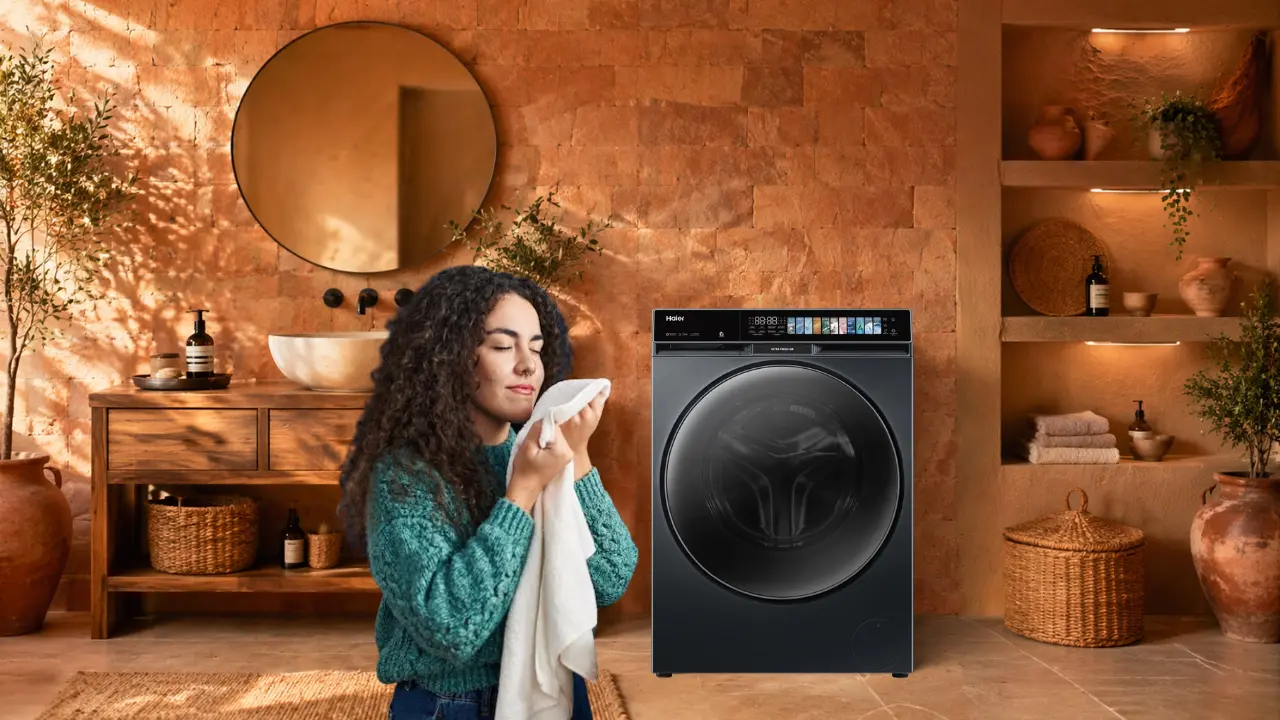

A smell-free washing machine comes down to three simple habits: keep it dry, clean it regularly, and avoid detergent buildup.
When moisture, residue, and closed spaces combine, odour builds up fast. Break that cycle, and your machine stays fresh, your clothes smell better, and your laundry routine feels lighter.
The moment you notice something is off.
It is a Sunday morning.
You open the washing machine to throw in a fresh load.
And then it hits you.
A faint smell. Damp. Slightly sour.
Not strong enough to panic. But strong enough to bother you.
Here’s the truth most people miss.
A washing machine is designed to clean everything except itself.
And that is where the problem begins.
Why washing machines start to smell in the first place
Let’s simplify the system.
A washing machine deals with three things every day:
- Water
- Dirt
- Detergent
Individually, none of these cause a problem. Together, they create a perfect environment for bacteria and mold.
The hidden cycle of odour formation
- Moisture stays trapped in the drum and rubber gasket
- Detergent residue builds up over time
- Dirt and lint settle in corners you rarely see
- Lack of airflow turns the drum into a closed, damp space
According to appliance care studies, front-load machines are more prone to odours because of their sealed design.
Which means one thing.
Smell is not an accident. It is a system outcome.
Tip 1: Leave the door open. Always.
This feels too simple. That’s why most people ignore it.
After every wash, leave the door slightly open for at least 2 to 3 hours.
Why this works
- Air circulation dries the drum
- Moisture does not get trapped
- Bacteria growth slows down
Think of it like drying a wet towel.
Fold it immediately, it smells.
Let it breathe, it stays fresh.
Freshness is not about cleaning. It is about drying.
Tip 2: Clean the gasket like you mean it
The rubber gasket is where most smells begin.
It traps:
- Water
- Hair
- Detergent foam
- Dirt particles
What you should do
- Wipe it after every 3 to 4 washes
- Use a dry cloth for daily care
- Use a mild vinegar solution once a week
What happens if you ignore it
| Area | What builds up | Result |
| Rubber gasket | Moisture + lint | Mould smell |
| Inner folds | Detergent residue | Sticky odour |
| Bottom edges | Dirty water | Sour smell |
This is not a maintenance tip.
This is the difference between fresh clothes and hidden bacteria.
Tip 3: Use the right amount of detergent

More detergent does not mean cleaner clothes.
It means more residue.
Here’s the trade-off
- Extra detergent creates foam buildup
- Foam leaves a sticky layer inside the drum
- That layer traps dirt and bacteria
Modern machines like the Haier 12 Kg F11 Front Load Washer Washing Machine (HW120-DM14F11BKU1) solve this with Essence Wash technology, which pre-mixes detergent for better distribution
Which leads to a simple insight.
The problem is not cleaning power. The problem is leftover detergent.
Tip 4: Run a drum clean cycle every 15 days
This is the reset button your machine needs.
Most modern washing machines come with a drum clean function.
If yours does not:
- Run an empty hot water cycle
- Add vinegar or a washing machine cleaner
What this fixes
- Removes detergent buildup
- Kills bacteria inside the drum
- Clears hidden residue
According to appliance care guidelines, running a cleaning cycle twice a month can reduce odour formation significantly.
Consistency beats intensity.
Tip 5: Dry the detergent drawer
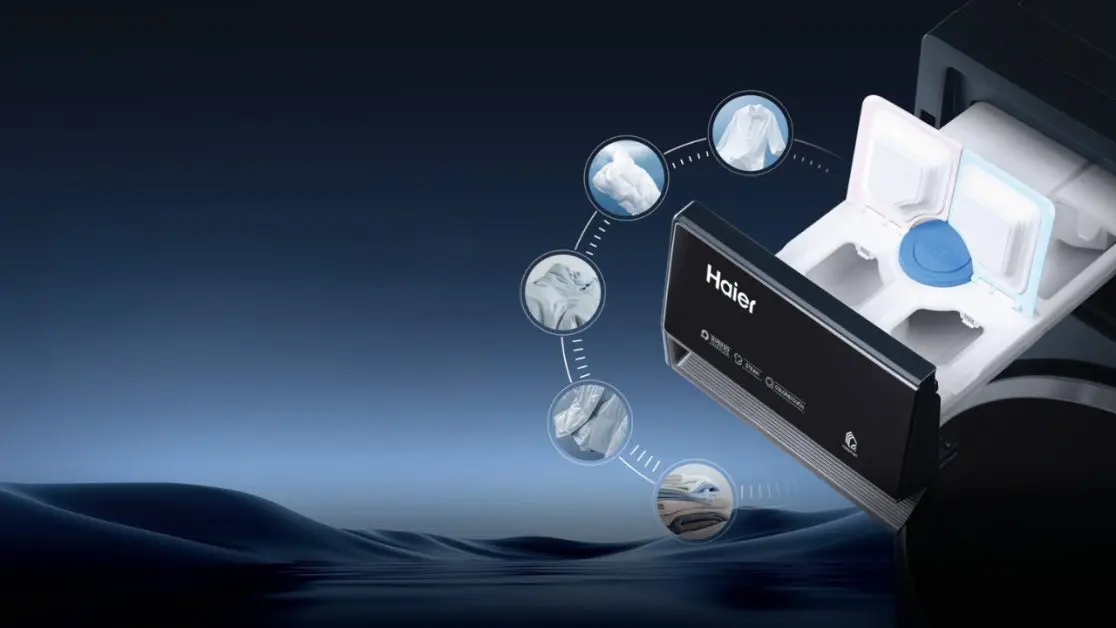
Most people clean the drum. Almost nobody cleans the drawer.
And that is where the smell quietly builds.
What to do
- Remove the drawer once a week
- Rinse it under running water
- Let it dry before putting it back
Why this matters
The drawer collects:
- Thick detergent residue
- Fabric softener buildup
- Water that never fully dries
A small area. A big impact.
Tip 6: Wash at higher temperatures occasionally
Cold washes save energy.
But they also allow bacteria to survive.
The smart balance
- Daily loads: 30 to 40°C
- Weekly deep clean: 60°C
Higher temperatures:
- Kill bacteria
- Break down residue
- Prevent long-term odour buildup
Machines like the Haier 12 Kg F11 Front Load Washer & Dryer Washing Machine (HWD120-DM14F11BKU1) support high-temperature washes up to 90°C, making deep cleaning more effective
Efficiency saves money. Heat saves hygiene.
Tip 7: Don’t leave wet clothes inside
This is the fastest way to create a smell.
Even a delay of 2 to 3 hours can start the process.
What happens inside
- Warm, damp fabric becomes a breeding ground
- Odour transfers from drum to clothes
- The smell multiplies with every cycle
Simple rule
- Remove clothes within 30 minutes of cycle completion
Or choose machines that help manage this.
For example, the Haier 12 Kg F11 Front Load Washer Washing Machine (HW120-DM14F11BKU1) uses Ultra Fresh Air Technology to keep air circulating inside the drum for up to 12 hours after the wash cycle
This changes the system.
From reactive cleaning to preventive freshness.
Tip 8: Choose airflow-driven technology when possible
Let’s step back.
Most tips solve the problem manually.
But some machines solve it structurally.
Two approaches
Option 1: Manual maintenance
- Requires regular effort
- Depends on consistency
- Easy to forget
Option 2: Built-in airflow systems
- Automatically circulate air
- Reduce moisture buildup
- Maintain freshness even after cycles
Technologies like Ultra Fresh Air use 360° micro-pressure airflow to refresh the drum repeatedly after washing
Which leads to a larger insight.
Good habits fix problems. Smart systems prevent them.
A simple weekly checklist
Keep it practical. Keep it repeatable.
- Leave the door open after every wash
- Wipe gasket twice a week
- Clean detergent drawer weekly
- Run drum clean cycle every 15 days
- Avoid overloading detergent
- Remove clothes on time
Small actions. Big difference.
The bigger picture most homes miss
A washing machine is not just a cleaning device.
It is a closed ecosystem.
Moisture, airflow, temperature, and residue all interact inside it.
Ignore the system, and smell becomes inevitable.
Understand the system, and freshness becomes automatic.
That is the shift.
What this really means for your home
Every home wants fresh clothes.
But freshness is not just about fragrance.
It is about hygiene, consistency, and ease.
When your machine smells clean:
- Clothes dry faster
- Fabric lasts longer
- Laundry feels less like a chore
And most importantly.
You stop thinking about problems that should never exist.
That is what good appliances do.
They remove friction from everyday life.
Quietly. Consistently. Invisibly.
Frequently Asked Questions
Am I overthinking my washing machine smell, or is this a real problem?
If you’re noticing even a faint damp or sour smell, it’s real. It means moisture and residue are building up. Catching it early is good, it’s easier to fix now than later.
I already use detergent and fabric softener. Why does my machine still smell?
Because cleaning clothes ≠ cleaning the machine. Detergent often leaves residue behind, which becomes food for bacteria over time.
Do I really need to clean my washing machine if it looks clean?
Yes. The smell comes from hidden areas like the gasket, drum interior, and detergent drawer not visible surfaces.
How do I know if I’m using too much detergent?
If your clothes feel slightly sticky, or the drum smells musty, you’re likely overusing it. Modern machines need less detergent than you think.
Are newer washing machines better at preventing smells?
Yes. Many modern machines include airflow systems, drum-clean cycles, and better detergent distribution to reduce residue buildup.
What does airflow technology actually do in a washing machine?
It circulates air inside the drum after a wash cycle, drying moisture and preventing odour formation automatically.
Do I still need manual cleaning if my machine has smart features?
Less often, but yes. Smart systems reduce effort, not eliminate it completely.
Is detergent pre-mixing technology useful or just marketing?
It’s useful. Even distribution reduces leftover detergent, which is one of the main causes of smell.