
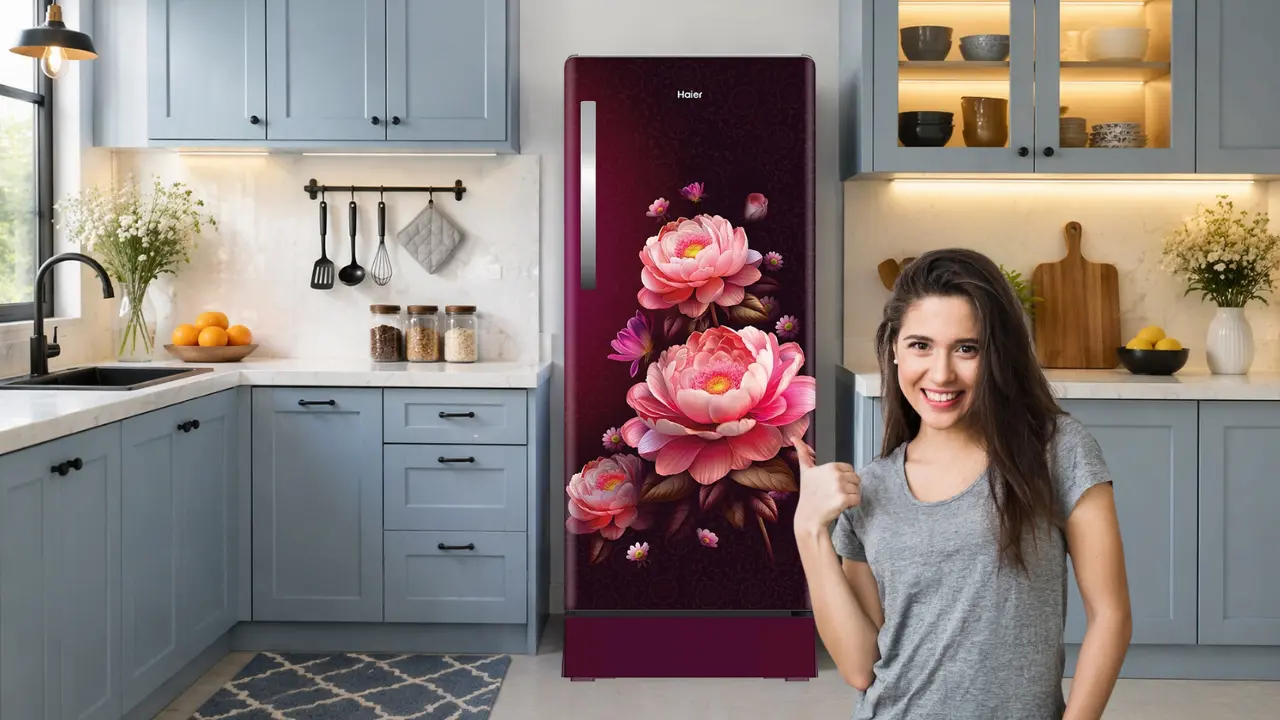

What should you actually look for when buying a refrigerator?
A good refrigerator balances capacity, energy efficiency, cooling performance, and real-life usability.
It should match your household size, handle Indian conditions like voltage fluctuations and power cuts, and quietly reduce daily effort. The best choice is not the biggest or most expensive one. It is the one that fits your life.
The moment that reveals what you really need.
It usually happens on a Sunday.
Vegetables for the week. Leftover dal. Cut fruits. A birthday cake squeezed into the last corner.
You open the fridge.
Something falls.
Something smells.
Something feels too warm.
That moment tells you everything.
A refrigerator is not a product decision.
It is a daily system decision.
And most people choose it backwards.
They look at the price first. Then color. Then maybe a brand.
But refrigerators do not fail on the outside.
They fail in the small, repeated moments inside.
Start here: What kind of household are you building for?

Before specs. Before features. Ask this.
What does your daily life look like?
Because refrigerators are not one-size-fits-all.
Three common household patterns
1. The Solo or Couple Setup
- Small kitchens
- Daily cooking or light storage
- Frequent grocery runs
- Ideal size: 150L to 220L
2. The Growing Family
- Bulk storage
- Weekly vegetable stocking
- Leftovers, tiffins, snacks
- Ideal size: 250L to 350L
3. The Large Household
- Heavy usage
- Festive cooking
- Multiple users opening doors all day
- Ideal size: 400L+
Insight:
Capacity is not about space. It is about rhythm.
Capacity is not storage. It is flowing.
A 190L refrigerator can feel spacious or cramped depending on design.
Take something like the Haier 190 L 5 Star Marine Blossom Single Door Refrigerator (HRD-2105PMBA-P).
It offers:
- 176L usable fridge space
- Base drawer for extra storage
- Toughened glass shelves
That combination changes how food flows inside the fridge.
What actually matters inside
- Shelf adjustability
- Separate zones for fruits and vegetables
- Door storage for bottles and small items
- Base drawers for dry items
Rule:
Good storage reduces thinking.
Energy rating is where your money quietly leaks or saves

A refrigerator runs 24 hours. Every day. All year.
Which means energy efficiency is not a feature.
It is a financial decision.
Understanding 5 Star refrigerators
- Up to 30 to 40 percent less energy consumption than lower-rated models
- Lower monthly electricity bills
- Better long-term value
For example:
- Some 190L 5 Star models consume around 120 units annually
- Others go up to 136 units depending on compressor type
That difference adds up over years.
Cost vs benefit
| Factor | 5 Star Refrigerator | Lower Rated Refrigerator |
| Initial cost | Slightly higher | Lower |
| Monthly bill | Lower | Higher |
| Long-term savings | Significant | Minimal |
Insight:
Electricity savings compound silently.
Cooling technology decides freshness, not just temperature
Most people assume all fridges cool the same way.
They don’t.
Two common systems
1. Direct Cool
- Natural convection cooling
- More energy efficient
- Requires manual defrost
- Ideal for small households
2. Frost Free
- Even cooling with fans
- No ice build-up
- Higher energy usage
- Ideal for larger families
What to prioritize in cooling
- Consistency of temperature
- Speed of cooling
- Ability to handle frequent door openings
Features like 1 Hour Icing Technology help freeze items quickly, especially useful in Indian summers
Insight:
Cooling speed saves time. Cooling consistency saves food.
Indian conditions change the rules
This is where most buying guides fail.
They ignore the environment.
Three real-world factors in Indian homes
1. Voltage fluctuations
- Frequent in many cities
- Can damage compressors
2. Power cuts
- Still common in many areas
- Food spoilage risk
3. Heat and humidity
- Higher cooling load
- More compressor stress
What to look for
- Stabilizer free operation
- Inverter compatibility
- Efficient insulation
Many Haier models support:
- Stabilizer free operation
- Running on home inverter
Insight:
A refrigerator should adapt to your home. Not the other way around.
Design is not about looks. It is about behaviour
Yes, design matters.
But not just for aesthetics.
What good design actually does
- Reduces clutter
- Improves accessibility
- Encourages better storage habits
For example:
- Separate fruit boxes reduce odor mixing
- Toughened glass shelves prevent spills
- Base drawers increase usable space
Also consider
- Handle type
- Door opening direction
- Height alignment with kitchen
And yes, aesthetics too.
A fridge like the Haier 190 L 5 Star Red Blossom Single Door Refrigerator (HRD-2115PRBA-N) blends functionality with visual appeal.
Because in modern homes, appliances are not hidden.
They are part of the room.
Hygiene is the invisible feature you notice too late
You don’t think about hygiene on day one.
You feel it after six months.
What improves hygiene
- Anti-bacterial gaskets
- Easy-to-clean interiors
- Covered back panels
For example:
- Clean back design prevents dust buildup
- Removable gaskets reduce bacterial growth
Insight:
The best hygiene feature is the one that reduces effort.
Compressor type decides noise, efficiency, and lifespan
This is the heart of the refrigerator.
Two main types
1. Normal compressor
- Fixed speed
- More energy consumption
- Lower upfront cost
2. Inverter compressor
- Adjusts speed based on cooling need
- Lower energy usage
- Quieter operation
- Longer lifespan
Many modern models use inverter compressors for better efficiency
Cost vs benefit
- Higher initial price
- Lower long-term cost
Insight:
The compressor you choose decides how your fridge ages.
Warranty is not paperwork. It is risk management

Refrigerators are long-term appliances.
A typical lifespan is 8 to 12 years.
What to check
- Product warranty: usually 2 years
- Compressor warranty: often up to 10 years
Example:
- 2 years complete warranty
- 10 years compressor warranty
This matters more than discounts.
Insight:
Warranty is confidence, not just coverage.
A simple decision framework
If everything feels overwhelming, simplify.
Ask these five questions
- How many people will use this daily?
- How often do you shop for groceries?
- Do you face power cuts or voltage issues?
- How much space does your kitchen allow?
- Do you prefer convenience or control?
Then match with options
- Small household → Single door, 150L to 220L
- Medium family → Double door, 250L to 350L
- Large household → Multi-door or side-by-side
What most people get wrong
They buy for today.
Refrigerators are built for tomorrow.
Common mistakes
- Choosing smaller capacity to save money
- Ignoring energy rating
- Overlooking local conditions
- Prioritizing design over usability
Insight:
Short-term savings often create long-term inconvenience.
The bigger picture: Appliances are quiet systems
A refrigerator does not demand attention.
It works in the background.
But it shapes daily life.
- How fresh your food stays
- How often you shop
- How much electricity you spend
- How organised your kitchen feels
And that is the hidden system.
You are not buying a fridge.
You are buying:
- Fewer daily frictions
- More predictable routines
- A little more ease
Final thought: The right refrigerator disappears into your life
The best refrigerator is not the one you admire.
It is the one you stop noticing.
Because everything just works.
Food stays fresh.
Storage feels effortless.
Bills stay controlled.
And your kitchen runs smoother without you thinking about it.
That is the real upgrade.
Explore thoughtfully designed refrigerators for modern Indian homes
If you want to see how these ideas translate into real products, explore Haier’s range of refrigerators designed for Indian lifestyles.
Because the right appliance does not just fit your kitchen.
It fits your life.
Frequently Asked Questions
Should I buy a bigger fridge for future needs?
Yes, but cautiously. A slightly larger fridge helps as needs grow, but too large wastes energy and space.
Why does my current fridge feel small even though it’s 190L?
Because usable space depends on layout, not just capacity. Poor shelf design creates clutter and “dead space.”
Is brand more important than features?
No. A trusted brand matters, but storage design, cooling, and energy efficiency impact daily life more.
Do smart features actually make a difference in daily use?
Only if they reduce effort like adjustable shelves, base drawers, and organized compartments.
Are toughened glass shelves worth it?
Yes. They handle heavy utensils and reduce spill damage.
What is the benefit of a base drawer?
Extra storage for dry items like onions, potatoes reduces fridge crowding.
Does design really impact usability?
Absolutely. Good design = less searching, less rearranging.
How do I know what refrigerator size is right for my family?
Your household size and cooking habits matter more than just liters.
1–2 people → 150L–220L
3–5 people → 250L–350L
5+ people → 400L+
If you cook in bulk or store leftovers often, go one size higher.