
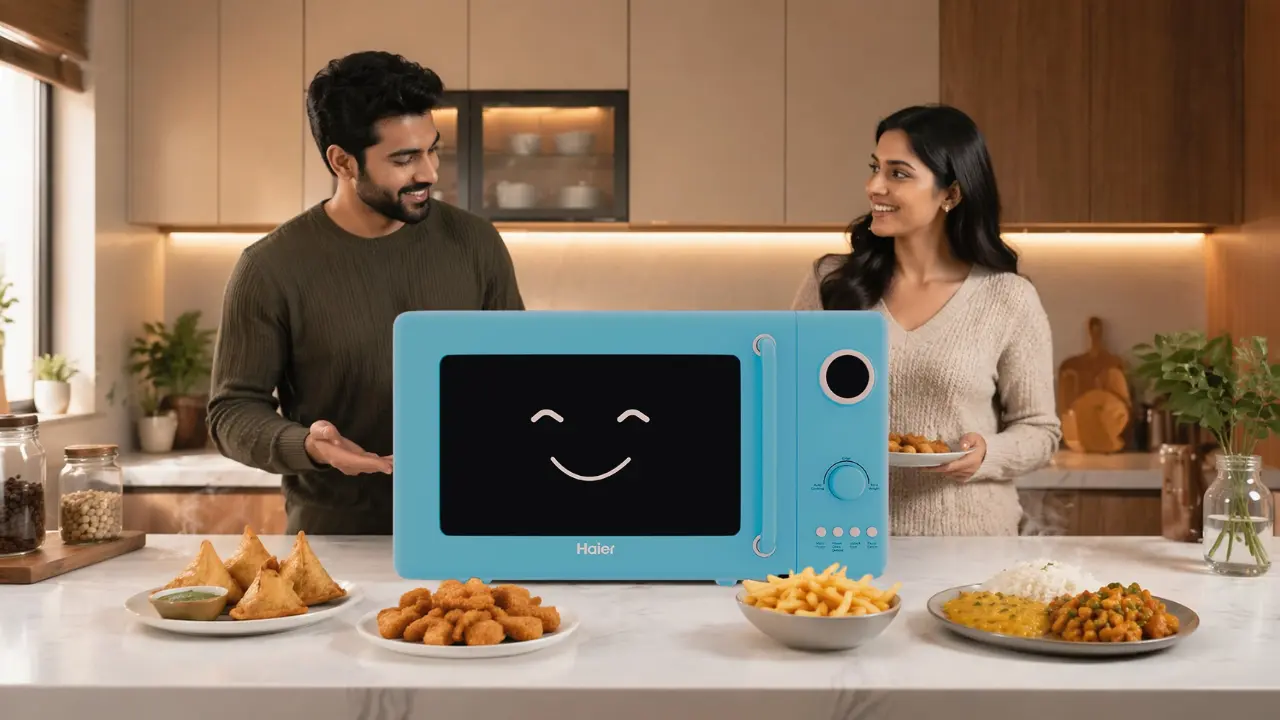

A modern kitchen today is not just about cooking. It is about saving time, reducing effort, and creating a space that works with your lifestyle.
Haier fits into this shift by combining smart functionality, intuitive design, and everyday efficiency in a way that feels natural inside Indian homes.
The kitchen has changed. Have our appliances caught up?
Walk into a typical Indian kitchen at 8:15 am.
One burner is on. The tiffin is half-packed. Someone is reheating last night’s sabzi. Someone else is searching for the right lid.
The kitchen is not a room. It is a system under pressure.
And most appliances? They still behave like isolated tools.
This is where the difference begins.
Modern kitchens are no longer about appliances that work. They are about systems that flow.
That is the quiet shift brands like Haier are building for.
Why Haier is Ideal for Modern Kitchens
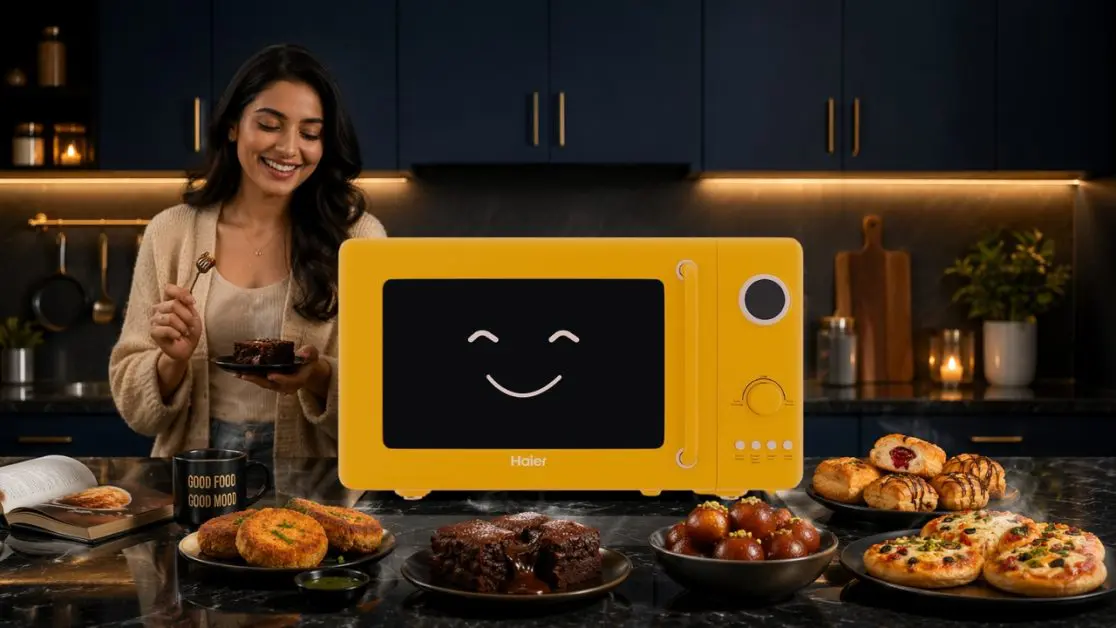
It designs for real life, not showroom life
Most kitchen appliances look perfect when unused.
The real test is chaos. Peak-hour mornings. Late-night cravings. Festival cooking marathons.
Haier’s approach feels grounded in these moments.
Take something as simple as a microwave.
The Haier Vogue 20L Solo Microwave Oven (HIL20V1MYPD / HIL20V1MOPD / HIL20V1MBPD) is not trying to impress with complexity. It simplifies the most common actions.
- Instant Start reduces friction
- Auto cook menus remove guesswork
- Jog dial control replaces complicated buttons
The insight is simple.
The best appliance is the one you do not have to think about.
What Makes a Kitchen Truly Modern?
Not size. Not budget. But systems.
A modern kitchen is not defined by marble countertops or modular cabinets.
It is defined by how smoothly things happen inside it.
Three invisible systems matter:
| System | What It Solves | Why It Matters |
| Time System | Faster cooking, reheating, prep | Reduces daily friction |
| Energy System | Efficient power use | Cuts long-term cost |
| Space System | Compact, multi-use design | Fits urban homes |
Haier appliances tend to sit at the intersection of all three.
That is not accidental. That is design thinking.
The Hidden Cost of “Traditional” Appliances
They make you do the work
Most older appliances operate on a simple logic.
You decide everything.
- Cooking time
- Power level
- Monitoring
- Adjustments
This creates a hidden cost.
Mental load.
You are not just cooking. You are constantly managing the process.
Now compare that with systems that reduce decisions.
For example:
- Auto cook menus adjust time and power automatically
- Digital displays show clear feedback
- One-touch operations remove repeated steps
Modern kitchens reduce decisions. Traditional kitchens multiply them.
Three Ways People Build Their Kitchen Today
One decision. Three different outcomes.
When setting up a kitchen, most people fall into one of these paths.
1. The Budget-First Approach
- Focus: Lowest price
- Benefit: Immediate savings
- Cost: Higher long-term effort and inefficiency
2. The Aesthetic-First Approach
- Focus: How it looks
- Benefit: Visually pleasing space
- Cost: Functionality often takes a backseat
3. The System-First Approach
- Focus: Ease, flow, usability
- Benefit: Daily life becomes smoother
- Cost: Slightly higher upfront investment
Haier naturally fits into the third category.
Not because it is premium.
Because it is thought-through.
Design Is No Longer Just About Looks
It is about emotional experience
Walk into a kitchen with a dull, lifeless appliance.
Now walk into one with a pop of colour.
It feels different.
That is not design. That is psychology.
The Haier Vogue series understands this well.
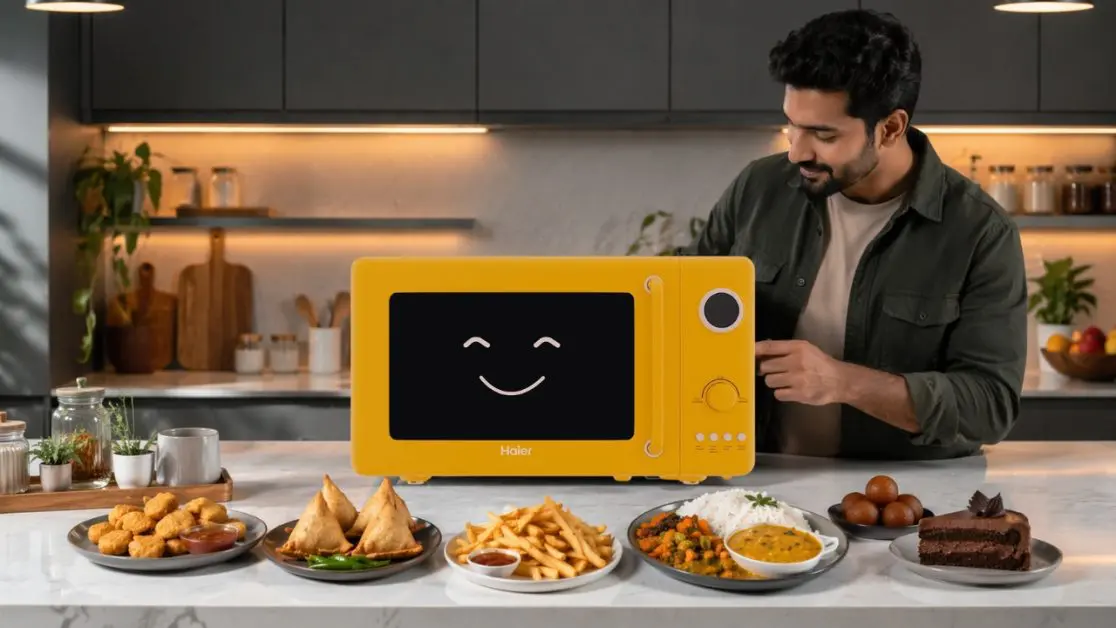
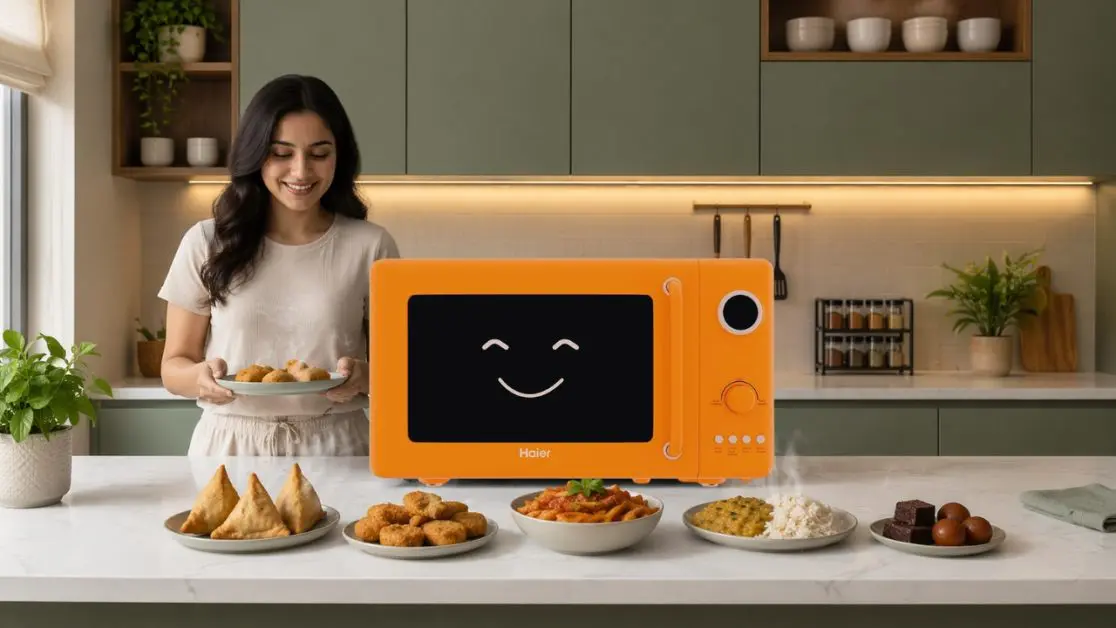
- Multi-colour options like Blueberry, Peach, and Lemon
- A playful smiley glass door that adds personality
This is not just visual.
It changes how people feel inside their kitchen.
A kitchen that feels good gets used more.
Speed Is the New Luxury in Indian Kitchens
Because time is always in short supply
In urban India, cooking time has compressed.
- Working professionals juggle meetings and meals
- Parents manage school schedules and dinner prep
- Students rely on quick fixes between classes
Speed matters.
But speed without control creates mistakes.
This is where structured automation becomes important.
What faster cooking actually looks like
- Instant Start reduces wait time to seconds
- Pre-set menus remove trial and error
- Defrost functions speed up frozen food prep
The result?
Not just faster cooking.
Less stressful cooking.
How Haier Fits Into Everyday Indian Scenarios
Not theory. Real life.
Let us map this to familiar situations.
Morning Rush
- Reheat parathas in seconds
- Auto settings avoid overcooking
Late-Night Hunger
- One-touch heating
- No need to think or adjust
Festival Prep
- Multiple dishes
- Reduced monitoring effort
Working From Home
- Quick meals between calls
- Minimal kitchen time
This is where Haier’s design philosophy becomes clear.
It is not about features. It is about removing friction from daily life.
A Simple Comparison That Explains Everything
Old Kitchen vs Modern Kitchen Thinking
| Factor | Traditional Setup | Modern Haier-Style Setup |
| Cooking Control | Manual | Assisted / Automated |
| Time Investment | High | Reduced |
| Mental Effort | Continuous | Minimal |
| Design | Neutral | Expressive |
| Adaptability | Fixed | Flexible |
The shift is not technological.
It is behavioural.
The Economics of a Smarter Kitchen
What do you actually gain?
Most people think appliances are an expense.
But modern appliances behave more like time-saving assets.
Let us break it down.
Costs
- Slightly higher upfront price
- Learning curve for features
Benefits
- Time saved daily
- Reduced energy wastage
- Lower cooking errors
- Less mental load
Now zoom out.
Saving 15 minutes daily equals:
- 7.5 hours a month
- 90 hours a year
That is more than three full days.
The right appliance does not cost money. It gives back time.
Why Haier Works for Indian Homes Specifically
Because it understands constraints
Indian kitchens come with unique challenges.
- Smaller spaces in cities
- Multi-generational usage
- Diverse cooking styles
- Frequent power usage
Haier’s approach addresses these realities:
- Compact designs like 20L microwaves
- Easy-to-use controls for all age groups
- Preset menus for common Indian dishes
- Efficient power usage
This is not global design applied locally.
This is local understanding built into design.
The Bigger Insight Most People Miss
Appliances shape behaviour
We assume we control our kitchens.
The truth is more interesting.
Our tools shape how we cook, how often we cook, and how we feel while doing it.
- Complicated appliances discourage usage
- Slow systems delay meals
- Inefficient designs create stress
On the other hand:
- Simple systems encourage consistency
- Faster tools enable flexibility
- Smart features build confidence
A better kitchen does not just improve cooking. It changes habits.
So, Why Is Haier Ideal for Modern Kitchens?
Because it aligns with how life actually works today
Not aspirational. Not exaggerated. Just practical.
It understands:
- Time is limited
- Space is constrained
- Energy matters
- Simplicity wins
And it builds around that.
The Final Thought
A kitchen is not defined by what it has.
It is defined by how it feels to use it every day.
Calm or chaotic. Effortless or exhausting.
That difference rarely comes from design alone.
It comes from systems.
Haier fits into modern kitchens because it quietly builds those systems.
Not loudly. Not aggressively.
Just enough to make life feel a little more sorted.
And in today’s homes, that is everything.
Frequently Asked Questions
Why do I feel mentally tired every time I cook, even for simple meals?
It’s not the cooking itself, it’s the constant decision-making. Traditional appliances force you to think about time, power levels, and monitoring. Modern systems (like Haier’s auto-cook features) reduce these micro-decisions, making cooking feel lighter and less draining.
I just want my kitchen to “flow” better. What does that actually mean?
A flowing kitchen means fewer interruptions: less guessing, fewer steps, and smoother transitions between tasks. Appliances that automate repetitive decisions (like reheating or defrosting) help your kitchen feel like a system, not a struggle.
I often leave food or utensils mid-process. Do modern appliances help with that chaos?
Yes. Modern appliances are designed for interruption-heavy environments. Features like quick restart, clear digital displays, and preset cooking reduce the risk of errors when you’re multitasking.
My kitchen gets messy during peak hours. Can appliances really make a difference?
They can reduce chaos, not eliminate it. Faster reheating, automated cooking, and fewer manual adjustments mean less cluttered workflows and fewer utensils or steps involved.
I want faster cooking, but I’m worried about ruining food. How do I balance both?
Speed alone isn’t helpful unless it’s controlled. Preset menus and auto-adjust features ensure food is heated or cooked properly without overdoing it. That’s the difference between raw speed and smart speed.
Does faster cooking actually save that much time daily?
Yes, even small savings compounds. Saving 10–15 minutes a day adds up to dozens of hours annually you can spend on work, rest, or family instead of routine kitchen tasks.
Are smart features really useful, or just marketing gimmicks?
They’re useful when they reduce effort. Features like auto-cook menus and one-touch operations aren’t about showing off; they’re about removing repetitive thinking and improving consistency.
I don’t want complicated tech. Are modern appliances harder to use?
Good modern appliances are actually simpler. The goal is fewer buttons, clearer controls, and intuitive use not more complexity.