
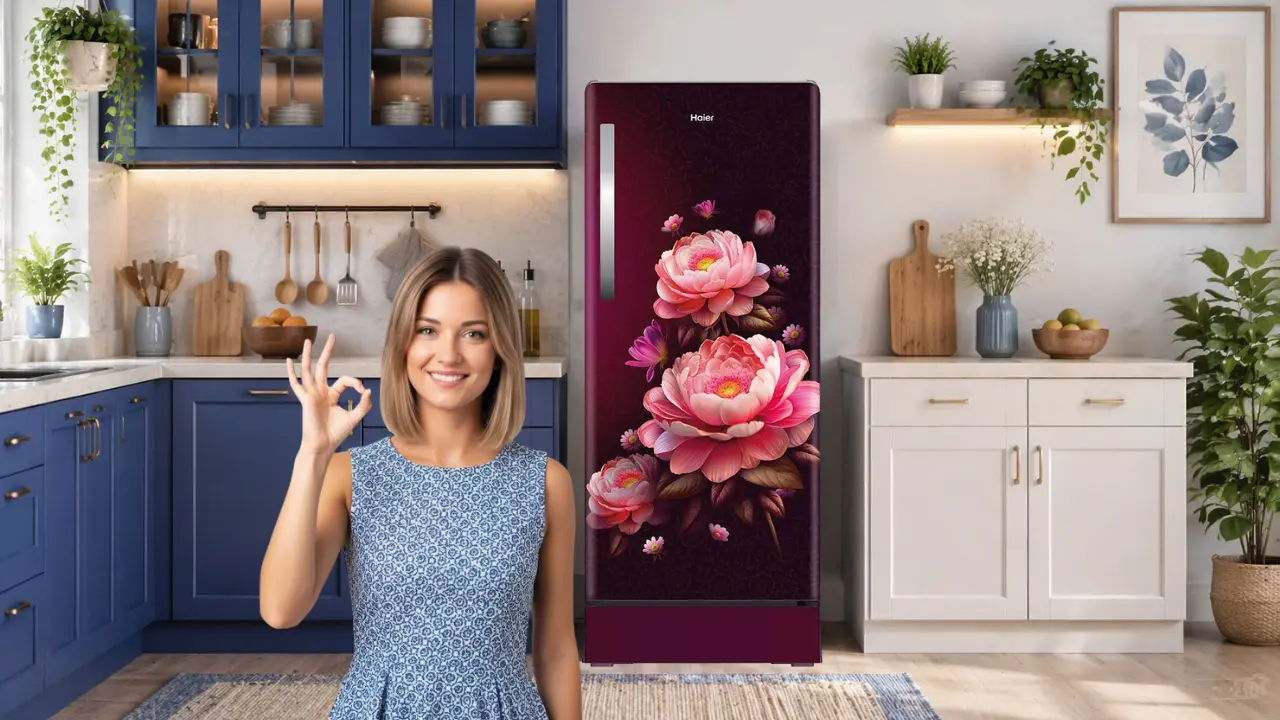

Haier inverter refrigerators save energy by adjusting cooling power based on real-time usage instead of running at full capacity all the time.
This reduces electricity consumption, lowers bills, and improves long-term efficiency without compromising cooling performance.
The ₹50 decision happens quietly in your kitchen every day.
It is 10:45 pm.
The kitchen is finally silent.
Dinner is done. Leftovers are packed. The refrigerator door shuts one last time.
And then something interesting happens.
The refrigerator keeps working.
All night.
All day.
All year.
Unlike most appliances, a refrigerator never takes a break. It runs 24 hours a day, 365 days a year. Which means one small design choice inside it decides a large part of your electricity bill.
This is where inverter technology changes the story.
Because energy savings do not come from turning appliances off.
They come from how intelligently they run when they are on.
What Makes an Inverter Refrigerator Different?
The old system: Start. Stop. Repeat.
Traditional refrigerators follow a simple pattern.
- Compressor switches ON at full power
- Reaches cooling level
- Switches OFF completely
- Temperature rises
- Switches ON again
This constant start-stop cycle consumes more energy and creates temperature fluctuations.
The inverter system: Adjust. Adapt. Continue.
Inverter refrigerators work differently.
- Compressor runs continuously
- Adjusts speed based on cooling need
- Uses only the power required at that moment
No sudden starts. No unnecessary stops.
Just smooth, controlled performance.
Insight: Energy is not wasted in motion. It is wasted in interruption.
Why Inverter Technology Saves More Electricity
The hidden cost of “full power thinking
Most people assume faster cooling means better performance.
It does not.
It often means higher energy consumption.
Let’s break it down using real product data.
| Feature | Traditional Refrigerator | Inverter Refrigerator |
| Compressor behavior | On or Off | Variable speed |
| Power usage | High spikes | Controlled usage |
| Temperature stability | Fluctuates | Stable |
| Energy consumption | Higher | Lower |
For example:
- A Haier 190 L 5 Star inverter refrigerator consumes around 120 units annually
- A comparable non-inverter model consumes around 136 units annually
That difference may look small.
But over 10 years, it compounds into meaningful savings.
Why Energy Savings Work Like Compound Interest
Small differences. Repeated daily.
Think of energy savings like investing ₹100 every day.
It feels small.
Until you zoom out.
In a typical Indian home:
- Refrigerator runs continuously
- Door opens 20 to 40 times daily
- Load changes with groceries, leftovers, water bottles
An inverter compressor adjusts to each of these changes.
Which means:
- Less power during low usage
- More power only when needed
Over time, this creates a pattern.
Not dramatic savings in one day.
But consistent savings every day.
Insight: Efficiency is not about one big decision. It is about thousands of small ones made automatically.
How Real Indian Homes Benefit from Inverter Refrigerators
1. The working professional living solo
- Fridge is half-filled most days
- Opens occasionally
- Needs consistent cooling, not aggressive cooling
Result: Inverter reduces unnecessary power usage during low demand.
2. The family kitchen during dinner time
- Frequent door openings
- Multiple items added at once
- Sudden temperature changes
Result: Compressor speeds up temporarily, then slows down again.
3. The festive overload moment
Think Diwali. Think weddings. Think Sunday meal prep.
- Full fridge
- Constant access
- Heavy cooling requirement
Result: Inverter adapts dynamically instead of running inefficiently at full power.
The System Behind Energy Savings
Energy savings are not a feature. They are a system.
Look closely at modern Haier refrigerators.
Energy efficiency does not come from one technology.
It comes from multiple systems working together.
1. Inverter Compressor
- Adjusts cooling speed
- Reduces energy spikes
2. Stabilizer-Free Operation
- Handles voltage fluctuations
- Saves additional electricity and protects components
3. Runs on Home Inverter
- Maintains cooling during power cuts
- Avoids restart energy surges
4. Insulation and Cooling Retention
- Keeps temperature stable
- Reduces need for repeated cooling cycles
Insight: The best systems do not work harder. They work smarter together.
Inverter Refrigerators vs 5 Star Ratings: What Really Matters?
Are star ratings enough?
Short answer. No.
Star ratings measure energy efficiency.
But inverter technology defines how that efficiency behaves in real life.
Two refrigerators. Same rating. Different experiences.
| Scenario | Without Inverter | With Inverter |
| Night usage | Full power cycles | Low steady power |
| Power cut recovery | Energy spike | Smooth restart |
| Partial load | Wasted energy | Optimised cooling |
Even among 5 Star refrigerators, inverter models deliver more consistent efficiency.
That is why many Haier 190L models combine both:
- 5 Star rating
- Inverter compressor
Because efficiency is not just about rating.
It is about behaviour.
What Most People Get Wrong About Energy Savings
Myth 1: Bigger fridge means higher bill
Not always.
A well-designed inverter refrigerator adjusts consumption based on load.
Which means a bigger fridge with inverter tech can still be efficient.
Myth 2: Turning off appliances saves the most energy
Not for refrigerators.
Frequent switching causes:
- Temperature loss
- Compressor overload
- Higher energy spikes
Myth 3: All 5 Star refrigerators perform the same
They do not.
Two products can have the same rating but different real-world performance depending on:
- Compressor type
- Cooling system
- Usage pattern adaptability
A Simple Cost-Benefit Breakdown
Option 1: Non-Inverter Refrigerator
Benefits
- Lower upfront cost
Costs
- Higher electricity usage
- Temperature fluctuations
- Shorter compressor life
Option 2: Inverter Refrigerator
Benefits
- Lower electricity bills over time
- Stable cooling
- Longer compressor lifespan
- Better performance during voltage fluctuations
Costs
- Slightly higher upfront investment
Insight: Cheap upfront often means expensive over time.
The Long-Term Impact Few People Calculate
Let’s simplify it.
If an inverter refrigerator saves even:
- 15 to 20 units per year
At ₹8 per unit:
- ₹120 to ₹160 saved annually
Over 10 years:
- ₹1,200 to ₹1,600 saved
Now add:
- Lower maintenance
- Longer compressor life
- Reduced stress on components
The actual value becomes much higher.
Why This Matters More in 2026 Than Ever Before
Energy costs are rising
Electricity tariffs in urban India continue to increase gradually.
Small inefficiencies now cost more than before.
Homes are becoming more appliance-driven
- ACs run longer
- Washing machines run frequently
- Refrigerators store more than just food
Energy demand inside homes is increasing.
Which makes efficient appliances more critical.
Sustainability is no longer optional
Lower energy consumption means:
- Reduced carbon footprint
- Lower grid pressure
- Smarter resource usage
A Real Example from Haier’s Lineup
Take models like:
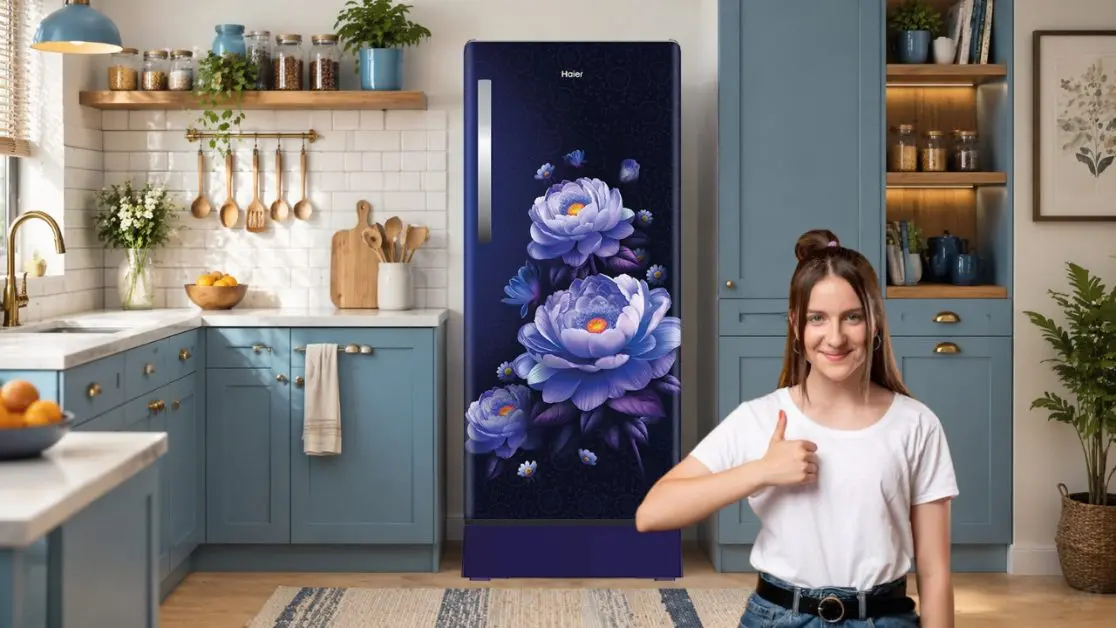
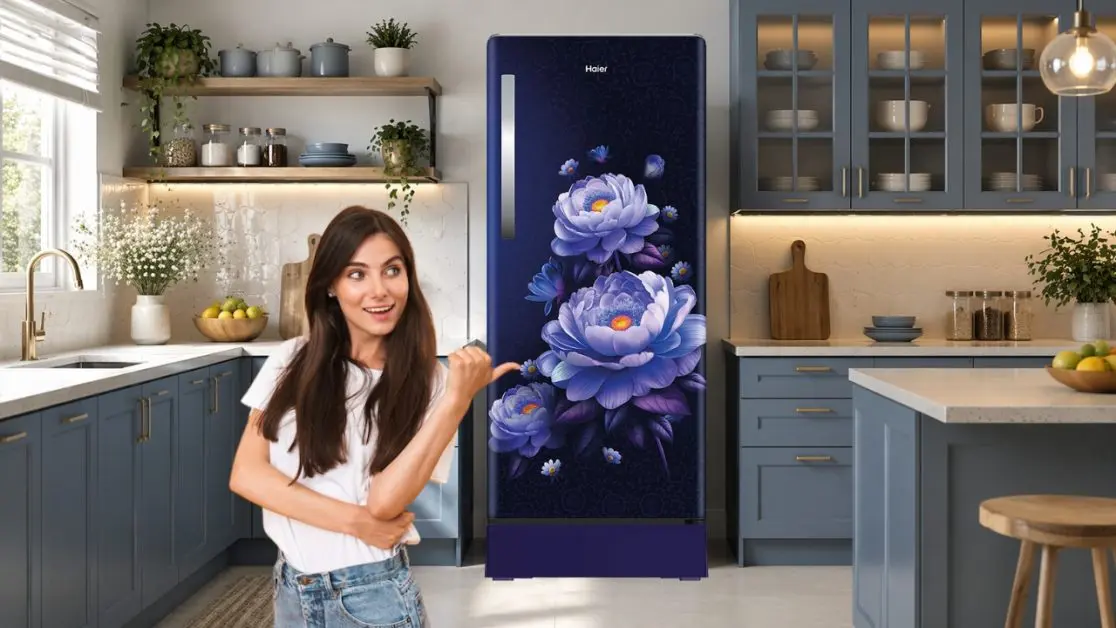
- Haier 190 L 5 Star Marine Blossom Single Door Refrigerator (HRD-2105PMBA-P)
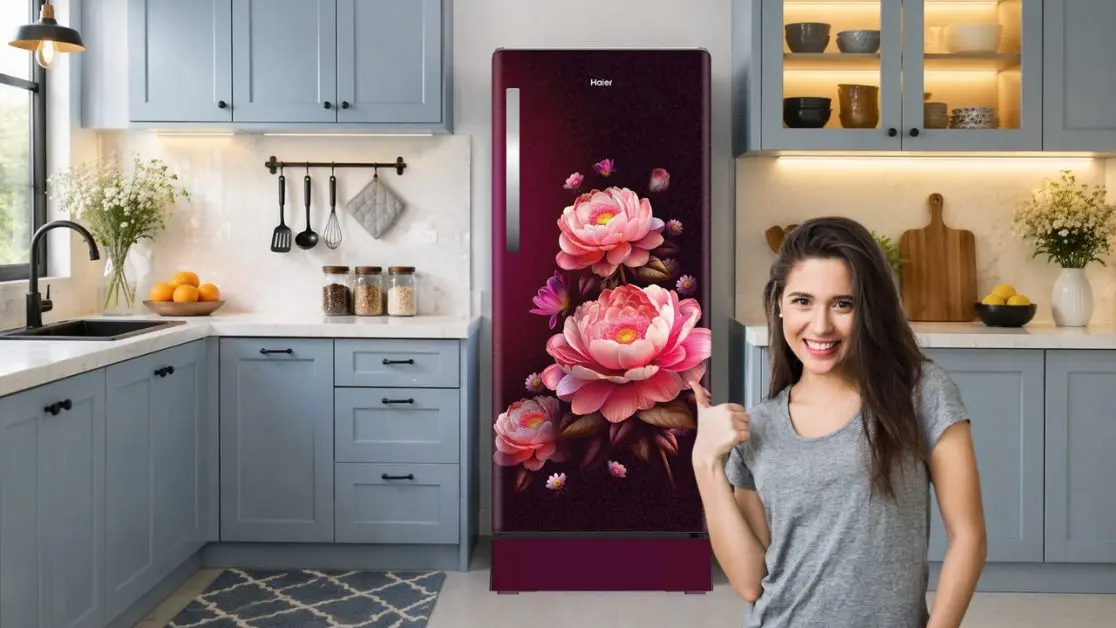
- Haier 190 L 5 Star Red Blossom Single Door Refrigerator (HRD-2115PRBA-N)
These combine:
- Inverter compressor
- Annual energy consumption around 120 units
- Stabilizer-free operation
- Home inverter compatibility
This is not just about saving electricity.
It is about making the appliance adapt to Indian conditions.
So What Should You Actually Look For?
A simple decision framework
When choosing a refrigerator, think of systems.
One option is:
Focus only on price.
You save today. You spend more later.
The second option:
Focus only on star rating.
You get efficiency on paper.
The third option:
Look at how the refrigerator behaves daily.
- Does it adapt to usage?
- Does it handle voltage fluctuations?
- Does it maintain cooling efficiently over time?
That is where inverter technology stands out.
The Final Insight: Efficiency Is Invisible Until It Isn’t
You will not notice your refrigerator saving energy today.
You will not feel it tomorrow either.
But over time, you will notice something else.
- Lower electricity bills
- More consistent cooling
- Fewer maintenance issues
And that is the point.
The best appliances do not demand attention. They quietly improve your everyday life.
What This Means for Your Home
Choosing an inverter refrigerator is not just a technical decision.
It is a lifestyle decision.
It means:
- Less energy waste
- More predictable expenses
- A home that runs smarter without extra effort
Because modern homes are not built on big upgrades.
They are built on small, intelligent systems working quietly in the background.
And sometimes, the smartest upgrade is the one you never have to think about again.
Frequently Asked Questions
I’m confused between a cheaper fridge and an inverter. Am I overthinking this?
Not really. The upfront price difference is small compared to long-term electricity savings. Inverter refrigerators quietly save money every day, so this is one of those decisions where thinking long-term actually pays off.
I keep delaying buying a fridge because I don’t understand inverter tech. What’s the simplest way to decide?
Do I want lower bills over the next 10 years? If yes, an inverter is the safer choice because it adapts power usage instead of wasting it.
Should I prioritise price or efficiency when buying my refrigerator?
Price matters today. Efficiency matters every day after that. Inverter refrigerators shift your spending from electricity bills back into your pocket over time.
I open my fridge a lot. Does the inverter actually help in real life?
Yes. Every time you open the door, the temperature drops. Inverter compressors respond instantly by increasing speed, then slowing down again saving energy instead of running at full blast continuously.
My fridge is often half-empty. Am I wasting electricity?
With a non-inverter fridge, yes. With an inverter, no. It adjusts cooling based on load, so a half-empty fridge consumes less power.
I left my fridge door open for a while. Will the inverter fix that energy loss?
It won’t undo the loss, but it will recover more efficiently. Instead of a full-power spike, it gradually adjusts cooling, reducing energy waste.