
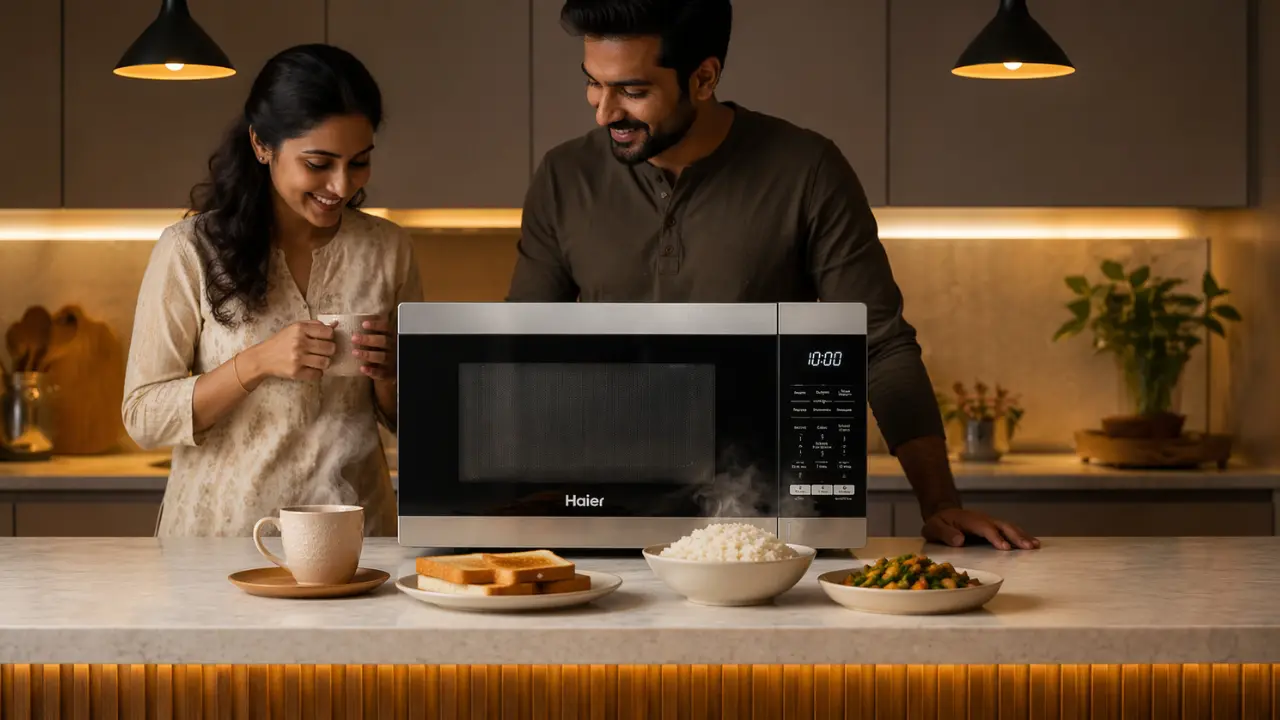

Auto cook menus simplify cooking by removing guesswork. They automatically adjust time, power, and cooking sequences for specific dishes, turning complex meal preparation into a one-step decision.
In models like the Haier Vogue 20L Solo Microwave Oven Series, this means faster meals, consistent taste, and less thinking in the kitchen.
Why does cooking feel harder than it should?
It is 8:20 pm.
Someone is reheating dal. Someone else wants pasta. A child asks for something crispy.
Nothing is complicated.
But everything needs a decision.
- How long should this cook?
- What power level is right?
- Should you check midway?
Cooking is not hard.
Decision-making is.
And most kitchens are built on constant decision-making.
What are auto cook menus, really?
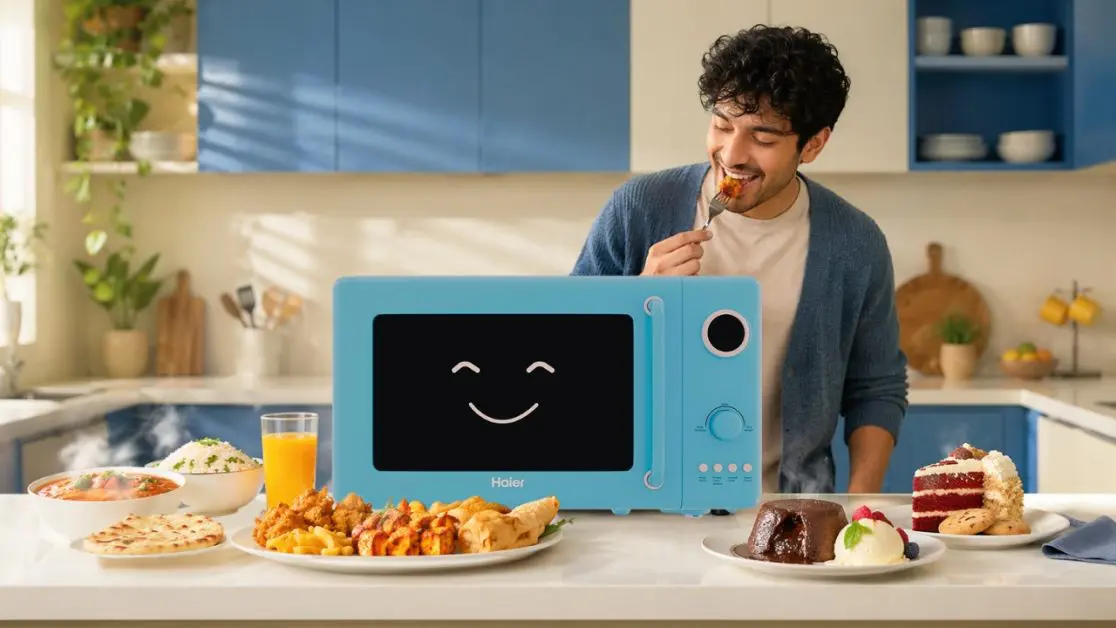
Auto cook menus are pre-set cooking programs designed for specific dishes.
Instead of setting time and power manually, the system does it for you.
In the Haier Vogue 20L Yellow Solo Microwave Oven with Auto Cook Menus Digital Display (HIL20V1MYPD), the system automatically adjusts cooking time and power based on the dish you select.
The same system extends across:
- Haier Vogue 20L Peach Solo Microwave Oven with Auto Cook Menus Digital Display (HIL20V1MOPD)
- Haier Vogue 20L Blueberry Solo Microwave Oven with Auto Cook Menus Digital Display (HIL20V1MBPD)
That means:
- No trial and error
- No overthinking
- No repeated adjustments
Just select the dish. Press start.
Complex cooking becomes a single action.
The real problem auto cook menus solve
Most people think auto cook menus save time.
They do.
But the deeper benefit is clarity.
Three hidden frictions in everyday cooking
- Unclear timing
Every dish feels like a guess. - Inconsistent heating
Too much power dries food. Too little leaves it cold. - Constant supervision
You keep checking. You stay involved.
Auto cook menus remove all three.
When the system knows the dish, it knows the process.
Manual cooking vs auto cook menus
| Factor | Manual Cooking | Auto Cook Menus |
| Time setting | You decide | System decides |
| Power control | Manual | Pre-optimized |
| Consistency | Varies | Predictable |
| Effort | High | Low |
| Supervision | Constant | Minimal |
This is not a feature upgrade.
It is a system upgrade.
How auto cook menus actually work
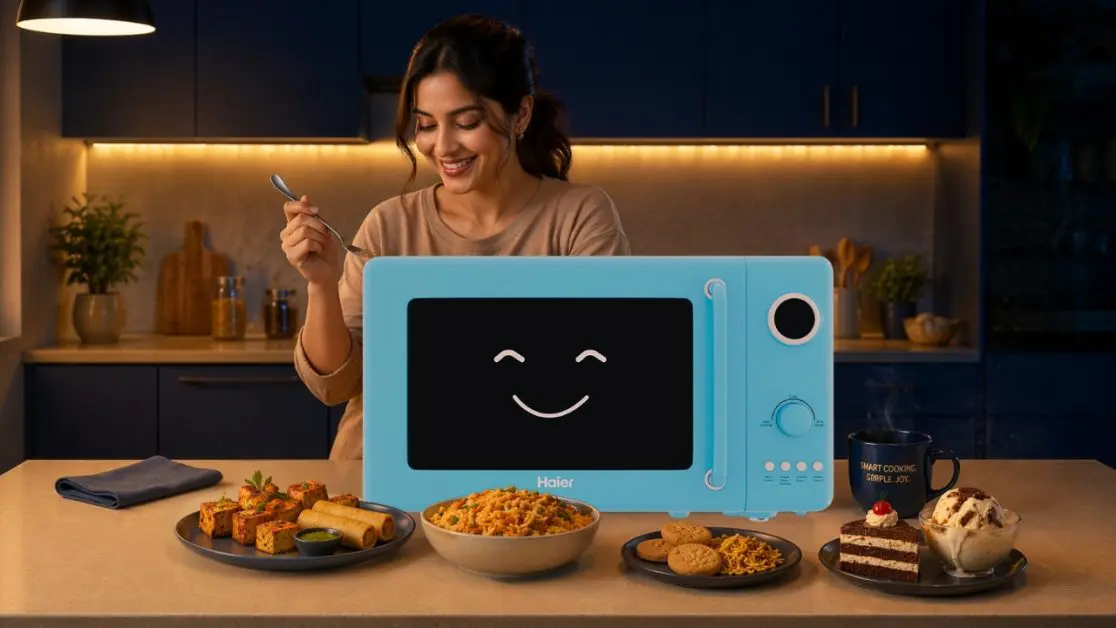
Auto cook menus are built on tested cooking patterns.
Each preset combines:
- Pre-defined cooking time
- Optimized power levels
- Dish-specific heating logic
For example:
- Rice needs even heating
- Snacks need crisping
- Milk needs gentle warming
The system already knows this.
In the Haier Vogue 20L microwave range, intuitive controls like jog dial and digital display make these menus easy to access and use.
So instead of thinking through every step, you simply choose the outcome.
What does this look like in a real Indian kitchen?
It is Sunday evening.
There are leftovers. Someone wants tea. Someone else wants snacks.
Without auto cook menus
- Set time manually
- Adjust power
- Check food repeatedly
It works. But it feels like effort.
With auto cook menus
- Select the dish
- Press start
- Walk away
The system handles the rest.
The kitchen shifts from manual control to guided outcomes.
What kinds of dishes benefit the most?
Auto cook menus are designed for real, everyday cooking.
High-frequency dishes
- Tea or milk reheating
- Dal, rice, sabzi
- Frozen snacks
Texture-sensitive dishes
- Paneer tikka
- Paratha reheating
- Sandwiches
Quick meals
- Instant noodles
- Rice bowls
- Simple desserts
In the Haier Vogue 20L series, up to 12 auto cook menus are available to handle these daily use cases.
This is not about cooking anymore.
It is about cooking better, faster, and with less effort.
The psychology of simplified cooking
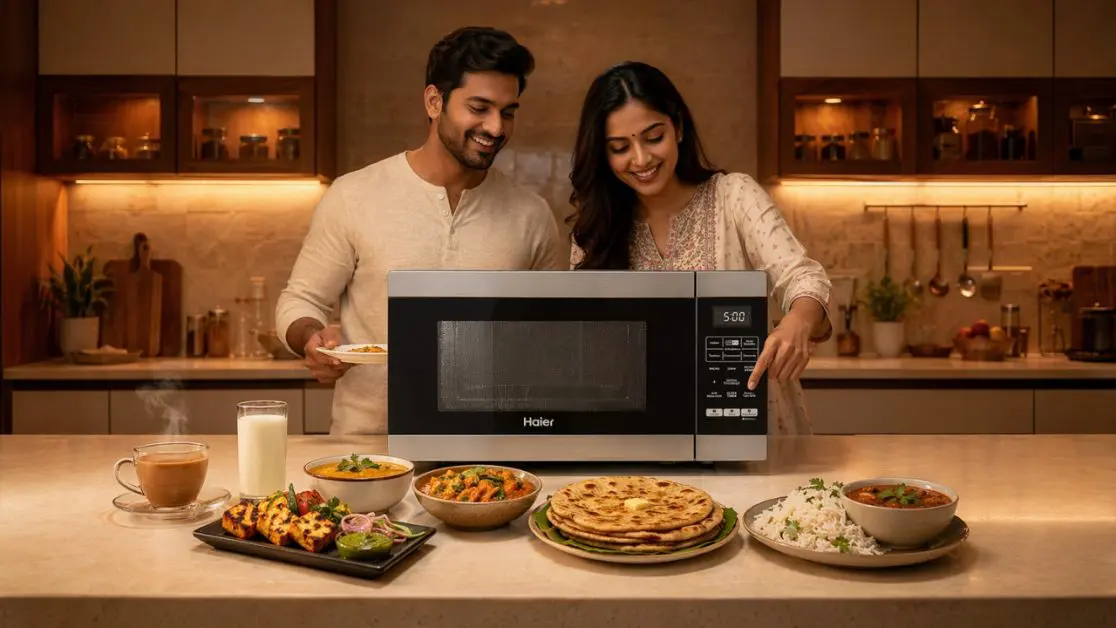
Here is what changes quietly.
When cooking becomes easier, people cook more often.
Not because they suddenly enjoy cooking more.
Because starting feels easier.
- A complex process feels like effort
- A one-button action feels manageable
Ease drives action.
Auto cook menus reduce the barrier to entry.
And that changes everyday habits.
Three ways people approach cooking today
One option is manual control
- Full flexibility
- High involvement
- Requires experience
Good for experts. Not ideal daily.
The second option is semi-automatic cooking
- Some presets
- Some decisions
- Partial ease
Better, but still effort-heavy.
The third option is auto cook menus
- One-step cooking
- System-driven results
- Minimal involvement
This is the shift.
From effort to ease. From guesswork to certainty.
What are the real benefits of auto cook menus?
1. Time efficiency
- Faster setup
- Instant start functionality
- No repeated adjustments
2. Consistency
- Same results every time
- No dependency on experience
3. Reduced mental load
- Fewer decisions
- Less supervision
4. Better energy use
- Optimized heating cycles
- No unnecessary power usage
5. Accessibility
- Anyone can cook
- No learning curve
This is not about adding features.
It is about removing friction.
Are there any limitations?
Every system has trade-offs.
What you gain
- Speed
- Simplicity
- Reliability
What you give up
- Full manual control
- Experimentation flexibility
But here is the reality.
Most kitchens are not experimenting daily.
They are repeating meals.
And repetition benefits from systems.
Why auto cook menus matter in modern Indian homes
Indian kitchens are dynamic.
- Multiple dishes at once
- Limited time
- Different preferences
Auto cook menus reduce coordination.
They simplify multitasking.
They make one appliance handle multiple needs.
In a busy home, simplicity is power.
The bigger shift most people miss
Auto cook menus are not just a feature.
They represent a change in how appliances behave.
From:
- Tools you control
To:
- Systems that guide you
This shift is happening everywhere.
And now it is happening in kitchens.
The one insight that changes everything
Good systems do not make you faster. They make you lighter.
Auto cook menus remove the invisible weight of decision-making.
And when that weight disappears, cooking feels easier.
Not because the food changed.
Because the process did.
Frequently Asked Questions
Why does cooking at night feel mentally exhausting even when the food is simple?
Because you’re not just cooking you’re making multiple micro-decisions (time, power, sequence), which adds cognitive load.
Why do I feel overwhelmed deciding how long to heat my food?
Uncertainty around timing creates friction. Without clear guidance, every dish feels like guesswork.
Is cooking actually hard, or am I just tired of making decisions?
Cooking itself is simple. The repeated decision-making is what makes it feel difficult.
How do auto cook menus reduce mental load in daily cooking?
They eliminate the need to think about settings, just select the dish and the system handles the rest.
Why does my dal dry out if I leave it too long in the microwave?
High power or extended time removes moisture, especially in liquid-based dishes.
Why does reheated food sometimes come out uneven?
Manual settings often don’t distribute heat optimally, leading to hot and cold spots.
Do I need to keep checking my food while reheating?
With manual cooking, yes. Without preset guidance, you rely on constant supervision.
Do auto cook menus prevent overcooking or undercooking?
Yes. They use pre-tested settings tailored to specific dishes for balanced heating.
What are auto cook menus in a microwave?
They are pre-set programs that automatically adjust cooking time and power for specific dishes.
Do I still need to set anything manually?
Usually I just select the dish and press start.
How does a microwave know what settings to use?
It uses pre-tested cooking patterns stored in the system for each menu item.
Are auto cook features available in all microwaves?
No, but models like the Haier Vogue 20L Solo Microwave Oven Series include multiple auto cook presets.