
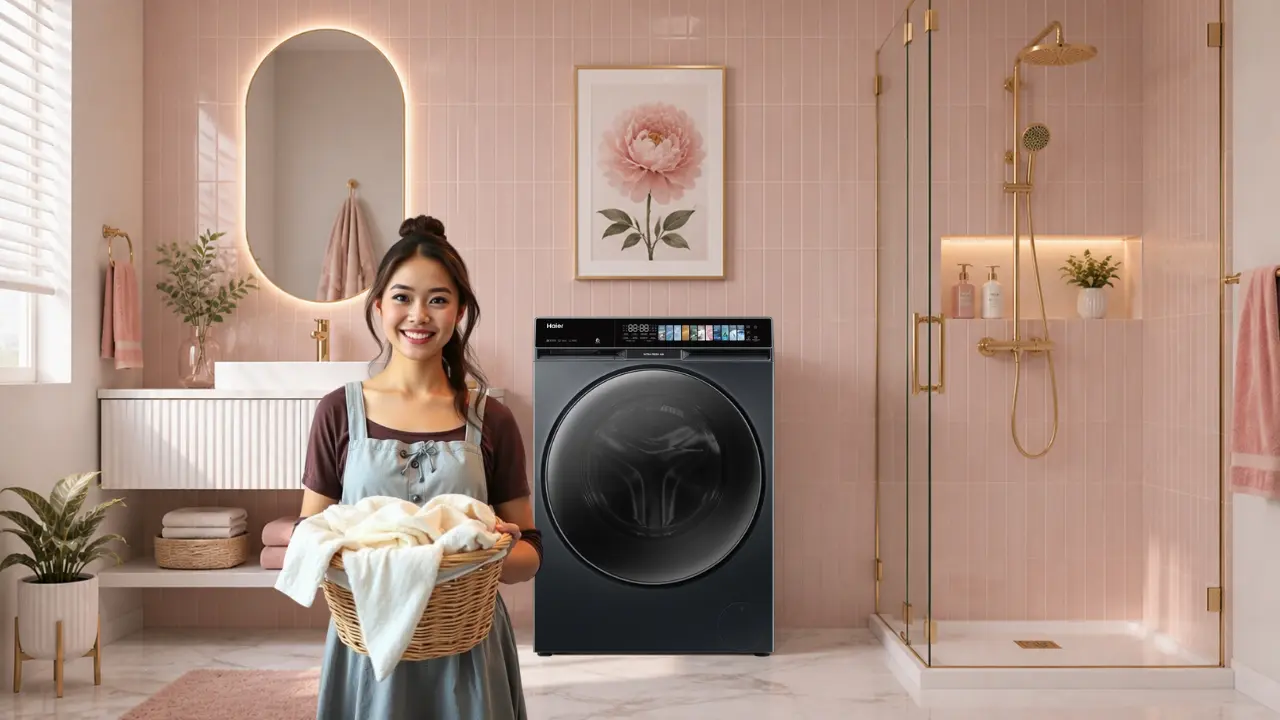

Intelligent washing matters because it removes guesswork from laundry, saves time, reduces water and detergent waste, and delivers consistent cleaning results by turning washing into an adaptive system instead of a manual chore.
It replaces decisions with clarity, effort with ease, and inconsistency with precision.
Why does laundry still feel like work in 2026?
It is 10:15 PM.
The house is finally quiet. Someone remembers the laundry.
A pile waits. Office shirts. Gym wear. Maybe a saree worn once for a function.
You stand in front of the machine.
Pause.
Which mode?
How much detergent?
Quick wash or heavy?
Laundry is not difficult.
But the decisions around it are.
That is the hidden system most people miss. Laundry is not about cleaning clothes. It is about managing variables. Fabric type. Dirt level. load size. detergent quantity. water usage.
And every time you guess, you pay a cost.
- Slightly faded clothes
- Residue left behind
- Higher water and electricity usage
- More time spent thinking than doing
The real problem is not washing. It is decision fatigue.
What is intelligent washing, really?
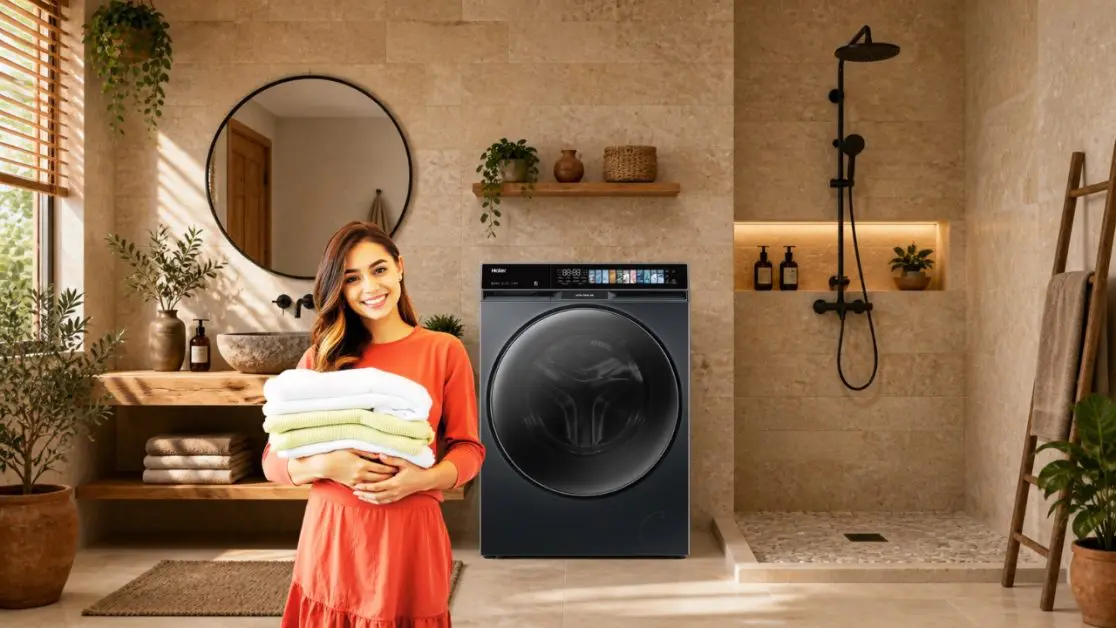
Intelligent washing is not about adding more features.
It is about removing decisions.
Think of it like Google Maps.
Earlier, you asked for directions, remembered turns, guessed routes.
Now, you enter a destination. It adjusts in real time.
Laundry is moving in the same direction.
Machines today are beginning to sense, decide, and adapt.
On models like the Haier 10 Kg F9 Pro Front Load Washer Washing Machine (HW100-DM14F9PBKU1), one-touch AI systems automatically detect fabric type, load size, and dirt level to select optimal settings.
That shift changes everything.
Because:
When a system thinks, you stop overthinking.
The three ways people approach laundry today
There are only three real approaches. Everything else is a variation.
1. Manual control
You decide everything.
- Mode selection
- Water level
- Detergent quantity
- Time
Cost: High effort, inconsistent results
Benefit: Full control
Most Indian households still operate here.
2. Assisted automation
Machines offer preset modes.
Cotton. Delicate. Quick wash.
You still decide. The machine assists.
Cost: Moderate effort
Benefit: Better consistency
This is where most mid-range machines sit.
3. Intelligent systems
The machine decides based on data.
Sensors detect weight. Algorithms adjust water, time, and detergent.
Machines like the Haier F11 series even go further with AI-powered one-touch wash and smart dosing systems that automatically calculate detergent based on load weight and fabric type.
Cost: Minimal effort
Benefit: Maximum consistency, efficiency, and time savings
Insight:
The future does not remove control. It removes unnecessary control.
Why intelligent washing saves more than just time
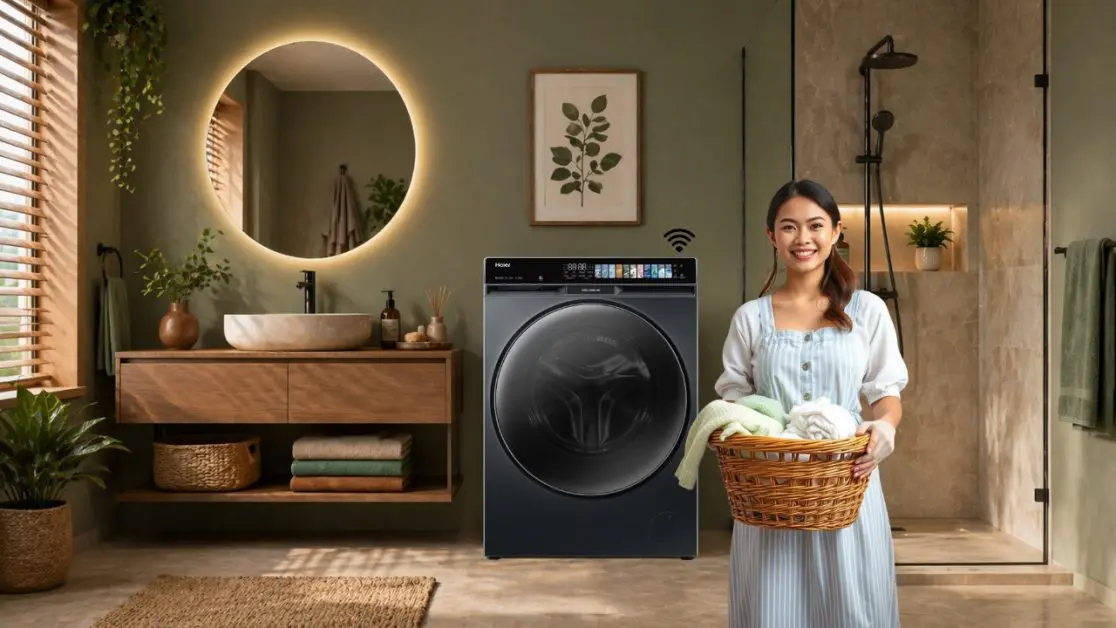
Most people think this is about convenience.
It is not.
It is about resource optimization.
Look at what actually changes
| Factor | Traditional Washing | Intelligent Washing |
| Water usage | Fixed or guessed | Adjusted per load |
| Detergent usage | Often overused | Precisely calculated |
| Time spent | High decision time | Minimal input |
| Fabric care | Inconsistent | Adaptive and optimized |
| Energy use | Often inefficient | Balanced per cycle |
Now multiply that over a year.
- 200 to 300 wash cycles
- 20 to 30 percent detergent waste reduction
- 15 to 20 percent water savings
Machines with auto weight detection and eco wash features dynamically match water levels and cycle times to the load, reducing both energy and water consumption.
Small efficiencies, repeated daily, become large outcomes.
The invisible upgrade: Consistency
There is something subtle that intelligent washing fixes.
Not visible. But deeply felt.
Consistency.
You know that feeling when clothes sometimes come out perfect. And sometimes not?
Same machine. Same detergent. Different results.
That is variability.
And variability is friction.
Intelligent systems remove variability by standardizing outcomes.
- Same wash quality
- Same freshness
- Same fabric care
Every single time.
Machines with Direct Motion Motors also reduce vibration and noise, ensuring stable, consistent performance even at high speeds.
Consistency is what turns a task into a system.
What happens when machines start understanding fabrics?
A white shirt is not the same as gym wear.
A cotton kurta is not the same as denim.
Yet most people wash them the same way.
That is the inefficiency.
Modern washing machines are solving this through fabric recognition and specialised programs.
For example:
- Stain-specific modes for oil, coffee, sweat, and mud
- Temperature adjustments from cold to 90°C depending on fabric
- Spin speed optimization to prevent damage
The Haier F11 series includes dedicated stain removal programs that automatically adjust washing parameters for different stain types, improving cleaning accuracy without manual intervention.
When the system understands the input, the output improves automatically.
Why freshness is becoming the new benchmark
Cleaning is no longer enough.
Freshness is the new expectation.
Think about this.
You finish the wash. But you do not remove clothes immediately.
In most machines, that leads to:
- Damp smell
- Bacterial growth
- Rewash cycles
Now look at what intelligent systems are doing differently.
Technologies like Ultra Fresh Air circulate air inside the drum for up to 12 hours after the wash cycle, keeping clothes fresh and odor-free even if left inside.
That solves a real problem.
Not theoretical. Not technical.
Real.
The best technology solves the problem you did not know how to articulate.
The rise of “set and forget” living
Modern households are changing.
- Dual-income families
- Late work hours
- Smaller homes
- Less time for chores
Laundry has to fit into this system.
Not disrupt it.
That is why features like:
- Night wash modes for silent operation
- WiFi-enabled remote control
- Wash and dry in a single cycle
are becoming important.
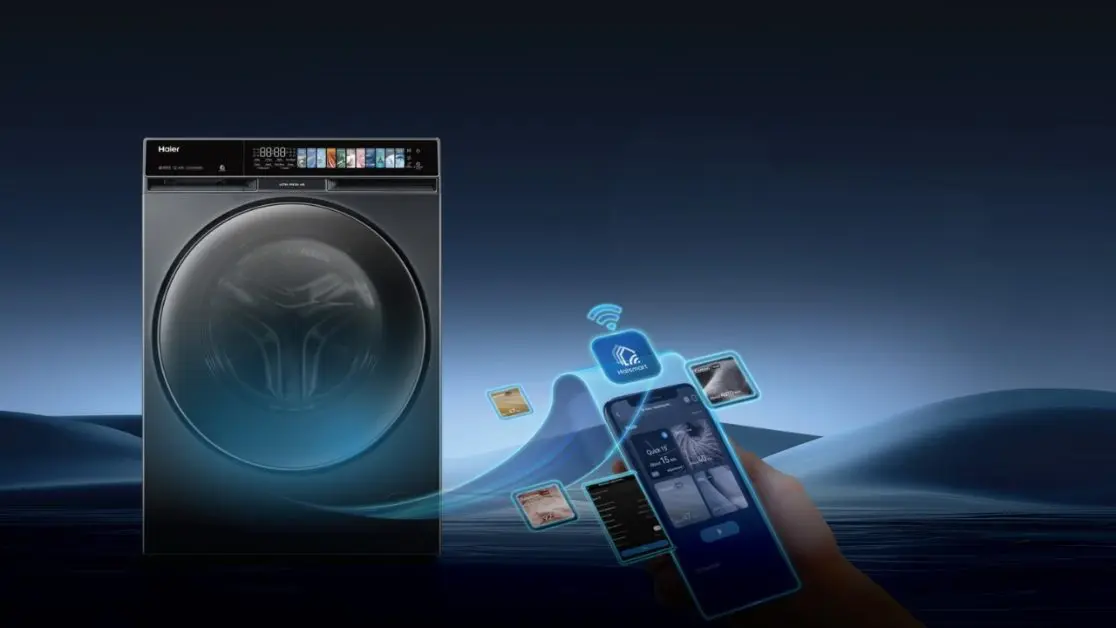
On washer-dryer models like the Haier 12 Kg F11 Front Load Washer & Dryer Washing Machine (HWD120-DM14F11BKU1), you can complete the entire process in one go and even control cycles remotely.
Convenience is not a luxury anymore. It is infrastructure.
A simple way to think about intelligent washing
Break it down.
Every wash cycle involves three decisions:
- What to wash
- How to wash
- How much resource to use
Traditional systems make you decide all three.
Intelligent systems handle two out of three.
That is a 66 percent reduction in decision load.
And that changes behavior.
Because:
When effort drops, consistency rises.
When consistency rises, habits improve.
The deeper shift: From appliances to systems
This is the real story.
Not washing machines.
Systems.
We are moving from tools you operate to systems that operate for you.
- Smart ACs adjust temperature based on usage patterns
- Refrigerators manage cooling zones based on food type
- Washing machines optimize cycles based on load intelligence
The pattern is clear.
Intelligence is becoming the default layer across home appliances.
And laundry is one of the most visible places where this shift is happening.
So, what should you actually care about?
Not every feature matters.
But a few do.
If you are evaluating intelligent washing, focus on:
Core capabilities that actually make a difference
- AI-based wash detection
- Smart dosing systems
- Load-based water adjustment
- Fabric-specific programs
- Silent operation for flexible timing
Nice-to-have upgrades
- WiFi connectivity
- Color touch panels
- App-based control
Long-term benefits
- Lower utility bills
- Better fabric life
- Reduced mental load
Insight:
The best purchase is not the one with the most features. It is the one that removes the most friction.
The final shift: Laundry without thinking
There is a moment every household reaches.
When a task stops feeling like a task.
It just happens.
That is what intelligent washing is moving toward.
Not faster washing.
Not smarter machines.
Fewer decisions.
Because in the end:
The real luxury is not technology.
It is a mental space.
And when your washing machine starts thinking for you,
you get a little more of that back.
Frequently Asked Questions
Why does laundry still feel tiring even when I use a washing machine?
The machine may wash the clothes, but you still make several decisions before every cycle: wash mode, detergent quantity, water level, spin speed, and fabric care. Intelligent washing reduces this mental load by sensing the load and adjusting settings automatically.
What is intelligent washing in simple terms?
Intelligent washing means the washing machine can detect things like fabric type, load size, and dirt level, then choose the right wash settings with minimal input from you.
How does AI washing reduce decision fatigue?
It removes the need to guess the right cycle, detergent amount, or wash intensity. Instead of manually deciding everything, you can use one-touch or AI-based wash programs that adapt to the laundry load.
Is intelligent washing useful for busy families?
Yes. It is especially useful for households with late work hours, mixed laundry loads, children’s clothes, gym wear, office wear, and limited time for chores.
Which intelligent washing features are genuinely useful?
The most useful features are AI-based wash detection, smart detergent dosing, load-based water adjustment, fabric-specific programs, stain-specific modes, and quiet operation.
Are WiFi and app control necessary in a washing machine?
They are useful but not essential. WiFi control helps if you want remote monitoring, delayed starts, or more flexible laundry timing. Core washing intelligence matters more than app control.
What is smart dosing in a washing machine?
Smart dosing automatically calculates the right amount of detergent based on load weight, fabric type, and sometimes dirt level. This reduces detergent waste and residue.
How does load detection save water?
Load detection allows the machine to measure how much laundry is inside and adjust water levels accordingly, instead of using a fixed amount for every cycle.
Is silent operation important in a washing machine?
Yes, especially for apartments, late-night laundry, homes with children, or smaller spaces. Quieter motors and stable drum systems reduce vibration and noise.