
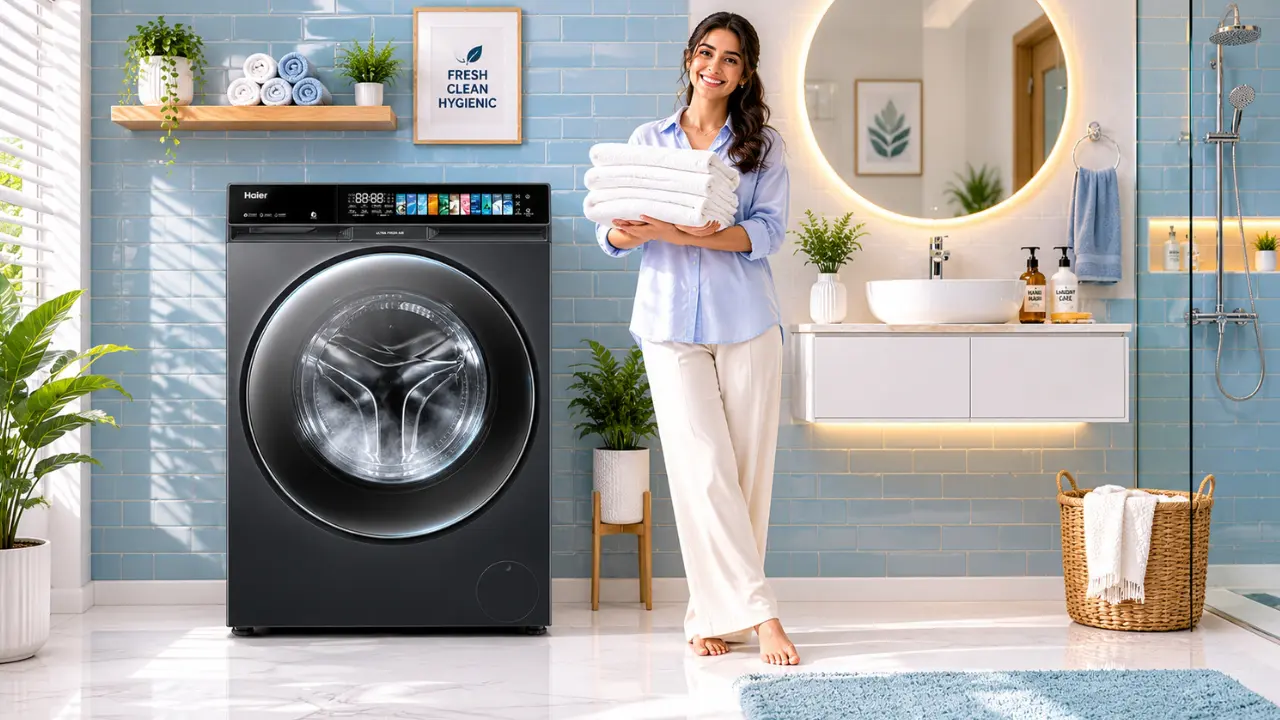

Modern washing machines are now hygiene systems, not just cleaning machines
A washing machine no longer exists only to remove visible dirt. In modern Indian homes, it manages something deeper: hygiene, fabric safety, skin protection, and everyday health. The most advanced washing machines are designed to reduce bacteria, detergent residue, damp odours, and hidden moisture buildup that quietly affect clothes over time.
Clean clothes are easy.
Hygienic clothes are harder.
And most people do not realize the difference until something goes wrong.
A child develops skin irritation. Gym clothes start smelling strange even after washing. Towels feel damp. The washing machine door develops a faint odour that no room freshener can hide.
The problem is not always the detergent.
Often, the problem is the ecosystem inside the machine itself.
That is the hidden shift happening in modern laundry care.
The washing machine has become a health appliance
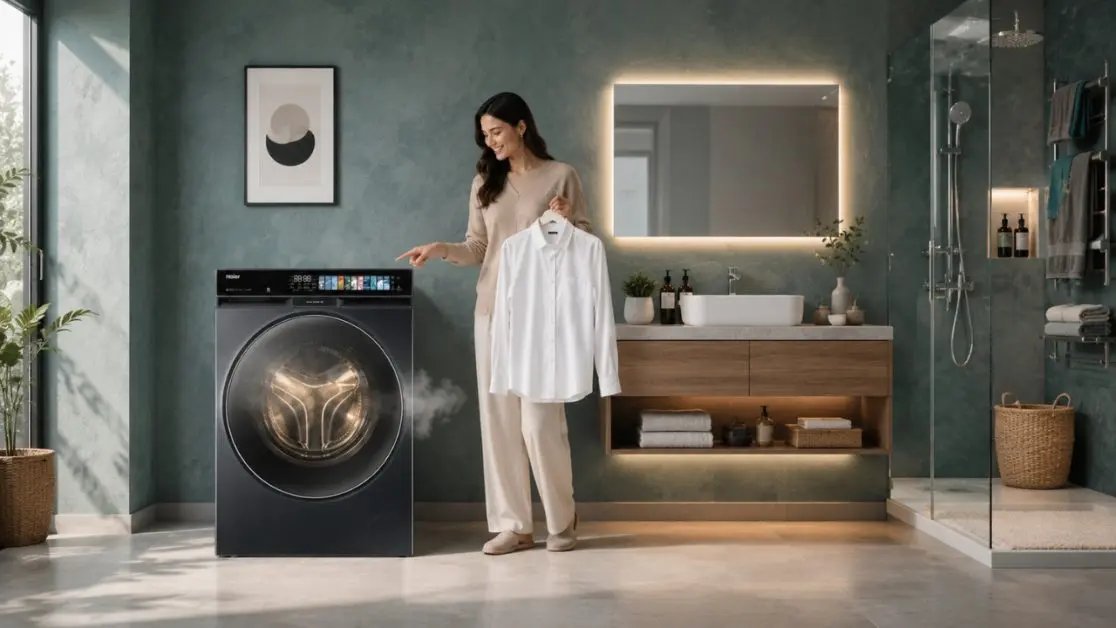
Think about how Indian households use washing machines today.
One load contains office shirts.
Another contains baby clothes.
Another handles kitchen towels, bedsheets, and gym wear.
Different fabrics. Different bacteria exposure. Different moisture levels.
Yet many households still think washing is only about stain removal.
That assumption belonged to an older era.
Modern homes are denser, faster, and more humid. Urban apartments often lack sunlight-heavy drying spaces. Many people wash clothes late at night and leave laundry sitting inside the drum for hours.
Moisture stays longer. Heat builds differently. Bacteria multiply quietly.
A washing machine is no longer simply cleaning clothes. It is managing micro-environments.
And micro-environments shape hygiene.
The hidden problem most people ignore
The inside of a washing machine rarely looks dirty.
That is precisely why hygiene problems grow unnoticed.
Here is where buildup usually happens:
- Rubber gaskets
- Detergent drawers
- Drum corners
- Moisture pockets
- Drain filters
- Residual water zones
One forgotten damp corner becomes a system-wide problem over time.
Bad hygiene scales slowly. Then suddenly.
That is why modern washing machine design increasingly focuses on:
- Anti-bacterial surfaces
- Drum sanitation systems
- Heat-based cleaning cycles
- Air circulation
- Moisture control
- Self-cleaning technologies
The machine itself now needs cleaning intelligence.
Not just washing power.
Why hygiene matters more in Indian conditions
Climate changes appliance behaviour.
That is the part many product discussions skip.
Indian homes deal with:
- Long monsoon seasons
- High humidity
- Hard water in many cities
- Dust-heavy environments
- Frequent mixed-fabric washing
- Larger family laundry loads
These conditions create faster bacterial growth inside washing machines.
A machine designed only for mechanical washing struggles over time.
A machine designed for hygiene adapts better.
Humidity changes everything
A damp washing machine behaves like a closed room after rain.
Airflow reduces. Moisture lingers. Odours develop gradually.
Front-load washing machines especially require stronger hygiene systems because their sealed-door design retains moisture more efficiently.
That is why premium modern washers increasingly include features focused on drum hygiene and freshness maintenance.
Because fresh laundry should not smell fresh for only ten minutes.
It should remain fresh inside wardrobes too.
Modern washing machines now solve invisible problems
Earlier generations of appliances solved visible labour.
Modern appliances solve invisible friction.
That is the real evolution.
A refrigerator preserves food freshness quietly.
An inverter AC stabilizes temperature quietly.
A smart washing machine manages hygiene quietly.
The best appliances reduce the mental load people carry daily.
What hygiene-focused washing systems actually improve
A hygiene-focused washing machine helps reduce:
- Bacterial buildup inside the drum
- Allergens trapped in fabrics
- Residual detergent accumulation
- Musty odours
- Moisture-related mould growth
- Fabric contamination between loads
And these improvements create larger lifestyle effects.
Clothes feel fresher longer.
Bedsheets age better.
Baby clothes feel safer.
Sportswear becomes easier to maintain.
Small systems create large emotional outcomes.
That is how modern appliance design actually works.
Why temperature control matters in laundry hygiene
Most people underestimate temperature.
Heat changes cleaning quality dramatically.
Cold water removes surface dirt well. But certain bacteria and residue require deeper sanitisation conditions.
That is why modern washing machines increasingly integrate advanced wash programs with controlled heating and hygiene cycles.
One option is quick washing
Fast. Efficient. Useful for lightly worn clothes.
But quick cycles prioritize convenience over deep sanitisation.
The second option is fabric-sensitive hygiene washing
This balances temperature, drum movement, and rinse depth carefully.
Useful for:
- Baby clothing
- Innerwear
- Bedsheets
- Towels
- Sensitive fabrics
The third option is intensive hygiene-focused cleaning
Higher-temperature wash systems help reduce stubborn residue and deeper contamination.
Particularly useful during:
- Monsoon seasons
- Flu seasons
- Heavy sweat months
- Shared-family laundry cycles
Different laundry situations require different hygiene strategies.
One cycle cannot solve every problem.
That is why modern washing machines increasingly behave more like intelligent systems than fixed-function appliances.
The rise of self-cleaning washing machines
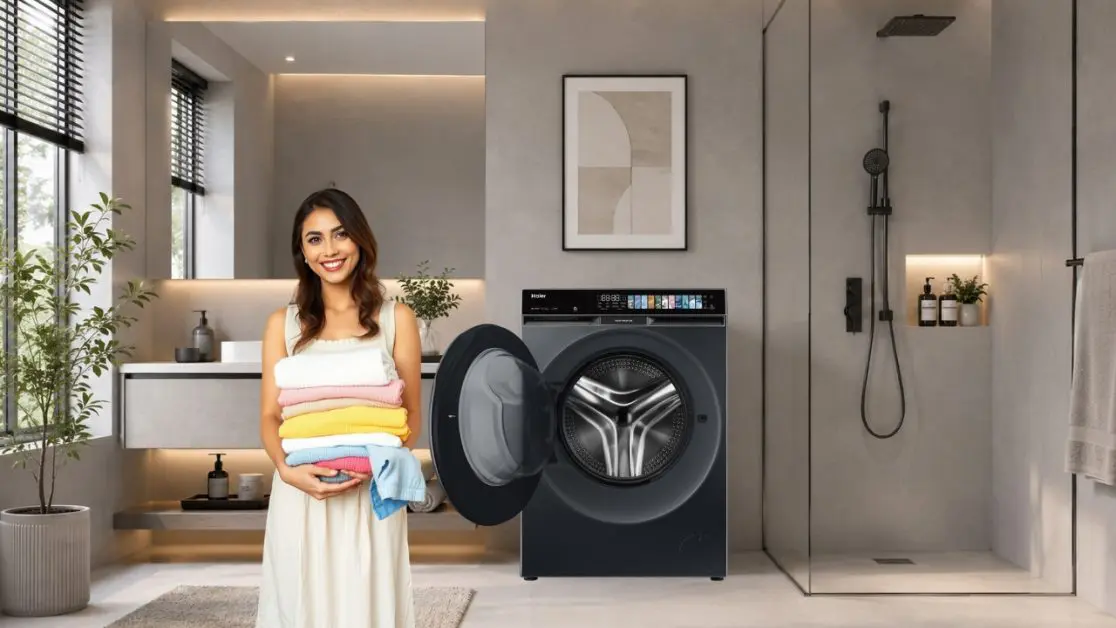
People often forget something important.
A machine that cleans constantly also needs cleaning constantly.
That sounds obvious. Yet most households ignore it for years.
Modern washing machines now include self-maintenance systems because manufacturers understand human behaviour realistically.
People forget maintenance.
Good design accounts for forgetting.
Features modern households increasingly value
In premium front-load washing machines, buyers now actively look for:
- Drum Clean programs
- Anti-bacterial gasket systems
- High-temperature drum sanitisation
- Steam-assisted hygiene
- Dual spray cleaning systems
- Lint and residue reduction systems
These are not luxury features anymore.
They are practical hygiene systems.
Particularly in households with:
- Children
- Elderly family members
- Pets
- Fitness-focused lifestyles
- Shared laundry patterns
The definition of “clean” has evolved.
How Haier approaches hygiene-focused laundry care
Modern appliance brands are increasingly designing around real lifestyle patterns instead of technical checklists alone.
That shift matters.
Haier’s premium front-load washing machine range reflects this broader evolution toward smarter hygiene-focused laundry systems for Indian homes.
Products like the Haier 12 Kg F11 Front Load Washer Washing Machine and the Haier 12 Kg F11 Front Load Washer & Dryer Washing Machine are built around the idea that laundry care today involves freshness management, fabric care, efficiency, and hygiene together.
Not separately.
Why integrated hygiene systems matter
Modern front-load washers increasingly combine:
- Advanced drum cleaning
- Better wash precision
- Fabric-sensitive care
- Controlled moisture handling
- Intelligent washing programs
Because households do not experience appliances feature-by-feature.
They experience outcomes.
Fresh-smelling clothes.
Lower maintenance stress.
Cleaner drum interiors.
More confidence during monsoon laundry cycles.
That is what people actually remember.
Laundry hygiene affects how homes feel
A home has invisible emotional signals.
Fresh bedsheets.
Neutral-smelling towels.
Wardrobes that smell clean.
Laundry baskets that do not carry damp odours.
These things shape how organised a home feels psychologically.
And people notice it immediately.
Not consciously. But emotionally.
Good appliance design quietly improves domestic rhythm.
That is why hygiene matters more than marketing brochures often suggest.
The washing machine changed its role quietly
Earlier, the washing machine replaced manual labour.
Now it reduces lifestyle friction.
That is a much bigger responsibility.
Especially in homes where both parents work.
Where schedules overlap.
Where drying space is limited.
Where laundry cycles happen continuously.
The appliance becomes part of household stability.
And stability is built from invisible systems working correctly every day.
What modern buyers should actually look for
Most appliance buying decisions focus heavily on:
- Capacity
- Spin speed
- Energy ratings
- Design aesthetics
Those matter.
But hygiene systems increasingly matter just as much.
Before buying a modern washing machine, it helps to evaluate:
1. Drum hygiene systems
Can the machine clean itself effectively?
2. Moisture management
Does the design reduce trapped dampness?
3. Wash program flexibility
Can different fabric and hygiene needs be handled separately?
4. Long-term freshness
Will the machine remain odour-free after years of use?
5. Fabric protection
Does hygiene come without damaging clothes?
The best appliance purchases solve future problems early.
That is what thoughtful engineering does.
Clean clothes are visible. Hygiene is invisible. But invisible systems shape daily life.
Most people only think about hygiene after discomfort appears.
A smell.
A rash.
A damp towel.
A machine that suddenly feels “old.”
But modern washing machines are evolving because homes are evolving.
People want appliances that quietly reduce effort.
Protect routines consistently.
And improve daily living without demanding constant attention.
That is the real future of home appliances.
Not louder technology.
Smarter systems.
Because the best appliances do not interrupt life.
They protect its rhythm silently.
Frequently Asked Questions
My clothes look clean after washing. Why should I still care about hygiene features?
Visible cleanliness and hygiene are not the same thing. Dirt and stains may disappear, but bacteria, detergent residue, moisture buildup, and odour-causing microorganisms can remain inside fabrics and the washing machine. Hygiene-focused systems help address these invisible issues.
I wash my clothes regularly. Can my washing machine still develop bacteria?
Yes. Moisture, detergent residue, and trapped water inside drum seals, detergent drawers, and filters can create conditions where bacteria and mould gradually develop over time.
Why do my clothes sometimes smell bad even after a fresh wash?
This often happens when moisture, detergent buildup, or bacterial growth exists inside the machine. The problem is not always the detergent itself, it may be the washing machine’s internal environment.
I left my laundry inside the washer overnight. Do I need to wash it again?
In many cases, yes. Damp clothes left in a closed drum for several hours can develop odours and encourage bacterial growth. Rewashing is usually recommended if the clothes no longer smell fresh.
Why do towels develop a musty smell faster than other clothes?
Towels absorb large amounts of moisture and often dry slowly. If washing machine hygiene or drying conditions are poor, odour-causing bacteria can build up more quickly in towels.