
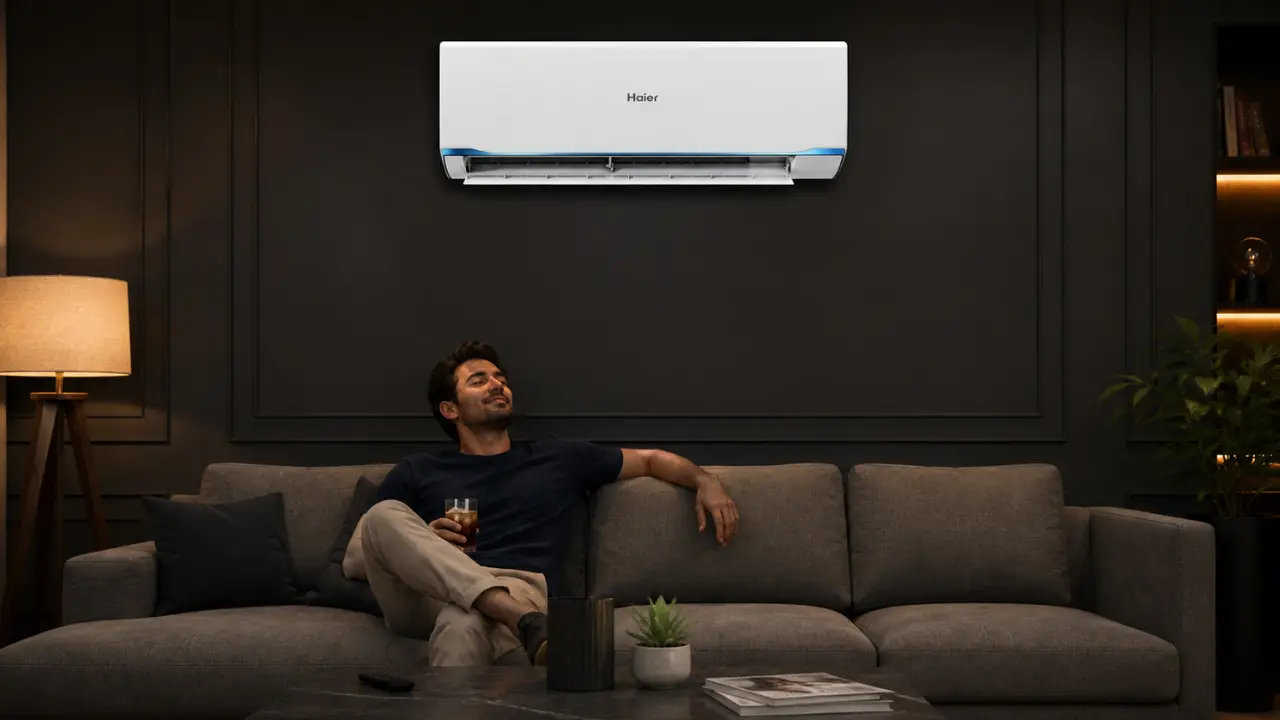

AI Human Detection in homes is best used to improve energy efficiency, enhance safety, automate comfort, and reduce unnecessary system usage by identifying real human presence in real time.
It turns appliances from reactive tools into intelligent systems that respond only when needed, saving power, effort, and attention.
Why does your home still run when no one is there?
It is 2:30 PM on a weekday.
The house is empty. Everyone is out.
But the AC is still cooling. Lights are still on. Maybe the TV is still running.
Not because someone forgot.
Because the home has no awareness.
That is the real gap AI Human Detection solves.
Homes don’t waste energy. Unaware systems do.
What is AI Human Detection and why does it matter now?
AI Human Detection is simple in concept.
It uses sensors and machine learning to detect actual human presence, not just motion.
That difference matters.
A pet walking across the room triggers a basic sensor.
But AI Human Detection identifies human patterns. Shape. Movement behavior. Heat signatures.
This is exactly what powers systems like the Haier 1.8 Ton 5 Star Desert Rose Air Conditioner (HSA20DSD-NAI5NB-I) and the Haier 1.8 Ton 5 Star GoldDesert Rose Air Conditioner (HSA20DSD-GAI5NB-I), where AI Human Detection ensures precise presence detection and zero energy waste
And once a home knows whether a human is present, everything changes.
The shift: From automated homes to aware homes
Most smart homes today follow commands.
Turn on at 6 PM. Turn off at 10 PM.
Useful. But limited.
AI Human Detection introduces a new layer.
Context.
Instead of asking:
“Is it time to turn on the AC?”
The system asks:
“Is someone actually here to need it?”
That shift turns automation into intelligence.
Use Case 1: Energy savings that happen without thinking
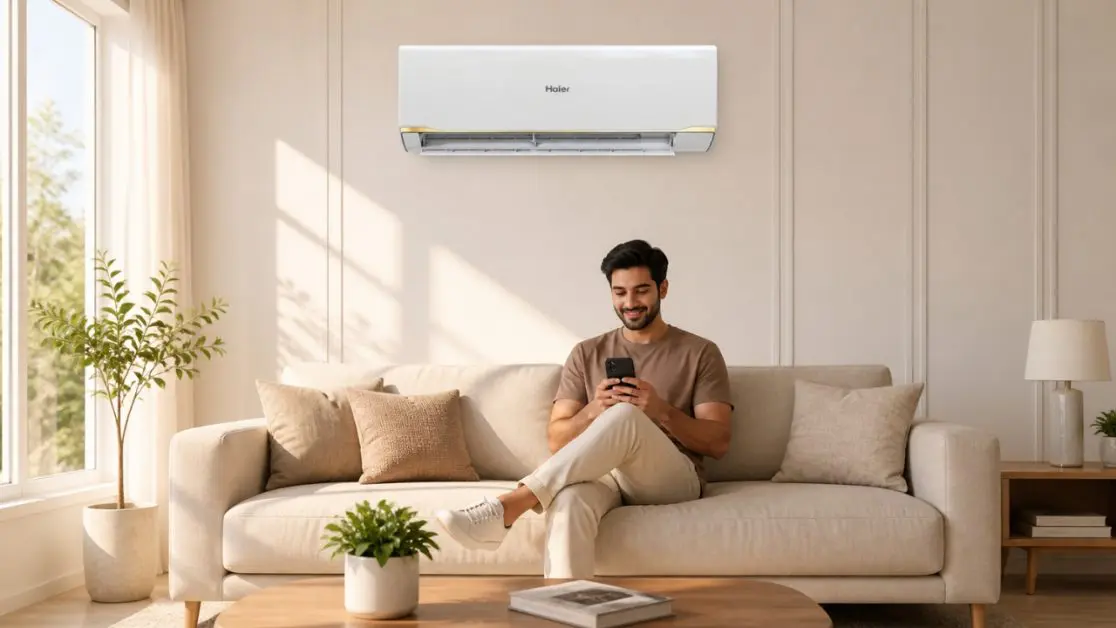
What happens when appliances stop guessing?
Electricity bills in Indian homes have a pattern.
High usage. Low awareness.
Cooling alone can account for a major share of household electricity usage during peak summer.
Now add this:
A significant portion of that usage happens when no one is in the room.
AI Human Detection fixes this quietly.
How it works in real life
- AC reduces cooling when no human is detected
- Switches to eco mode automatically
- Turns off after a defined absence period
In systems like the Haier 1.8 Ton 5 Star Desert Rose Air Conditioner (HSA20DSD-NAI5NB-I), this translates into energy savings of up to 56 percent through intelligent monitoring and automatic adjustments
Cost vs benefit
- Benefit: Lower electricity bills, reduced power wastage
- Cost: Slightly higher upfront investment
- Outcome: Consistent monthly savings
The cheapest unit of energy is the one you never use.
Use Case 2: Smarter cooling that adapts to people, not rooms
Why do most rooms feel either too cold or not enough?
Because traditional systems cool spaces.
AI systems cool people.
That difference changes comfort.
Three ways AI Human Detection improves comfort
- Directional cooling
Airflow aligns with where people are sitting or resting - Dynamic temperature control
Cooling adjusts based on the number of people present - Sleep-aware adjustments
System adapts to inactivity patterns during rest
The deeper insight
Comfort is not about temperature. It is about relevance.
Use Case 3: Safety that filters what matters
What if your home could tell the difference between normal and unusual?
Most systems react to movement.
AI Human Detection reacts to meaningful movement.
Real-world scenarios
- Detecting unexpected presence when the home is empty
- Identifying unusual movement patterns at night
- Triggering alerts only for human activity
Cost vs benefit
- Benefit: Fewer false alarms, better clarity
- Cost: Requires connected ecosystem
- Outcome: Reliable monitoring without noise
Security improves when noise is removed.
Use Case 4: Built for Indian family life
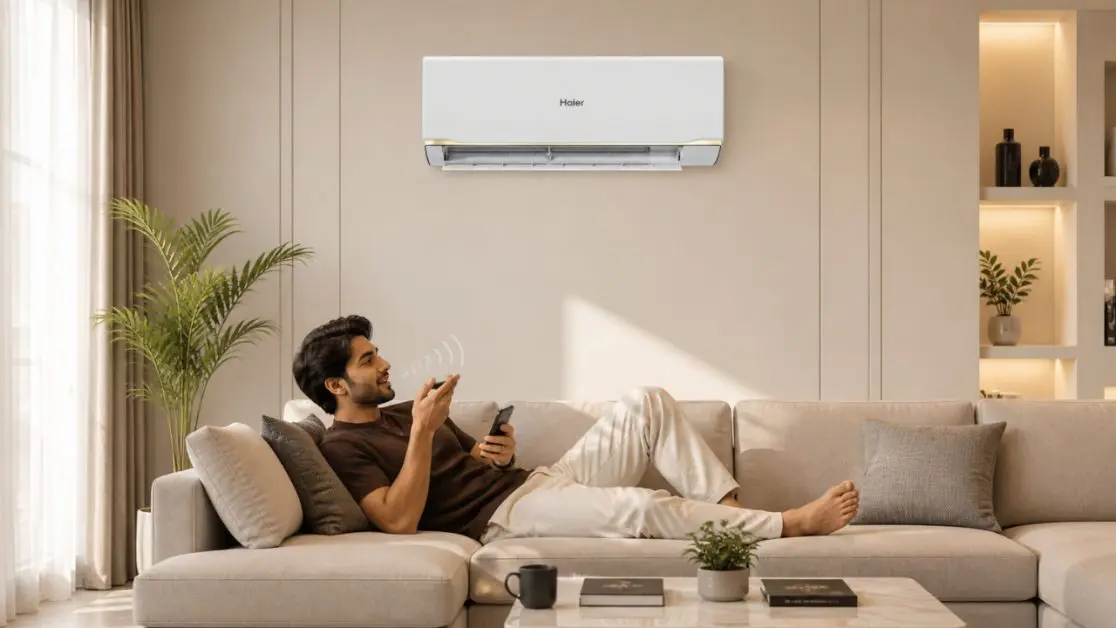
Why do Indian homes need smarter detection more than others?
Because they are constantly changing.
People come and go.
Parents. Kids. Guests. Help.
Static systems fail here.
AI Human Detection adapts.
Everyday examples
- Cooling adjusts when more people enter a room
- System reduces output when people leave
- Avoids unnecessary usage during partial occupancy
In homes using systems like the Haier 1.8 Ton 5 Star GoldDesert Rose Air Conditioner (HSA20DSD-GAI5NB-I), this results in balanced comfort without constant manual control
Homes are not static. Systems should not be either.
Use Case 5: Perfect for professionals living solo
What happens when your home works even when you forget?
Busy schedules create small inefficiencies.
Leaving appliances on is one of them.
AI Human Detection fixes that.
Practical benefits
- AC switches off when you leave
- Activates only when you return
- Maintains minimal usage during absence
The best systems reduce decisions, not add features.
Use Case 6: Subtle support for elderly care
Can technology care without being intrusive?
Yes.
AI Human Detection observes patterns without interfering.
How it helps
- Detects inactivity over long periods
- Identifies unusual movement timings
- Supports remote monitoring by family
Good technology supports without interrupting.
Use Case 7: Extending appliance life
What most people ignore about appliance usage
Every extra run cycle adds wear.
Motors. Compressors. Fans.
AI Human Detection reduces unnecessary operation.
What changes
- Reduced idle running
- Lower stress on components
- More efficient usage cycles
Long-term impact
- Lower maintenance costs
- Fewer breakdowns
- Better long-term performance
Efficiency is not just about saving energy. It is about preserving systems.
A simple framework: Where AI Human Detection makes the most sense
Use it when:
- Rooms are frequently empty
- Energy bills feel higher than expected
- Home usage patterns change often
- Safety needs accuracy, not noise
Avoid overcomplicating when:
- Spaces are always occupied
- Usage is predictable
- Basic automation is enough
Technology should solve friction, not create it.
What does this mean for modern homes?
Homes are evolving.
From spaces we manage
To systems that manage themselves
AI Human Detection is not just a feature.
It is a shift in how homes behave.
- Energy becomes intentional
- Comfort becomes adaptive
- Safety becomes intelligent
Conclusion: The home that responds to you
Smart homes are not about adding more controls.
They are about removing the need for control.
AI Human Detection makes homes responsive.
Not reactive.
Not wasteful.
Not complicated.
Just aware.
And once a home understands when you are there, it starts doing something powerful.
It stops doing everything else unnecessarily.
Because the smartest homes are not the busiest ones.
They are the ones that know when to act.
Frequently Asked Questions
I keep forgetting to turn off my AC when I leave. Will AI human detection actually fix this?
Yes. Systems with AI human detection automatically recognize when no one is present and either reduce cooling or switch off entirely after a set period. You don’t need to remember anything; it removes the habit of dependency.
Do I still need timers if my home knows when I’m actually there?
Not really. Timers are based on assumptions. AI detection works on real presence, making it more accurate and flexible than fixed schedules.
Is AI human detection actually worth the extra cost?
If your home often has empty rooms with appliances running, the savings can be significant over time. Reduced idle usage especially from ACs can noticeably lower electricity bills.
Why is my electricity bill high even when I feel like I’m careful?
Most energy waste comes from unnoticed idle usage ACs, lights, and devices running in empty rooms. AI detection solves this by eliminating unnecessary operations.
How is AI human detection different from motion sensors?
Motion sensors react to any movement. AI detection identifies actual humans using advanced recognition patterns, reducing false triggers.
Does this make my home fully automated?
Not fully but it makes it context-aware. Instead of following schedules, your home responds to real-world conditions.