


Using the right amount of detergent isn’t about saving soap. It’s about improving everything else.
The correct detergent quantity ensures cleaner clothes, longer fabric life, lower water and electricity use, and better washing machine performance.
Too much or too little detergent creates hidden inefficiencies that cost time, money, and fabric quality over time.
Why does detergent feel like guesswork in the first place?
It is 10:15 PM.
You load the machine after a long day. Add detergent. Pause.
Too much? Too little?
That moment of hesitation shows up in almost every Indian home.
Laundry is not complicated.
But the decisions around it are.
And detergent is the most misunderstood one.
Because we assume more equals better.
It doesn’t.
More detergent doesn’t clean better. It just makes problems harder to see.
The hidden system: How detergent actually works

Detergent is not just soap. It is a chemical system.
It lifts dirt, suspends it in water, and helps rinse it away.
But here is the catch.
This system only works within a range.
Too little detergent
- Dirt stays on fabric
- Oils don’t break down
- Clothes feel dull over time
Too much detergent
- Foam traps dirt back into clothes
- Residue sticks to fabric
- Machine struggles to rinse properly
The outcome looks clean.
But the system is failing underneath.
What happens when you use too much detergent?
Most people think excess detergent is harmless.
It isn’t.
1. Residue builds up on clothes
Excess foam prevents proper rinsing.
That leaves a thin film on fabric.
Over time
- Whites turn grey
- Colors lose sharpness
- Clothes feel stiff, not soft
That “fresh smell” becomes artificial.
2. Your washing machine works harder than it should
More detergent means more foam.
More foam means more rinse cycles.
That leads to
- Higher water consumption
- Longer wash times
- Increased electricity usage
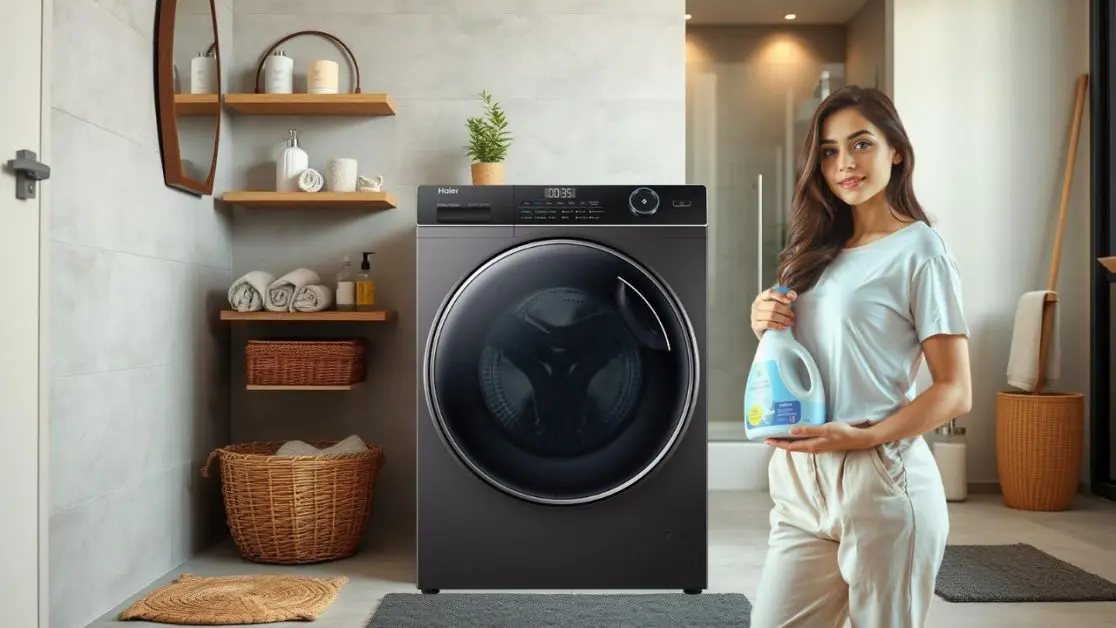
Machines like the Haier 12 Kg F11 Front Load Washing Machine (HW120-DM14F11BKU1) are designed to optimize wash cycles automatically, but excess detergent still forces the system to compensate unnecessarily.
Efficiency breaks when inputs are wrong.
3. Skin irritation becomes more common
Residual detergent stays on clothes.
For sensitive skin
- Itching increases
- Allergies trigger faster
- Kids’ clothes become uncomfortable
This is rarely linked back to detergent quantity.
But it should be.
4. Long-term machine damage
Detergent buildup doesn’t just stay on clothes.
It collects inside the drum, pipes, and filters.
Over time
- Odour develops
- Performance drops
- Maintenance costs increase
The system slows down quietly.
What happens when you use too little detergent?

The opposite mistake looks harmless.
It isn’t either.
1. Clothes don’t get fully clean
Dirt stays embedded.
Oils don’t dissolve.
This leads to
- Rewashing cycles
- Lingering odours
- Reduced hygiene
You end up using more water and electricity anyway.
2. Bacteria buildup increases
Low detergent means incomplete cleaning.
Especially for
- Gym clothes
- Towels
- Bedsheets
Hygiene becomes inconsistent.
3. Fabric quality degrades faster
Unremoved dirt acts like friction.
Over time
- Fibers weaken
- Clothes lose softness
- Lifespan reduces
It’s not visible immediately.
But it compounds.
Three ways people approach detergent. Only one works.
Let’s break this down simply.
Option 1: The “eyeballing” method
You pour detergent based on instinct.
Cost:
- Zero effort
Hidden cost:
- Inconsistent results
- Higher long-term expense
Option 2: The “more is safer” mindset
You add extra detergent to be sure.
Cost:
- Wasted detergent
- More rinse cycles
Hidden cost:
- Fabric damage
- Machine wear
Option 3: The “measured system” approach
You match detergent to load size, fabric, and dirt level.
Cost:
- Slight attention required
Benefit:
- Maximum efficiency
- Consistent cleaning
- Lower long-term costs
This is the only approach that scales.
Why modern machines are designed around precision
Washing machines are evolving.
Not by adding complexity.
But by removing guesswork.
Take systems like:
- One-Touch AI Wash
- Smart Dosing
- Essence Wash technology
These are not feature add-ons.
They are decision systems.
For example, Essence Wash pre-mixes detergent into a concentrated solution before applying it directly to fabric, improving cleaning efficiency while reducing residue.
And Smart Dosing adjusts detergent automatically based on load weight and fabric type, ensuring the right amount every time.
The machine starts thinking for you.
A simple framework to get it right every time
You don’t need complex rules.
Just a system.
Step 1: Look at the load size
- Small load: less detergent
- Full load: standard amount
Step 2: Understand fabric type
- Heavy fabrics like jeans need more
- Delicates need less
Step 3: Consider dirt level
- Light wear: reduce detergent
- Heavy stains: increase slightly
Step 4: Adjust for water hardness
Hard water reduces detergent effectiveness.
In such cases
- Slightly increase quantity
- Use machines that optimize wash cycles
Quick reference table
| Load Type | Detergent Level | Result |
| Small, light | Low | Efficient, no residue |
| Medium, normal | Standard | Balanced cleaning |
| Heavy, dirty | Slightly high | Deep cleaning |
| Overuse | Excess | Residue, inefficiency |
The bigger insight: Detergent is a systems problem, not a product problem
Most people try to solve laundry with better detergent.
The real solution is better measurement.
Because the system is interconnected.
- Detergent affects water usage
- Water affects energy consumption
- Energy affects cost
- Cost affects long-term behavior
One small decision influences the entire cycle.
Precision is not about control. It is about reducing waste.
Where smart homes are quietly changing the game
In modern Indian homes, time is limited.
Work runs late. Weekends fill up.
Laundry becomes background noise.
That is where intelligent systems matter.
Machines like the Haier 12 Kg F11 Front Load Washer & Dryer Washing Machine (HWD120-DM14F11BKU1) combine wash and dry cycles while optimizing detergent use and fabric care automatically.
You don’t think about detergent anymore.
The system handles it.
The real benefit isn’t cleaner clothes. It’s fewer decisions.
That’s the shift.
Laundry used to be an effort.
Now it’s becoming automated.
And the right amount of detergent sits at the center of that transformation.
Not because it’s important on its own.
But because it affects everything else.
A simple thought to leave with
Too much detergent feels safe.
Too little feels efficient.
Both are wrong.
The right amount feels invisible. And that’s how you know it’s working.
Because the best systems don’t demand attention.
They quietly get it right.
Frequently Asked Questions
How Do I Know If I’m Using Too Much Detergent?
If your clothes feel stiff, smell overly perfumed, or still feel slippery after washing, you are likely using excess detergent. Too much detergent creates extra foam that prevents proper rinsing, leaving residue behind.
Why Do My Clothes Look Dull Even After Washing?
This usually happens when detergent balance is off. Too little detergent leaves dirt behind, while too much traps residue in the fabric. Over time, whites become grey and colors lose sharpness.
I Always Add Extra Detergent Because My Clothes Are Very Dirty. Is That Wrong?
Not always, but “more” is rarely the best solution. Slightly increasing detergent for heavily soiled loads is fine, but excessive detergent reduces rinse efficiency and can redeposit dirt back onto clothes.
Why Does Detergent Always Feel Like Guesswork?
Because most people rely on instinct instead of measurement. Load size, fabric type, dirt level, and water hardness all affect how much detergent is actually needed.
Is Using Less Detergent Better for Saving Money?
Only if clothes still get cleaned properly. Using too little detergent often leads to rewashing, which increases water, electricity, and detergent use overall.
What Is Smart Dosing in a Washing Machine?
Smart Dosing automatically measures detergent based on load size, fabric type, and sometimes dirt level, reducing guesswork and waste.
How Does AI Wash Technology Help With Detergent Usage?
AI Wash systems analyze laundry conditions and optimize water, cycle settings, and detergent usage automatically for better efficiency.
What Is Essence Wash Technology?
Essence Wash pre-mixes detergent into a concentrated solution before distributing it evenly across fabric, improving cleaning while reducing residue.
Are Smart Washing Machines Actually Useful or Just Marketing?
They are useful when they reduce repeated decisions and improve consistency. Features like automatic dosing and optimized rinse cycles directly improve efficiency and fabric care.
Can Smart Washing Machines Reduce Detergent Waste?
Yes. Automated systems prevent over-pouring and help use only the amount needed for effective cleaning.