
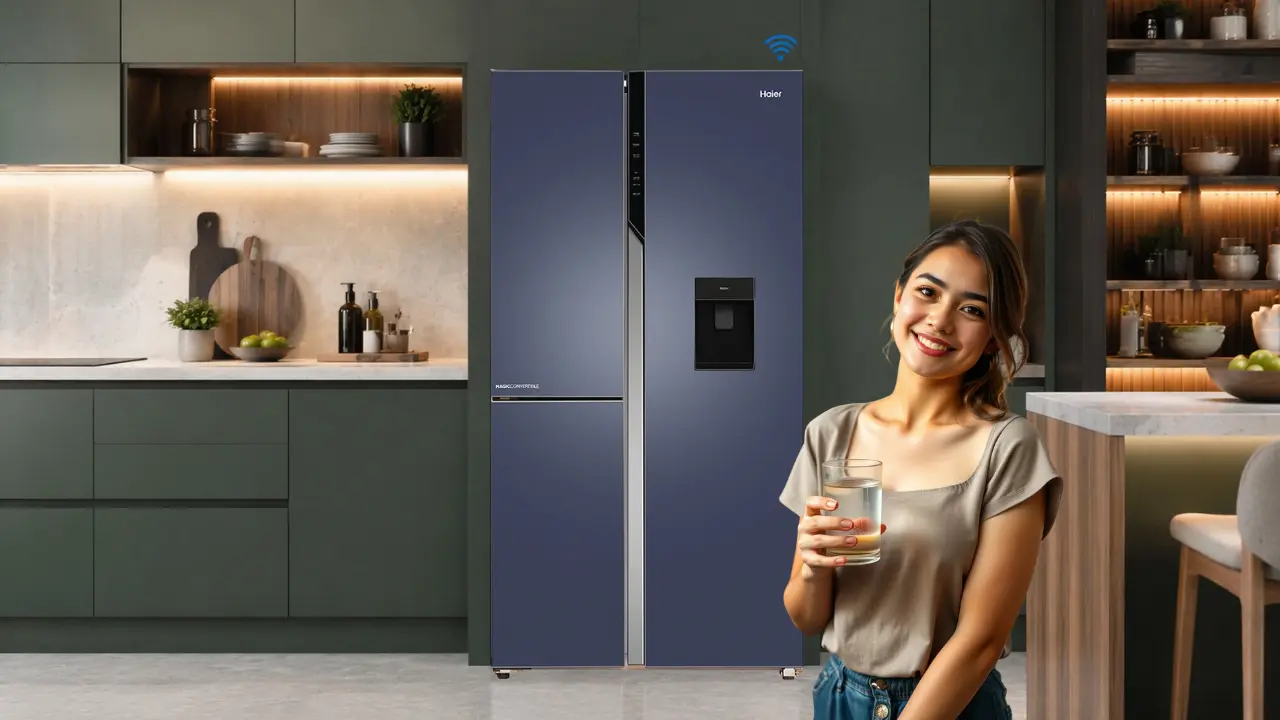

Traditional dispensers deliver water. Smart dispensers deliver control.
The difference is not just technology. It is the shift from manual effort to automated convenience. Traditional dispensers require you to act. Smart dispensers anticipate, optimize, and simplify your daily routine.
A glass of water tells you everything.
It is a typical Indian evening.
Dinner is almost ready. Someone asks for water. You walk to the dispenser, press a lever, wait, adjust the temperature mentally, and pour.
Nothing feels broken.
But nothing feels effortless either.
Now imagine this.
You walk in. The water is already chilled to your preferred cooling level. The system understands usage patterns and optimizes cooling automatically.
Same glass.
Different systems.
The difference between traditional and smart dispensers is not visible at first glance. It is felt over time.
What is a Traditional Water Dispenser really designed to do?
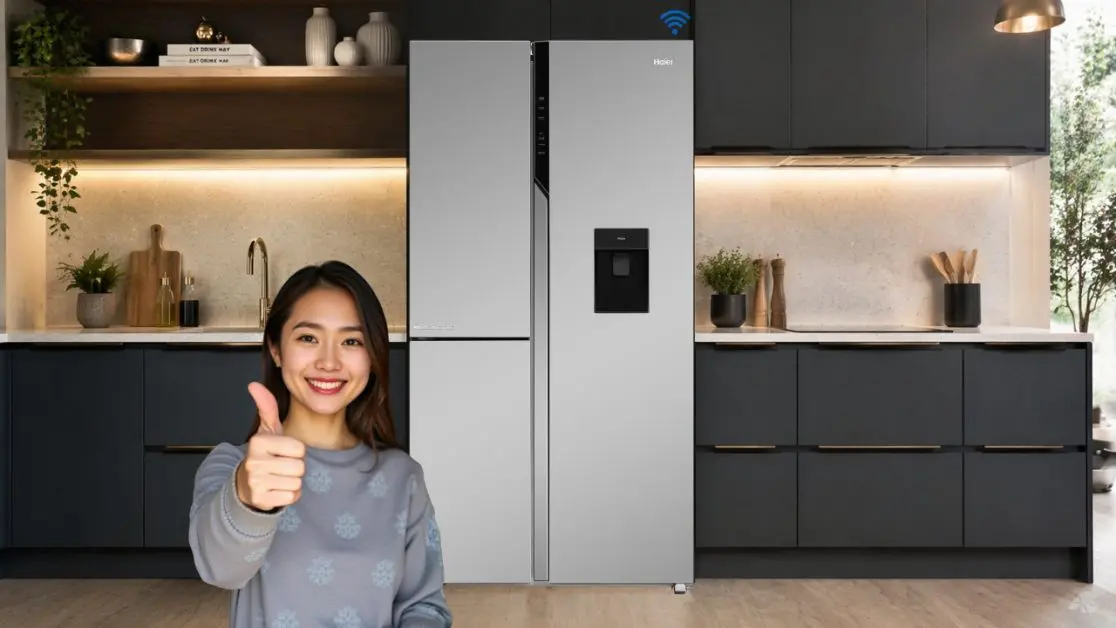
A traditional water dispenser solves one problem.
Access.
What it does well
- Provides cold, or room temperature water
- Works reliably with minimal setup
- Requires no internet or app
- Affordable and easy to maintain
What it does not do
- Does not learn usage patterns
- Does not optimize energy dynamically
- Does not connect with other appliances
- Does not provide insights
Insight: Traditional dispensers are tools. They respond when you act.
What is a Smart Water Dispenser actually doing differently?
A smart water dispenser solves a different problem.
Friction.
It removes the need to think about small, repeated actions.
Core capabilities of smart dispensers
- WiFi connectivity for remote control
- Temperature precision based on habits
- Energy optimization using smart sensors
- Integration with smart home ecosystems
- Real-time monitoring and alerts
You can already see this thinking in appliances like the Haier 598L Black White Glass 3 Door Smart Convertible SBS (HRT-683WISU1), where features like WiFi-enabled control and digital panels reduce the need for constant manual adjustments .
Insight: Smart dispensers are not tools. They are systems.
Traditional vs Smart Dispensers: The Real Comparison
| Feature | Traditional Dispenser | Smart Dispenser |
| Control | Manual | App + Automated |
| Learning Ability | None | Learns user behavior |
| Energy Efficiency | Fixed | Dynamic optimization |
| Connectivity | No | WiFi enabled |
| Maintenance Alerts | No | Yes |
| User Experience | Functional | Seamless |
The difference is not in what they do. It is in how much thinking they remove from your day.
Why the shift is happening in Indian homes
Walk into any modern Indian household today.
There is already a pattern.
- Smart TVs recommend what to watch
- Washing machines choose the right wash cycle
- Refrigerators track storage and freshness
For instance, the Haier 592L Graphite Black 3 Door Smart Convertible Refrigerator (HRT-683WGKU1) integrates smart connectivity, food tracking, and energy efficiency into daily life .
So expectations evolve.
If everything else adapts, why should water dispensers stay static?
The hidden cost of traditional systems
Traditional dispensers look simple.
But simplicity has a cost.
Cost 1: Repeated decisions
Every use requires manual action. Cooling consistency depends on constant adjustment and monitoring.
Cost 2: Energy inefficiency
Cooling runs continuously, not intelligently.
Cost 3: No awareness
No tracking of water consumption. No alerts.
Cost 4: No ecosystem
They operate in isolation.
Insight: When systems do not think, people have to.
How smart dispensers change everyday behavior
Smart dispensers do not just improve convenience.
They change how homes function.
1. They reduce micro-decisions
Preferences are remembered. Repetition disappears.
2. They improve energy usage
Systems adjust based on actual demand.
3. They create awareness
Users understand consumption patterns better.
4. They connect everything
They become part of a larger smart ecosystem.
This is the same philosophy seen in the Haier 596L Regal Steel 2 Door Smart Convertible SBS Refrigerator (HRS-682WRSU1), where smart connectivity and AI-driven features bring control into one connected experience .
Insight: Smart systems shift effort from people to machines.
Three ways to think about choosing between the two
Not every home needs the same solution.
So the decision is not about better or worse. It is about alignment.
Option 1: Stay with traditional
- Economical
- Simple
- No learning curve
Cost: Ongoing manual effort
Benefit: Reliability and low upfront cost
Option 2: Move to semi-smart systems
- Digital controls
- Better precision
- Limited automation
Cost: Moderate investment
Benefit: Better control with minimal complexity
Option 3: Choose fully smart dispensers
- App-based control
- AI-driven optimization
- Smart home integration
Cost: Higher initial investment
Benefit: Long-term convenience and efficiency
Insight: The right choice depends on how much effort you want to remove from your daily life.
The psychology behind the shift
People do not upgrade appliances for features.
They upgrade for relief.
Relief from:
- Repetition
- Decision fatigue
- Inefficiency
A smart dispenser is not about water.
It is about removing friction from everyday moments.
A pattern you start noticing everywhere
Look closely.
This shift is happening across homes.
- TVs are becoming predictive
- ACs are becoming adaptive
- Refrigerators are becoming intelligent
Products are evolving from devices to systems.
What this means for modern Indian homes
Homes today are not just spaces.
They are systems.
Systems that:
- Save time
- Reduce effort
- Optimize energy
- Improve comfort
Smart dispensers fit into this larger shift.
They are a small upgrade with a large impact.
So what should you actually choose?
Ask one question.
Do you want control, or do you want convenience?
If control matters, traditional works.
If convenience matters, smart wins.
The bigger insight most people miss
Technology does not change life dramatically.
It changes it quietly.
A smarter TV saves minutes daily.
A better washing machine saves effort weekly.
A smart dispenser removes small friction, many times a day.
Individually, these feel small.
Together, they redefine how your home feels.
Final thought: The system always wins
Manual systems depend on memory.
Smart systems depend on design.
And design scales better.
The future of appliances is not more features. There are fewer decisions.
That is the real difference between traditional dispensers and smart dispensers.
And once you see it, you cannot unsee it.
Frequently Asked Questions
What is the main difference between a traditional dispenser and a smart dispenser?
A traditional dispenser gives you water when you manually operate it. A smart dispenser reduces effort by automating temperature control, monitoring usage, and optimizing performance over time.
Why are people switching to smart water dispensers?
Most people are not upgrading for “technology.” They are upgrading for convenience, consistency, and reduced daily effort.
Are smart dispensers really more convenient in daily life?
Yes. The convenience comes from eliminating repeated actions like adjusting cooling, checking temperatures, or monitoring usage manually.
Is a traditional dispenser still worth buying in 2026?
Absolutely. Traditional dispensers remain reliable, affordable, and simple to maintain. They work well for homes that prefer minimal complexity.
What smart features do modern dispensers include?
Common features include WiFi connectivity, app control, usage tracking, energy optimization, maintenance alerts, and temperature customization.
Can smart dispensers connect with other smart home devices?
Yes. Many smart dispensers integrate with broader smart home ecosystems.
Do smart dispensers use AI?
Some advanced systems use AI-driven optimization to learn usage patterns and improve efficiency automatically.
Are smart dispensers energy efficient?
Generally, yes. Smart systems optimize cooling cycles based on actual demand rather than running continuously.