
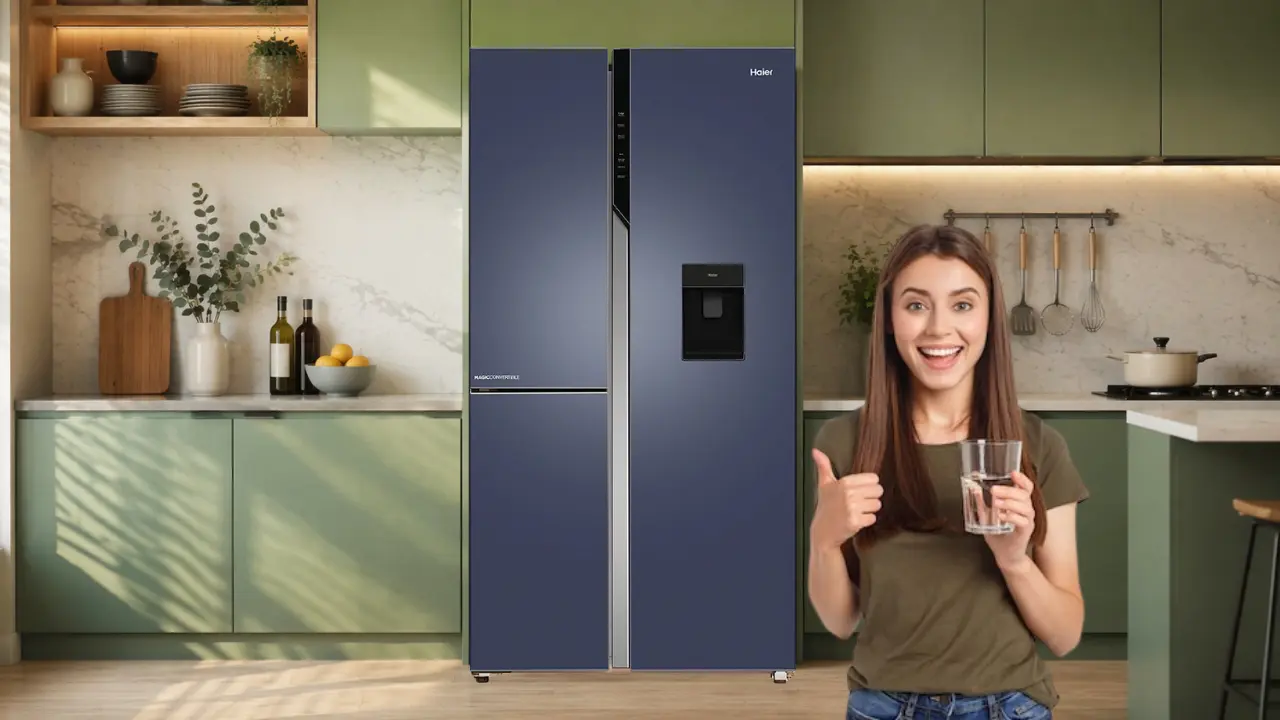

The best water dispenser depends on how your home consumes water, not just how much space you have.
Large families need high-capacity, continuous dispensing systems with minimal refilling.
Small homes need compact, energy-efficient units that fit seamlessly into daily routines without occupying mental or physical space.
A kitchen at 8 pm reveals everything.
Dinner is almost ready.
One person is filling a bottle.
Another is rinsing vegetables.
Someone else wants cold water after a long day.
Now pause.
How many times does the same tap get used in the next 10 minutes?
This is where most homes quietly struggle.
Not because they lack water.
But because they lack flow.
A water dispenser is not about convenience.
It is about removing friction from repetition.
And repetition looks very different in a family of five versus a solo apartment.
Why choosing the wrong water dispenser feels frustrating over time
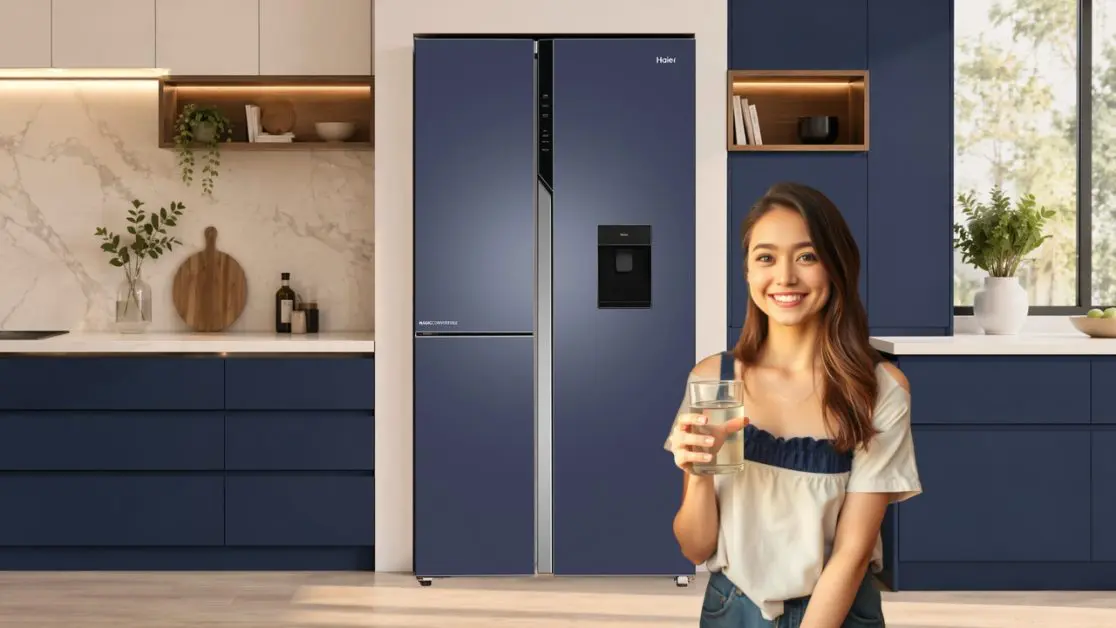
Most people choose based on size or price.
But the real variable is the usage pattern.
A family of six consumes water like a busy railway station.
A couple consumes water like a quiet café.
Same need.
Different rhythms.
Here is what usually goes wrong:
- Large families buy compact dispensers and keep refilling every hour
- Small homes buy bulky units that feel excessive and waste energy
- People ignore peak usage times like mornings and dinner hours
Insight: Appliances fail when they are sized for space instead of behaviour.
Understanding the two systems of water consumption
Before choosing the best water dispenser for large families vs small homes, understand this:
There are only two real systems
- High-frequency consumption systems
- Low-frequency consumption systems
Everything else is a variation.
System 1: High-frequency homes need uninterrupted flow
Who fits here?
- Joint families
- Homes with kids and elders
- Households that cook frequently
- Homes where guests are common
What actually happens daily
- 20 to 40 water interactions per day
- Multiple people using water at the same time
What this system demands
- Large storage capacity
- Fast cooling
- Continuous dispensing without downtime
Best water dispenser setup for large families
One option is a high-capacity floor-standing dispenser
- Stores large volumes of water
- Ideal for kitchens or dining areas
- Reduces refill frequency
The second option is a refrigerator with built-in dispenser
This is where things get interesting.
Some modern refrigerators integrate water dispensing directly into the system.
For example:
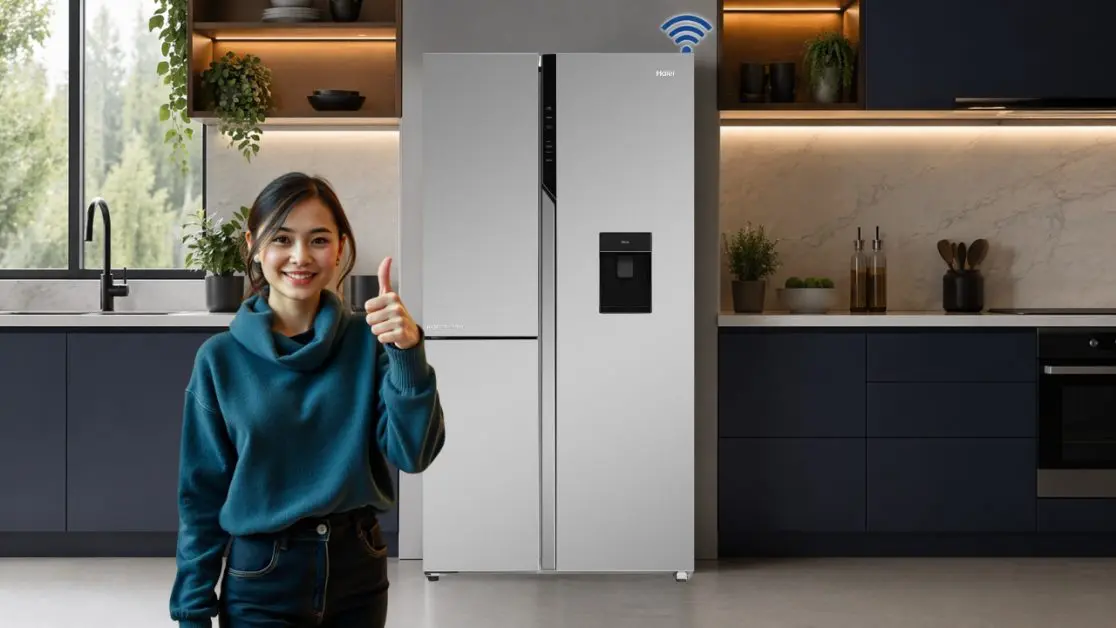
- Haier 598L Black White Glass 3 Door Smart Convertible SBS Refrigerator (HRT-683WISU1) comes with an in-built water dispenser that allows access to clean BPA-free water without opening the fridge door.
- Haier 592L Graphite Black 3 Door Smart Convertible Refrigerator (HRT-683WGKU1) offers a similar in-built dispensing system combined with smart connectivity and food management features.
That changes the system completely.
- No extra appliance
- No additional space needed
- Water access becomes part of kitchen flow
The third option is connected smart dispensers
- Monitor usage
- Control temperature digitally
- Reduce energy waste
Cost vs benefit for large families
| Option | Cost | Benefit |
| Floor-standing dispenser | Moderate | High capacity, easy access |
| Built-in refrigerator dispenser | Higher upfront | Seamless integration, saves space |
| Smart connected dispenser | Premium | Efficiency, control, tracking |
Insight: In large homes, the cost of inconvenience is higher than the cost of the appliance.
System 2: Low-frequency homes need efficient simplicity
Who fits here?
- Working professionals living solo
- Couples in compact apartments
- Minimalist households
- Homes with predictable routines
What actually happens daily
- 5 to 10 water interactions per day
- Mostly individual use
- Less simultaneous demand
What this system demands
- Compact design
- Low energy consumption
- Easy maintenance
Best water dispenser setup for small homes
One option is a tabletop dispenser
- Fits on kitchen counters
- Easy to move
- Ideal for limited space
The second option is a compact integrated appliance
Think smaller refrigerators or appliances that combine multiple functions.
For instance:
- Haier 596L Regal Steel 2 Door Smart Convertible SBS Refrigerator (HRS-682WRSU1) includes a 2.5-litre in-built water dispenser, combining storage and water access in one streamlined unit.
This reduces the need for a separate dispenser.
The third option is a basic water purifier with dispensing
- Cost-effective
- Minimal space usage
- Covers essential needs
Cost vs benefit for small homes
| Option | Cost | Benefit |
| Tabletop dispenser | Low to moderate | Space saving, easy setup |
| Compact integrated system | Moderate | Multi-function efficiency |
| Basic purifier with tap | Low | Essential functionality |
Insight: In small homes, efficiency beats capacity every single time.
The hidden variable most people ignore: peak load
Water usage is not evenly distributed.
It spikes.
Morning rush.
Dinner time.
Weekend gatherings.
Ask this before choosing
- How many people use water at the same time?
- How often does refilling happen?
- Is chilled water used occasionally or throughout the day
A dispenser that works at 3 pm might fail at 8 pm.
Why built-in dispensers are quietly changing Indian kitchens
There is a subtle shift happening.
People are moving away from adding more appliances.
They are choosing systems that combine functions.
Take refrigerators with built-in dispensers.
They offer:
- Water access without opening doors
- Better hygiene with enclosed systems
- Reduced clutter in the kitchen
Models like:
- Haier 592L Graphite Black 3 Door Smart Convertible Refrigerator (HRT-683WGKU1)
- Haier 598L Black White Glass 3 Door Smart Convertible SBS Refrigerator (HRT-683WISU1)
show how chilled water dispensing, cooling, and smart controls can exist in one seamless system.
This is not about features.
It is about flow design.
Insight: The best appliance is the one you stop noticing because it just works.
Large family vs small homie: a direct comparison
What actually matters
| Factor | Large Families | Small Homes |
| Water demand | High | Low |
| Usage frequency | Constant | Occasional |
| Space availability | Moderate to large | Limited |
| Ideal solution | High-capacity or integrated systems | Compact, efficient units |
| Priority | Flow and convenience | Space and efficiency |
Three decision frameworks that simplify everything
1. The frequency rule
- High usage equals large capacity
- Low usage equals compact design
2. The space rule
- Limited kitchen space equals integrated systems
- Larger kitchens equals dedicated dispensers
3. The friction rule
- If refilling annoys you, upgrade capacity
- If cleaning annoys you, simplify design
Insight: The right appliance reduces decisions, not just effort.
What most buying guides don’t tell you
They compare features.
But homes don’t operate on features.
They operate on patterns.
A family with kids needs speed.
A working professional needs simplicity.
A host needs flexibility.
So the question is not:
“What is the best water dispenser?”
The real question is:
“What kind of water usage system does your home run on?”
The bigger shift: from appliances to systems
Look around any modern Indian home.
Refrigerators are getting smarter.
ACs are learning usage patterns.
TVs are adapting to content.
Water dispensing is following the same path.
From standalone units
To integrated systems
To intelligent ecosystems
This is not innovation for the sake of it.
It is a response to one simple truth:
People don’t want more appliances. They want fewer decisions.
So, which one should you choose?
Let’s make it simple.
Choose a high-capacity or integrated dispenser if:
- Your home has 4 or more members
- Water usage peaks frequently
- Convenience matters more than space
Choose a compact or tabletop dispenser if:
- You live alone or as a couple
- Space is limited
- Usage is predictable
Final thought: design your water flow, not just your kitchen
A water dispenser is not a purchase.
It is a decision about how your home handles repetition.
Every glass of water is a small moment.
Multiply that by 20 times a day.
365 days a year.
That is where comfort comes from.
Not from features.
But from flow.
Because the best homes are not the ones with more appliances.
They are the ones where everyday actions feel effortless.
Frequently Asked Questions
I have a family of five. Should I buy a separate water dispenser or a fridge with an in-built dispenser?
If your family uses water frequently throughout the day, an integrated refrigerator dispenser can reduce clutter and make access smoother. A separate high-capacity dispenser works better if you need constant heavy usage and easy refilling.
I live alone. Is a large water dispenser unnecessary for me?
Yes, in most cases. A compact tabletop dispenser or basic purifier with a tap is usually enough for solo living because usage is predictable and low-frequency.
My kitchen is small, but I want chilled water easily. What should I choose?
Choose a compact integrated appliance or tabletop dispenser. The goal is to save counter space while avoiding an oversized unit that feels like extra maintenance.
Help me decide between a tabletop dispenser and a built-in refrigerator dispenser for my apartment.
Pick a tabletop dispenser if budget and portability matter. Pick a built-in refrigerator dispenser if you want fewer appliances and a cleaner kitchen layout.
My family needs cold water during dinner time and mornings. What dispenser works best?
A high-capacity floor-standing dispenser or refrigerator with built-in water dispenser works better because peak-time demand is high.
I hate refilling my dispenser again and again. What should I upgrade to?
Upgrade to a higher-capacity dispenser or an integrated fridge dispenser. Frequent refilling usually means the appliance is too small for your household rhythm.
Are smart water dispensers worth it for large families?
They can be useful if you want temperature control, usage tracking, and better energy management. For simple needs, a high-capacity dispenser may be enough.
Why are refrigerators with built-in water dispensers becoming popular?
They combine cooling, storage, and water access in one appliance, which reduces kitchen clutter and makes daily routines smoother.