
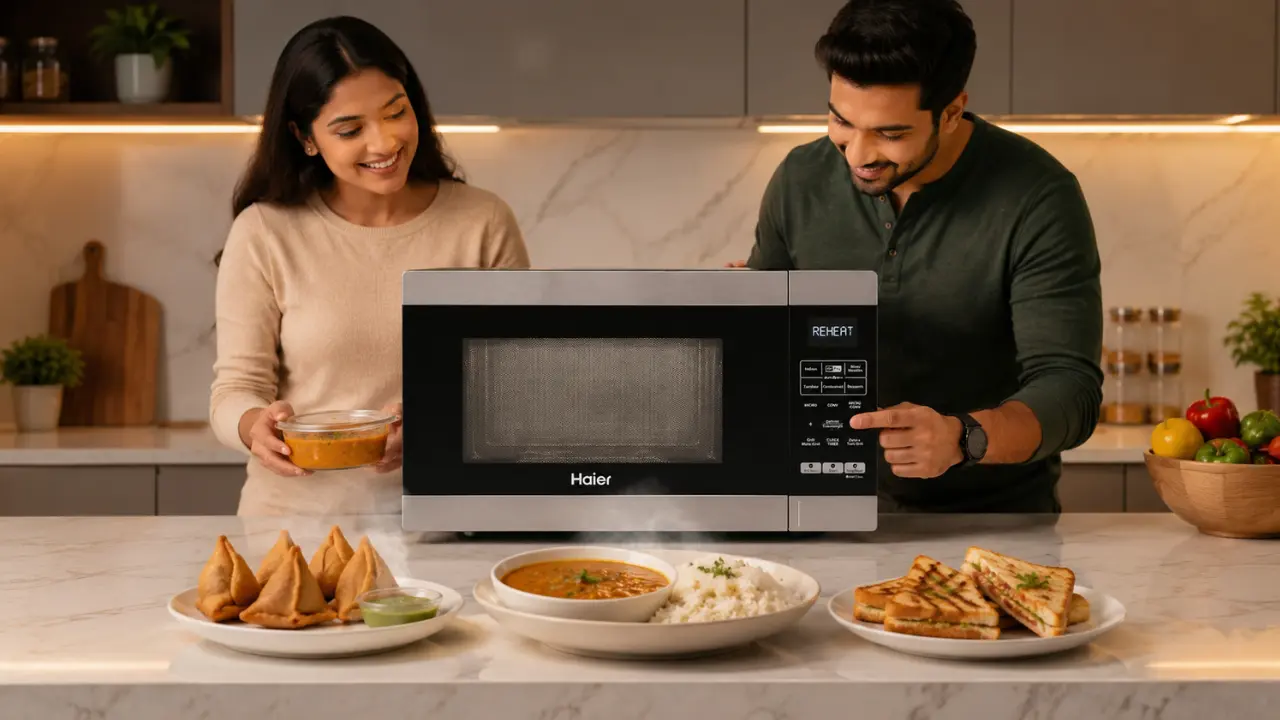

A multi mode microwave works best when you stop treating it like a reheating box and start using it like a system.
Combine microwave, grill, convection, and air fryer modes based on the dish, not habit. The result is faster cooking, better texture, and far less effort in everyday Indian kitchens.
Why does your microwave feel underused?
It is 9:15 pm.
Leftover dal needs heating. Frozen kebabs sit in the freezer. Someone wants a quick dessert.
What happens next?
You press “Start.”
Everything gets reheated. Nothing gets better.
That is the hidden problem.
Most homes own a multi mode microwave. Few actually use it.
Because the real challenge is not the appliance.
It is understanding the system inside it.
A microwave today is not one function. There are five different cooking methods living in one box.
Once you see that, everything changes.
What is a multi mode microwave actually doing?
A multi mode microwave combines different cooking technologies into one system.
Take something like the Haier 30L Convection Microwave With In-Built Air Fryer (HIL3001ARSB). It is not just a microwave. It is:
- Microwave mode for reheating and basic cooking
- Grill mode for browning and crisping
- Convection mode for baking and roasting
- Air fryer mode for low oil crisping
- Combination cooking for speed + texture
It even comes with 305 preset auto cook menus that adjust time and power automatically
That is not convenient. That is decision reduction.
Insight: Efficiency is not about doing more. It is about deciding less.
The biggest mistake people make
They use one mode for everything.
Rice. Microwave.
Pizza. Microwave.
Chicken. Microwave.
The result?
- Soft instead of crispy
- Uneven heating
- Longer cooking time
A multi mode microwave fails when treated like a single mode machine.
How to think about cooking modes like a system
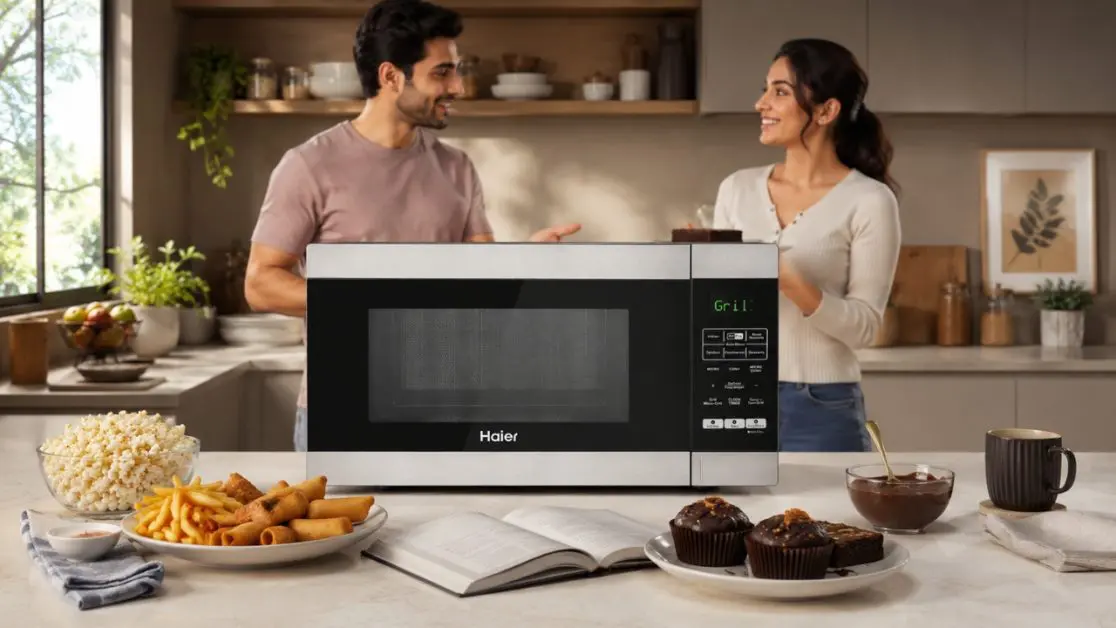
Instead of asking “What button should I press?”
Ask a better question:
What outcome do I want?
Then match the mode to the outcome.
1. Microwave mode is for speed
Use it when:
- Reheating leftovers
- Cooking dals, rice, or sabzi
- Defrosting frozen food
Benefit: Fast and efficient
Cost: No texture or crispness
Think of it like boiling water. Functional. Not expressive.
2. Grill mode is for texture
Use it when:
- You want golden brown paneer tikka
- Toasting sandwiches
- Crisping the top layer of pasta
Benefit: Surface crisp and color
Cost: Slower than microwave
This is where food starts to look and feel like it came from a restaurant.
3. Convection mode is for baking and roasting
Use it when:
- Baking cakes or cookies
- Roasting vegetables or chicken
- Making pizza
Benefit: Even cooking with proper texture
Cost: Requires preheating
Convection turns your microwave into an oven.
And for Indian homes, that means festival baking without a separate appliance.
4. Air fryer mode is for everyday health decisions
Use it when:
- Making samosas, fries, nuggets
- Reheating fried food without making it soggy
The Haier model includes 36 dedicated air fryer menus
Benefit: Crispy food with less oil
Cost: Slightly longer cooking time than deep frying
Insight: Health is not about removing indulgence. It is about redesigning it.
5. Combination mode is where the real power lies
This is the most underused feature.
It combines microwave + grill or microwave + convection.
Use it when:
- Cooking chicken that needs to be juicy inside and crispy outside
- Baking dishes that need speed and texture
Benefit: Faster cooking with better results
Cost: Requires a bit of learning
This is what the product refers to as combination cooking for faster and better results
Insight: The best systems are not single tools. They are smart combinations.
A simple table to make decisions faster
| Cooking Need | Best Mode | Why it works |
| Reheating food | Microwave | Fast and energy efficient |
| Crisping snacks | Grill | Adds texture and color |
| Baking cakes | Convection | Even heat distribution |
| Low oil frying | Air Fryer | Crispy with less oil |
| Juicy + crispy dishes | Combination | Speed + texture together |
How modern Indian homes actually use it
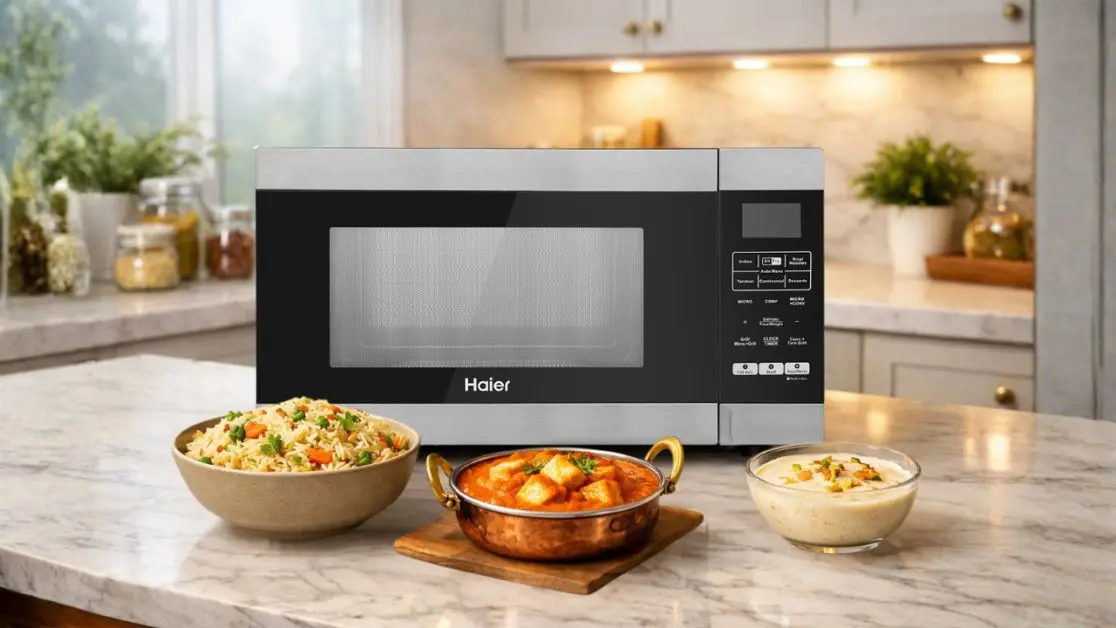
Let’s make this real.
Scenario 1: Weekday dinner rush
- Reheat dal in microwave
- Grill paneer for texture
- Air fry frozen kebabs
Three modes. One appliance. Ten minutes saved.
Scenario 2: Sunday family cooking
- Bake cake in convection
- Use rotisserie for chicken grilling
- Warm naan in microwave
Yes, features like motorized rotisserie ensure even grilling
That is not just cooking. That is experience design at home.
Scenario 3: Late-night cravings
- Air fry fries instead of deep frying
- Reheat leftovers without losing taste
The difference is small. The habit shift is big.
The role of presets and automation
Modern multi mode microwaves reduce guesswork.
With 305 auto cook menus, the system already knows:
- Time required
- Power level
- Cooking sequence
That means less trial and error.
Less overcooked food.
Less frustration.
Insight: Automation is not about replacing effort. It is about guiding it.
What about power levels? Most people ignore this
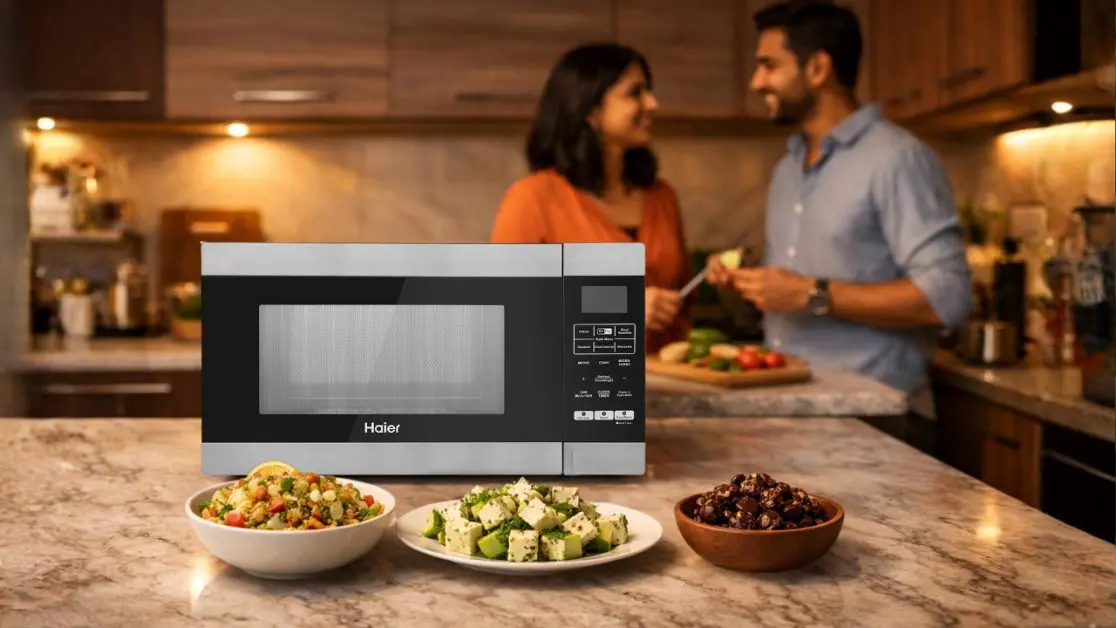
Your microwave does not just have one intensity.
The Haier model offers 5 multi power levels for different food types
Here is how to think about it:
- High power: Reheating and boiling
- Medium: Cooking vegetables
- Low: Defrosting or gentle heating
Ignoring power levels is like driving in one gear.
You reach. But not efficiently.
Common mistakes that reduce effectiveness
Let’s be honest. Most inefficiency comes from habits.
- Using microwave mode for everything
- Not preheating in convection mode
- Overcrowding the cavity
- Ignoring combination cooking
Each mistake costs time, texture, or energy.
How to build a smarter cooking system at home
Think in layers.
One option is convenience-first
- Use presets and auto menus
- Minimal learning required
- Good for working professionals
The second option is control-first
- Adjust modes and power manually
- Better results with practice
- Ideal for home cooks
The third option is hybrid
- Start with presets
- Gradually customize settings
Insight: Good systems give you a path from simplicity to mastery.
Why this matters beyond cooking
This is not just about using a multi mode microwave effectively.
It is about how modern homes work.
- Less time spent on repetitive tasks
- More flexibility in meal planning
- Healthier cooking without extra effort
- Better use of space and appliances
A single appliance replacing four.
That is not just efficiency. That is design thinking applied to everyday life.
A final thought you will remember
Most appliances don’t fail because they lack features.
They fail because we don’t understand the system inside them.
A multi mode microwave is not complex.
It is simply multi-purpose.
And once you match the right mode to the right outcome, something shifts.
Cooking becomes faster.
Food tastes better.
Life feels… a little more sorted.
That is the real benefit.
Frequently Asked Questions
Why do I only use my microwave for reheating even though it has multiple modes?
Most people never learn the purpose behind each cooking mode. They default to microwave mode out of habit instead of matching the mode to the cooking outcome.
How do I stop underusing my multi mode microwave?
Start thinking in outcomes instead of buttons. Ask whether you want speed, crispness, baking, roasting, or healthier frying then choose the mode accordingly.
What is the biggest mistake people make with multi mode microwaves?
Using microwave mode for everything. That usually leads to soggy textures, uneven heating, and disappointing food quality.
Why does my food taste average even though my microwave has advanced features?
Because features only work when paired with the correct cooking method. Grill, convection, and air fryer modes are designed for texture and consistency, not just heating.