

Convection mode makes baking more even, faster, and more reliable
Convection mode helps in baking by circulating hot air evenly around the food. That changes everything. Cakes rise more uniformly.
Cookies bake consistently. Pizza crusts crisp better. The hidden advantage is not just speed. It is predictability. Convection baking reduces the small errors that quietly ruin home baking.
Most people think baking fails because of recipes.
Usually, it fails because of heat.
Not enough heat. Uneven heat. Heat trapped in the wrong place.
That is the real story behind dry cakes, burnt edges, uncooked centres, and cookies that look different on the same tray.
A microwave with convection mode solves a problem most home bakers do not even realize they have.
Because baking is not only about ingredients.
It is about airflow.
Why traditional heating creates inconsistent baking
Imagine a small family preparing a birthday cake at home.
The batter is perfect. Measurements are accurate. The oven is preheated.
And still, something goes wrong.
One side rises more. The centre sinks slightly. The top browns too early.
The recipe gets blamed.
But heat distribution is often the real culprit.
Traditional heating systems create hot pockets. Heat gathers in certain areas while other corners stay cooler. That creates inconsistency.
Convection mode changes the system itself.
Instead of allowing heat to sit still, it continuously circulates hot air through an internal fan. The result is balanced cooking from multiple directions.
A simple shift. A major difference.
Good baking is not about more heat. It is about better movement of heat.
That distinction matters.
What exactly happens inside convection mode?
Convection mode uses three systems together:
- Heating elements generate heat
- A fan circulates hot air
- Airflow distributes temperature evenly
This creates a controlled cooking environment.
In practical terms, here is what changes:
1. Faster heat transfer
Moving air cooks faster than still air.
That means:
- Cakes bake quicker
- Frozen snacks crisp faster
- Cookies brown evenly
- Less waiting between batches
Many professional kitchens rely on convection systems for exactly this reason.
Consistency saves time.
2. Even browning
One tray. Multiple cookies. Same colour.
That is harder in standard baking systems because corners heat differently.
Convection airflow reduces those differences.
This matters especially in Indian homes where ovens often handle:
- Garlic bread during parties
- Evening pizza sessions
- Festival baking
- Quick tea-time snacks
Consistency becomes visible immediately.
3. Better texture control
Texture is where convection baking quietly wins.
Consider the difference:
- Soft inside, crisp outside
- Moist cake with evenly baked layers
- Proper puff in pastries
- Balanced browning without dryness
The system affects structure.
And structure affects taste.
Why modern Indian kitchens are leaning toward convection cooking
The modern Indian kitchen has changed.
It is no longer built only around gas burners and pressure cookers.
Today’s kitchen handles:
- Late-night reheating
- Weekend baking
- Air-fried snacks
- Kids’ tiffin prep
- Health-conscious cooking
- Small celebrations at home
One appliance now performs multiple roles.
That is why convection mode matters more today than it did ten years ago.
Because homes are asking appliances to think beyond one task.
The shift from “heating food” to “creating experiences”
A microwave used to be a backup appliance.
Now it has become part of the daily cooking rhythm.
A working professional may bake frozen momos after work.
Parents may prepare banana bread on weekends.
College students living alone may experiment with homemade pizza instead of ordering in.
The appliance changes behaviour when it reduces friction.
That is the invisible pattern across smart kitchens.
The best appliances remove hesitation before they remove effort.
How convection mode improves different baked foods
Different foods react differently to airflow.
That is why convection baking becomes versatile.
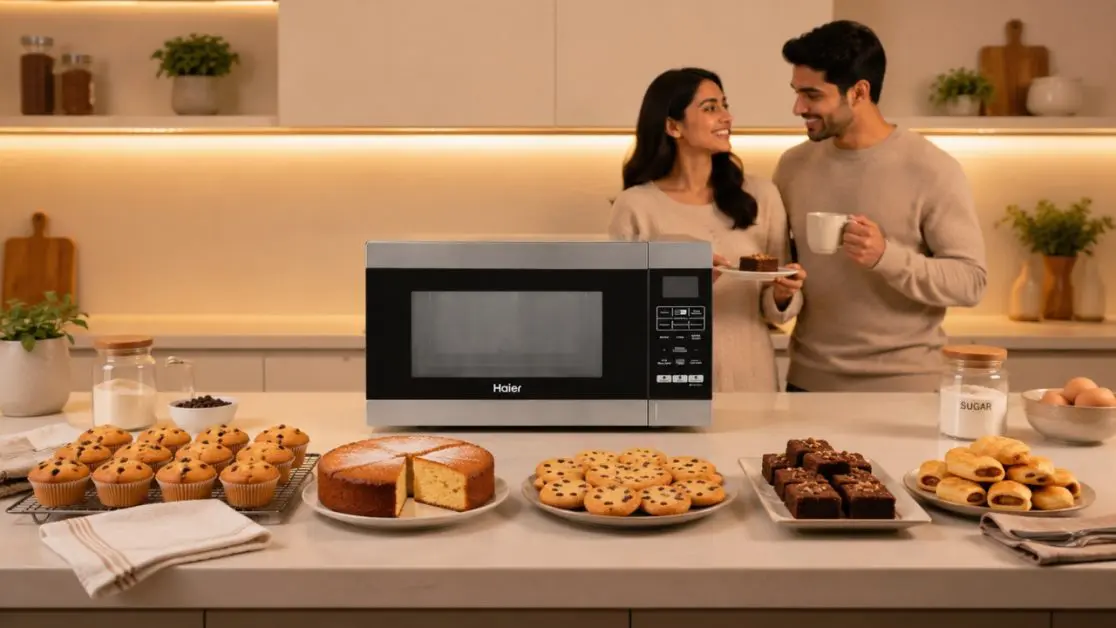
For cakes
Convection mode helps cakes rise evenly and bake uniformly.
Benefits include:
- Better sponge texture
- Reduced undercooked centres
- More balanced top browning
- Faster baking cycles
This matters during celebrations where appearance matters as much as taste.
For cookies and biscuits
Cookies need dry circulating heat.
Convection mode helps:
- Crisp edges develop properly
- Centres stay soft
- Multiple trays bake evenly
That is difficult in uneven heating systems.
For pizza and garlic bread
Texture defines success here.
Convection baking improves:
- Crust crispness
- Cheese melting consistency
- Even topping cooking
Nobody likes a soggy pizza base.
Airflow fixes that.
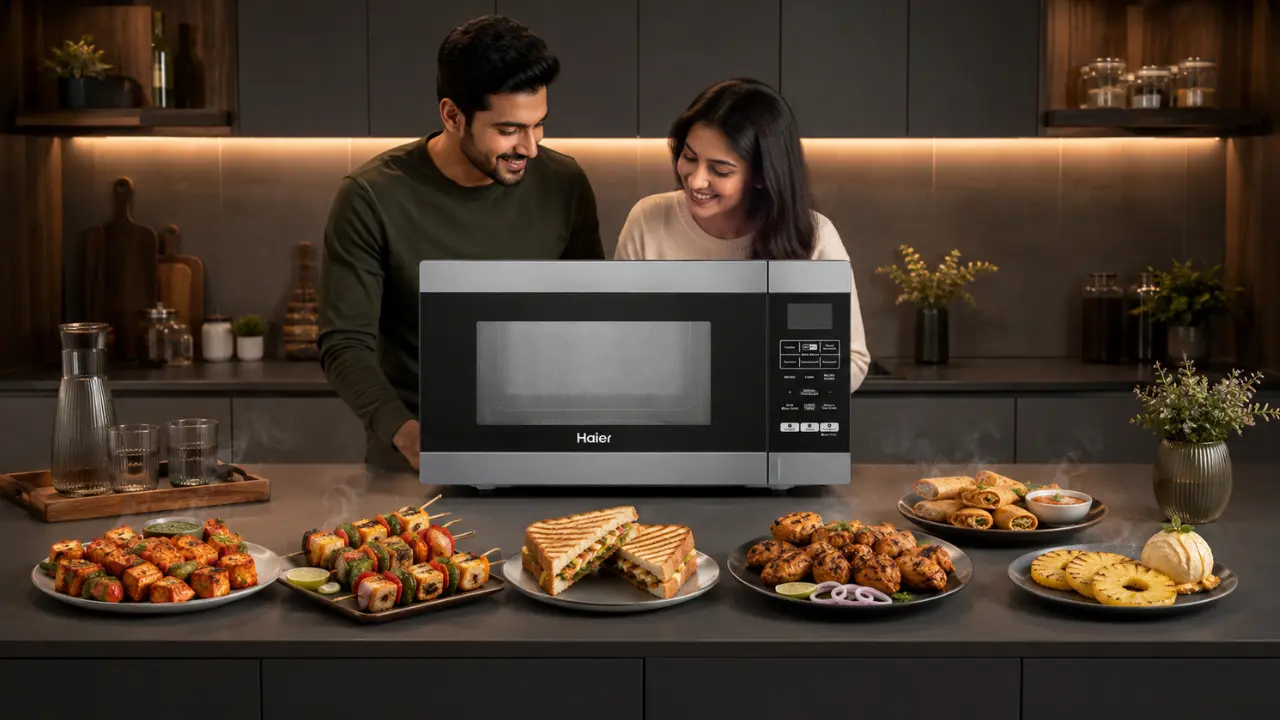
For roasted snacks
Modern convection microwaves increasingly support roasting and grilling combinations.
That helps with:
- Paneer tikka
- Roasted vegetables
- Chicken wings
- Baked samosas
The result feels closer to oven-style cooking without needing a large standalone oven.
How Haier convection microwaves fit into modern baking habits
Most people do not buy a convection microwave because they suddenly want to become bakers.
They buy it because life becomes unpredictable.
Schedules overlap. Guests arrive unexpectedly. Children want homemade snacks. Health goals shift.
Flexibility becomes valuable.
That is where products like the Haier HIL2501CBSH 25L Convection Microwave Oven quietly become useful.
The model combines:
- Convection cooking
- Baking support
- Grilling functionality
- Multi-stage cooking
- Bread basket accessory integration
That last detail matters more than it sounds.
Because baking at home is emotional before it is technical.
Fresh bread in the evening changes how a home feels.
Similarly, models like the Haier 20L Convection Microwave with Mirror Glass Design focus on compact urban kitchens where space matters as much as functionality.
Meanwhile, the Haier 30L Convection Microwave with In-Built Air Fryer reflects another emerging shift.
People want fewer appliances doing more jobs.
Not because minimalism is trendy.
Because kitchen counters are finite.
The hidden psychology of baking at home
Baking is rarely just about food.
It is usually about rhythm.
A mother teaching her child cookies during summer holidays.
A couple trying homemade pizza on Friday nights.
Someone learning banana bread after endless food delivery fatigue.
These moments matter because they create participation.
Convection mode lowers the barrier to those moments.
That is the overlooked value.
When systems become easier, people experiment more
Bad appliances create caution.
Good appliances create curiosity.
That changes behaviour over time.
People try:
- Mug cakes
- Baked pasta
- Homemade cookies
- Healthier snacks
- Fusion recipes
Not because they suddenly become chefs.
Because the system feels approachable.
Convection baking also changes energy usage patterns
A smaller convection microwave often uses less space and less energy than operating a large oven for smaller portions.
That matters in urban Indian homes.
Especially for:
- Nuclear families
- Solo professionals
- Students
- Compact apartments
Shorter cooking cycles also reduce unnecessary energy use.
The bigger insight?
Efficiency is not only about electricity ratings.
It is about reducing waste inside the cooking process itself.
Common mistakes people make while using convection mode
Convection mode helps. But it still requires small behavioural adjustments.
Mistake 1: Overcrowding the tray
Airflow needs space.
Too much food blocks circulation and reduces even cooking.
Mistake 2: Using incorrect utensils
Convection-safe cookware matters.
Metal racks and baking-safe containers usually perform better than microwave-only plastics.
Mistake 3: Ignoring preheating
Preheating still matters in convection baking.
Skipping it affects:
- Rise quality
- Texture
- Browning consistency
The system works best when temperature stabilizes first.
Why convection mode matters more than ever
The future kitchen is not about complexity.
It is about adaptability.
One appliance.
Multiple outcomes.
Less friction.
That is why convection mode continues gaining relevance in Indian homes.
Not because baking became fashionable.
Because modern life rewards systems that quietly handle more without demanding more attention.
And that is exactly what convection baking does.
It turns uncertain cooking into repeatable results.
The real innovation is not the fan inside the appliance.
It is the confidence it creates outside it.
Because when people trust the process, they cook more.
And homes change when kitchens become places people want to return to.
Frequently Asked Questions
Is convection mode really necessary for baking at home?
Yes. Convection mode improves heat circulation, which helps cakes, cookies, pizza, and baked snacks cook more evenly and consistently.
What is the difference between convection mode and normal microwave mode?
Normal microwave mode reheats food using microwave radiation. Convection mode uses heating elements and a fan to circulate hot air, making it suitable for baking and roasting.
Should I buy a convection microwave or a separate OTG oven?
A convection microwave works well for small families, compact kitchens, and multi-purpose cooking. An OTG may suit people who bake frequently in larger batches.
Why are modern Indian kitchens shifting toward convection microwaves?
Because one appliance can now handle reheating, grilling, baking, roasting, and even air frying while saving counter space.
Is convection mode good for beginners who have never baked before?
Yes. Convection mode reduces uneven heating, making baking more forgiving and predictable for first-time users.
Does convection baking save electricity compared to large ovens?
Often yes, especially for smaller portions. Convection microwaves heat smaller spaces faster and more efficiently.