
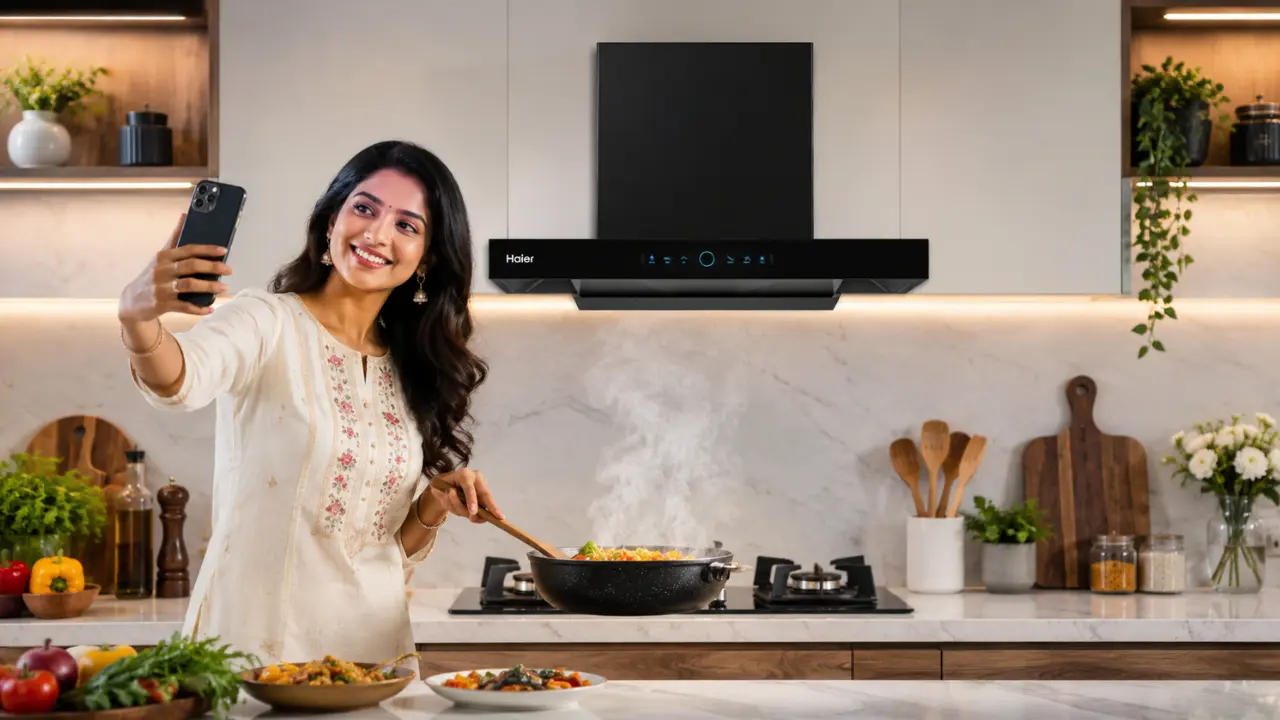

A kitchen chimney is no longer a luxury in Indian homes. It is a fire, smoke, and air-control system that protects your walls, improves breathing comfort, reduces grease buildup, and lowers cooking-related safety risks.
In modern kitchens where frying, tadka, grilling, and high-heat cooking happen daily, a chimney quietly becomes one of the most important appliances in the house.
There is a moment every Indian kitchen knows.
Oil starts heating.
The tadka crackles.
Steam rises.
Smoke spreads faster than expected.
Within minutes, the curtains absorb the smell, cabinets turn sticky, and the ceiling begins collecting invisible grease.
Most people think this is “normal kitchen life.”
It is not.
It is an unmanaged airflow.
And unmanaged airflow changes how a home feels over time.
Smoke Is Not Just Smoke. It Is A System Problem

A lot of kitchen discomfort hides in repetition.
One day of cooking smoke feels harmless.
Three years of trapped smoke feels very different.
That is how kitchens slowly change:
- White walls become yellow
- Cabinets become oily
- Gas zones feel hotter
- Exhaust fans struggle
- Cooking smells travel into bedrooms
The problem is not one meal.
The problem is accumulation.
Homes age through invisible particles before they age through visible damage.
Modern Indian cooking intensifies this challenge:
- Deep frying
- High-flame tadka
- Grilling
- Pressure cooking
- Multi-dish preparation during festivals
Indian kitchens generate heavier smoke and oil particles than many Western cooking environments. That changes the ventilation requirement completely.
Why Traditional Ventilation Stops Working In Modern Kitchens
Open windows worked differently twenty years ago.
Kitchens were larger.
Cooking styles were slower.
Apartments were less sealed.
Today’s homes follow a different architecture:
- Compact layouts
- Open kitchens
- Modular cabinets
- Air-conditioned living spaces
- Smaller utility areas
The result?
Smoke no longer “escapes naturally.”
It circulates.
That circulation creates three hidden risks.
1. Grease Becomes A Fire Risk
Oil particles do not disappear.
They settle.
On cabinets.
On tiles.
Inside exhaust fans.
Around electrical fittings.
Over time, grease buildup becomes flammable.
This is why commercial kitchens follow strict ventilation systems. Heat plus oil residue creates dangerous conditions faster than most people realise.
A chimney interrupts this cycle early.
High suction systems pull smoke and grease before they settle onto surfaces.
Models like the Haier Unique Pyramid Filter 2000 M³H Suction Power Heat Auto Clean Chimney (HIH-T5905) use powerful suction combined with heat auto-clean technology to manage grease accumulation more efficiently.
That matters because cleaner airflow is also safer airflow.
2. Smoke Changes Indoor Air Quality
Most people notice smoke visually.
But the bigger issue is what remains invisible.
Fine particles remain suspended indoors long after cooking ends.
That affects:
- Breathing comfort
- Eye irritation
- Heat perception
- Lingering odours
This becomes more noticeable in:
- Studio apartments
- Homes with children
- Elderly households
- Work-from-home setups
A smoky kitchen no longer stays inside the kitchen.
Open-plan homes changed that equation completely.
3. Heat Fatigue Makes Cooking Exhausting
There is another overlooked factor.
Temperature.
Cooking already generates heat. When smoke and hot air remain trapped, kitchens become physically tiring.
This is why many people avoid long cooking sessions during summer afternoons.
Ventilation affects stamina more than most people think.
A chimney removes rising hot air along with smoke, making the cooking environment feel lighter and more breathable.
Small change.
Big effect.
A Chimney Is Really A Behaviour Design Tool
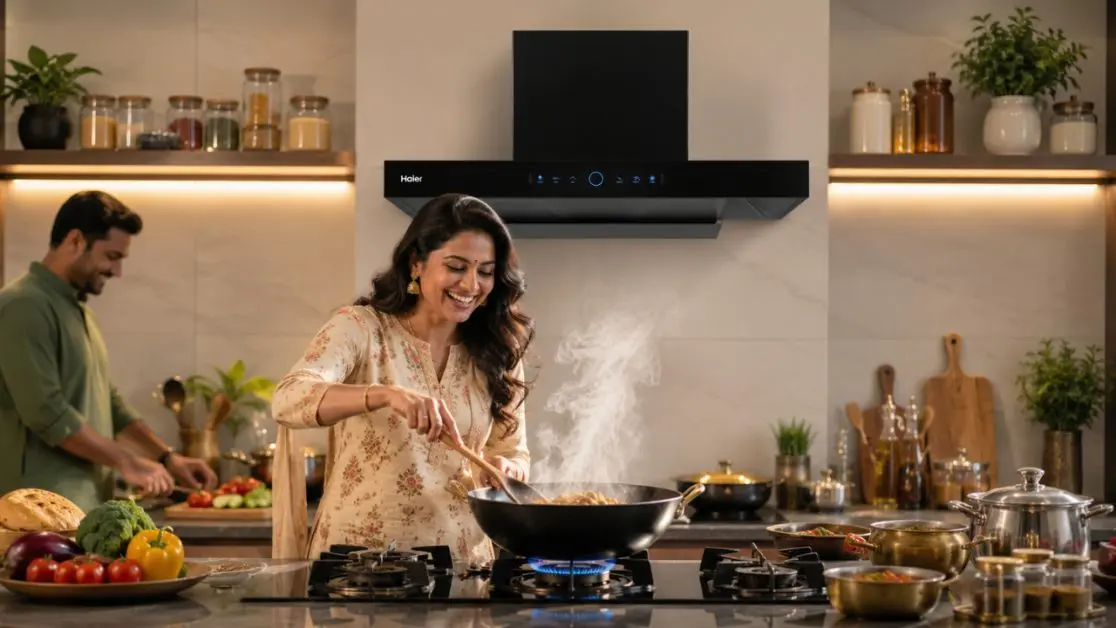
Most people buy chimneys for cleanliness.
But the real value is behavioural.
It changes how cooking feels.
A kitchen with poor airflow creates friction:
- More cleaning
- More wiping
- More sweating
- More smell management
- More maintenance
A kitchen with controlled airflow reduces decision fatigue.
You cook.
The smoke leaves.
The kitchen resets faster.
That changes daily energy.
Good appliances remove invisible work.
What Actually Makes A Good Kitchen Chimney?
Most buying decisions focus only on looks.
That is a mistake.
A chimney is an airflow machine first.
A design object second.
Here are the four systems that matter most.
1. Suction Power Determines Smoke Control
Indian kitchens need stronger suction because Indian cooking produces denser smoke and grease.
General guideline:
| Kitchen Type | Recommended Suction |
| Light cooking | 1000–1200 m³/h |
| Regular Indian cooking | 1200–1500 m³/h |
| Heavy frying/grilling | 1500–2000 m³/h |
For example:
- Haier HIH-G60HM-N offers 1700 m³/h suction power
- Haier HIH-T3903 offers 1800 m³/h suction power
- Haier HIH-T5905 reaches 2000 m³/h suction power
That range matters during intensive Indian cooking.
Especially during:
- Diwali preparation
- Weekend batch cooking
- Family gatherings
- Wedding-season hosting
2. Filterless Systems Reduce Maintenance
Traditional filters trap grease.
But trapped grease also means regular cleaning.
Filterless systems reduce that burden significantly.
That changes long-term usability.
One option is high-maintenance cleaning every few weeks.
The second option is automated grease management with auto-clean systems.
Most modern households prefer the second.
Several Haier models now use filterless designs combined with heat auto-clean or spin-clean technology.
That matters because neglected chimneys lose efficiency over time.
3. Noise Levels Change Daily Experience
A loud chimney solves one problem by creating another.
Noise fatigue is real.
Especially in open kitchens connected to living rooms.
Modern BLDC motor systems reduce operational noise while improving energy efficiency.
For example, Haier BLDC chimney models operate below 52 dB noise levels.
That is important in homes where:
- Someone is attending office calls
- Children are studying
- Television is running nearby
- Late-night cooking happens regularly
Quiet appliances disappear into routines better.
And the best technology often feels invisible.
The Real Shift Is Psychological
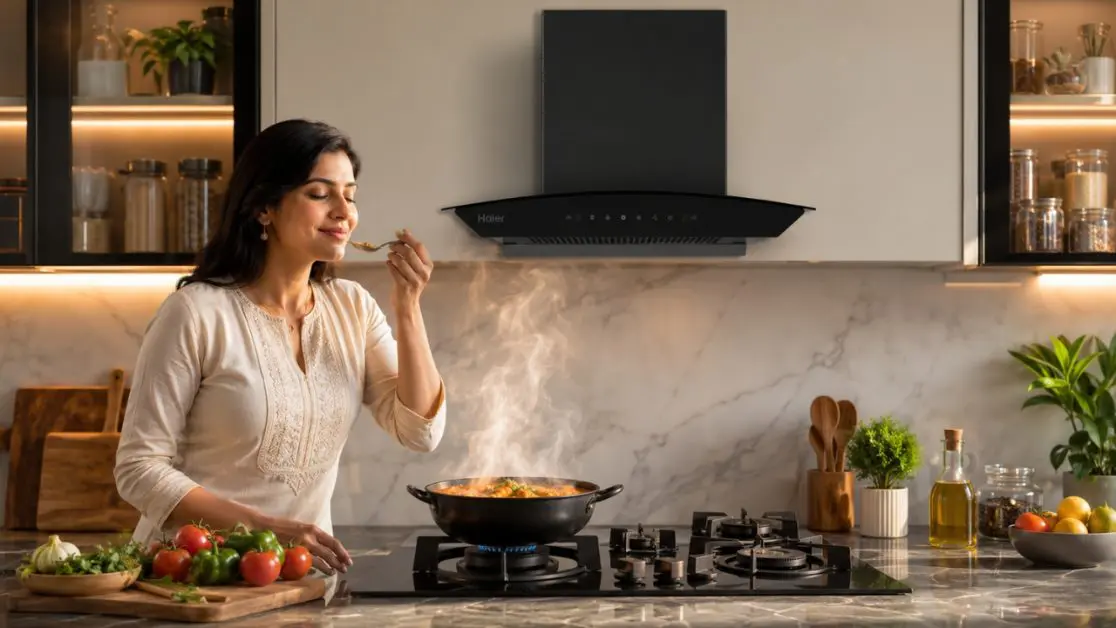
A clean kitchen changes behaviour.
People cook more confidently in spaces that feel controlled.
That affects:
- Meal quality
- Frequency of home cooking
- Family interaction
- Health habits
There is a reason cafés invest heavily in ventilation.
Smell affects emotion.
Heat affects patience.
Airflow affects comfort.
Homes work the same way.
The Kitchen Is No Longer Hidden
Older Indian homes treated kitchens as separate utility zones.
Modern homes treat kitchens as social spaces.
People talk while cooking now.
Children do homework nearby.
Guests stand around the island counter.
That changes expectations completely.
Smoke control becomes part of interior design.
Not because aesthetics matter more.
Because open spaces spread discomfort faster.
How Different Households Need Different Chimneys
Not every home cooks the same way.
That means not every chimney should solve the same problem.
For Working Professionals
Focus on:
- Low maintenance
- Auto-clean systems
- Quiet operation
- Compact designs
For Large Families
Focus on:
- Higher suction power
- Wider coverage
- Heavy smoke management
- Continuous performance
For Open Kitchens
Focus on:
- Noise reduction
- Fast smoke extraction
- Stylish integrated design
- Gesture or touch controls
Gesture control systems in modern chimneys reduce the need to touch greasy panels repeatedly during cooking. Several Haier models now include touch and gesture controls for easier daily operation.
Small friction points matter more than feature lists.
The Most Expensive Kitchens Often Ignore Airflow
This is surprisingly common.
People spend lakhs on:
- Quartz countertops
- Designer cabinets
- Imported lighting
- Premium tiles
Then install weak ventilation.
That is like buying a luxury car with poor brakes.
Because kitchen longevity depends heavily on airflow management.
Smoke affects:
- Paint lifespan
- Cabinet finish
- Appliance cleanliness
- Odour retention
- Ceiling maintenance
Ventilation protects investment.
Not just comfort.
Fire Safety Begins Before Fire Happens
Most people think safety starts during emergencies.
Real safety starts much earlier.
It starts with reducing conditions that allow risk to build silently.
Grease accumulation.
Heat concentration.
Poor ventilation.
Smoke stagnation.
These systems build gradually.
A kitchen chimney works because it interrupts the buildup process early.
That is the hidden principle behind most modern safety systems:
- Prevention beats reaction
- Maintenance beats repair
- Airflow beats cleanup
And homes that understand this feel easier to live in over time.
The Future Kitchen Is Not Just Smart. It Is Self-Regulating
The smartest appliances do not demand attention constantly.
They reduce effort quietly.
That is where modern chimneys are heading:
- Higher suction efficiency
- Lower noise
- Smarter cleaning reminders
- Better energy management
- Automated maintenance support
For instance, several Haier chimney models include cleaning reminder systems and delay-off functionality that continue airflow briefly even after cooking ends.
That sounds small.
Until you realise small systems shape daily life.
A kitchen chimney is not about removing smoke alone.
It is about protecting rhythm.
Because the best kitchens do not just look modern.
They recover quickly after real life happens.
Frequently Asked Questions
I already have an exhaust fan, do I still need a chimney?
Yes, especially for Indian cooking. Exhaust fans remove some air, but chimneys pull smoke, grease, heat, and odours directly from the cooking zone before they spread.
My kitchen feels sticky even after cleaning. Is poor ventilation the reason?
Very likely. Oil particles settle on cabinets, tiles, ceilings, and exhaust fans over time, creating that sticky layer.
I cook daily with tadka and frying. What suction power should I look for?
For regular Indian cooking, 1200–1500 m³/h is usually suitable. For heavy frying, grilling, or large-family cooking, 1500–2000 m³/h works better.
Is a chimney worth it in a small apartment kitchen?
Yes. Compact homes trap smoke faster, and smells can easily travel into bedrooms and living areas.
Why do my kitchen cabinets become oily even when I wipe them often?
Cooking smoke carries fine oil particles. Without strong suction, those particles settle repeatedly on surfaces.
I hate the smell of frying spreading through my house. Will a chimney help?
Yes. A chimney captures smoke and odours near the stove before they circulate through open spaces.
I have an open kitchen. Why does the whole living room smell after cooking?
Open layouts allow smoke and odours to move freely. A chimney helps control airflow at the source.