
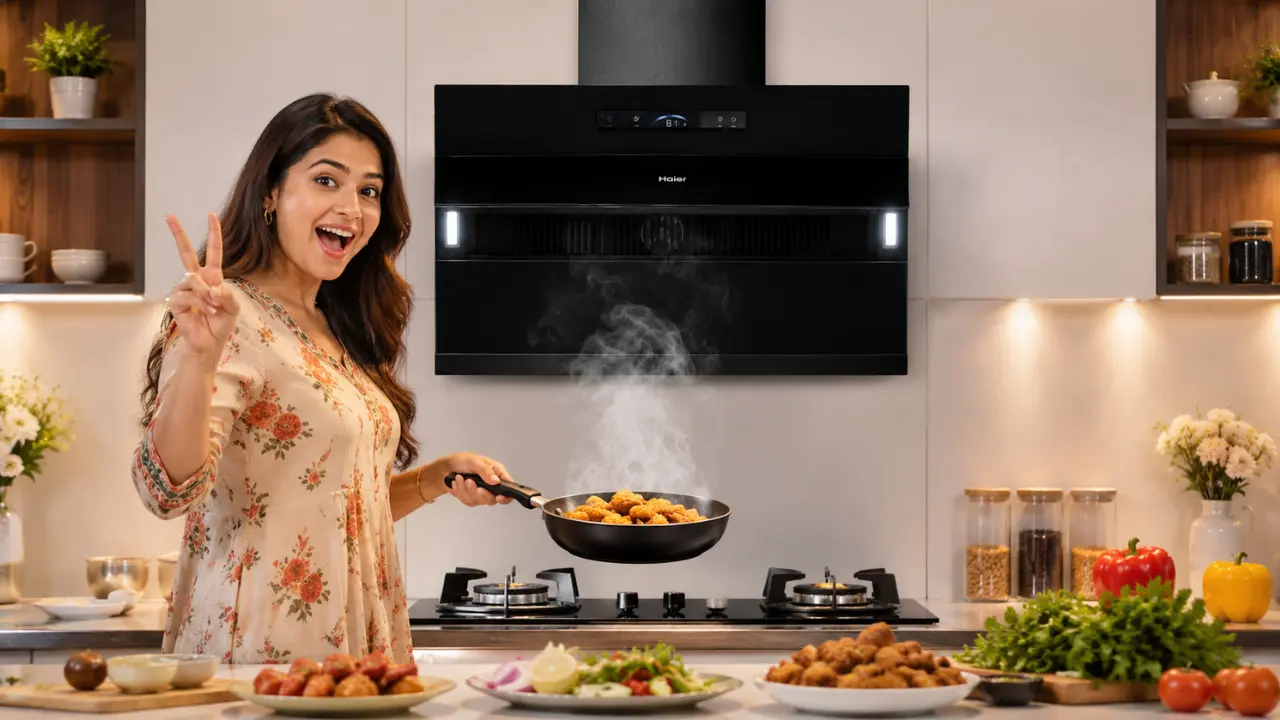

A kitchen chimney improves kitchen safety by removing smoke, grease, heat, and airborne particles before they settle into your home.
In modern Indian kitchens, that changes more than air quality. It reduces fire risk, keeps surfaces cleaner, improves breathing comfort, and makes everyday cooking feel less exhausting.
The safest kitchens are not always the most expensive ones.
They are the ones designed to handle repetition well.
Because danger in Indian kitchens rarely arrives dramatically. It builds slowly. Oil residue on cabinets. Smoke trapped in corners. Heat collecting near ceilings. Slippery grease near the stove. Tiny systems failing quietly over time.
Most homes notice the problem only after the kitchen starts feeling heavy.
That is where kitchen chimneys stop being “luxury appliances” and start becoming infrastructure.
Indian Cooking Creates Invisible Stress
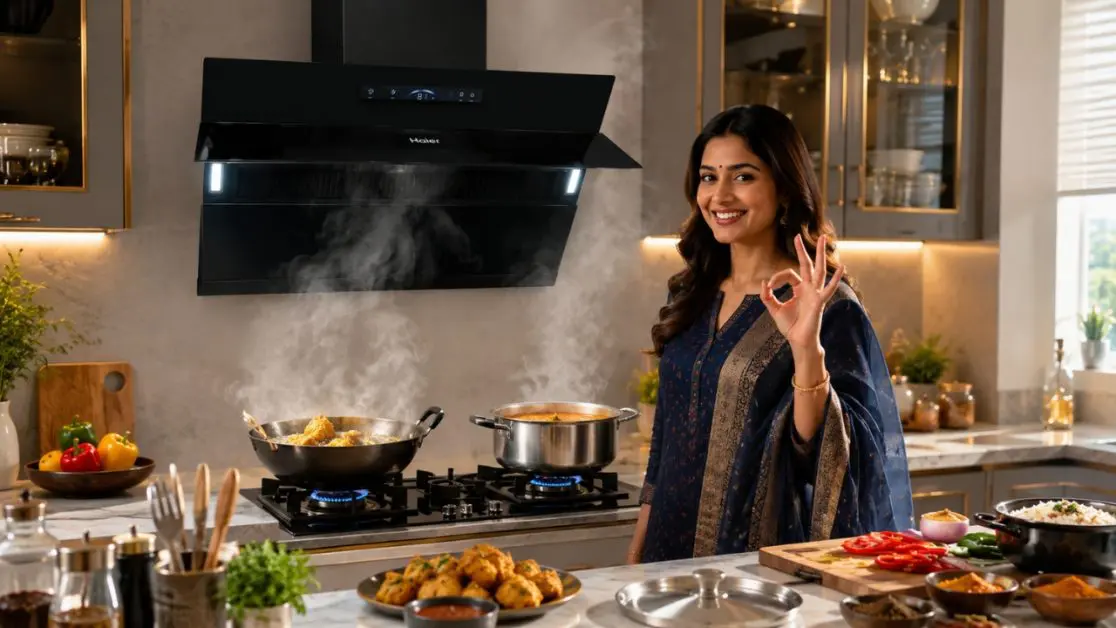
Think about a normal evening.
The tadka hits hot oil. Smoke rises instantly. The pressure cooker whistles. Someone fries fish. Someone reheats parathas. A second burner starts running.
Now multiply that by 365 days.
Indian cooking is intense by design. High heat. Multiple burners. Oil-heavy techniques. Spices that release strong particles into the air. Our kitchens work harder than most Western kitchen setups were originally designed for.
Which means kitchen safety is not only about flames.
It is about what stays behind after cooking ends.
Smoke is not just unpleasant. It changes the room
One option is to open windows and rely on natural airflow.
The second option is to use an exhaust fan.
The third option is to use a high-suction kitchen chimney that actively removes smoke, grease, and heat before they spread.
Each option solves a different layer of the problem.
| Solution | What It Handles | Limitation |
| Open windows | Basic airflow | Poor during summers, rain, pollution |
| Exhaust fan | Some smoke removal | Limited grease control |
| Kitchen chimney | Smoke, grease, heat, odour | Requires installation and cleaning |
A kitchen reveals its systems through smell.
If your living room smells like last night’s frying this morning, your ventilation system is losing.
That is the hidden role of chimneys.
Kitchen Safety Is Really About Airflow
Most people think chimneys are about aesthetics.
Black glass panels. Touch controls. Premium kitchens.
That is surface-level thinking.
The real function is airflow management.
Modern chimneys create controlled extraction zones above the stove. That matters because airborne grease does not disappear. It settles.
On walls. Cabinets. Curtains. Electrical fittings.
And grease plus heat plus electricity is not a combination any home wants quietly accumulating over years.
Why grease buildup becomes a long-term safety issue
Grease is sticky.
Sticky surfaces trap dust.
Dust near heat sources becomes difficult to clean and easier to ignite.
Restaurants know this well. Commercial kitchens clean ventilation systems aggressively because grease buildup increases fire risks over time.
Homes often ignore this because the accumulation happens slowly.
A good chimney interrupts that cycle early.
Models like the Haier BLDC Chimney With 1650 M³H Suction Power Spin Clean Filterless (HIH-C1900-BLDC-IN) are designed specifically for heavy Indian cooking conditions with strong suction power and filterless airflow systems.
That detail matters more than it first appears.
Because strong suction is not just about removing smell. It is about reducing residue before it settles into the kitchen ecosystem.
Heat Changes Human Behaviour Inside Kitchens
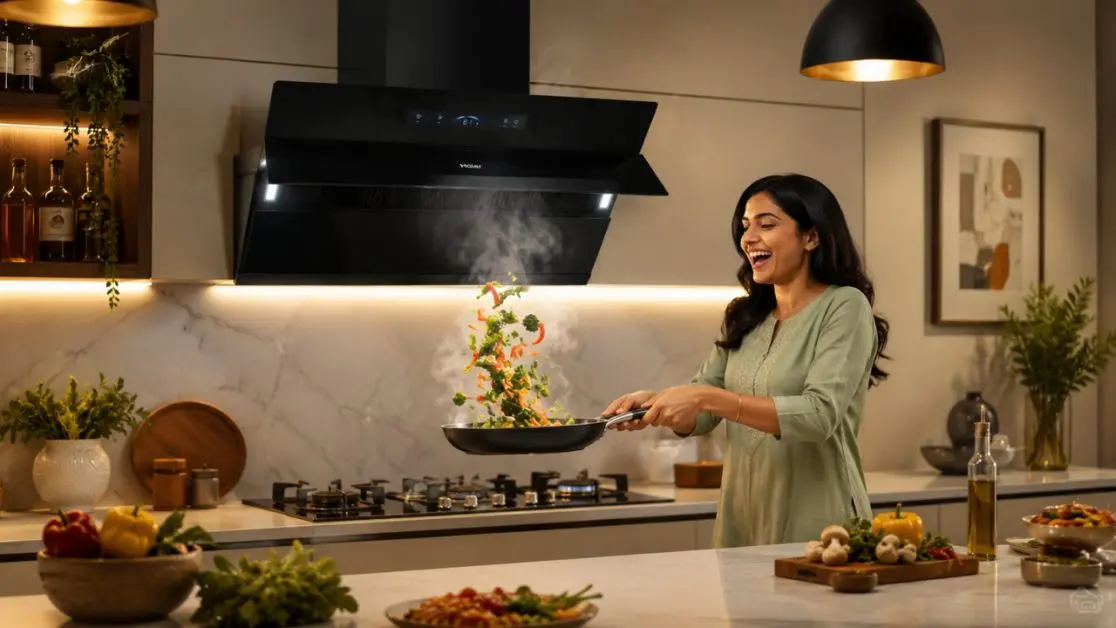
Safety is not only physical.
It is behavioural.
Hot kitchens make people impatient.
And impatient people make mistakes.
The invisible chain reaction of overheated kitchens
A hot kitchen creates small behavioural shortcuts:
- Someone wipes sweat while handling hot cookware
- Someone rushes because the room feels uncomfortable
- Someone avoids cooking elaborate meals entirely
- Someone leaves windows open during dust storms or pollution spikes
Heat changes attention spans.
A cooler kitchen improves decision quality.
That is why high-suction chimneys matter during Indian summers, especially in compact apartments where kitchens merge into dining or living areas.
Haier chimney models with 1650 m³/h suction power are designed to maintain smoke-free cooking environments during intensive usage.
The system matters more than the appliance.
Good airflow reduces heat concentration. Reduced heat lowers fatigue. Lower fatigue improves attention. Better attention improves safety.
That is how smart homes quietly work.
Modern Kitchens Need Hands-Free Thinking
The modern Indian kitchen looks different now.
One person is attending Zoom calls while cooking.
Another is meal-prepping at midnight.
Parents are supervising homework while making dinner.
Attention is fragmented.
Which means safety increasingly depends on reducing unnecessary interactions.
Why gesture control is more useful than it sounds
Touch controls inside oily kitchens create friction.
Hands are wet. Fingers carry masala. Surfaces become messy quickly.
Gesture controls solve a surprisingly practical problem.
Haier kitchen chimney models include Touch & Gesture controls designed for hands-free operation during cooking.
That sounds small.
Until your hands are covered in atta and you need to adjust suction speed.
The best kitchen technologies remove interruptions instead of adding new ones.
That is the difference between smart-looking products and genuinely smart systems.
Noise Also Shapes Kitchen Safety
People rarely discuss noise while talking about kitchen chimneys.
They should.
A loud appliance creates cognitive fatigue.
It becomes harder to hear conversations, pressure cookers, timers, or children calling from another room.
Low-noise systems reduce mental overload.
Why quieter kitchens feel safer
A calm kitchen changes behaviour.
People stay longer. Communicate better. Feel less irritated.
Haier BLDC chimneys operate below 52 dB while delivering strong suction performance.
That balance matters because many older chimneys forced users into a tradeoff:
- High suction but unbearable noise
- Low noise but weak smoke removal
Modern BLDC motors shift that equation by improving efficiency while reducing maintenance and operational noise.
Good appliances remove friction quietly.
Literally.
Kitchen Safety Depends on Maintenance Systems

Every safety system eventually fails if people stop maintaining it.
That includes chimneys.
One reason older chimneys frustrated users was maintenance fatigue. Filters clogged. Cleaning felt messy. Performance dropped.
Modern kitchens need lower-maintenance systems because busy households rarely maintain appliances perfectly.
Why self-cleaning systems matter
One option is manual cleaning every few weeks.
The second option is removable filter systems.
The third option is auto-clean and filterless systems that reduce long-term maintenance effort.
Here is how they compare:
| Cleaning System | Effort Required | Long-Term Convenience |
| Manual filter cleaning | High | Low |
| Removable filters | Medium | Medium |
| Filterless auto-clean systems | Low | High |
Haier chimney models include Heat Auto Clean technology that melts grease buildup to improve hygiene and performance over time.
There is also a cleaning reminder system after cumulative usage hours.
That feature sounds operational.
It is actually behavioural design.
Because humans forget repetitive maintenance tasks. Smart systems compensate for human inconsistency.
That is what modern appliance design increasingly means.
Kitchen Safety Is Connected to Appliance Ecosystems
A chimney does not operate alone.
It works alongside your hob, cookware, kitchen layout, and ventilation design.
That ecosystem thinking changes outcomes dramatically.
For example, the Haier Auto Ignition Full Brass 5 Burner Hybrid Hob (HIC-Q89576F) combines features like auto ignition, flame failure devices across burners, and toughened glass durability for safer cooking setups.
Now combine that with strong chimney suction above.
The result is not one safer appliance.
It is a safer kitchen system.
Three layers of safer kitchen design
- Heat control
- Efficient burners
- Stable cookware support
- Better airflow
- Air management
- Smoke extraction
- Grease reduction
- Lower odour retention
- Human comfort
- Lower noise
- Reduced heat stress
- Easier controls
Safety rarely comes from one feature.
It comes from systems working together consistently.
The Future of Kitchen Safety Is Invisible
The best technology often disappears into routine.
You stop noticing it because it keeps preventing problems before they happen.
That is the future modern Indian homes are moving toward.
Not flashy smart homes.
Frictionless homes.
Why this shift matters for Indian households
Indian kitchens are changing fast:
- Open kitchen layouts are increasing
- Compact urban homes merge cooking and living spaces
- More people cook late at night
- Dual-income households optimise time aggressively
- Younger buyers prioritise hygiene and air quality more than previous generations
That changes what “safe kitchen” means.
It is no longer only about preventing accidents.
It is about protecting comfort, attention, air quality, energy, and long-term health simultaneously.
A chimney becomes part of that broader architecture.
Not because it looks modern.
Because it reduces hidden strain.
And that is what the smartest appliances always do.
They make everyday life feel lighter without constantly demanding attention in return.
Frequently Asked Questions
I cook every day in a small Indian kitchen. Do I really need a chimney?
Yes. Daily Indian cooking creates smoke, grease, heat, and odour buildup. A chimney helps remove these before they settle across your kitchen and home.
My kitchen feels heavy after cooking. Is poor ventilation the reason?
Very likely. Trapped smoke, oil particles, and heat can make the kitchen feel stuffy even after cooking ends.
I already have an exhaust fan. Why should I consider a kitchen chimney?
An exhaust fan removes some smoke, but a chimney works directly above the stove to capture smoke, grease, heat, and odour more effectively.
I fry food often. Will a chimney actually make my kitchen safer?
Yes. Frying releases grease particles that settle on walls, cabinets, and electrical surfaces. A chimney reduces this buildup and helps lower long-term fire risk.
I can smell yesterday’s frying in my living room. What does that mean?
It means smoke and odour are spreading beyond the kitchen. A strong chimney helps control this before it reaches other rooms.
My cabinets feel sticky near the stove. Can a chimney help?
Yes. Sticky residue usually comes from airborne grease. A chimney captures much of that grease before it settles.