
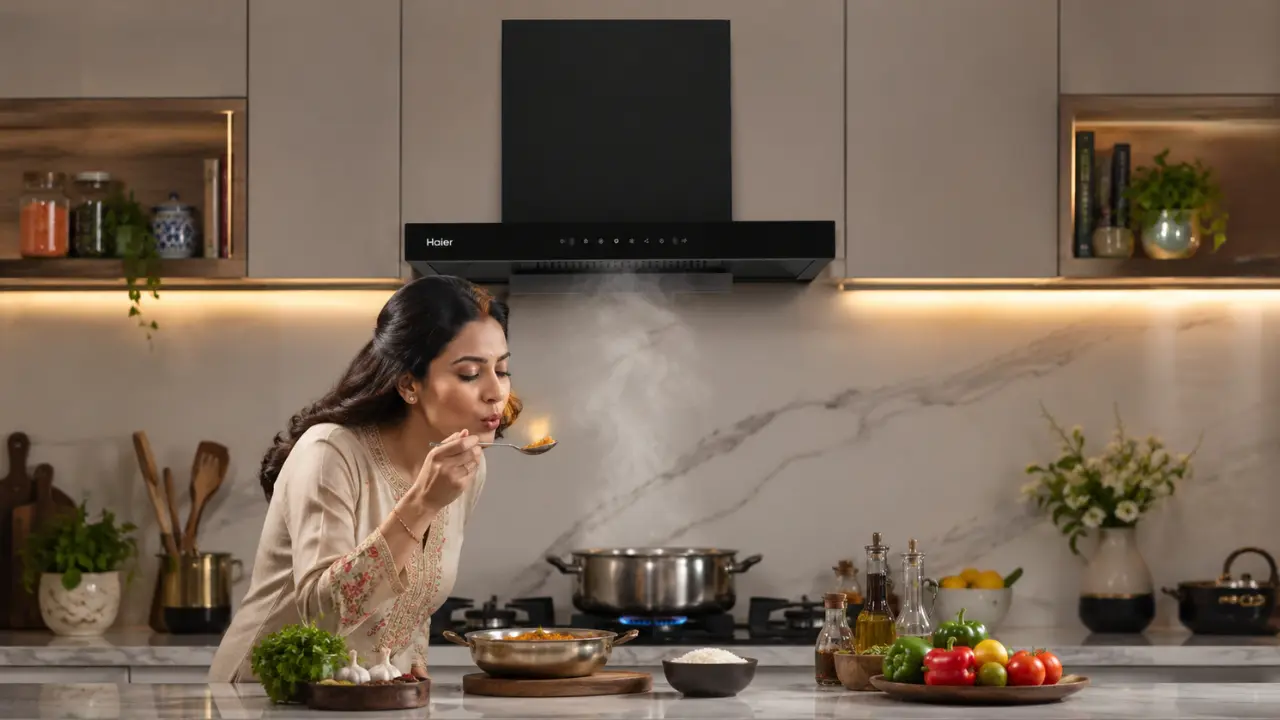

Most Indian kitchens need a kitchen chimney with 1200 to 1800 m³/h suction power. But the right number depends less on kitchen size and more on cooking style.
Deep frying, tadka, grilling, and daily masala cooking create heavier smoke and oil particles. The more intense the cooking, the higher the suction power required.
A kitchen at 8:15 pm reveals everything.
Oil crackles. Onions brown. Jeera hits hot ghee. Someone opens the pressure cooker. The exhaust fan struggles quietly in the background.
And within minutes, the kitchen changes.
The cabinets feel sticky. The curtains absorb smell. Smoke drifts into the dining room. Tomorrow morning, the same smell still lingers.
This is the hidden cost of Indian cooking.
Not the food. The air.
A kitchen chimney is not just about removing smoke. It is about controlling what stays inside your home.
And suction power decides whether that system actually works.
What Does Suction Power Actually Mean?
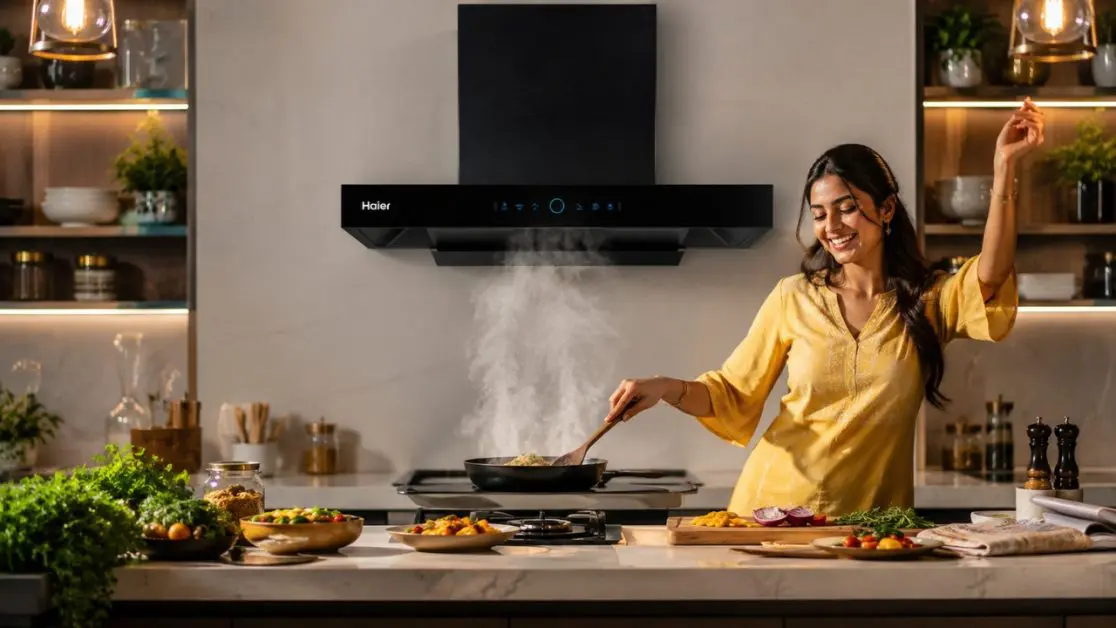
Most people see numbers like 1200 m³/h or 1800 m³/h and assume bigger always means better.
That logic fails fast.
Suction power simply measures how much air a chimney can pull in and filter every hour. Higher suction means faster smoke, oil, and odour removal.
But kitchens behave differently.
A small apartment kitchen where someone makes dal and chapati twice a day does not behave like a joint-family kitchen during Sunday fish fry.
Insight: The right appliance is not the most powerful one. It is the one matched to your daily reality.
Why Indian Kitchens Need Higher Suction Power
Western kitchens mostly deal with baking, grilling, and light sautéing.
Indian kitchens are different systems entirely.
We use:
- Deep frying
- Heavy tadka
- Mustard oil
- High-heat cooking
- Multi-dish meal preparation
- Spices that release airborne oil particles
This changes the air density inside the kitchen.
That is why modern Indian homes increasingly prefer chimneys above 1200 m³/h suction power.
According to Haier chimney specifications, several modern models now operate between 1650 and 2000 m³/h suction capacity for heavy Indian cooking conditions.
How Much Suction Power Do Different Homes Actually Need?
This is where most buying decisions become unnecessarily confusing.
The easiest way to think about chimney suction is to think about cooking intensity.
Not just kitchen size.
Option 1: 1200 to 1400 m³/h
Best for:
- Small families
- Light cooking
- Minimal frying
- Studio apartments
- Working professionals living solo
This range works efficiently when cooking duration is short and smoke generation stays controlled.
The benefit:
- Lower power usage
- Lower operational noise
- Economically efficient for lighter cooking patterns
The limitation:
- Struggles during intense frying sessions or festive cooking days
Option 2: 1500 to 1800 m³/h
Best for:
- Medium to large families
- Daily Indian cooking
- Frequent tadka and frying
- Open kitchens connected to living spaces
This is where most modern Indian homes fit.
For example, the Haier HIH-T3903 chimney offers 1800 m³/h suction power with Heat Auto Clean technology and filterless operation.
Similarly, the Haier HIH-T1901 flat chimney provides 1750 m³/h suction power with touch and gesture controls.
This range creates balance.
Strong enough for Indian cooking. Practical enough for daily use.
Option 3: 1900 to 2000 m³/h
Best for:
- Heavy cooking households
- Joint families
- Frequent frying or grilling
- Open-concept premium kitchens
- Homes where cooking happens multiple times daily
This category exists for kitchens that behave more like active production spaces.
During festive seasons, family gatherings, or weekend meal prep, smoke levels rise dramatically.
High suction systems handle that load faster.
The Haier HIH-T5905 chimney delivers 2000 m³/h suction power with a filterless double-layered pyramid design and BLDC motor support.
And that matters more than most people realise.
Because smoke is delayed.
The Real Mistake People Make While Choosing Chimneys

Most people buy chimneys based on appearance first.
Glass design.
Touch panel.
Lighting.
Finish.
All visible things.
But chimney performance lives inside invisible systems.
Airflow.
Motor quality.
Filter design.
Noise management.
A beautiful chimney with weak suction becomes decorative furniture within months.
Insight: A kitchen chimney succeeds quietly. You notice it most when the smell does not travel.
Why Open Kitchens Change Everything
Ten years ago, smoke stayed trapped inside separate kitchens.
Now kitchens flow directly into living rooms.
That changes the equation.
When smoke travels, the entire home experiences cooking residue:
- Sofa fabrics absorb odours
- Curtains trap grease
- Air conditioning circulates smells
- Walls accumulate oil particles slowly
Open kitchens need stronger suction because the chimney protects more than the cooking area.
It protects the atmosphere of the home.
That is why higher suction power has become less of a luxury and more of a design necessity in modern Indian apartments.
Does Higher Suction Mean More Noise?
Usually yes.
But newer motor technologies are changing that relationship.
Older chimneys relied heavily on brute-force airflow. More suction often meant louder operation.
Modern BLDC motor chimneys improve efficiency differently.
For example:
- Haier BLDC chimney models operate with noise levels below 52 dB while maintaining 1650 m³/h suction power.
- Some standard AC motor models operate below 57 dB at higher capacities like 1750 to 1800 m³/h.
That matters because kitchen noise creates fatigue over time.
A loud chimney changes conversations.
A quieter chimney disappears into routine.
And the best home systems are usually the least noticeable ones.
What Else Matters Beyond Suction Power?
Suction power alone does not define performance.
Three additional systems matter.
| Feature | Why It Matters |
| Filterless Design | Reduces maintenance and airflow blockage |
| Auto Clean Technology | Prevents grease buildup inside the motor |
| BLDC Motor | Improves efficiency while reducing noise and maintenance |
Several Haier chimneys now combine these systems together:
- Filterless airflow
- Heat Auto Clean technology
- Touch and gesture controls
- Cleaning reminders
- Delay-off functions
- BLDC motor efficiency
This combination changes how the appliance feels over years of use.
Not just on installation day.
How Kitchen Size Affects Chimney Selection
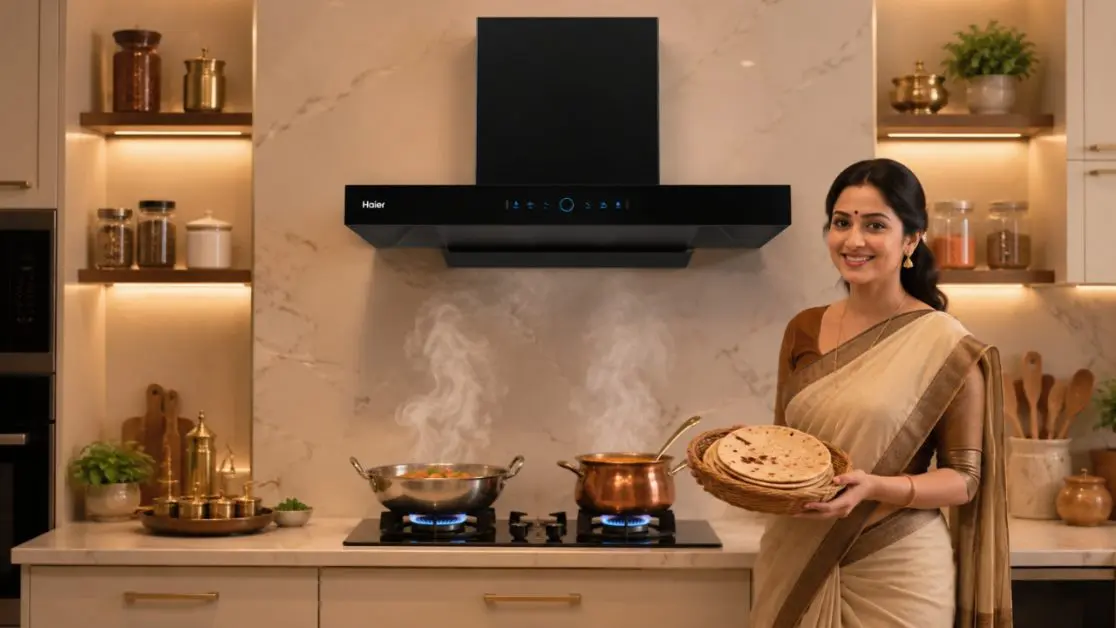
Kitchen size still matters. Just not as much as people think.
Here is a practical framework:
Small Kitchens
Recommended suction:
- 1200 to 1500 m³/h
Why:
Smaller spaces trap smoke faster. Moderate suction clears air efficiently without overwhelming the room.
Medium Kitchens
Recommended suction:
- 1500 to 1800 m³/h
Why:
Balanced airflow works best for daily Indian cooking patterns.
Large or Open Kitchens
Recommended suction:
- 1800 to 2000 m³/h
Why:
Larger air volume requires faster extraction before smoke spreads.
The hidden variable is airflow distance.
The farther smoke travels before capture, the harder the chimney must work.
The Kitchen Chimney Is Really an Air Management System
Most people think chimneys remove smoke.
That is only partially true.
A good chimney manages:
- Heat
- Grease particles
- Odour spread
- Air freshness
- Surface cleanliness
- Long-term kitchen maintenance
Over time, this affects:
- Cleaning effort
- Appliance lifespan
- Indoor comfort
- Cooking experience
- Even wall maintenance costs
Small systems shape daily life more than dramatic purchases.
A chimney is one of those systems.
How to Choose the Right Haier Kitchen Chimney
Instead of asking:
“What is the best suction power?”
Ask:
“How does my kitchen actually behave every day?”
That question changes everything.
Choose 1650 m³/h if:
- You cook daily Indian meals
- You want quieter performance
- You prefer energy-efficient BLDC models
- Your kitchen is medium-sized
Haier models like HIH-C1600-BLDC-IN and HIH-C1750-BLDC-IN fit this category well.
Choose 1750 to 1800 m³/h if:
- Your home cooks frequently
- Frying happens often
- Your kitchen opens into living areas
- You want stronger smoke extraction
Models like HIH-T1901 and HIH-T3903 are built around this requirement.
Choose 2000 m³/h if:
- Cooking intensity stays high
- Multiple meals happen daily
- Your kitchen handles heavy oil-based cooking
- You want maximum extraction speed
The Haier HIH-T5905 operates in this category.
The Real Upgrade Is Not the Chimney
It is the feeling after cooking.
No lingering smell in the bedroom.
No sticky cabinet surface after two months.
No heavy air during dinner conversations.
A kitchen chimney changes something subtle but important.
It protects the atmosphere of the home.
And that is what smart appliances quietly do at their best.
They remove friction people stopped noticing.
Frequently Asked Questions
How much suction power do I actually need in a kitchen chimney?
Most Indian homes need between 1200 and 1800 m³/h suction power. If your cooking includes frequent tadka, frying, grilling, or heavy masala preparation, you should usually look at 1650 m³/h or above.
Is higher suction power always better?
No. Higher suction helps only if your cooking style actually creates heavy smoke and oil particles. A very high-suction chimney in a small low-cooking household may simply increase noise and electricity usage unnecessarily.
Why do Indian kitchens need stronger chimneys than Western kitchens?
Indian cooking produces denser airborne oil and spice particles because of:
Deep frying
High-heat tadka
Mustard oil
Multi-dish cooking
Heavy spice tempering
This creates thicker kitchen air that requires faster extraction.
I mostly cook dal, sabzi, and chapati. Do I still need 1800 m³/h?
Probably not. If your cooking is light and frying is occasional, a chimney in the 1200–1500 m³/h range is usually sufficient.
I cook fish fry and tadka daily. What suction power should I choose?
You should ideally consider 1750–2000 m³/h suction capacity because oily smoke spreads quickly and settles on cabinets, curtains, and walls.