
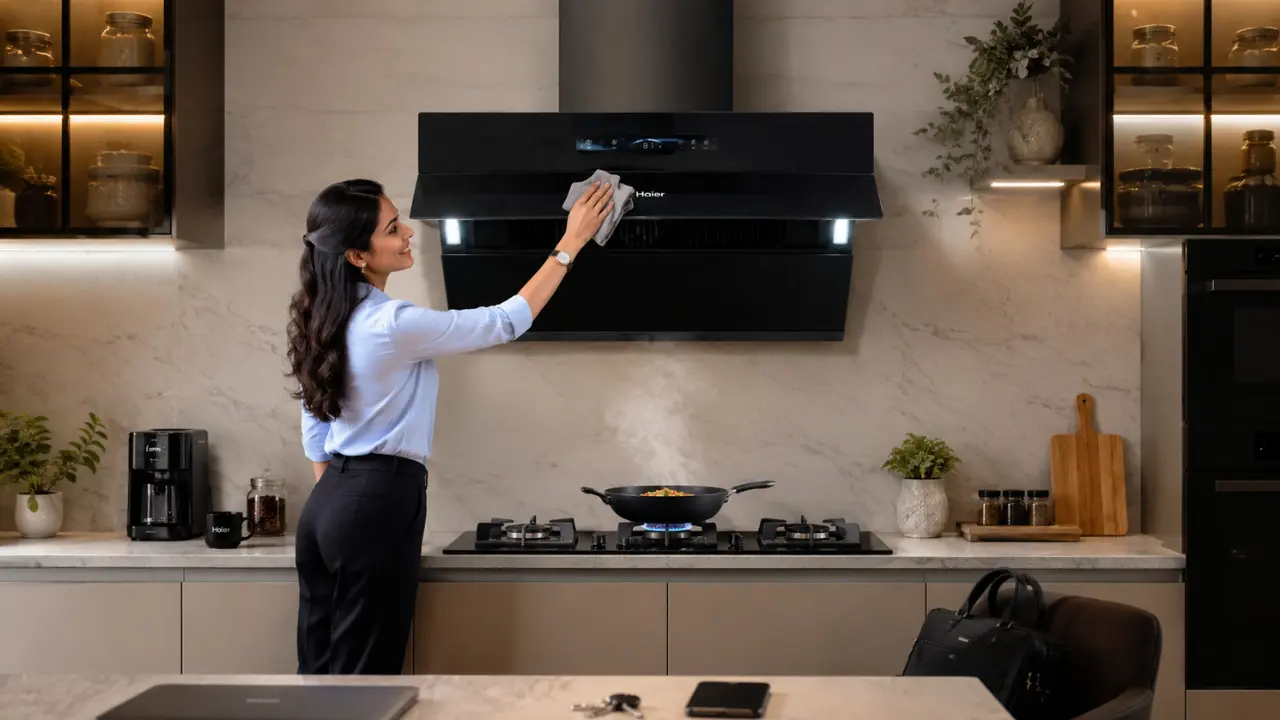

Chimney care for working professionals is not about deep cleaning every weekend. It is about reducing grease buildup before it becomes a time-consuming problem.
Small habits like wiping surfaces daily, using auto-clean functions regularly, and checking oil collectors weekly keep your kitchen cleaner, quieter, and easier to manage without disrupting a busy schedule.
There is a reason kitchen mess feels more exhausting after work.
It is not just the cooking.
It is the invisible layer left behind.
Oil in the air. Grease on cabinets. Smoke trapped in curtains. The chimney absorbs most of it quietly. Until it stops doing its job properly.
And most people notice it too late.
A noisy motor. Sticky surfaces. Reduced suction. Lingering smell after cooking tadka at 10:30 pm.
The problem is not the chimney.
The problem is delayed maintenance.
Because modern Indian kitchens do not create light cooking conditions anymore. Air fryers, deep frying, high-flame tadkas, grilling, open kitchens, compact apartments. Everything increases smoke concentration.
Especially for working professionals who cook fast, multitask constantly, and rarely have time for deep appliance care.
That changes how chimney maintenance should work.
Not intensive.
Systematic.
Why Chimney Maintenance Feels Harder for Working Professionals
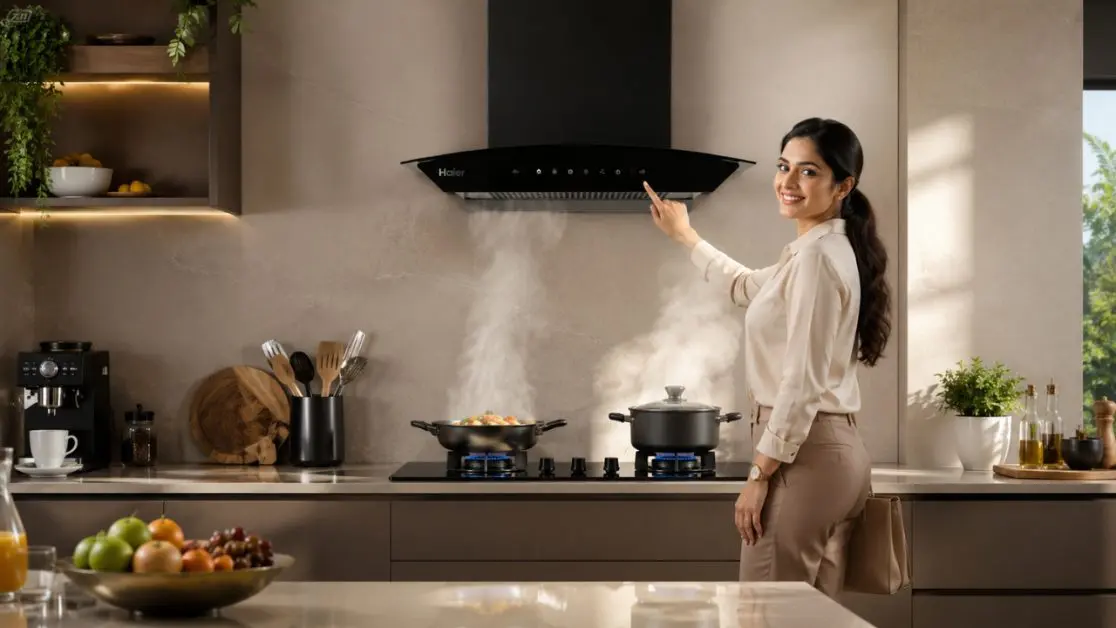
A Sunday disappears quickly.
Laundry. Groceries. Cleaning. Calls from family. Meal prep for the week.
Now add chimney cleaning.
Most people postpone it.
That delay creates a hidden cycle:
- Grease buildup reduces suction
- Reduced suction traps more smoke
- More smoke creates more residue
- Residue makes cleaning harder later
A kitchen chimney is like a coffee machine in an office pantry.
Nobody notices maintenance when it works well. Everyone notices the moment it fails.
The real issue is not cleaning. It is accumulated friction.
Working professionals rarely struggle with one big mess.
They struggle with repeated small neglect.
One skipped wipe becomes sticky glass.
One ignored oil tray becomes odour.
One delayed service becomes loud motor noise.
Small delays compound.
That is how kitchens quietly become stressful.
The Best Chimney Care Routine Is the One You Can Actually Follow
Complicated routines fail.
Especially after long workdays.
The smartest chimney care systems reduce effort instead of adding more tasks.
Here is a practical structure that works for most Indian homes.
| Frequency | What to Do | Time Required |
| Daily | Wipe outer glass/body | 2 minutes |
| Weekly | Empty oil collector | 5 minutes |
| Bi-weekly | Clean touch panel and vents | 10 minutes |
| Monthly | Run auto-clean properly | 15 minutes |
| Every 6-12 months | Professional servicing | 30-60 minutes |
The goal is not perfection.
The goal is preventing buildup before it becomes visible.
Daily Chimney Care Tips That Save Hours Later

One wipe today prevents one hour tomorrow
Fresh grease removes easily.
Old grease behaves like dried glue.
That is the difference most people underestimate.
After cooking:
- Use a microfiber cloth
- Wipe glass surfaces lightly
- Focus near control panels and edges
- Avoid harsh scrubbers
This matters more in Indian kitchens because oil-heavy cooking creates airborne particles quickly.
Especially during:
- Deep frying
- Tadka preparation
- Fish frying
- Festival cooking
- Pressure cooking with spices
The residue does not disappear.
It settles.
Keep airflow unobstructed
Many kitchens accidentally block chimney efficiency.
Common mistakes:
- Hanging cloths near vents
- Storing spice jars too close
- Letting grease collect near suction areas
Airflow systems work like traffic systems.
Small blockages create bigger slowdowns over time.
Auto-Clean Chimneys Exist Because Modern Lifestyles Changed
Older chimneys demanded manual cleaning constantly.
Modern schedules made that unrealistic.
That is why technologies like Heat Auto Clean and Spin Clean became important in newer kitchen chimneys.
For example, several Haier kitchen chimney models include Heat Auto Clean systems that melt accumulated grease internally and collect it separately for easier disposal.
That shift matters.
Because maintenance changes from scrubbing interiors manually to managing grease systematically.
What does Heat Auto Clean actually solve?
It solves delayed maintenance.
Not by eliminating cleaning entirely.
But by reducing how often deep cleaning becomes necessary.
Models like the Haier HIH-T1600-IN and HIH-G60HM-N also include cleaning reminders, gesture controls, and filterless designs that reduce maintenance friction further.
That combination matters more for working professionals than feature lists suggest.
Because the best appliance feature is often the one that reduces mental load.
Filterless Chimneys Change the Maintenance Equation
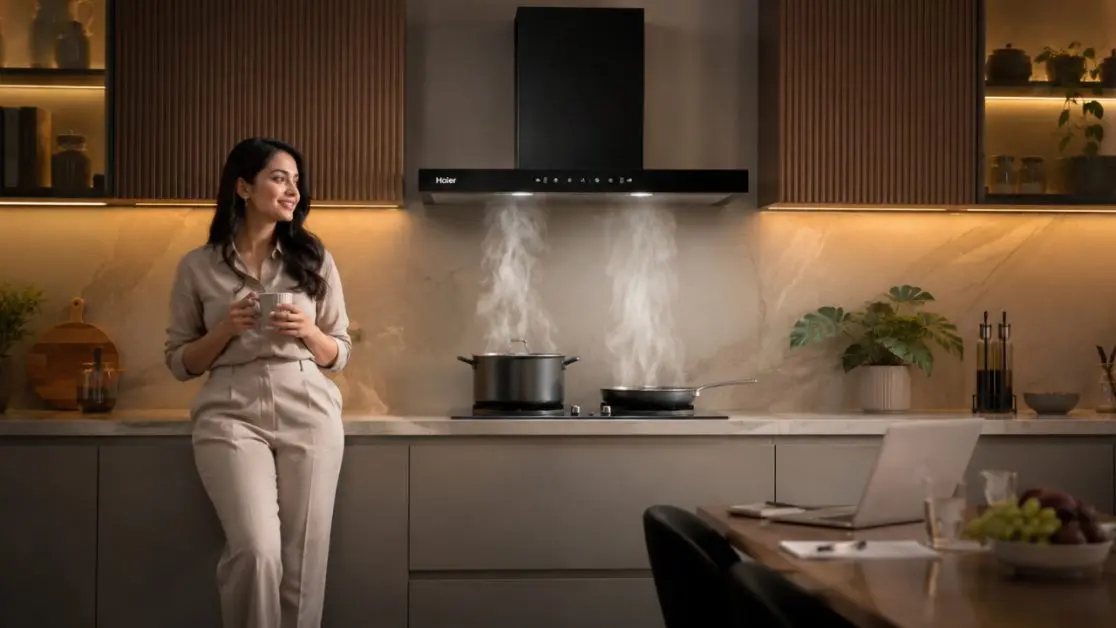
Traditional filters trap grease.
Which also means they need regular removal and cleaning.
Filterless chimneys approach the problem differently.
Instead of trapping grease inside layered filters, they separate oil through airflow dynamics and oil collectors.
That creates three practical advantages:
1. Faster maintenance
No soaking filters overnight.
2. Better suction consistency
Clogged filters reduce airflow significantly over time.
3. Lower maintenance fatigue
People postpone difficult cleaning tasks. Simpler systems get maintained more consistently.
Several Haier chimney models use filterless technology combined with suction capacities ranging from 1500 m³/h to 1750 m³/h for heavy Indian cooking conditions.
The insight here is larger than chimneys.
Systems succeed when maintenance feels manageable.
The Most Ignored Part of Chimney Care Is Noise
People tolerate rising noise levels slowly.
Until the kitchen starts sounding aggressive.
A louder chimney usually signals:
- Grease buildup
- Airflow restriction
- Dirty motors
- Poor cleaning frequency
This is why lower-noise BLDC motor chimneys are becoming more relevant in apartments and open kitchens.
Models like the Haier HIH-T1900-BLDC-IN and HIH-C1600-BLDC-IN combine BLDC motors with lower noise levels and higher efficiency.
That matters in real homes.
Because modern kitchens are no longer isolated rooms.
People cook during meetings.
Children study nearby.
TV runs in the background.
Open layouts connect everything.
Noise is no longer a technical specification.
It is a lifestyle factor.
Three Chimney Habits That Working Professionals Should Avoid
1. Waiting until suction feels weak
By the time smoke becomes visible, efficiency has already dropped significantly.
2. Ignoring the oil collector
Overflowing oil collectors create odour and hygiene issues.
Weekly checks prevent bigger problems.
3. Switching off the chimney immediately after cooking
Use delay-off functions when available.
Some Haier models include delay-off systems that continue clearing residual smoke after cooking ends.
This matters because smoke lingers longer than people think.
Especially in compact urban kitchens.
Kitchen Hygiene Is Actually About Air Management
People clean counters daily.
But ignore airborne grease.
That creates a strange imbalance.
Because air carries the mess farther than food spills do.
Kitchen chimneys quietly manage:
- Smoke particles
- Oil vapours
- Heat concentration
- Cooking odours
- Air quality
The cleaner the airflow system, the cleaner the kitchen feels overall.
Not just visually.
Mentally.
A clean kitchen changes how cooking feels after work
That is the hidden impact.
Cooking feels lighter in clean spaces.
Faster.
Less exhausting.
People cook more willingly when kitchens feel manageable.
And that affects health, spending habits, and even family routines over time.
Small systems shape bigger behaviours.
What Working Professionals Should Prioritise While Choosing a Chimney
Not every feature matters equally.
Some features genuinely reduce long-term maintenance effort.
Here is what creates the biggest difference:
| Feature | Why It Matters |
| Auto-clean technology | Reduces manual grease cleaning |
| Filterless design | Simplifies maintenance |
| High suction power | Handles heavy Indian cooking |
| Cleaning reminders | Prevents delayed maintenance |
| BLDC motors | Lower noise and better efficiency |
| Gesture control | Cleaner operation during cooking |
For instance, newer Haier chimneys combine gesture controls, auto-clean systems, high suction power, and filterless technology specifically for Indian cooking patterns.
The important part is not the technology itself.
It is what the technology removes from your routine.
The Real Goal of Chimney Care Is Not Cleanliness
It is continuity.
A kitchen that stays manageable during busy weeks.
A cooking space that does not feel overwhelming after office hours.
An appliance that quietly works without demanding constant attention.
That is what modern home systems are supposed to do.
The smartest homes are not the ones filled with gadgets.
They are the ones where everyday friction disappears quietly.
And chimney care sits right inside that invisible system.
Because the real luxury in modern Indian homes is not automation alone.
It reduces exhaustion.
Frequently Asked Questions
Why does my kitchen feel greasy even when I clean regularly?
Oil particles from Indian cooking settle slowly on cabinets, curtains, counters, and chimney surfaces. Even if the kitchen looks clean, airborne grease continues accumulating unless the chimney airflow remains efficient.
Why does chimney maintenance feel overwhelming after work?
Because chimney care usually gets postponed until problems become visible. By then, grease buildup, odours, and reduced suction make cleaning feel much harder than small daily maintenance.
Is chimney cleaning supposed to be this frequent in Indian kitchens?
Heavy cooking styles like tadka, frying, grilling, and pressure cooking produce more airborne oil than many people realize. Indian kitchens generally require more consistent chimney upkeep than lighter cooking environments.
How do I maintain my chimney without spending weekends deep cleaning?
Focus on small repeatable habits:
Daily surface wipe
Weekly oil collector check
Monthly auto-clean cycle
Professional servicing every 6–12 months
Consistency matters more than intensive cleaning sessions.
Why does my kitchen still smell after cooking?
Residual smoke and oil particles linger in compact kitchens, especially if the chimney is switched off immediately after cooking.